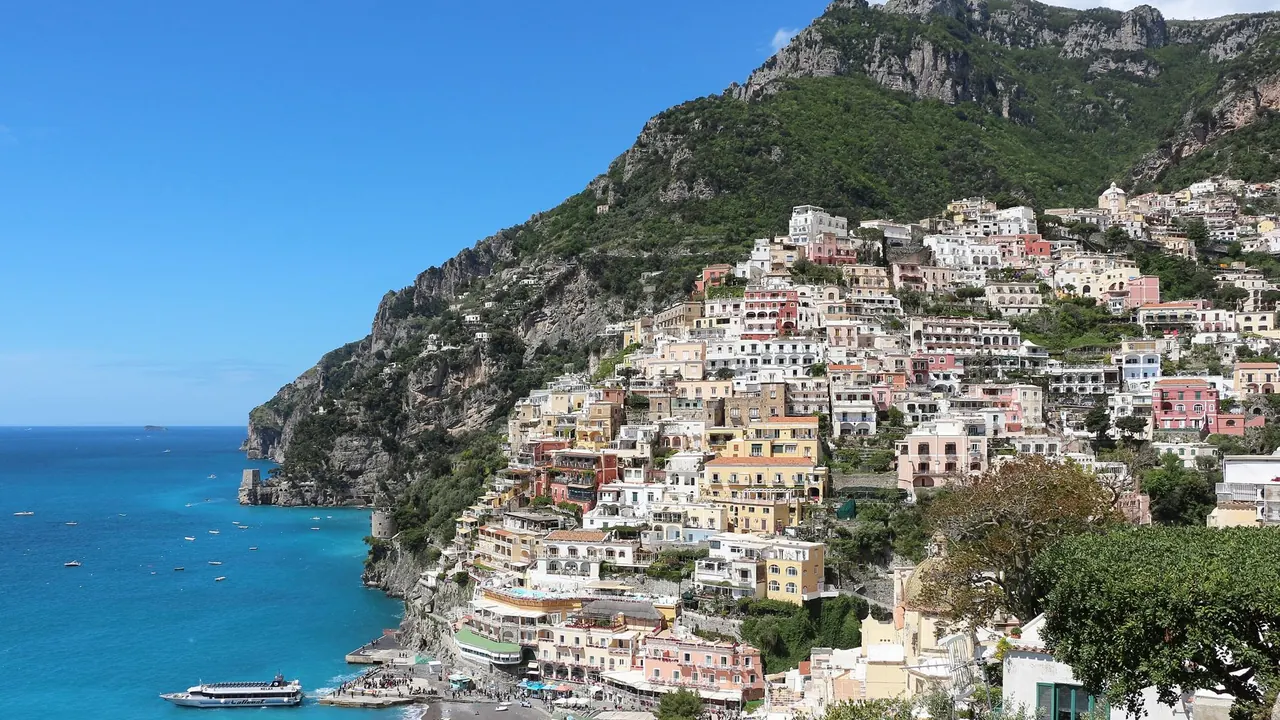
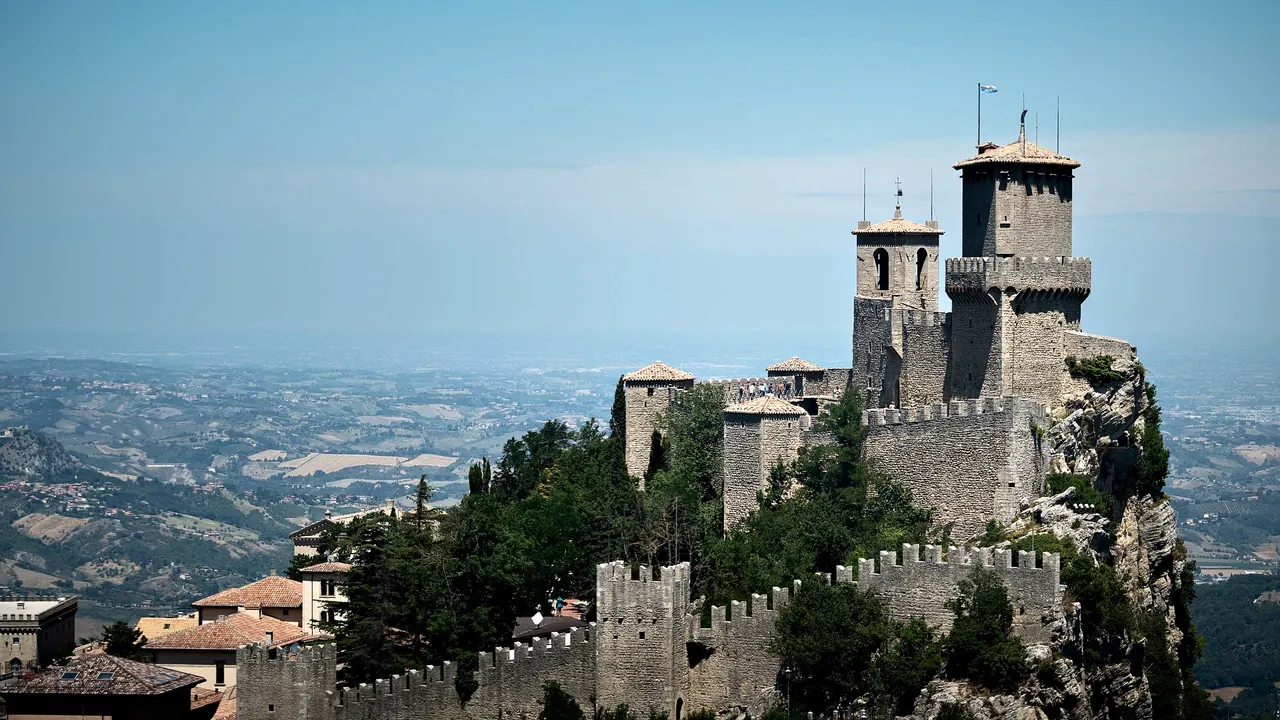
Photos: Positano by Bernard Gagnon, CC BY 4.0, cropped; San Marino by Tibor Szabo, Pexels License.
Positano or San Marino?
Our verdict in twelve categories, each scored against the same fixed benchmark cities, and the climate month by month, so you can choose for your trip.
Choose Positano for
- nature and the outdoors
- beaches
- wellness
Positano suits travellers who want the sea and the cliffs to be the whole vacation: swimming from the town's own beaches, boats to Capri and along the coast, and walks on the Path of the Gods high above the water. It also works for couples who care more about the setting than the bill, because nothing about it is cheap and the stairs everywhere make it hard going with small children.
Choose San Marino for
- prices
- culture and sights
- families
San Marino is the better choice for a calmer, cheaper stay built around a medieval hilltop town and a car. Its towers and walls give more to see than Positano's lanes, children usually love the battlements and the cable car, and the Riviera beaches, Urbino and Ravenna lie within a drive. Choose it if you are happy to go down to the sea rather than wake up beside it.
Scoreboard
Twelve categories on one fixed scale from 0 to 100. The shaded stretch is the gap between the two.
Your match
Pick a travel style or drag the sliders, and both match scores follow your weighting.
Wins on nature and the outdoors and beaches with your weighting.
Wins on prices and culture and sights with your weighting.
What matters to you?
Category by category
What the scores mean for a trip.
Beaches & swimming
Positano lives by the sea. Spiaggia Grande and Fornillo are steps from town, Arienzo and Laurito are a stairway or a boat ride away, and the water is deep and clear, though the shore is coarse, shelves steeply and fills up early in high summer.
San Marino has no shore of its own. The beaches are the long, sandy, organised strands of Rimini and Riccione, roughly half an hour's drive away, with shallow water that suits children better than Positano's pebbles but none of its drama.
Food & drink
Neither place is a reason to travel for food, and both charge for the view on their terraces. The difference is the kitchen: Positano cooks the sea, with clams, grilled fish, seafood scialatielli and lemon desserts, on menus that repeat themselves and often close in winter.
San Marino eats from the hills, with tagliatelle, passatelli in broth, grilled meats, piadina and the Tre Monti wafer cake, plus its own Sangiovese. The best meals are in trattorias in Borgo Maggiore and the lower villages rather than up on the summit.
Culture & sights
San Marino gives more to see. The three towers on Monte Titano, the cliffside path between Guaita and Cesta, the Palazzo Pubblico and the basilica tell the story of one of the world's oldest surviving republics, and half a day does it justice.
In Positano the town itself is the sight: the majolica dome of Santa Maria Assunta and the painted Roman villa beneath it, then little more. A couple of hours covers it, and serious sightseeing means Naples or the rest of the coast.
Nightlife
Neither is a place for a big night out, but Positano at least has a summer scene: aperitivo with a sea view, a few wine and cocktail bars near the beach and a cave club at the end of Spiaggia Grande, all fading once the season ends.
San Marino goes quiet when the coaches leave, leaving a few terraces for a drink over the lights of the coast. Anyone wanting more has to drive down to the Riviera clubs of Rimini and Riccione.
Nature & outdoors
Positano has the grander landscape by far. The Lattari mountains drop straight into the sea, the Path of the Gods runs along the cliffs to Nocelle, trails climb above 1,000m through chestnut woods, and kayaks reach grottoes and the Li Galli islets.
Monte Titano is gentler: a limestone ridge of about 740m with fine views over the Romagna plain, short paths between the towers and quiet cycling roads in the Montefeltro hills. It suits a morning walk rather than a day of serious hiking.
Day trips
Both make good bases, but Positano's reach is richer. Amalfi, Ravello, Capri and Sorrento are a ferry ride away, and Pompeii, Herculaneum and Paestum make full days out, though most boats stop outside the warmer months.
San Marino's outings run inland and along the Adriatic: the San Leo fortress, Urbino's Renaissance palace, Ravenna's mosaics and Rimini's Roman arch. Beyond the bus to Rimini, almost all of them need a car.
Good for families
San Marino is the easier family stop. Children enjoy the battlements, cliff edges and the cable car from Borgo Maggiore, and with a car the theme parks, waterparks and shallow beaches around Rimini and Riccione are within easy reach.
Positano is built of stairs, has nothing aimed at children beyond the sea and drops off quickly from its pebbly beaches. Older children who love boats and swimming will be fine, but toddlers and pushchairs are hard going.
Getting around
Both towns are steep and best walked, so expect steps either way. San Marino is slightly simpler: a car-free core you can cross in under half an hour, a cable car down to Borgo Maggiore, car parks on the slopes and a direct bus to Rimini's trains.
In Positano a car is more trouble than it is worth on the narrow coast road, so you depend on crowded buses, a single loop road and seasonal ferries, plus a great many stairs.
Shopping & style
Positano has a look you can take home: loose linen and printed resort wear in the lanes above the beach, sandals cut to fit while you wait and hand-painted ceramics. It is a single style, but a genuine one.
San Marino trades mainly on souvenirs, stamps and coins, and on tax-cheap perfume, watches and spirits, with an outlet centre on the valley floor. It is useful for bargains rather than for anything with local character.
Affordability
This is where the two differ most. Positano is among the costliest places to stay in Italy, with sea-view rooms, loungers, terrace meals and boat transfers all adding up, and staying in Praiano or Sorrento is the usual way to cut the bill.
San Marino is middling and predictable. Hotels outside August and trattorias in the lower villages are fairly priced, only the summit carries a premium, and lower taxes trim the cost of fuel and some goods.
Live music & performing arts
Both are thin on stage life, and both send you elsewhere for opera. Positano's best evening lies along the coast at Ravello's summer festival, with classical concerts on a terrace above the sea.
San Marino's highlight is its own Medieval Days each summer, with costumed musicians, crossbow contests and flag-throwers, and the Rossini town of Pesaro is within reach for more.
Wellness & relaxation
Positano makes the more restful retreat, mostly through its upscale hotels, several with spas and cliffside pools, and through the simple pleasure of a long afternoon on a terrace over the sea. High summer is crowded, so May, June and late September are calmest.
San Marino offers only a few hotel spas. Its form of rest is the hush of the summit once the day visitors leave, with evening walks along the walls, while proper thermal baths mean a separate trip down to the coast or the Apennines.
When should you go?
Pick your month. The climate figures are measured averages, not a forecast.
Positano in July
San Marino in July
Daytime high, °C
Rainfall in the month, mm
Where the figures come from
Positano's temperatures are measured 25 km from the centre, at Capri.
Positano has no rain gauge within 25 km of the centre, so its rainfall comes from a gridded climate dataset read at the city rather than from a gauge further away.
Positano's sunshine is measured 59 km from the centre, at Grazzanise.
San Marino's temperatures are measured 52 km from the centre, at Frontone.
San Marino has no rain gauge within 25 km of the centre, so its rainfall comes from a gridded climate dataset read at the city rather than from a gauge further away.
Temperature and rainfall are climate normals, averaged over the years shown. Positano: 2005-2025 (sunshine 1991-2020, rainfall 1991-2020) normals, Capri (25.3 km from centre). San Marino: 1991-2020 normals, Frontone (51.5 km from centre).
Positano has the longer and gentler season. Its sea is warm enough for swimming from June to early October, peaking at 26°C in August, and the summer is very dry and sunny, though July and August are hot for climbing its stairs in the middle of the day. May, June and late September are the most comfortable months for walking. Rain sets in from October, and November is the wettest month at 127mm, but winters stay mild by the sea.
San Marino, up on its mountain, swings much further. Winter days are cold, with highs around 7°C in January, so the walls and towers are a chillier visit than anything on the Amalfi Coast. July is as hot as Positano, and the Adriatic below warms enough for beach days from July to early September. Late spring and September suit sightseeing on the ridge best, before the autumn rain builds through October and November.
Which traveller are you?
On a beach and sun trip, Positano is the clear pick. You swim from Spiaggia Grande or Fornillo below your room, take boats to coves and Capri, and come back for a long lunch on a terrace, whereas San Marino means a drive down to Rimini.
For a trip on a tight budget, San Marino is far kinder. Hotels and trattorias are priced like provincial central Italy, the sights cost little, and lower taxes help, while Positano is among Italy's most expensive places, down to the loungers and boat trips.
On a family trip with children, San Marino works better. Towers, battlements and the cable car keep children entertained, and the coast below adds waterparks, Fiabilandia and shallow sandy beaches, while Positano's endless stairs and steep pebble shore rule out pushchairs and toddlers.
Before you go
| Measure | Positano | San Marino |
|---|---|---|
| Official language | Italian | Italian |
| Currency | Euro (EUR) | Euro (EUR) |
| Sockets | CFL230 V, 50 Hz | CFL230 V, 50 Hz |
| Driving side | Right | Right |
| Time zone | UTC+1, UTC+2 in summer | UTC+1, UTC+2 in summer |
| Emergency number | 112 | 112 |
| Elevation | 142 m | 675 m |
| Main airport | Naples International Airport (NAP)33 km from centre131 non-stop destinations | Bologna Guglielmo Marconi Airport (BLQ)114 km from centre98 non-stop destinations |
| Public holidays this year | 13 days | 18 days |
By the numbers
| Measure | Positano | San Marino |
|---|---|---|
| City population | 3,729 | 4,040 |
| People per km² | 429 | 569 |
| Museums within 10 km | 10 | 19 |
| UNESCO World Heritage sites within 50 km | 5 | 2 |
| Swim season, months above 21 °C | 5 months | 4 months |
Where else could you go?
Every comparison below shares a destination with this one, so you can follow Positano or San Marino somewhere new.
- Sorrentovs Positano
- Amalfivs Positano
- Salernovs Positano
- Naplesvs Positano
- Assisivs San Marino
- Florencevs San Marino