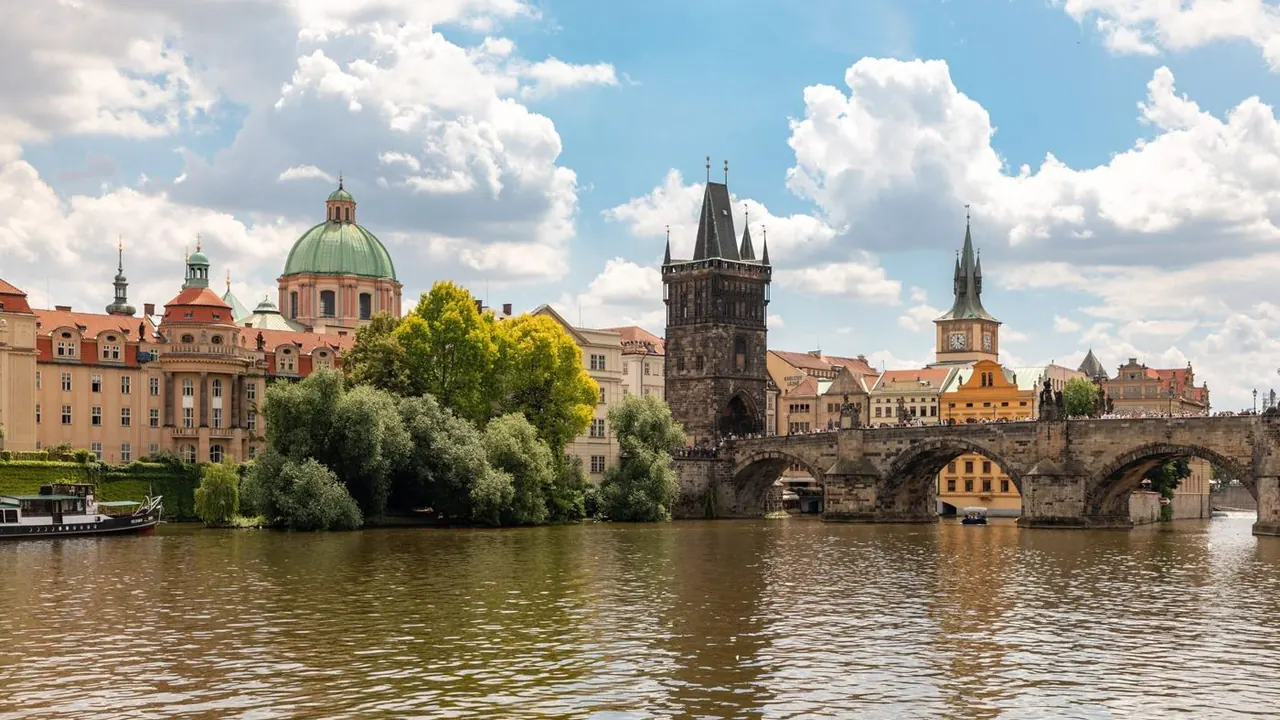
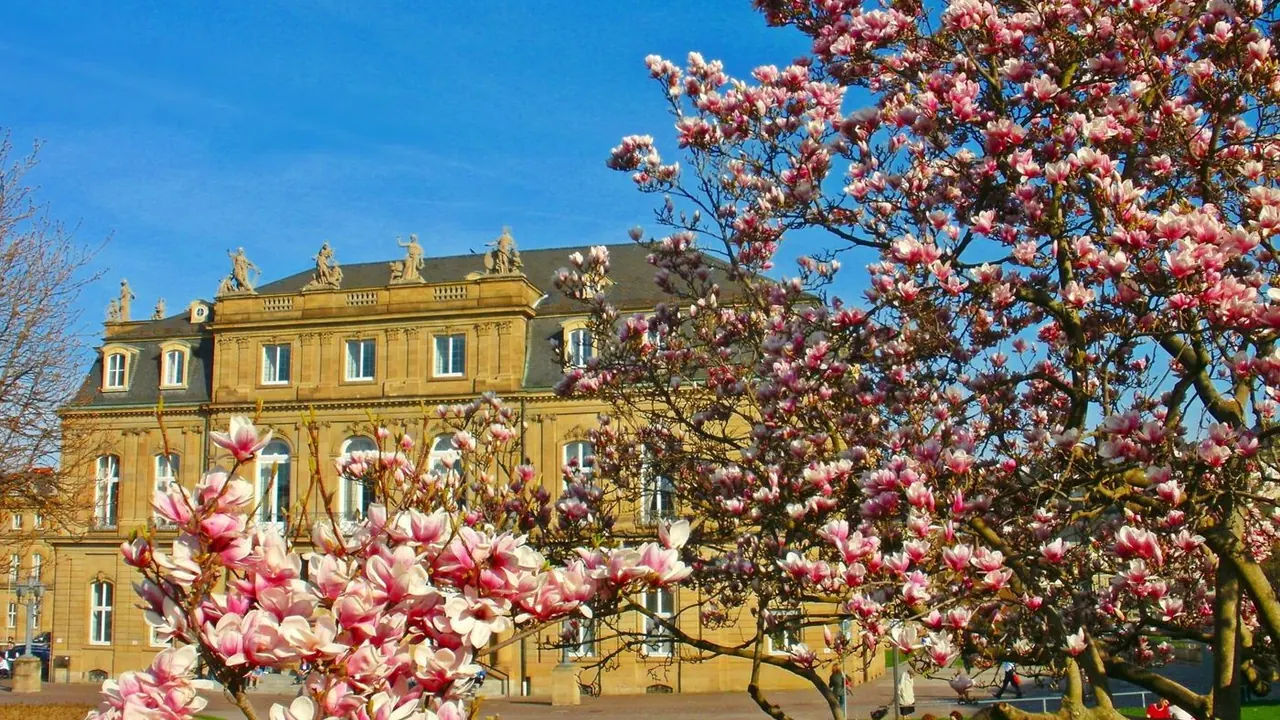
Photos: Prague by Dietmar Rabich, CC BY-SA 4.0, cropped; Stuttgart by Baden de, CC BY 3.0, cropped.
Prague or Stuttgart?
Our verdict in twelve categories, each scored against the same fixed benchmark cities, and the climate month by month, so you can choose for your trip.
Choose Prague for
- nightlife
- prices
- culture and sights
Prague suits a first look at old Central Europe. Its walkable centre survived almost intact, with the castle, the Charles Bridge and the Jewish Quarter all close together, opera houses with Mozart in their history, and evenings in pubs where the beer is cheap and very good. Choose it for sightseeing from morning to night, a livelier night out and a budget that goes further, as long as you can live with crowds in the core and a narrow choice of food.
Choose Stuttgart for
- wellness
- families
- food and drink
Families and slower travellers will find Stuttgart easier. Wilhelma, the car museums and child-friendly beer gardens make days with children simple. The mineral baths at Bad Cannstatt offer a real way to unwind, and Swabian cooking with wine from vineyards inside the city is a step up at the table. It costs more, and its sights lean towards modern design rather than old streets. As a base for Heidelberg, Tübingen and the Swabian Jura, though, it is hard to fault.
Scoreboard
Twelve categories on one fixed scale from 0 to 100. The shaded stretch is the gap between the two.
Your match
Pick a travel style or drag the sliders, and both match scores follow your weighting.
Too close to call, 2 points apart
Wins on nightlife and prices with your weighting.
Wins on wellness and families with your weighting.
What matters to you?
Category by category
What the scores mean for a trip.
Beaches & swimming
Neither city is a place to swim, and in both the summer answer is an outdoor pool. What differs is what lies nearby. Prague has the Dzban reservoir in the Sarka valley and the wooded shores of Slapy about an hour south. Stuttgart's best summer swim is in pools fed by its own mineral springs, and Lake Constance is more than two hours away.
Food & drink
Both cities cook hearty regional food, but Stuttgart's has more range. Maultaschen, Käsespätzle and onion-topped roast beef come with Trollinger and Riesling from vineyards inside the city. Growers open seasonal Besen taverns in their own homes, and there is a serious fine-dining scene.
In Prague, eating revolves around beer: carefully kept lager with roast pork, dumplings and svickova. It is a treat for beer lovers, but the menus are narrower and the streets around Old Town Square are a trap, so the good meals are in Vinohrady, Karlin or Letna.
Culture & sights
For sightseeing, Prague is in a different league. Its centre came through largely intact, so the Castle, the Charles Bridge, the Old Town and the Jewish Quarter form one continuous historic city, with Art Nouveau and rare Cubist buildings on top.
Stuttgart's old core was heavily bombed, and its strengths are modern: the Mercedes-Benz and Porsche museums, the Staatsgalerie and the Weissenhof Estate. These are excellent if you care about design or cars, but two days covers them, where Prague needs three or four.
Nightlife
Prague is the better night out by some way. Pubs in Zizkov, wine bars in Vinohrady and summer beer gardens on Letna stay busy late, and Holesovice has a real techno and alternative scene. The big Old Town clubs, though, lean towards stag parties.
Stuttgart's evenings centre on the bars of Theodor-Heuss-Strasse and quieter wine bars in the Bohnenviertel. Outside the Cannstatter Volksfest and the summer wine village, the city goes to bed early on weekdays.
Nature & outdoors
Outdoors the two are evenly matched, and both offer gentle hills and forest rather than mountains. Prague's green spaces are inside the city, from Petrin Hill to the rocky Divoka Sarka gorge, and its best hiking is among the sandstone towers of Bohemian Switzerland, about two hours away.
In Stuttgart, vineyards and woods start at the edge of the city's basin. The cliffs and caves of the Swabian Jura and the northern Black Forest are each about an hour out, so a full day of walking takes less travel.
Day trips
Both cities make first-rate bases, but the trips have a different character. From Prague the theme is castles and history: Kutna Hora, Karlstejn and Terezin. Dresden is two hours away, and Cesky Krumlov really needs an overnight stay.
Stuttgart's outings are quicker by train. Ludwigsburg and Esslingen are on the S-Bahn, Heidelberg and Tübingen are within the hour, and Hohenzollern, Ulm and Maulbronn are a little further. Strasbourg is reachable for a long day.
Good for families
Stuttgart is the easier city with children. Wilhelma fills a whole day, Killesberg park has its small railway and animal enclosures, and the car museums suit older children. Child-friendly beer gardens and good outdoor pools fill the gaps.
Prague's highlights for children are the excellent zoo at Troja and a storybook castle, but beyond those the list thins quickly. Cobbles, the castle stairs and summer crowds make a pushchair hard work.
Getting around
Prague is the simpler city to get around, on foot or by public transport. You can walk the historic centre end to end, trams reach almost every neighbourhood and run through the night, and three metro lines cover the longer trips. The drawbacks are tiring cobbles and pickpockets on crowded tram lines.
Stuttgart's flat core is just as easy to walk, but the city climbs steeply beyond it. More trips therefore depend on the Stadtbahn, the rack railway or the long Stäffele stairways.
Shopping & style
Stuttgart is the better place to shop, mainly for brands. Königstrasse is one of Germany's longest pedestrian shopping streets, a long-established family department store covers luxury fashion, and the Metzingen outlets are half an hour away.
Prague is better for browsing. Bohemian crystal, garnets and marionettes are the distinctive buys, and the design and vintage shops of Vinohrady and Holesovice beat the souvenir rows of the old centre.
Affordability
Prague is clearly the cheaper of the two. Beer, pub lunches and public transport cost little, and staying a few tram stops out keeps the bill modest, as long as you avoid the restaurants with river views and the exchange booths.
Stuttgart is a prosperous business city, and hotels are expensive whenever a big trade fair is on. Tavern meals are fair for the portions, but a stay costs noticeably more overall.
Live music & performing arts
Both cities offer far more on stage than their size suggests, but their strengths differ. Prague is the place for opera and classical music, with the National Theatre, the State Opera, the Estates Theatre where Don Giovanni premiered, and the Czech Philharmonic at the Rudolfinum. Black-light theatre and marionette shows need no Czech.
Stuttgart is the place for dance. Its ballet is among the most respected in Europe and shares the state theatre with a bold opera company, while the Liederhalle and the long seasons of musicals at Möhringen fill other nights.
Wellness & relaxation
Stuttgart has a real bathing culture and Prague does not. The mineral springs of Bad Cannstatt and Berg feed public baths where you soak in warm carbonated water indoors and out, and the larger ones add saunas.
In Prague the nearest equivalents are hotel spas, massage studios and beer baths that are more novelty than rest. Relaxing there means a grand old coffee house, the Baroque gardens below the castle or a quiet bench on Kampa.
When should you go?
Pick your month. The climate figures are measured averages, not a forecast.
Prague in July
Stuttgart in July
Daytime high, °C
Rainfall in the month, mm
Temperature and rainfall are climate normals, averaged over the years shown. Prague: 1991-2020 normals, Praha-Libus (8.1 km from centre). Stuttgart: 1991-2020 normals, Stuttgart / Neckartal (2.8 km from centre).
Both cities have the same continental pattern, but Prague's winters are harder. January highs reach about 2°C there against 6°C in Stuttgart, and from November to February Prague's days are also the dimmer of the two. From June to August the two are much alike, with highs of around 25°C. That is comfortable for walking the streets and warm enough for an outdoor pool. Summer is the wettest season in both, with rain often coming as heavy showers from May onwards. Prague gets close to 80mm in each summer month, while Stuttgart's August is noticeably drier at about 63mm.
September is the best month in each city: still warm and sunny, and clearly drier than high summer. April is dry too, but cooler. May is pleasantly warm, though it already has rain close to summer levels. From autumn to early spring Prague gets less rain, while Stuttgart stays milder and a little brighter, so it is the gentler choice for a winter trip. Prague's cold, grey months suit people who are happy to spend their time moving between coffee houses and concert halls.
Which traveller are you?
For a culture and arts trip, Prague is the stronger choice. Whole days pass walking from one historic quarter to the next, best begun early before the crowds, and most evenings can end at the opera. In Stuttgart, old streets mean a train out to Ludwigsburg or Heidelberg.
On a relaxing and wellness trip, Stuttgart suits you better. Days can settle into an easy rhythm of a long soak and a sauna, then a stroll through the vineyards and dinner in a wine tavern. In Prague, crowds and noise make rest harder to find.
On a tight budget, Prague makes the same money last more nights, with a train to Kutna Hora on top, as long as you eat away from the old squares. In Stuttgart that money buys a shorter stay and few meals at its best tables.
Before you go
| Measure | Prague | Stuttgart |
|---|---|---|
| Official language | Czech | German |
| Currency | Czech Koruna (CZK) | Euro (EUR) |
| Sockets | CE230 V, 50 Hz | CF230 V, 50 Hz |
| Driving side | Right | Right |
| Time zone | UTC+1, UTC+2 in summer | UTC+1, UTC+2 in summer |
| Emergency number | 112 | 112 |
| Elevation | 235 m | 245 m |
| Main airport | Václav Havel Airport Prague (PRG)12 km from centre178 non-stop destinations | Stuttgart Airport (STR)10 km from centre124 non-stop destinations |
| Public holidays this year | 13 days | 12 days |
By the numbers
| Measure | Prague | Stuttgart |
|---|---|---|
| City population | 1,397,880 | 609,365 |
| People per km² | 2,817 | 2,938 |
| Museums within 10 km | 88 | 42 |
| UNESCO World Heritage sites within 50 km | 1 | 3 |
Where else could you go?
Every comparison below shares a destination with this one, so you can follow Prague or Stuttgart somewhere new.