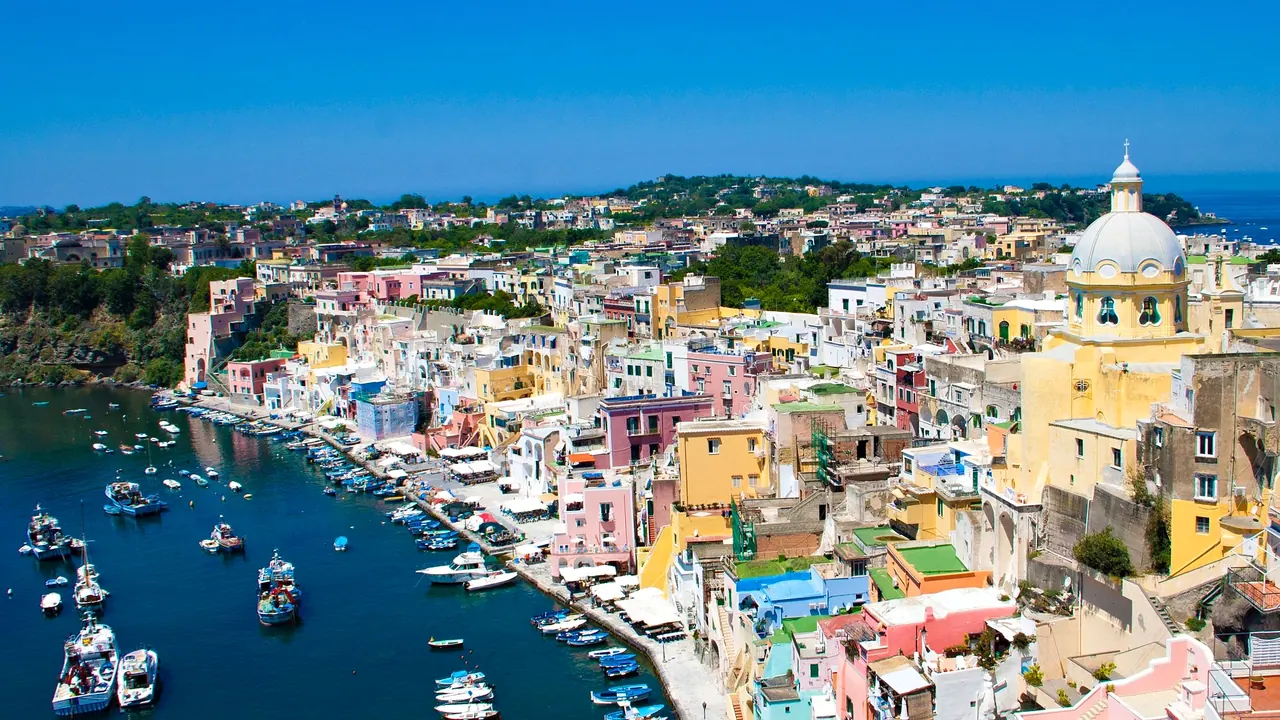
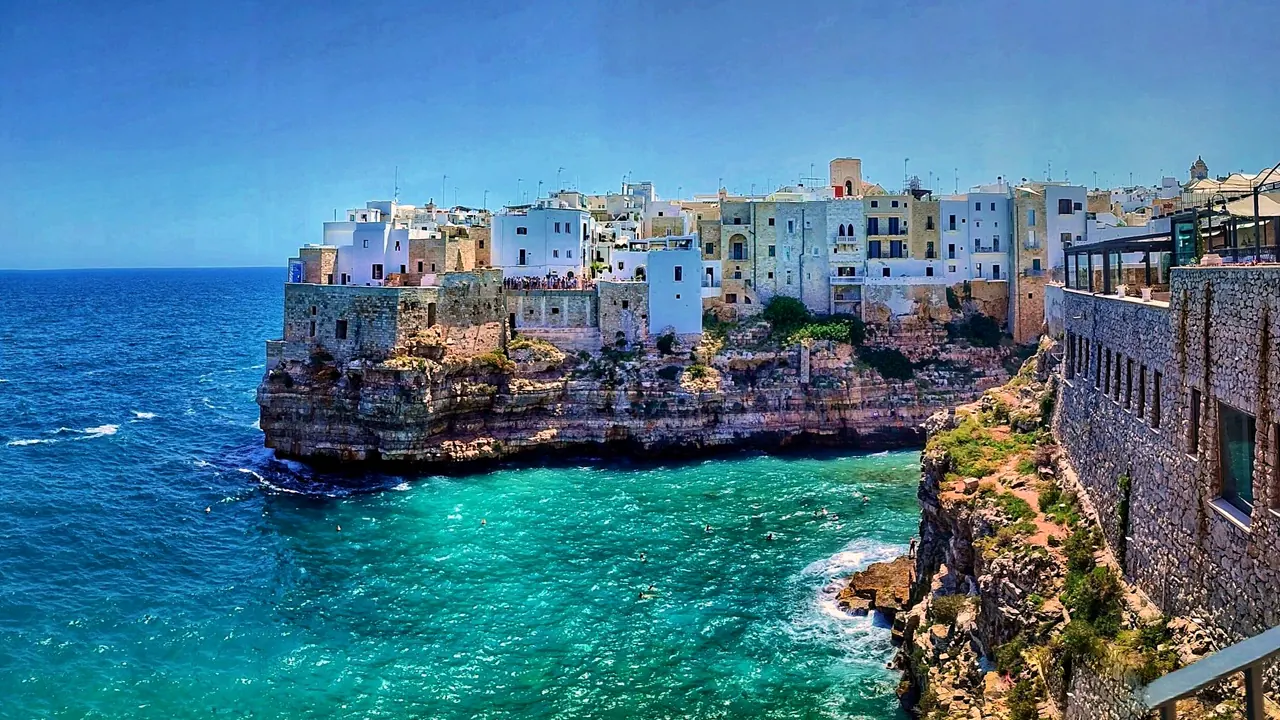
Photos: Procida by DIANA.GRYGAROVA, CC BY-SA 4.0, cropped; Puglia by Acquario51, CC BY-SA 4.0, cropped.
Procida or Puglia?
Our verdict in twelve categories, each scored against the same fixed benchmark cities, and the climate month by month, so you can choose for your trip.
Choose Procida for
- getting around
Procida suits travellers who want one small island and very little to organise. You arrive by ferry, leave the car behind, walk down to the pastel harbour at Corricella for dinner and spend the days on a little volcanic beach or on the boat to Ischia, Pozzuoli or Naples. It is a slow, simple stay, best for couples and for anyone who would rather sit still than tour.
Choose Puglia for
- culture and sights
- nightlife
- live music and the arts
For a bigger and more varied trip with a hire car, Puglia is the better choice. It has longer and sandier beaches, much richer cooking, the baroque of Lecce and the trulli of Alberobello, and summer nights in Gallipoli and Lecce that Procida cannot match. What you give up is ease: the region is long, and seeing it well means driving between towns or splitting the stay between two bases.
Scoreboard
Twelve categories on one fixed scale from 0 to 100. The shaded stretch is the gap between the two.
Your match
Pick a travel style or drag the sliders, and both match scores follow your weighting.
Wins on getting around with your weighting.
Wins on culture and sights and nightlife with your weighting.
What matters to you?
Category by category
What the scores mean for a trip.
Beaches & swimming
Procida's beaches are small coves of dark volcanic sand: Chiaiolella and Ciraccio in the south-west, Chiaia below the cliffs of Terra Murata and little Pozzo Vecchio. They are pleasant and close at hand, but there are only a handful, and in August they fill early.
Puglia has far more coast, and two kinds of it. On the Ionian side of the Salento, around Porto Cesareo and Pescoluse, there are long pale sands and shallow turquoise water. The Adriatic side has limestone platforms and coves at Polignano a Mare and Otranto, and the Gargano's cliffs lie further north. The sea warms just as much in both places, but in Puglia you can choose sand or rock and drive on when one beach is full.
Food & drink
Procida does fish and lemons well: seafood linguine on the Corricella harbour, the island's lemon salad with mint and chilli, and lingua pastry on the Marina Grande waterfront. After a few days, though, the menus repeat, and many places close out of season.
Puglia has a whole regional kitchen to work through. There is orecchiette with turnip tops, fresh burrata and Lecce's pasticciotto, grilled meat at the butcher-grill houses of the Valle d'Itria, and farm meals at the masserie, all with the region's own olive oil, Primitivo and Negroamaro. Neither place is about fine dining, but Puglia gives you far more to eat.
Culture & sights
Procida's heritage fits into a slow day. You can see the walled village of Terra Murata, with its abbey and the Palazzo d'Avalos, a palace that later served as a prison, and then the coloured houses stacked around Corricella.
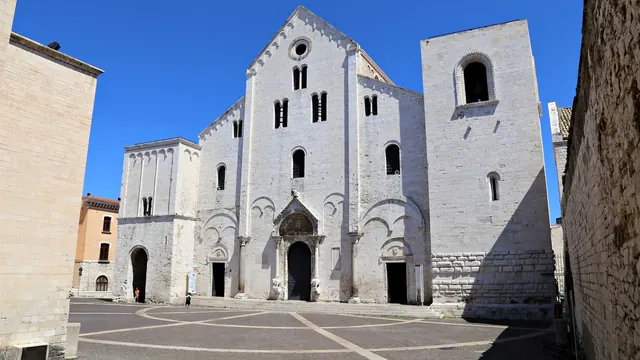
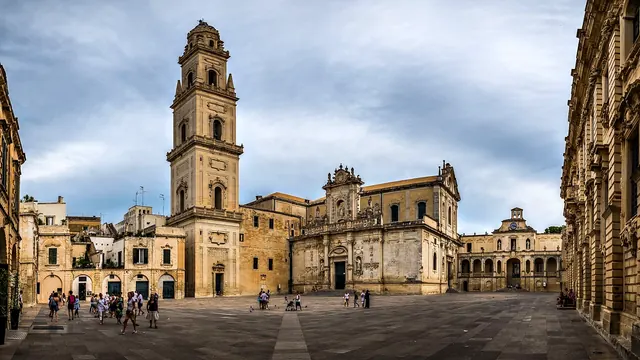
Puglia has a whole region's worth spread across its towns: Lecce's baroque, the trulli of Alberobello, Castel del Monte alone on the Murge and Trani's cathedral at the edge of the sea. Its museums are modest and you need a car to get between the sights, but there is enough for a week of touring, which Procida cannot offer.
Nightlife
On Procida the evening ends with a drink on the waterfront at Marina Grande or Chiaiolella, busy until about midnight in high summer and quiet early the rest of the year. A real night out means a ferry to Naples. Puglia has proper summer nightlife: Gallipoli's beach clubs run into the small hours, Salento beach bars hold DJ nights and Lecce's squares fill with people drinking, while Bari's old town keeps its bars going all year.
Nature & outdoors
Procida is a low island of old craters flooded by the sea and walled lemon gardens. Walks lead to viewpoints over Corricella and the headlands rather than along trails, and the Vivara reserve opens only for guided visits. A few days covers it all.
Puglia has more ground and more variety. You can cycle through the olive groves and dry-stone walls of the Valle d'Itria, walk in the beech woods of the Foresta Umbra, take a boat into the Gargano's sea caves, follow cliff paths near Otranto and Santa Maria di Leuca, and dive off the Tremiti islands. Spring and autumn are the seasons for walking there.
Day trips
Both make excellent bases for outings, but of different kinds. From Procida every trip starts with a boat: Ischia in about a quarter of an hour, Pozzuoli, Baia and Cuma in the Phlegraean Fields, and Naples with Herculaneum beyond. The last ferry home decides how long you can stay.
In Puglia the outings are by road, from one small town to the next: Ostuni, Locorotondo and Martina Franca in the Valle d'Itria, Trani on the Adriatic, Otranto from Lecce, and Matera's cave dwellings about an hour from Bari. You have more freedom over timing, but you do the driving.
Good for families
Procida is safe and small, and the beaches at Chiaiolella and Ciraccio slope gently into the water. Beyond the sea, though, there is nothing made for children. The narrow lanes have no pavements and Corricella is reached by steps, so a pushchair is hard work.
Puglia gives families more to do. There are shallow sandy beaches in the Salento, villas and masserie with pools, the safari and amusement park at Fasano, and the trulli at Alberobello, which children tend to love. You need a car, and the August heat and crowds are the main drawback.
Getting around
Procida is the easier place to get around. It is only a few kilometres across, small buses and three-wheeled taxis cover it from Marina Grande, and ferries and hydrofoils run often to Naples, Pozzuoli and Ischia. The one catch is walking, since the main lanes are narrow, walled and busy with traffic.
Puglia is hard to see without a car. The roads are good, but it takes four to five hours to drive from the Gargano to Leuca. Away from the main railway line through Bari, Polignano a Mare and Lecce, trains and buses are slow and infrequent, and parking near the beaches is tight in August.
Shopping & style
Neither is a shopping destination, but Puglia has more to find. On Procida there is a short stretch of Via Roma with ceramics, limoncello and linen, and anyone who wants real shopping goes to Naples. Puglia has the ceramic workshops of Grottaglie, Lecce's papier-mache studios, linen from the Valle d'Itria, olive oil and wine to carry home, and the high-street chains around Via Sparano in Bari.
Affordability
Procida costs less than the better-known islands in the gulf, but its few guesthouses and flats are firmly priced in July and August, and harbour seafood comes at island prices. You save on a car, and a beach day costs little if you skip the sunbeds.
Puglia works out somewhat cheaper overall, mostly because eating is such good value: trattoria meals, street snacks and local wine cost less than in much of Italy. Its summer rooms and lido loungers are not cheap, and car hire has to go into the budget. In both places the edges of summer give the warm sea for less.
Live music & performing arts
Procida has no theatre or concert hall. Its one great spectacle is the Good Friday procession of the Misteri from Terra Murata down to the sea, and getting back from an evening at the opera in Naples is awkward. Puglia has a real programme: opera and ballet at Bari's Teatro Petruzzelli, a summer opera festival in the courtyard of the ducal palace at Martina Franca, and the Salento's pizzica folk dance, which comes together at Melpignano each August for the Notte della Taranta.
Wellness & relaxation
Both are restful because of their pace rather than their spas. On Procida the calm comes from being on a small island, with long lunches above the harbour, and for proper soaking Ischia's hot springs and thermal gardens are a short boat ride away. Puglia's calm comes from its countryside, with masserie among the olive groves, many with their own pools and spas, and smaller thermal spots at Santa Cesarea Terme and Torre Canne.
When should you go?
Pick your month. The climate figures are measured averages, not a forecast.
Procida in July
Puglia in July
Daytime high, °C
Rainfall in the month, mm
Where the figures come from
Procida's temperatures are measured 32 km from the centre, at Grazzanise.
Puglia's temperatures are measured 64 km from the centre, at Brindisi.
Puglia has no rain gauge within 25 km of the centre, so its rainfall comes from a gridded climate dataset read at the destination rather than from a gauge further away.
Temperature and rainfall are climate normals, averaged over the years shown. Procida: 1991-2020 (rainfall 1971-2000) normals, Grazzanise (32.2 km from centre). Puglia: 1991-2020 (sunshine 1981-2010) normals, Brindisi (64.4 km from centre).
Both follow the southern Italian pattern. The sea is warm enough to swim from June to September and peaks at about 26°C in August. July and August are hot, with highs around 31°C on Procida and a touch lower where Puglia is measured. Midsummer afternoons are better spent in the water than in old towns, so May, June and September are the best months for sightseeing in both.
The real difference is rain. Procida turns wet from September, and October and November bring 153mm and more. Puglia's wettest month stays nearer 83mm, so it is the safer choice for an autumn or spring trip of walking and touring. Procida's sea holds a little more warmth into October, but you take a bigger chance on the weather there.
Which traveller are you?
On a culture and arts trip, Puglia is far ahead. Lecce's baroque, the trulli of Alberobello, Castel del Monte and the cathedrals of Trani and Bari fill a week, with opera at the Petruzzelli. Procida's Terra Murata and Corricella take a day or two.
For a food and nightlife trip, choose Puglia. Burrata, orecchiette, raw sea urchins in Bari and Primitivo wine give far more range than Procida's harbour seafood, and Gallipoli's beach clubs keep going long after Procida's waterfront bars close.
On a relaxing and wellness trip, Procida has the edge because it is so simple. There is no car to hire and no distance to cover, the day is a beach, a long lunch and the evening light on Corricella, and Ischia's thermal pools are a short boat ride away.
Before you go
| Measure | Procida | Puglia |
|---|---|---|
| Official language | Italian | Italian |
| Currency | Euro (EUR) | Euro (EUR) |
| Sockets | CFL230 V, 50 Hz | CFL230 V, 50 Hz |
| Driving side | Right | Right |
| Time zone | UTC+1, UTC+2 in summer | UTC+1, UTC+2 in summer |
| Emergency number | 112 | 112 |
| Main airport | Naples International Airport (NAP)131 non-stop destinations | Bari Karol Wojtyła International Airport (BRI)104 non-stop destinations |
| Public holidays this year | 13 days | 13 days |
By the numbers
| Measure | Procida | Puglia |
|---|---|---|
| Population | 10,092 | 3,866,174 |
| People per km² | 2,347 | 198 |
| Swim season, months above 21 °C | 5 months | 4 months |
Where else could you go?
Every comparison below shares a destination with this one, so you can follow Procida or Puglia somewhere new.
- Ischiavs Procida
- Caprivs Procida
- Amalfi Coastvs Procida
- Korčulavs Puglia
- Amalfi Coastvs Puglia
- Hvarvs Puglia