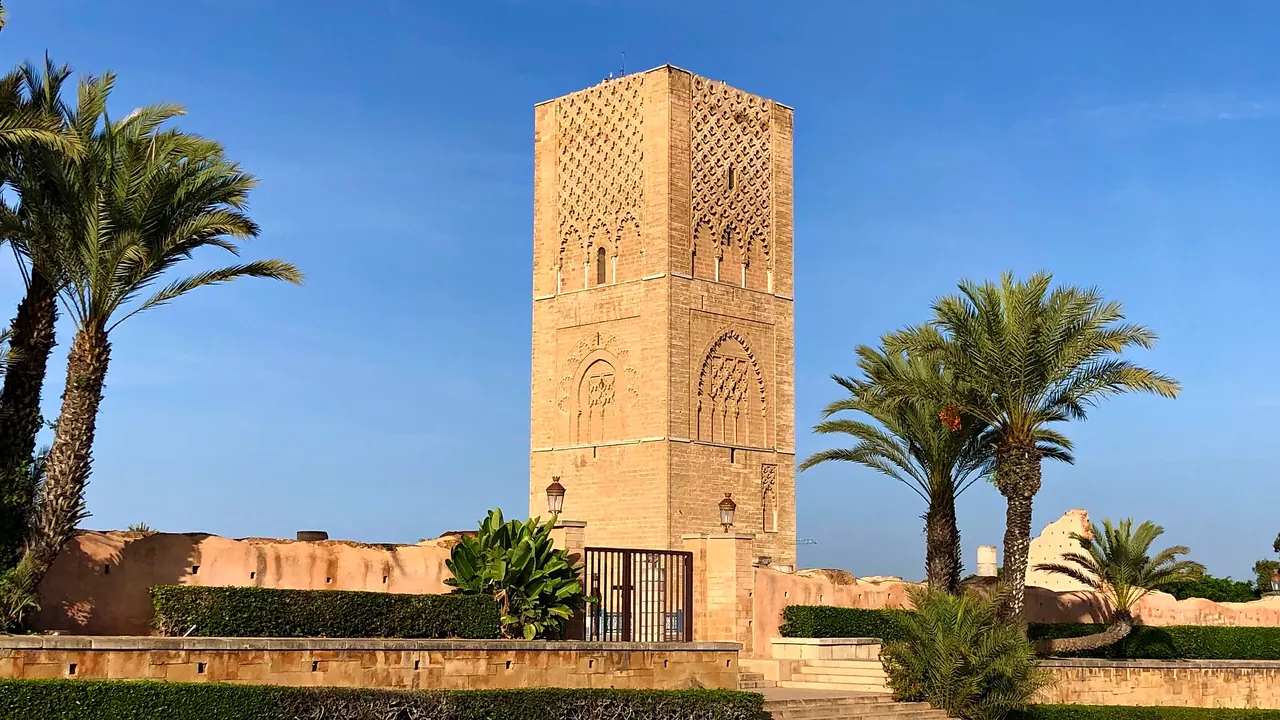
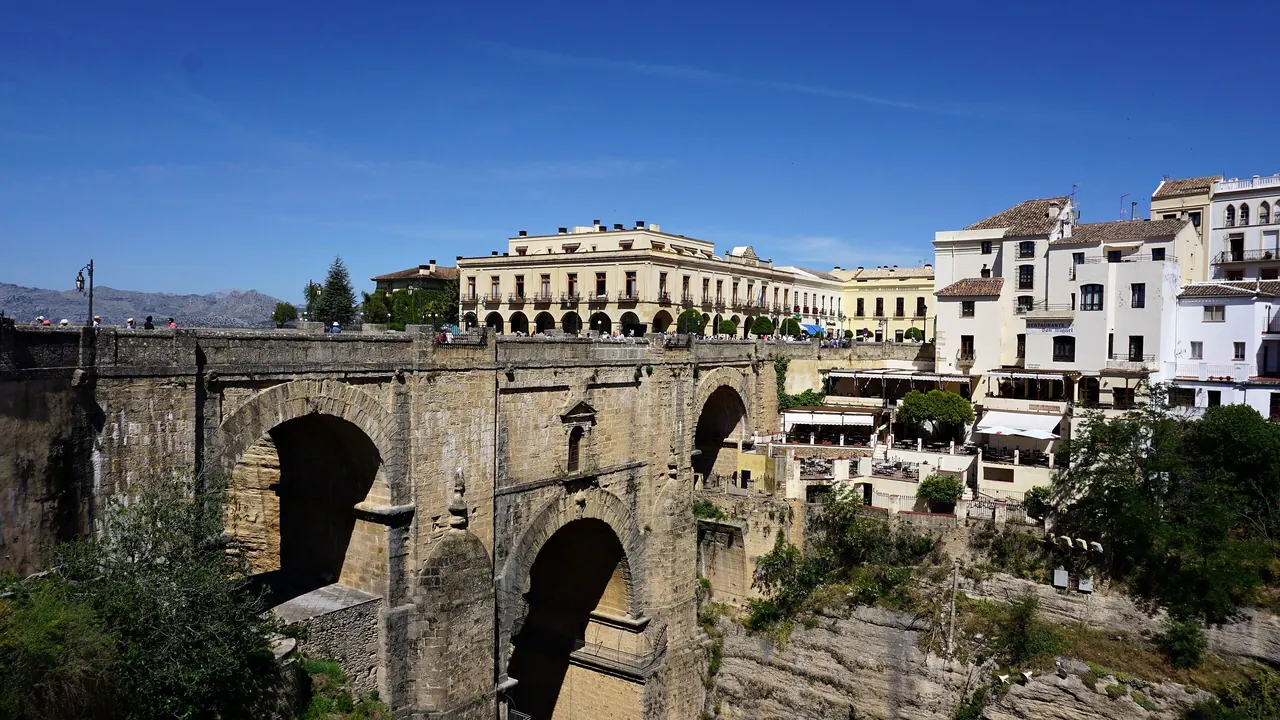
Photos: Rabat by Aemazy, CC BY-SA 4.0, cropped; Ronda by Julia Kostecka, CC BY 2.0, cropped.
Rabat or Ronda?
Our verdict in twelve categories, each scored against the same fixed benchmark cities, and the climate month by month, so you can choose for your trip.
Choose Rabat for
- beaches
- shopping
- wellness
Rabat suits a traveller who wants an easy, unhurried introduction to Morocco. Its UNESCO-listed core of kasbah, Roman ruins and royal mausoleum sits within walking distance of a gentle medina where haggling is mild, and trains run to Casablanca, Meknes and Tangier. It is the better choice with children, on a tighter budget, or for a calm city stay with hammams, an Atlantic breeze and no need for a car.
Choose Ronda for
- nature and the outdoors
- day trips
Ronda is for people who travel for landscape. The town on its gorge is striking, but the real draw is the country around it: the Sierra de Grazalema, the Sierra de las Nieves, the white villages and the Caminito del Rey, all best reached with a hire car. Walkers, climbers and drivers who want a farmhouse with a pool and mountain cooking in the evening will get far more from it than from Rabat, as long as they expect even less nightlife and shopping.
Scoreboard
Twelve categories on one fixed scale from 0 to 100. The shaded stretch is the gap between the two.
Your match
Pick a travel style or drag the sliders, and both match scores follow your weighting.
Wins on beaches and shopping with your weighting.
Wins on nature and the outdoors and day trips with your weighting.
What matters to you?
Category by category
What the scores mean for a trip.
Beaches & swimming
Neither is a beach destination, but Rabat at least has the Atlantic on its doorstep. The city beach below the Kasbah of the Udayas is good for watching surfers and local families, calmer sand lies a short taxi ride south towards Temara and Skhirat, and swimming in the swell means staying close to shore.
From Ronda the sea is a full day out, about 50km of hairpin bends down to the built-up beaches around Estepona and San Pedro. The Mediterranean water there is warmer, but most visitors settle for a pool in the hills.
Food & drink
Rabat has the wider table. You get tagines, Friday couscous, harira and grilled sardines in the medina, snail broth from evening stalls, plain Atlantic fish near the port, and French and Lebanese cooking in Agdal when you want a change.
Ronda's cooking is narrower and heartier: oxtail stew, lamb, game and cured hams from the Serranía, with chestnuts and wild mushrooms in autumn. Wine is where it wins, with tastings at wineries just outside town, while in Rabat alcohol stays mostly inside hotels.
Culture & sights
Rabat has the broader set of sights, spread over nearly two thousand years. There is the blue-and-white Kasbah of the Udayas, the Hassan Tower beside the Mausoleum of Mohammed V, the stork-covered Roman and Marinid ruins of the Chellah and an art deco Ville Nouvelle, with a modern art museum on top.
Ronda's heritage is more compact, and its setting does most of the work. The Puente Nuevo over El Tajo, the old Maestranza bullring, the Arab baths and the rock-cut stairway of the Casa del Rey Moro fill a day or two, where Rabat needs two or three.
Nightlife
Neither town suits a night out, though Rabat keeps a little more going after dark. It has hotel bars and lounges in Agdal and the Hassan district, the riverside promenade and medina streets that stay busy on summer and Ramadan nights. In Ronda, evenings end with tapas and a late dinner around the Plaza del Socorro, and the town is silent by the early hours except during the September fair.
Nature & outdoors
Ronda is far ahead here. The crags, vultures and Garganta Verde ravine of the Sierra de Grazalema, the Spanish fir forests of the Sierra de las Nieves, the gorge path and climbing cliffs, and the Caminito del Rey about an hour away make it a real base for walking.
Rabat's outdoors is flat and gentle by comparison: surfing at the river mouth, paddling on the Bou Regreg, easy rides in the Maamora cork forest and birdwatching at Sidi Boughaba. Its mountains are several hours away.
Day trips
Rabat's strength is the train. The Hassan II Mosque in Casablanca is an hour away, Tangier and Asilah are on the high-speed line, Meknes takes about two hours, and Salé's old medina is a tram ride across the river.
Ronda has more to see within easy reach. You can visit the white villages of Setenil, Zahara, Grazalema and Arcos, the cave paintings of La Pileta and the dolmens of Antequera, or make a long day of Seville or Málaga. Most of it needs a hire car.
Good for families
Rabat is the easier city with children. The medina is calm, the tram is simple, the national zoo has open African enclosures and the gardens at Bouknadel give room to play, though the waves on the city beach need close watching.
Ronda appeals more to older children, who enjoy the bridge, the walk into the gorge and the caves nearby. Steep cobbles, exposed viewpoints and nothing built for children make it harder with small ones, and a country house with a pool works best.
Getting around
Both are walkable at their core, but in different ways. Rabat's sights line the river on broad, flat streets, and a tram, cheap petit taxis and a central station cover the rest, so you never need a car.
Ronda is smaller and you cross it on foot in minutes, though the lanes down into La Ciudad are steep. Its slow buses and few trains are for arriving rather than exploring, and the countryside that makes the town worth the trip is reached by car.
Shopping & style
Rabat gives a shopper much more to do. Rue des Consuls in the medina sells carpets, including the city's own deep-pile style, along with leather, brass and embroidery, the haggling is gentle, and Salé has pottery, while Agdal and the riverside mall cover everyday needs. Ronda has chain shops on Carrera Espinel and souvenirs near the bridge, and its best buys are things to eat and drink: wine, cured meats, olive oil and convent sweets.
Affordability
Rabat is the cheaper of the two day to day. Medina meals, mint tea on café terraces, tram rides and taxis all cost little, and most sights charge almost nothing. The catch is where you sleep, since the capital has more business hotels than budget riads.
Ronda is good value for Spain, with set lunches in the Mercadillo and fairly priced rural houses. Rooms overlooking the gorge cost more, costs rise at Easter and during the fair, and most visitors also need a hire car.
Live music & performing arts
Rabat has more to see on stage. It is home to national institutions such as the Mohammed V National Theatre and the Grand Theatre on the Bou Regreg, and it hosts the Mawazine festival on open-air stages around the city. At other times, Andalusian and chaabi music turns up at cultural centres.
In Ronda, performance mostly means flamenco in small venues for visitors and an occasional programme at the municipal theatre. Its one standout is the Corrida Goyesca, a bullfight in eighteenth-century costume held at the September fair.
Wellness & relaxation
Rabat has a bathing culture that is still part of daily life. You can go to a neighbourhood hammam in the medina or Salé, or to a hotel spa for an argan oil massage. It is also the calmest of Morocco's big cities, and the kasbah's Andalusian garden and the river walks slow the pace further.
In Ronda the Arab baths are for looking at, not bathing, and treatments are limited to a few hotel spas. Rest there comes from the countryside: a farmhouse with a pool among the olive groves, once the coach parties have left.
When should you go?
Pick your month. The climate figures are measured averages, not a forecast.
Rabat in July
Ronda in July
Daytime high, °C
Rainfall in the month, mm
Where the figures come from
Ronda has no weather station within reach, so its figures come from a gridded climate model rather than a measured record, and read a broad area rather than the city itself.
Temperature and rainfall are climate normals, averaged over the years shown. Rabat: 1991-2020 normals, Rabat-Sale (7.6 km from centre). Ronda: 1991-2020 normals, TerraClimate 4 km grid at the town, no weather station within 90 km.
Rabat's Atlantic climate stays mild all year, with daytime highs from 18°C in January to 28°C in August, so its streets are comfortable for walking in every month. Summer is dry and very sunny, and the sea is warm enough for a comfortable swim only from July to September, when it reaches about 23°C. Rain returns in October and is heaviest in November and December.
Ronda's weather changes much more through the year. Its mountain summers reach 32°C in July and August, too hot for long afternoon walks, while winters are cool and wet. The rain comes back in October and lasts until March, reaching about 120mm in December. That makes April, May and the second half of September its best months, warm and mostly dry before the rains begin. In high summer and in midwinter Rabat is the milder of the two, and the Costa del Sol below Ronda is warmest for a swim in August.
Which traveller are you?
For an outdoors trip, Ronda is the clear choice. The limestone sierras of Grazalema and Las Nieves begin at the edge of town, and the Tajo gorge offers a path to its floor and cliffs for climbing. Rabat's estuary and cork forest are tame by comparison.
On a family trip with young children, Rabat works better. The tram and flat boulevards make getting about simple, and the national zoo and Jardin d'Essais give children room to run. Ronda's steep cobbles are hard with pushchairs, and little there is aimed at children.
On a relaxing and wellness trip, Rabat has the edge. Its neighbourhood and hotel hammams offer steam and a black-soap scrub, and the city's slow pace suits long river walks. Ronda's Arab baths are only a monument, though its country farmhouses suit idle days.
Before you go
| Measure | Rabat | Ronda |
|---|---|---|
| Official language | Arabic, Standard Moroccan Tamazight | Spanish |
| Currency | Moroccan Dirham (MAD) | Euro (EUR) |
| Sockets | CE50 Hz | CF230 V, 50 Hz |
| Driving side | Right | Right |
| Time zone | UTC+1 | UTC+1, UTC+2 in summer |
| Emergency number | Police 19/112, ambulance 15, fire 15 | 112 |
| Elevation | 87 m | 724 m |
| Main airport | Rabat-Salé Airport (RBA)9 km from centre45 non-stop destinations | Málaga-Costa del Sol Airport (AGP)60 km from centre165 non-stop destinations |
| Public holidays this year | 11 days | 12 days |
By the numbers
| Measure | Rabat | Ronda |
|---|---|---|
| City population | 515,619 | 33,671 |
| People per km² | 4,370 | 87 |
| Museums within 10 km | 7 | 5 |
| UNESCO World Heritage sites within 50 km | 1 | 0 |
| Swim season, months above 21 °C | 4 months | 1 month |
Where else could you go?
Every comparison below shares a destination with this one, so you can follow Rabat or Ronda somewhere new.