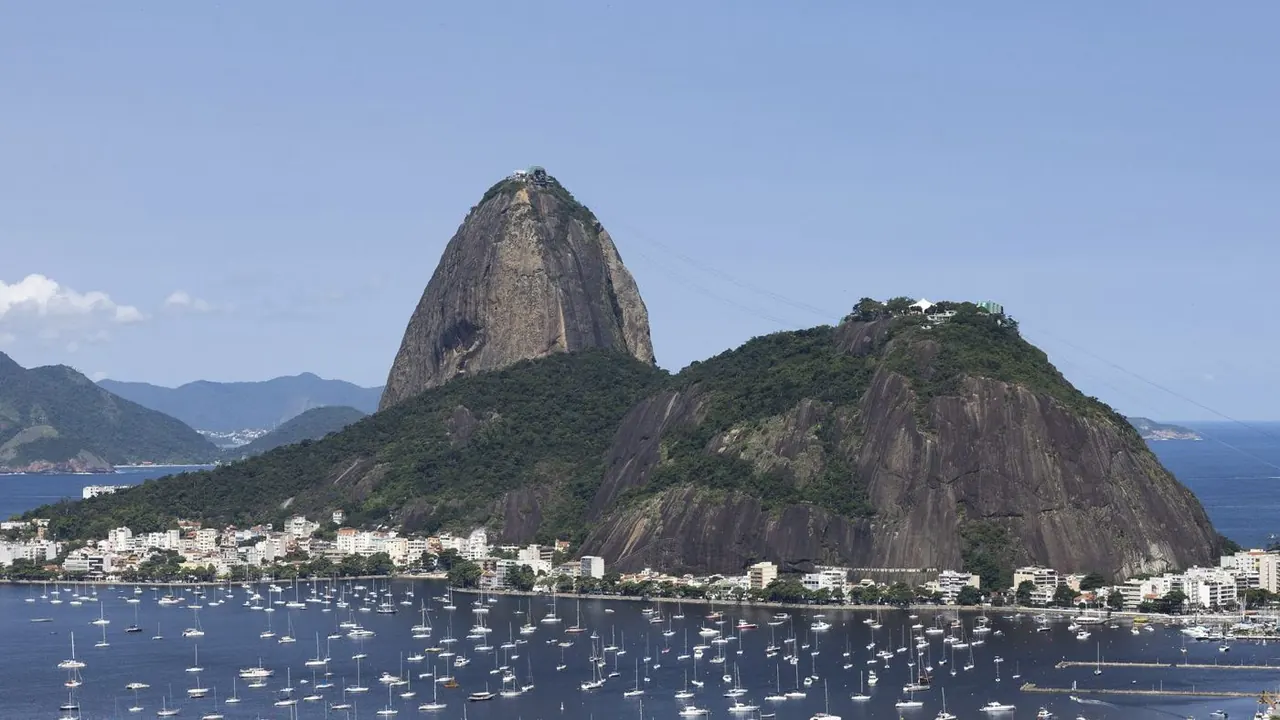
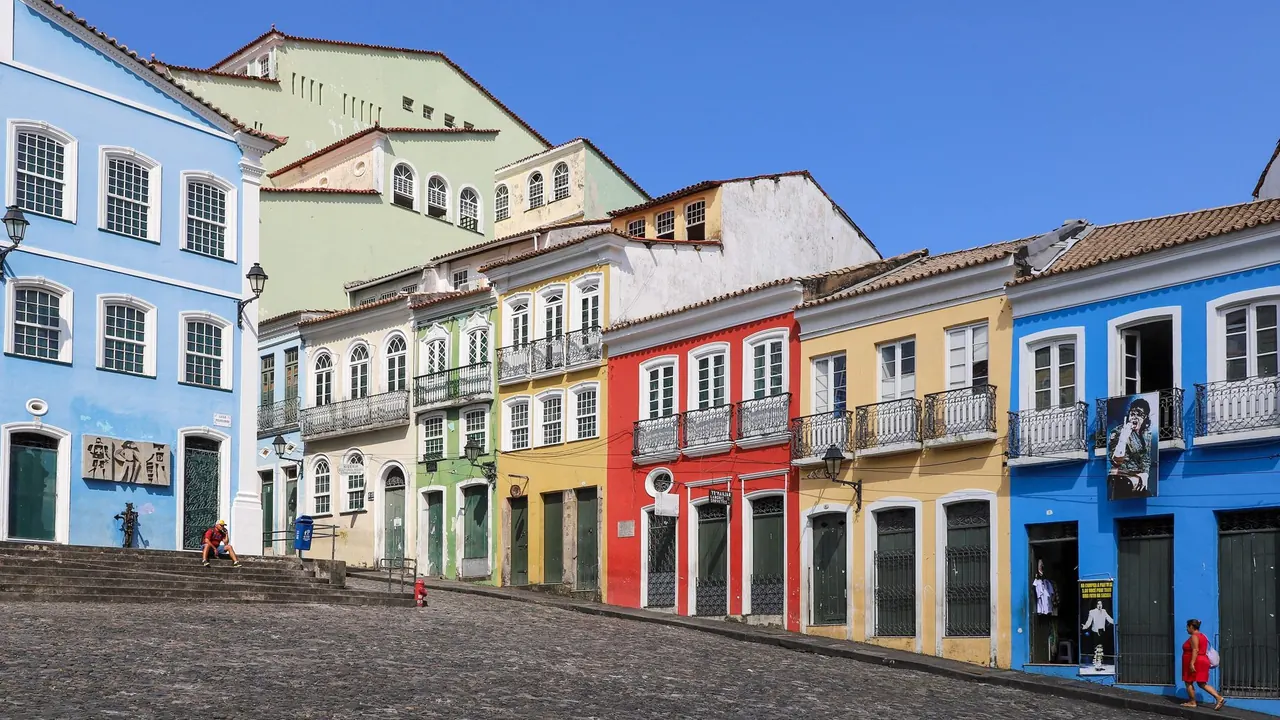
Photos: Rio de Janeiro by Arne Müseler, CC BY-SA 3.0 DE, cropped; Salvador by Paul R. Burley, CC BY-SA 4.0, cropped.
Rio de Janeiro or Salvador?
Our verdict in twelve categories, each scored against the same fixed benchmark cities, and the climate month by month, so you can choose for your trip.
Choose Rio de Janeiro for
- nature and the outdoors
- nightlife
- beaches
Rio de Janeiro suits travellers who want a big, dramatic city where granite peaks, rainforest and long ocean beaches are all a short ride apart. Hikers, surfers and anyone who likes a late night on the streets of Lapa or Botafogo will get more out of it. Families also find more to fill the days, from the Sugarloaf cable car to the aquarium by the port.
Choose Salvador for
- prices
- culture and sights
- day trips
For a trip built around history, music and food with a strong identity of its own, Salvador is the better pick. The baroque churches of the Pelourinho, the Afro-Brazilian heritage and Bahian cooking give it a character Rio cannot match, the sea is warmer and the money goes further. In return, the landscape is flat and the outdoors offers far less.
Scoreboard
Twelve categories on one fixed scale from 0 to 100. The shaded stretch is the gap between the two.
Your match
Pick a travel style or drag the sliders, and both match scores follow your weighting.
Wins on nature and the outdoors and nightlife with your weighting.
Wins on prices and culture and sights with your weighting.
What matters to you?
Category by category
What the scores mean for a trip.
Beaches & swimming
Both cities live on the beach, but Rio's shoreline is the bigger stage. The long sweep of Copacabana, Ipanema and Leblon sits right outside the main hotel districts, and Prainha and Grumari to the west add wilder sand and surf under forested hills. Swim near the lifeguards on the open beaches, and leave the bay shore to the view.
Salvador's sea is warmer all year, and the sheltered cove of Porto da Barra is calmer for a swim than anything on Rio's ocean front. Its busier city stretches can turn murky after rain, though, so the best sand lies north towards Stella Maris or an hour out at Praia do Forte.
Food & drink
Salvador has the cooking you will remember, while Rio's appeal is the ritual of eating out. In Rio that means the boteco, with ice-cold draught chopp, shared pastéis and bolinhos, Saturday feijoada and a juice bar on every corner. Leblon and Botafogo add a wider spread of modern restaurants.
Bahian food is a regional cuisine in its own right, built on dendê oil, coconut milk and dried shrimp. It means acarajé from baianas at street stalls and moqueca simmered in a clay pot, with the São Joaquim market's fruit and spice stalls to wander. Beyond these classics there is less choice, and little high-end dining.
Culture & sights
Salvador has the stronger historic core. The Pelourinho is a whole colonial upper town of cobbled streets and baroque churches, led by the gilded São Francisco. Its Afro-Brazilian heritage, which runs through its churches, museums and squares, is unlike anything elsewhere in Brazil.
Rio's great sights are about setting: Christ the Redeemer and Sugarloaf are icons as much for their views as for themselves. The São Bento monastery, the Real Gabinete Português de Leitura and the port museums reward a visit, but they are scattered among modern blocks and fill a few days rather than a week.
Nightlife
Rio has more to do after dark and keeps going later. Crowds gather under the Lapa Arches, the pavement bars of Botafogo and Humaitá spill across the corners, Leblon has its smarter cocktail bars, and baile funk and big club nights run until dawn.
Salvador's evenings are open-air and easygoing, centred on the bars and late acarajé stalls of Rio Vermelho and on the Pelourinho squares on Tuesdays and at weekends. Outside Carnival week, though, the club scene is small. In both cities, take taxis between districts at night.
Nature & outdoors
This is the widest gap between the two. Rio has mountains and rainforest inside the city: the Tijuca forest with its waterfalls and marmosets, steep hikes up Dois Irmãos and Pedra da Gávea, rock climbing on Sugarloaf and hang-gliding from Pedra Bonita. Serious trekking in the Serra dos Órgãos is about two hours away.
Salvador's setting is low and coastal. Its draws are sailing on the Bay of All Saints, the dunes and dark lagoon of Abaeté, and watching humpback whales from roughly July to October. There is no hiking country nearby, and the Chapada Diamantina needs several days.
Day trips
Salvador has a slightly better spread of outings within reach. The colonial river towns of Cachoeira and São Félix in the Recôncavo, Praia do Forte to the north and the ferry to Itaparica all make easy days out, and boats tour the smaller islands of the bay.
From Rio, the standouts are imperial Petrópolis in the cool hills and the ferry across to Niterói. Paraty, Búzios and Ilha Grande are too far for a day, and weekend traffic out of the city eats into the time.
Good for families
Neither city is easy with children, but Rio gives them more to do. Besides the beach, there are the Sugarloaf cable car, the Corcovado railway, AquaRio, the BioParque zoo and the lagoon cycle path, and Leme and Praia Vermelha have calmer water for small swimmers.
Salvador has the shallow cove at Porto da Barra, the turtles at Praia do Forte and the drumming of the Pelourinho, but little else made for families. The steep cobbles of the old town are hard going with a pushchair, so families there usually settle at a beach resort.
Getting around
Rio's metro runs along the line a visitor uses most, from the centre through Botafogo and Copacabana to Ipanema and Leblon, and the flat beachfront districts are pleasant to walk. Santa Teresa, the Tijuca forest and the western beaches lie off that line and mean a taxi or ride-hailing, often through slow tunnels.
Salvador is built on two levels, with the Lacerda Elevator and a funicular linking the upper town to the port below. The old centre is walkable but steep and cobbled, and its metro mostly serves the airport and bus station. Beyond Barra and the Pelourinho the city spreads far up the coast, so cheap ride-hailing does most of the work.
Shopping & style
Rio has the wider choice, and most of it is for the beach: Brazilian swimwear, linen and resort wear in the boutiques of Ipanema and Leblon, crafts at the Sunday hippie fair and Carnival gear in the crowded Saara streets.
Salvador is better for handmade souvenirs. The Mercado Modelo and the Pelourinho sell carved wood, lace, berimbaus and percussion instruments, but fashion shopping there means malls of Brazilian chains.
Affordability
Salvador stretches a budget further. Simple guesthouses in Barra and the Pelourinho are cheap, street food and meals at beach shacks cost little, and many churches and museums charge a small fee or nothing.
Rio's everyday costs are low too, and its beaches and forest trails are free. But hotels near the sand in Copacabana and Ipanema are dear for what they offer, and the smarter restaurants in Leblon come close to European prices. In both cities room rates rise steeply around Carnival.
Live music & performing arts
Both are music cities first, and the difference is in the beat. Rio has samba and choro in the old houses of Lapa, rodas de samba in squares and small rooms devoted to bossa nova, plus opera and ballet at the Theatro Municipal.
Salvador is about drums: samba-reggae and axé bloco rehearsals in the Pelourinho and Liberdade, Afro-Brazilian dance by the Balé Folclórico most evenings and capoeira breaking out in the squares. Its classical programme at the Teatro Castro Alves is thinner.
Wellness & relaxation
Neither city has a bathing tradition, and in both the spas belong to the big hotels and resorts. In Rio, calm comes from the sea, yoga on the sand, an evening walk round the lagoon and the cooler hills of Santa Teresa. In Salvador, it comes from the slow Bahian pace, a quiet guesthouse in Santo Antônio or a resort up the coast.
When should you go?
Pick your month. The climate figures are measured averages, not a forecast.
Rio de Janeiro in July
Salvador in July
Daytime high, °C
Rainfall in the month, mm
Where the figures come from
Rio de Janeiro has no weather station within reach, so its figures come from a gridded climate model rather than a measured record, and read a broad area rather than the city itself.
Temperature and rainfall are climate normals, averaged over the years shown. Rio de Janeiro: 2001-2020 normals, NASA POWER reanalysis grid, no weather station within 90 km. Salvador: 1991-2020 normals, Salvador (4.5 km from centre).
Rio is most comfortable from May to September, when daytime highs settle in the mid twenties and the rain falls to its lowest, about 45mm a month in midwinter. These are the best months for hiking the forest trails and walking the old centre. From November to March it is hotter and much wetter, with the heaviest downpours in December. The sea is warmest in the southern summer and cools by August and September, when some will find a swim brisk.
Salvador runs on a different calendar. Its wet season falls between April and July, which are also its least sunny months, and April and May are by far the rainiest at nearly 290mm each. Its best spell runs from September to March, with December and January the driest and sunniest months. Highs of around 31°C then make midday walking on the steep streets of the old town tiring. The sea stays warm enough for swimming all year and never drops below 25°C.
Which traveller are you?
On an outdoors trip, Rio is the clear choice. The trails of the Tijuca forest, the climbs up Dois Irmãos and Pedra da Gávea, surfing at Arpoador and hang-gliding over São Conrado put real adventure inside the city. Salvador offers mainly boat trips and coast.
For a culture and arts trip, Salvador has the edge. The baroque churches of the Pelourinho, the Afro-Brazilian Museum and nightly drumming and dance give a deeper sense of history than Rio's scattered sights, although Rio's samba and the Theatro Municipal still compete.
On a tight budget, Salvador goes further. Guesthouses in Barra and the Pelourinho are cheap, acarajé and grilled fish from beach shacks cost little and many sights are nearly free. In Rio, rooms near the beach push costs up quickly.
Before you go
| Measure | Rio de Janeiro | Salvador |
|---|---|---|
| Official language | Portuguese | Portuguese |
| Currency | Brazilian Real (BRL) | Brazilian Real (BRL) |
| Sockets | CN60 Hz | CN60 Hz |
| Driving side | Right | Right |
| Time zone | UTC-3 | UTC-3 |
| Emergency number | Police 190, ambulance 192, fire 193 | Police 190, ambulance 192, fire 193 |
| Elevation | 31 m | 8 m |
| Main airport | Rio de Janeiro Galeão – Tom Jobim International Airport (GIG)12 km from centre54 non-stop destinations | Deputado Luiz Eduardo Magalhães International Airport (SSA)20 km from centre31 non-stop destinations |
| Public holidays this year | 14 days | 14 days |
By the numbers
| Measure | Rio de Janeiro | Salvador |
|---|---|---|
| City population | 6,211,223 | 2,417,678 |
| People per km² | 4,930 | 3,489 |
| Museums within 10 km | 69 | 49 |
| UNESCO World Heritage sites within 50 km | 3 | 1 |
| Swim season, months above 21 °C | 12 months | 12 months |
Where else could you go?
Every comparison below shares a destination with this one, so you can follow Rio de Janeiro or Salvador somewhere new.