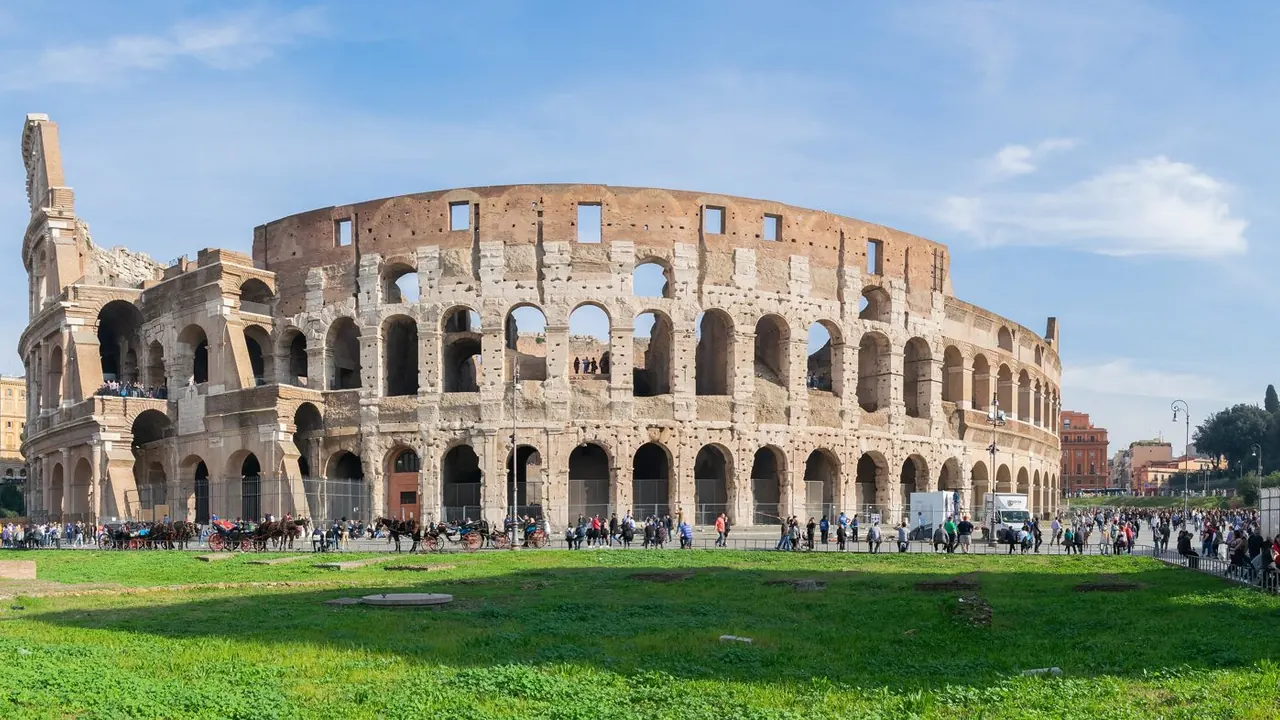
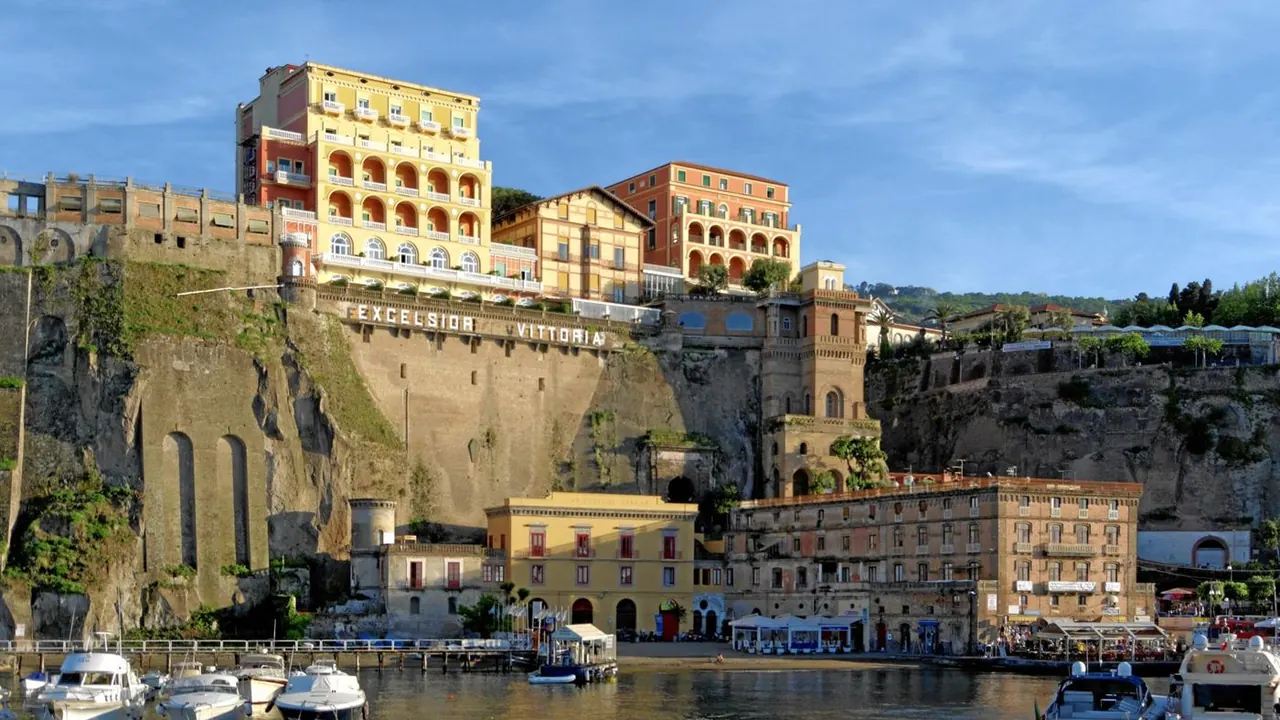
Photos: Rome by Tournasol7, CC BY-SA 4.0, cropped; Sorrento by Berthold Werner, CC BY-SA 3.0, cropped.
Rome or Sorrento?
Our verdict in twelve categories, each scored against the same fixed benchmark cities, and the climate month by month, so you can choose for your trip.
Choose Rome for
- culture and sights
- live music and the arts
- shopping
Rome suits travellers who want the city itself to be the reason for the trip. Ancient ruins, Baroque churches and some of the world's great museums lie within walking distance of one another. Dinners in Trastevere and Testaccio show off a cuisine found nowhere else, and evenings bring aperitivo in the piazzas, opera or concerts. It also has real shopping, and fast trains run out to Florence and Naples.
Choose Sorrento for
- nature and the outdoors
- beaches
- wellness
Pick Sorrento if you would rather look out over the sea than queue for a museum. The town is small and quiet after dark. In return, Pompeii, Capri, Vesuvius and the Amalfi Coast are all a train or ferry ride away, you swim from piers into clear, deep water, and footpaths climb through the lemon terraces behind the town. It suits a slower, outdoor stay where the sightseeing happens on excursions rather than on your doorstep.
Scoreboard
Twelve categories on one fixed scale from 0 to 100. The shaded stretch is the gap between the two.
Your match
Pick a travel style or drag the sliders, and both match scores follow your weighting.
Wins on culture and sights and live music and the arts with your weighting.
Wins on nature and the outdoors and beaches with your weighting.
What matters to you?
Category by category
What the scores mean for a trip.
Beaches & swimming
Rome's sea is a day out rather than part of the stay. It means half an hour on the train to Ostia's dark volcanic sand, where the water is warm in summer but rarely clear and the lidos fill with Romans at weekends.
Sorrento has the sea right below the town. Its lidos stand on wooden piers over clear, deep water and are reached by lift or stairs. The rocks of the Bagni della Regina Giovanna are a short walk away, and Capri's coves are a boat ride off. If you want sand, Ostia is the one place either city offers it, but for swimming in clean water Sorrento is clearly better.
Food & drink
Rome has the richer table. It has a cuisine of its own, built on the four classic pastas, Jewish-style artichokes in the Ghetto and offal dishes in Testaccio. The street food is serious, from fried supplì to pizza al taglio. Trastevere, Monti and Testaccio offer enough trattorias and markets to eat somewhere different every night.
Sorrento's cooking is honest Campanian food but narrower. It means gnocchi alla sorrentina, fish from the bay, lemons in everything and fresh mozzarella from the hill dairies. The best meals are at Marina Grande and in the villages of the peninsula, which hold some celebrated fine dining, but in a small town the choice runs out sooner.
Culture & sights
This is the widest gap between the two. Rome can fill a week and more with the Forum and the Palatine, the Pantheon, the Vatican Museums and the Borghese Gallery. Even the walk between them passes obelisks, aqueduct arches and Baroque fountains.
Sorrento's own sights take a gentle day or two: the cathedral, the cloister of San Francesco, the Museo Correale and the sunken ravine of the Vallone dei Mulini. The famous history of the area, Pompeii and Naples' archaeological museum, lies outside the town.
Nightlife
Rome has far more going on after dinner. Aperitivo spills into the piazzas, and Trastevere's lanes stay busy until late. Monti has small cocktail and wine bars, San Lorenzo draws students, and there is a modest club scene in Testaccio and Ostiense.
A night in Sorrento means a passeggiata along Corso Italia, a drink on a terrace above the bay and Neapolitan songs in a piano bar, and for most of the year the town is quiet early. The last trains and ferries leave in the evening, so a late night in Naples or on Capri means staying over.
Nature & outdoors
Rome's outdoors is mostly parks and gentle countryside. There are the old villa gardens, a bike ride along the Appian Way past tombs and aqueducts, and the crater lakes of the Alban Hills, with the Apennines about ninety minutes away.
Sorrento has the more dramatic landscape right outside the door. Paths climb through terraced groves to Punta Campanella and down to the protected bay of Ieranto, and the Path of the Gods, Monte Faito and Vesuvius are all close. On the water, boats and kayaks explore grottoes and coves that nowhere near Rome can match.
Day trips
Both are outstanding bases, and the difference is in what lies around them. Rome's trips run inland and by fast train: Ostia Antica, the villas of Tivoli, Etruscan tombs, Orvieto and Assisi, with Florence and Naples about ninety minutes away.
Sorrento's excursions sit closer together and often go by sea. Pompeii and Herculaneum are a short local train ride, Capri is a ferry crossing, and in summer boats run to Positano and Amalfi. Rome gives you a wider variety of towns and regions, while Sorrento packs more famous names into a small radius.
Good for families
Neither is built around children, but Rome gives them a little more. Villa Borghese has the zoo, rowing boats and room to run, there is a children's museum, and gladiators and catacombs catch young imaginations. The cost is long queues, summer heat and cobbles that are hard on pushchairs.
Sorrento's flat centre is easier with a pushchair, and the boat to Capri and the train to Pompeii make exciting outings. However, the swimming is from piers into deep water rather than off shallow sand, and many hotels sit on steep lanes without pavements, so families with small children usually want a hotel with a pool.
Getting around
Both are best explored on foot at their core, and in both a car is more trouble than help. Rome's centre is bigger, so the walking is longer and harder on the feet. The few metro lines skirt the historic core, which leaves buses and trams to crawl through traffic.
Sorrento's centre is small and flat, with a lift down to the marinas. The difficulties start when you leave town, on the crowded and delay-prone Circumvesuviana or on full buses along the hairpins of the coast road. That is why ferries are often the most comfortable way to travel.
Shopping & style
Rome is a proper shopping city. The big fashion houses line Via Condotti and the streets off the Spanish Steps, and the mainstream chains are on Via del Corso. Monti has independent boutiques and vintage, antique dealers gather around Via dei Coronari, and the sprawling Porta Portese flea market runs on Sundays.
Sorrento's shopping is mostly souvenirs, a lot of it lemon-themed, with a few genuine local crafts: inlaid wood, sandals made to measure while you wait, linen and cameos. Anyone after fashion goes to Naples or Capri.
Affordability
Neither is cheap, and in both the bill depends mostly on where you sleep. Rome is slightly kinder because everyday life there costs little: espresso standing at the bar, pizza al taglio, free water from the street fountains and churches full of art that cost nothing to enter. The major museums charge heavily, though.
In summer Sorrento charges resort prices for sea-view rooms, sunbeds and private boat trips. Its trains and buses are cheap, and hotel rates fall in spring and late autumn, which brings it closer to Rome off-season.
Live music & performing arts
The gap here is wide. In Rome you can find good live music on almost any night of the year, while in Sorrento you have to go looking for it. Beyond its opera house, Rome has a jazz club scene with a long history, organ and sacred music in its churches, and a summer of festivals and open-air concerts in parks and among ancient ruins. Theatre is mostly in Italian, so visitors come for the music rather than the plays.
Sorrento has little of its own beyond entertainment put on for tourists. There are evenings of Neapolitan song and tarantella, a few chamber recitals in a medieval cloister in summer, and hotel pianists who never go long without 'Torna a Surriento'. For real opera or a full orchestra you go to the San Carlo in Naples, so a performance becomes a planned excursion rather than something you decide on over dinner.
Wellness & relaxation
Neither has a living bathhouse tradition, so the difference is mostly one of mood. Rome's centre is loud with scooters and crowds, and you find calm in the villa gardens or on the Aventine. Real thermal water means a trip out to Bagni di Tivoli or the hot springs near Viterbo.
Sorrento is the easier place to slow down. Its cliff-top hotels have pools and spas above the bay, the lemon groves and old villa gardens set an unhurried pace, and Ischia's thermal gardens by the sea are an hour away by ferry. Spring and autumn are best, when the town is quieter.
When should you go?
Pick your month. The climate figures are measured averages, not a forecast.
Rome in July
Sorrento in July
Daytime high, °C
Rainfall in the month, mm
Where the figures come from
Rome's sunshine is measured 31 km from the centre, at Vigna Di Valle.
Sorrento has no rain gauge within 25 km of the centre, so its rainfall comes from a gridded climate dataset read at the city rather than from a gauge further away.
Sorrento's sunshine is measured 54 km from the centre, at Grazzanise.
Temperature and rainfall are climate normals, averaged over the years shown. Rome: 1991-2020 normals, Roma / Ciampino (15.1 km from centre). Sorrento: 2005-2025 (sunshine 1991-2020, rainfall 1991-2020) normals, Capri (17 km from centre).
The two have almost the same climate. From June to September both are warm enough for the sea, which is at its warmest in August at about 25°C. Sorrento's water stays pleasant a little longer into October. July and August reach highs of 30°C, too hot for long walks between Roman ruins and hard work on the exposed trails above Sorrento. Both are at their best for sightseeing and hiking in May, late September and early October, when days are warm without being punishing.
The rain sets in from October, and November is the wettest month in both. It is much wetter in Sorrento, at 151mm against 117mm in Rome. Winters are mild but damp and grey. That matters less in Rome, where the museums and churches keep a visit worthwhile, than in Sorrento, where most of the pleasure is the sea and the cliff paths.
Which traveller are you?
On a culture and arts trip, Rome is the clear choice. The Colosseum, the Vatican Museums, Bernini's piazzas and Caravaggios in side chapels fill a week. In the evenings there is opera among the ruins of the Baths of Caracalla or concerts at the Auditorium.
For an outdoors trip, Sorrento is the better base. Footpaths run through lemon and olive terraces to Punta Campanella, the Path of the Gods and the crater of Vesuvius are close, and boats and kayaks reach the grottoes and coves around Capri.
On a food and nightlife trip, choose Rome. Its trattorias serve a cooking of their own, from carbonara to Jewish-style artichokes. Evenings run from aperitivo to late nights in the lanes of Trastevere and Monti, while Sorrento goes quiet early.
Before you go
| Measure | Rome | Sorrento |
|---|---|---|
| Official language | Italian | Italian |
| Currency | Euro (EUR) | Euro (EUR) |
| Sockets | CFL230 V, 50 Hz | CFL230 V, 50 Hz |
| Driving side | Right | Right |
| Time zone | UTC+1, UTC+2 in summer | UTC+1, UTC+2 in summer |
| Emergency number | 112 | 112 |
| Elevation | 21 m | 50 m |
| Main airport | Rome–Fiumicino Leonardo da Vinci International Airport (FCO)23 km from centre242 non-stop destinations | Naples International Airport (NAP)30 km from centre131 non-stop destinations |
| Public holidays this year | 13 days | 13 days |
By the numbers
| Measure | Rome | Sorrento |
|---|---|---|
| City population | 2,748,109 | 15,407 |
| People per km² | 2,135 | 1,541 |
| Museums within 10 km | 178 | 6 |
| UNESCO World Heritage sites within 50 km | 7 | 5 |
| Swim season, months above 21 °C | 5 months | 5 months |
Where else could you go?
Every comparison below shares a destination with this one, so you can follow Rome or Sorrento somewhere new.