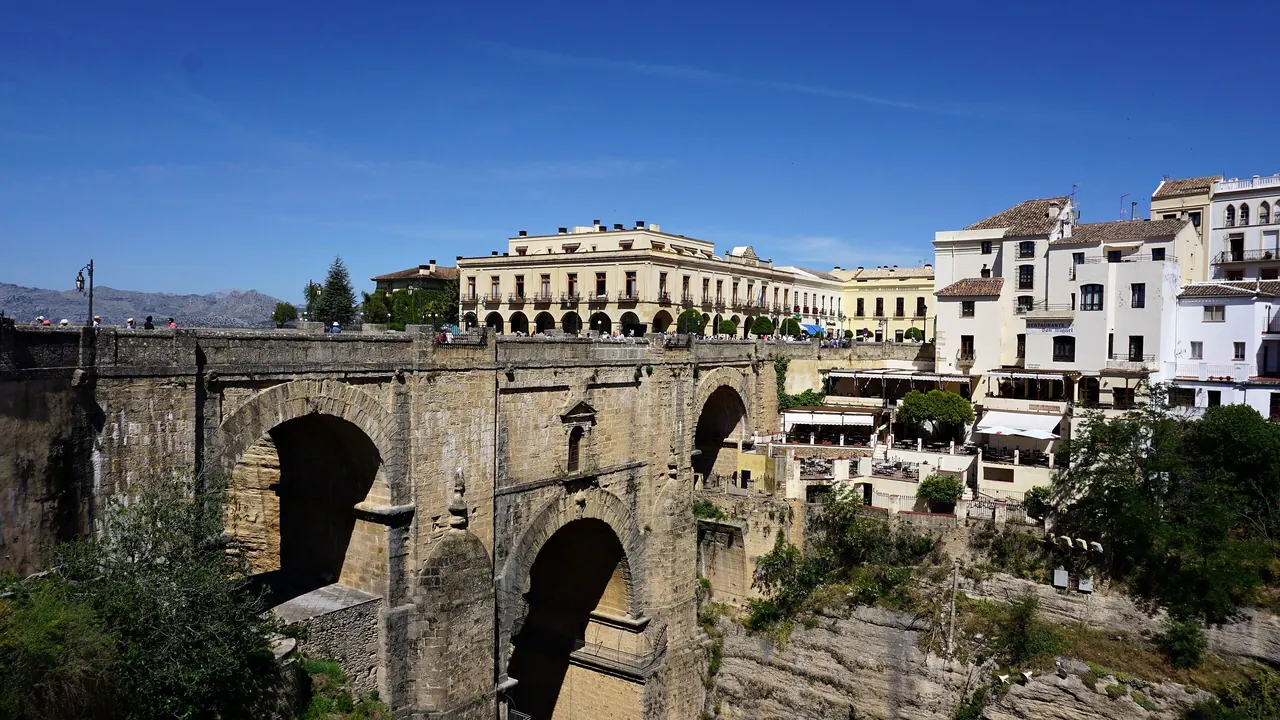
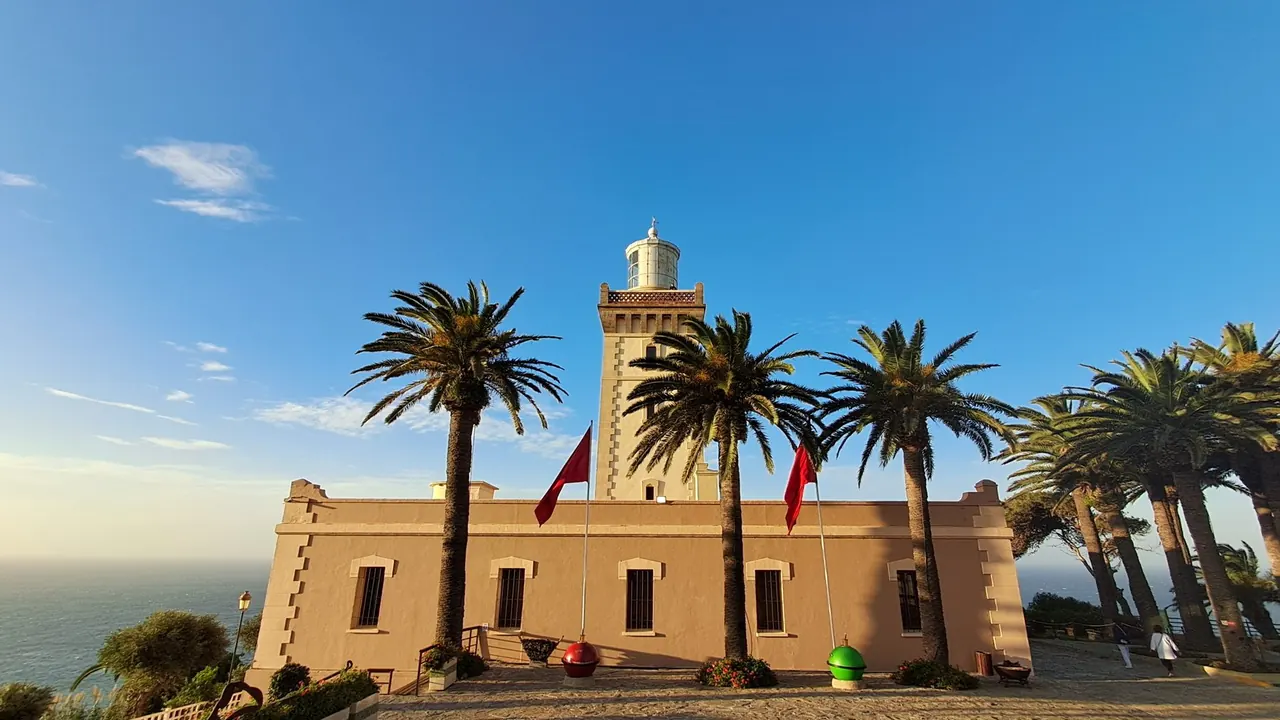
Photos: Ronda by Julia Kostecka, CC BY 2.0, cropped; Tangier by Ideophagous, CC BY-SA 4.0, cropped.
Ronda or Tangier?
Our verdict in twelve categories, each scored against the same fixed benchmark cities, and the climate month by month, so you can choose for your trip.
Choose Ronda for
- nature and the outdoors
- getting around
- day trips
Ronda suits travellers who want mountain country on the doorstep. The gorge path, the Sierra de Grazalema and the Sierra de las Nieves are close by, and a hire car brings the white villages within easy reach. It is a small town you can walk across, best taken slowly over a few days, and its evenings are for tapas rather than a night out.
Choose Tangier for
- beaches
- shopping
- food and drink
Pick Tangier for a trip with more variety in a day. You can bargain in a medina, spend an hour in a hammam, eat fish grilled at the port and reach Atlantic sand by taxi. Day to day it costs less, and its position on the Strait puts Asilah, Tetouan and a ferry to Spain within reach.
Scoreboard
Twelve categories on one fixed scale from 0 to 100. The shaded stretch is the gap between the two.
Your match
Pick a travel style or drag the sliders, and both match scores follow your weighting.
Wins on nature and the outdoors and getting around with your weighting.
Wins on beaches and shopping with your weighting.
What matters to you?
Category by category
What the scores mean for a trip.
Beaches & swimming
Tangier is the one where a swim fits easily into the day. Its sandy bay lies right below the modern town, and the wider, emptier Atlantic beaches around Achakar and Cap Spartel are a short ride west, with surf and cooler water. Asilah's beaches add a further option within the hour. Expect modest dress and Moroccan families filling the sand in high summer.
Ronda has no sea of its own. The built-up sands near Estepona and San Pedro de Alcántara mean a full day out and a winding mountain drive, so in practice most visitors cool off in a pool instead.
Food & drink
Tangier gives you more to eat your way through. Sardines and fish picked at the port, tagines, Friday couscous, bissara at breakfast and snail broth from medina stalls make every walk a chance to snack, and the markets by the Grand Socco show the raw ingredients. Hours on a tea terrace overlooking the Strait are part of the cooking culture too.
Ronda's mountain cooking is heartier and narrower: oxtail stew, lamb, game, cured hams and autumn chestnuts and mushrooms, best found in the Mercadillo's tapas bars. One thing it has that Tangier lacks is wine, from local vineyards, which is easy to order anywhere, whereas in Tangier alcohol is limited to a few places.
Culture & sights
The two are evenly matched, but they offer different things. Ronda's draw is a single dramatic setting: the Puente Nuevo over a gorge more than 100m deep, with the old bullring, the Arab baths, the Mondragón palace and the rock-cut stairway of the Casa del Rey Moro grouped around it.
Tangier's appeal lies in atmosphere and layered history rather than one great view. The kasbah museum, the American Legation, St Andrew's church, the Art Deco Ville Nouvelle and the memory of Paul Bowles and the Beats tell the story of a city between two continents. It takes a day longer to absorb.
Nightlife
Neither town is for a big night, but Tangier gives you somewhat more to do after dinner. There are old bars from the international era, hotel lounges in the Ville Nouvelle and beach clubs on the bay in summer, alongside the evening crowds on the seafront.
In Ronda the evening is the meal itself. The squares around the Plaza del Socorro stay sociable late in summer, and then the town goes quiet, except during the September fair.
Nature & outdoors
Ronda is the stronger base for the outdoors by a wide margin. Two contrasting ranges lie on either side of town: the green, rain-fed crags of Grazalema with the Garganta Verde and its vultures, and the Spanish fir forests of the Sierra de las Nieves. Add climbing on the Tajo cliffs, the Caminito del Rey and copper chestnut woods in the Genal valley each autumn.
Tangier's nature is gentler and closer to the sea: the pine paths and lighthouse at Cap Spartel, the wooded Perdicaris park, migrating storks and raptors over the Strait and dolphin trips. Real mountains, in the Rif and Talassemtane, mean an overnight stay.
Day trips
Both are fine bases for excursions, but the trips themselves are different. From Ronda the outings are rural Andalusia: Setenil under its rock, Zahara below its castle, Grazalema, Roman Acinipo and the painted Pileta cave, all best reached with a hire car.
Tangier's excursions take you further and work without a car. You can go to Asilah's ramparts, Tetouan's medina, Chefchaouen on a long day, Rabat by high-speed train, or cross the Strait to Tarifa by ferry. Seville, Málaga and Gibraltar are within a long day of Ronda, but Tangier gives you two countries.
Good for families
Neither town has much built for children, and both are steep and hard work with a pushchair. Ronda's best family moments are the bridge, the walk into the gorge and the nearby caves. Tangier adds a beach, the seafront promenade and the fun of a ferry ride to Spain, though touts in the medina can wear parents down. In both towns a base with a pool and short outings works best.
Getting around
Ronda is easier on foot. The old town, the bridge, the bullring and the Mercadillo sit a few minutes apart, so once you have parked you hardly need transport. The car comes back into its own for the villages and parks.
In Tangier you can walk the core, but the medina's stairways are confusing at first, and anything beyond the centre, such as Cap Spartel or the Atlantic beaches, means flagging a petit taxi. Its train station and central ferry port do make onward travel simpler than Ronda's slow, infrequent buses.
Shopping & style
Tangier gives a shopper more to do. The medina lanes between the Petit Socco and the kasbah sell slippers, rugs, lanterns and striped Rif cloth, Saturday brings farm women with woven hats to the Grand Socco, and malls on the bay cover the basics. Expect to haggle and to face a persistent hard sell.
Ronda's Carrera Espinel and the souvenir streets by the bridge are ordinary. The best things to bring home from there are wine, cured meats and convent sweets.
Affordability
Tangier stretches a budget further. Grilled fish, street snacks, mint tea and petit taxis all cost little, and medina riads are good value outside high summer. Only alcohol and the smarter sea-view hotels break that pattern.
Ronda is reasonable for Spain, with good-value tapas and set lunches, but a hire car is close to essential and adds a real cost. Rooms overlooking the gorge and stays at Easter or during the fair also cost more.
Live music & performing arts
Tangier has a little more to hear, and it is more varied: Andalusian classical music, gnawa and Jilala at festivals, a long-running jazz festival and the old art-house cinema on the Grand Socco. Its link to the Jajouka musicians adds some musical history.
Ronda's offer is flamenco in small venues and a modest municipal theatre. Its one great spectacle is the Corrida Goyesca at the September fair, so a visitor outside fair time has little to attend in either place.
Wellness & relaxation
Tangier is the better place to relax. Neighbourhood hammams are part of daily life, with separate hours for men and women and a proper scrub with black soap. Riads and hotels offer softer versions, and a rooftop or a café terrace over the Strait slows the day down, though the traffic below can be noisy.
Ronda offers quiet rather than treatments: a town that empties after the coaches leave, and country houses among olive groves where doing nothing by the pool is the point.
When should you go?
Pick your month. The climate figures are measured averages, not a forecast.
Ronda in July
Tangier in July
Daytime high, °C
Rainfall in the month, mm
Where the figures come from
Ronda has no weather station within reach, so its figures come from a gridded climate model rather than a measured record, and read a broad area rather than the city itself.
Temperature and rainfall are climate normals, averaged over the years shown. Ronda: 1991-2020 normals, TerraClimate 4 km grid at the town, no weather station within 90 km. Tangier: 1991-2020 normals, Tanger Aerodrome (9.5 km from centre).
Ronda sits high inland, so its seasons are sharper. Summers are dry but hot, with afternoons around 32°C in July and August that make the steep lanes and gorge paths hard going. Winter days of about 13°C bring the heaviest rain, close to 120mm in December. May, late September and October are the best months for walking. The coast it relies on for swimming warms to 22°C in August, but that is an hour's drive down the mountain.
Tangier has the gentler year. Winter days stay near 17°C, though November to January are as wet as Ronda's, and its summer peak is a little lower. June to September is reliably dry, with the sunniest weeks in July, and the sea is warm enough to swim from July into September. Spring and October are pleasant for long days in the medina and on the headland.
Which traveller are you?
On a beach and sun trip, Tangier is the clear choice. Its city beach is a stroll from the centre and the wider Atlantic sands at Achakar and Cap Spartel are a short taxi ride away, while Ronda's nearest sea is an hour of hairpin bends away.
For an outdoors trip, Ronda wins easily. The Sierra de Grazalema and the Sierra de las Nieves begin just beyond town, the Tajo has climbing routes and a path to its floor, and the Caminito del Rey is close. Tangier's best walking is one headland.
On a relaxing and wellness trip, Tangier has the real thing: neighbourhood hammams with steam, black soap and a kessa scrub, plus gentler riad spas. In Ronda the Arab baths are a monument only, and the calm comes from country hotels with pools.
Before you go
| Measure | Ronda | Tangier |
|---|---|---|
| Official language | Spanish | Arabic, Standard Moroccan Tamazight |
| Currency | Euro (EUR) | Moroccan Dirham (MAD) |
| Sockets | CF230 V, 50 Hz | CE50 Hz |
| Driving side | Right | Right |
| Time zone | UTC+1, UTC+2 in summer | UTC+1 |
| Emergency number | 112 | Police 19/112, ambulance 15, fire 15 |
| Elevation | 724 m | 56 m |
| Main airport | Málaga-Costa del Sol Airport (AGP)60 km from centre166 non-stop destinations | Tangier Ibn Battuta Airport (TNG)11 km from centre50 non-stop destinations |
| Public holidays this year | 12 days | 11 days |
By the numbers
| Measure | Ronda | Tangier |
|---|---|---|
| City population | 33,671 | 1,275,428 |
| People per km² | 87 | 6,393 |
| Museums within 10 km | 5 | 6 |
| UNESCO World Heritage sites within 50 km | 0 | 1 |
| Swim season, months above 21 °C | 1 month | 3 months |
Where else could you go?
Every comparison below shares a destination with this one, so you can follow Ronda or Tangier somewhere new.