Photos: Ronda by Julia Kostecka, CC BY 2.0, cropped; Zaragoza by Pablo Alejandro Araujo Granda, CC BY-SA 2.0, cropped.
Ronda or Zaragoza?
Our verdict in twelve categories, each scored against the same fixed benchmark cities, and the climate month by month, so you can choose for your trip.
Choose Ronda for
- nature and the outdoors
- beaches
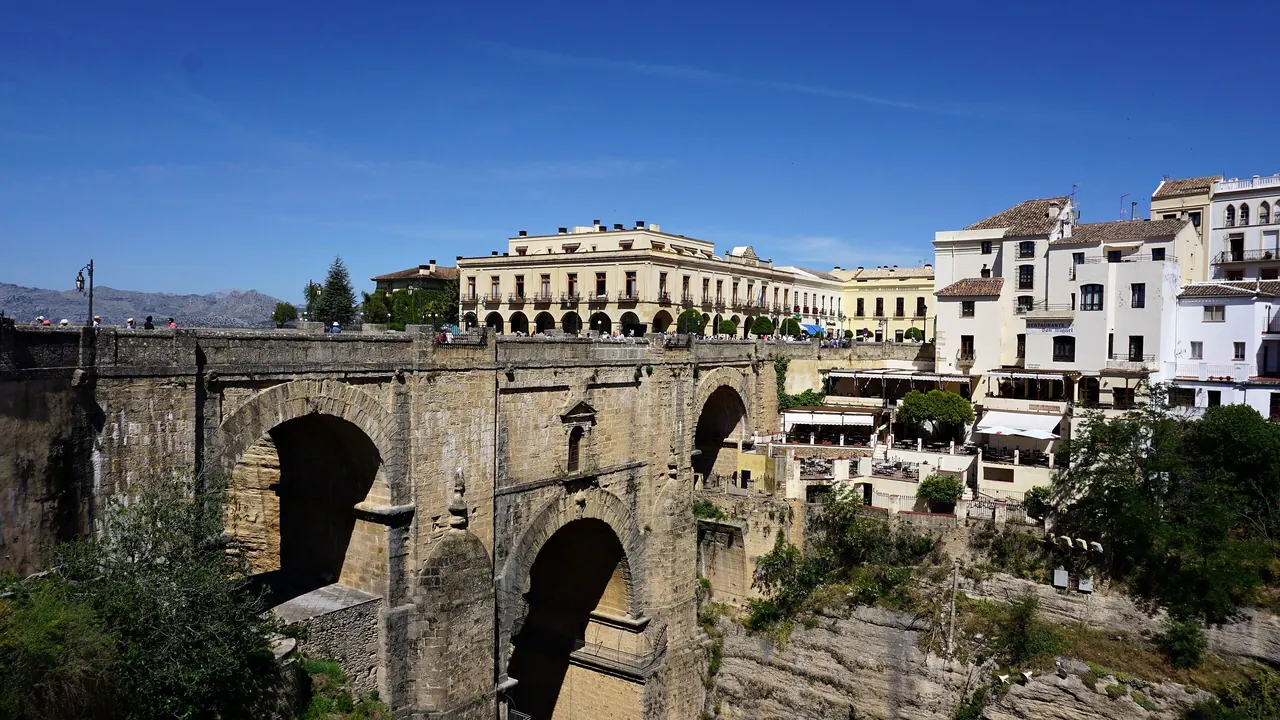
Ronda is for travellers who come for the land rather than the town. The gorge and its bridge make a memorable first day, but the real reason to stay is the mountain country around it: walks in the Sierra de Grazalema and the Sierra de las Nieves, and drives to white villages such as Setenil and Zahara. It suits walkers and couples with a hire car who are content with a good dinner and a quiet night, ideally in a farmhouse with a pool.
Choose Zaragoza for
- nightlife
- families
- live music and the arts
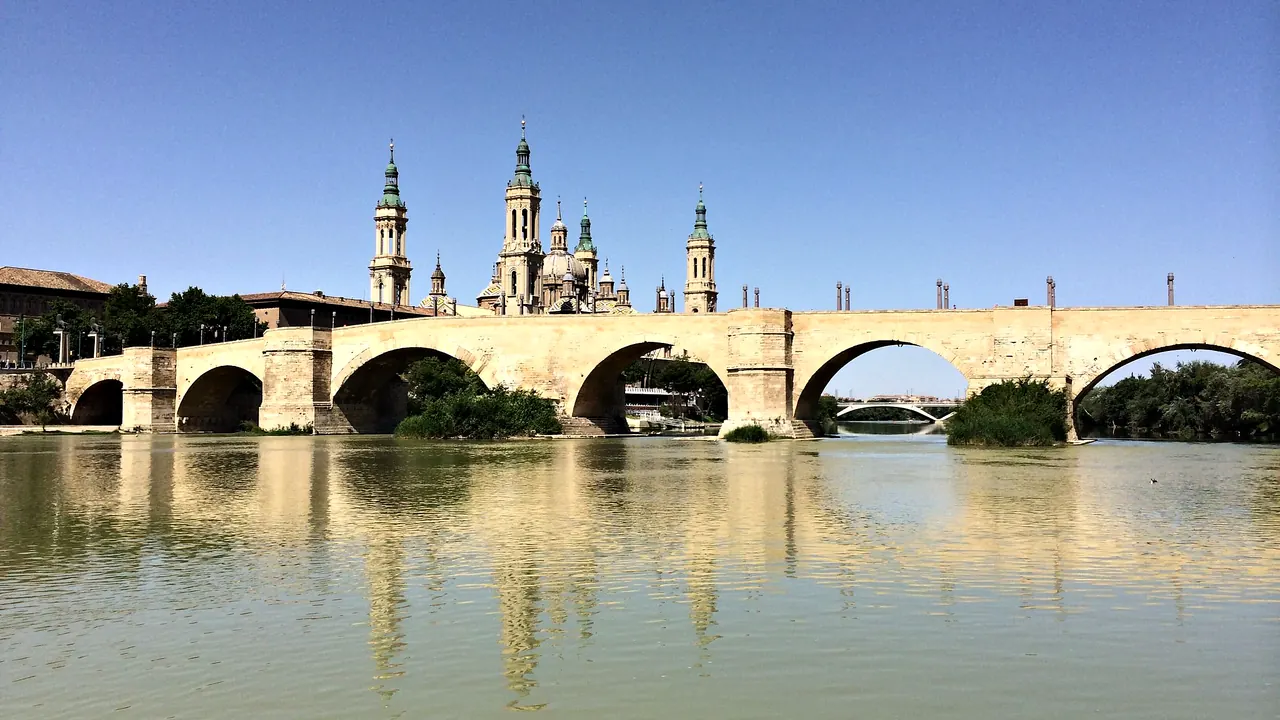
Choose Zaragoza if you want a proper city with no car needed. The centre is flat and served by a tram, the Pilar basilica, the Aljafería and the Roman remains fill two or three days, and evenings run from the tapas lanes of El Tubo to student bars that stay open late. It is the easier place with children, and the high-speed line puts Madrid and Barcelona within a day's reach.
Scoreboard
Twelve categories on one fixed scale from 0 to 100. The shaded stretch is the gap between the two.
Your match
Pick a travel style or drag the sliders, and both match scores follow your weighting.
Wins on nature and the outdoors and beaches with your weighting.
Wins on nightlife and families with your weighting.
What matters to you?
Category by category
What the scores mean for a trip.
Beaches & swimming
Neither is a beach destination, but Ronda at least has the sea within reach. The sandy, built-up beaches around Estepona and San Pedro de Alcántara are about an hour's drive down a winding mountain road, which makes a realistic day out if you have a car.
From Zaragoza the Mediterranean is more than 200km away, too far for a casual swim, and nobody bathes in the Ebro. In both places summer swimming really means a pool: rural-house and hotel pools around Ronda, municipal open-air pools in Zaragoza.
Food & drink
Zaragoza is the better place to eat. Its strength is El Tubo, a tangle of lanes off Plaza de España where every bar is known for one dish, so dinner becomes a crawl of croquetas, mushroom skewers and anchovies, washed down with cheap reds from Cariñena or Somontano. The modernist Mercado Central adds a market morning, and ternasco lamb and borage with clams give the city its own dishes.
Ronda's mountain cooking is honest and filling: oxtail stew, game, cured hams, and chestnuts and wild mushrooms from the Genal valley in autumn. Most of its good tapas bars are in the Mercadillo, and the gorge-side terraces are best avoided. There is less of it, though, and a few days exhaust the choice. Neither town offers much fine dining or food from other countries.
Culture & sights
The two are close, but Zaragoza offers more to see while Ronda has the more dramatic setting. Ronda's sights are its gorge and the eighteenth-century Puente Nuevo across it, backed by a tight cluster of heritage: one of Spain's oldest bullrings, well-preserved Arab baths and the rock-cut stairway of the Casa del Rey Moro. It is a day or two at an easy pace.
Zaragoza covers more centuries. It has Roman Caesaraugusta in underground museums and an open-air theatre, the Islamic Aljafería palace, the Mudéjar wall of La Seo, and Goya's ceilings in the Pilar basilica, plus a museum devoted to him. That is two or three days of indoor sightseeing set in a largely modern city.
Nightlife
Zaragoza has an actual night out. After the tapas, students pack the bars around Plaza San Felipe, Plaza Santa Marta and the Casco from Thursday to the weekend. There are cocktail and music bars and a few clubs that run into the early morning, and during the Fiestas del Pilar in October the streets stay full until dawn.
Ronda's evening is the meal itself: late dinners and a drink around the Plaza del Socorro, after which the town goes quiet. Only the September fair keeps it up late.
Nature & outdoors
This is Ronda's strongest suit. You can walk out of town and down to the foot of the Tajo. The Sierra de Grazalema to the west is unusually green, with the Garganta Verde ravine and griffon vultures, and to the east the Sierra de las Nieves protects rare Spanish fir forest. The Caminito del Rey and the copper chestnut woods of the Genal in autumn are both within easy driving distance.
Zaragoza sits on dry, wind-scoured steppe, so nature close to the city means the Ebro riverside path and the big parks. The real landscapes are drives away: the beech woods of Moncayo, the red towers of the Mallos de Riglos and the Bardenas badlands, with the Pyrenees about two hours north.
Day trips
The choice of outings is about equal, but they work in different ways. Ronda's are a car journey through the mountains: Setenil under its rock overhangs twenty minutes away, Zahara and Grazalema within the hour, plus Roman Acinipo and the painted Cueva de la Pileta. Seville and Málaga are possible but take up to two hours by road.
Zaragoza's trump card is the high-speed train, which reaches Madrid or Barcelona in about an hour and a half. Driving around Aragon brings in the castle of Loarre, the ruined old town of Belchite, Goya's birthplace at Fuendetodos and, with an early start, Albarracín and the Mudéjar towers of Teruel.
Good for families
Zaragoza suits children much better. The centre is flat with large car-free squares, the riverside aquarium and the Parque del Agua fill a day, Parque Grande has a small amusement park, and the October fiestas bring giants parades and funfairs. The summer heat is the main drawback.
Ronda has nothing built for children. Older ones will enjoy the bridge, the walk into the gorge and the cave visits, but the steep cobbled lanes defeat pushchairs and some viewpoints are high and unfenced. Families do best in a country house with a pool, making short trips from there.
Getting around
Zaragoza is the easier of the two without a car. The main sights lie on flat ground between the Pilar and the Aljafería, and a tram, a dense bus network and bike-share stations cover the rest. A car only matters for rural Aragon.
Ronda is small enough to walk, but the lanes down into La Ciudad are steep. The trains and buses are fine for arriving and too slow and infrequent for exploring, so the villages and natural parks effectively require a hire car, and parking in the old town is tight.
Shopping & style
Zaragoza at least has a city's worth of shops. You will find the main chains and a classic department store on Paseo de la Independencia, older pastry shops on Calle Alfonso I, and ceramics from nearby Muel as a local souvenir. Ronda's Carrera Espinel is an ordinary small-town high street, and its best buys are wine, cured meats and convent sweets. Neither caters for luxury or design shopping.
Affordability
Both are good value next to Spain's big tourist cities, but the costs fall in different places. In Zaragoza you need no car, the Pilar basilica is free to enter, and central hotels are reasonable except during the October fiestas.
In Ronda the tapas and set lunches in the Mercadillo are cheap, but a hire car is close to essential. Rooms with gorge views, Easter and the September fair all push prices up.
Live music & performing arts
Zaragoza has a season to plan around. The Auditorio brings in touring orchestras, chamber music and jazz, and the Teatro Principal stages plays and dance. Aragon's leaping jota comes into its own at the Fiestas del Pilar.
Ronda's offer is mainly flamenco in small venues aimed at visitors, plus the Corrida Goyesca, the costumed bullfight held each September in its historic ring. On most evenings there is little else to attend.
Wellness & relaxation
Neither place is a spa destination, and both have little more than a handful of hotel spas. The real difference is the kind of rest on offer. Ronda's is the countryside. Base yourself in an old farmhouse among the olive trees and the days come down to a swim, a book and the sierra on the horizon, and even the town itself is calm by evening once the day visitors have gone. Its Arab baths are a ruin to walk round, not a place to bathe. This suits couples who want to switch off completely.
Zaragoza's rest is a city kind: a long Aragonese lunch, a stroll by the Ebro as the day cools and shade under the trees of Parque Grande. For real thermal water you make a day of it at the historic spa town of Alhama de Aragón. It suits travellers who unwind best with a little to do around them, though on the open plain the summer heat and the cierzo wind are tiring.
When should you go?
Pick your month. The climate figures are measured averages, not a forecast.
Ronda in July
Zaragoza in July
Daytime high, °C
Rainfall in the month, mm
Where the figures come from
Ronda has no weather station within reach, so its figures come from a gridded climate model rather than a measured record, and read a broad area rather than the city itself.
Temperature and rainfall are climate normals, averaged over the years shown. Ronda: 1991-2020 normals, TerraClimate 4 km grid at the town, no weather station within 90 km. Zaragoza: 1991-2020 (rainfall 1971-2000) normals, Zaragoza / Aeropuerto (11.2 km from centre).
Ronda has a wet mountain winter. From October to March the rain comes often and heavily, peaking at around 120mm in December, and nights up on the plateau are cold. April, May and late September into October are the months for walking the gorge and the sierras. June to August are almost completely dry but afternoons reach 32°C, too hot for hiking. July to September are also the months for a day on the Costa del Sol, where the sea warms to about 22°C.
Zaragoza is much drier in winter, and no month gets much over 50mm of rain, so a winter city break is less likely to be rained off. Midwinter days are a little cooler than Ronda's and the cierzo wind makes them feel colder. Spring and early autumn are the best time for walking the streets. July is fierce on the open plain, with highs of 33°C and long, cloudless days, so summer sightseeing is best done in the morning and evening.
Which traveller are you?
For an outdoors trip, Ronda is the clear choice. It has a path down into its own gorge, green limestone sierras with vultures and Spanish fir on either side, cliffs for climbers and the Caminito del Rey within an hour. Zaragoza's best scenery needs longer drives across dry steppe.
On a family trip with children, Zaragoza is far easier. Pushchairs cope with its flat centre, there is a river aquarium and the Parque del Agua playgrounds, and the tram cuts down the walking. Ronda's steep cobbles and exposed viewpoints suit older children more than young ones.
For a food and nightlife trip, Zaragoza wins. A bar crawl through El Tubo, with each counter known for a speciality, leads on to the student bars and late clubs of the Casco. Ronda's evenings end after a hearty mountain dinner and a drink in the Plaza del Socorro.
Before you go
| Measure | Ronda | Zaragoza |
|---|---|---|
| Official language | Spanish | Spanish |
| Currency | Euro (EUR) | Euro (EUR) |
| Sockets | CF230 V, 50 Hz | CF230 V, 50 Hz |
| Driving side | Right | Right |
| Time zone | UTC+1, UTC+2 in summer | UTC+1, UTC+2 in summer |
| Emergency number | 112 | 112 |
| Elevation | 724 m | 200 m |
| Main airport | Málaga-Costa del Sol Airport (AGP)60 km from centre166 non-stop destinations | Zaragoza Airport (ZAZ)13 km from centre12 non-stop destinations |
| Public holidays this year | 12 days | 12 days |
By the numbers
| Measure | Ronda | Zaragoza |
|---|---|---|
| City population | 33,671 | 693,091 |
| People per km² | 87 | 712 |
| Museums within 10 km | 5 | 22 |
| UNESCO World Heritage sites within 50 km | 0 | 1 |
| Swim season, months above 21 °C | 1 month | - |
Where else could you go?
Every comparison below shares a destination with this one, so you can follow Ronda or Zaragoza somewhere new.