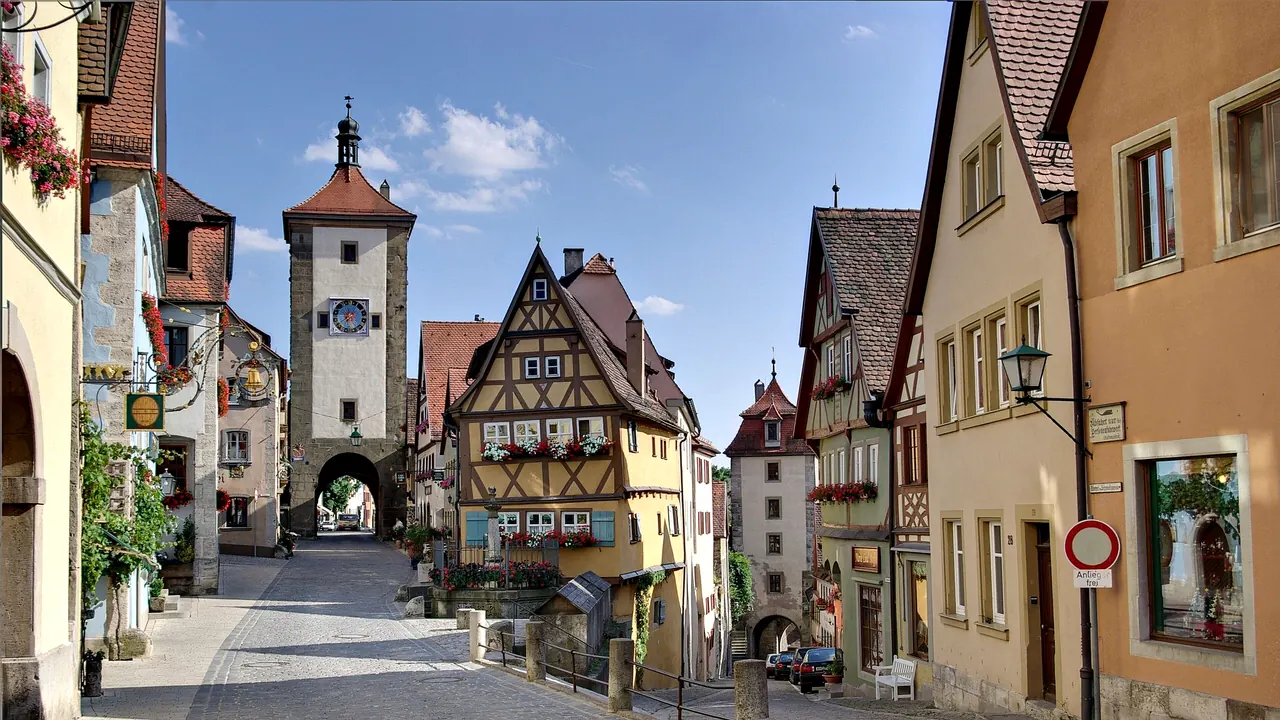
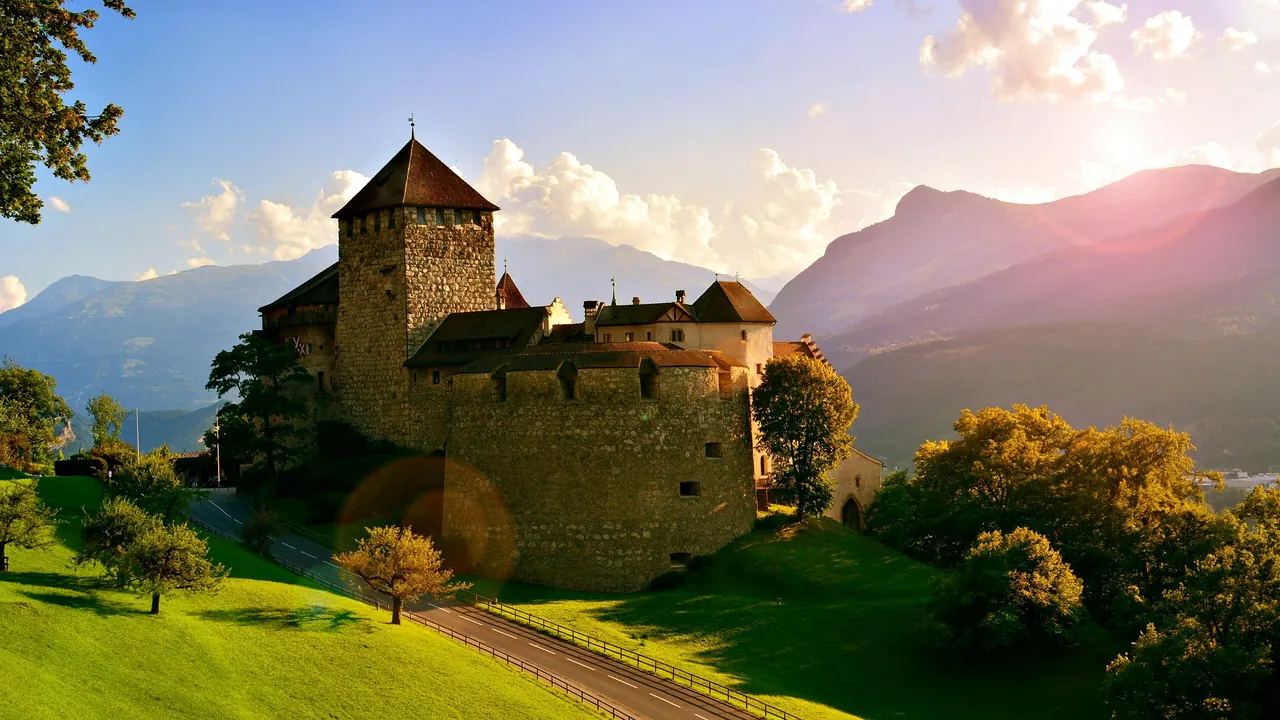
Photos: Rothenburg ob der Tauber by Berthold Werner, Public domain; Vaduz by Justin LaBerge, CC BY 2.0, cropped.
Rothenburg ob der Tauber or Vaduz?
Our verdict in twelve categories, each scored against the same fixed benchmark cities, and the climate month by month, so you can choose for your trip.
Choose Rothenburg ob der Tauber for
- prices
- culture and sights
- shopping
Rothenburg suits travellers who want to walk through history. It is a complete walled town with a rampart walkway, gate towers and Riemenschneider's carved altar, set on a Romantic Road lined with more towns like it. It costs far less than Vaduz. Its Christmas shops and December market give it a season of its own, and children old enough for the ramparts and the night watchman get a storybook couple of days.
Choose Vaduz for
- nature and the outdoors
- beaches
- wellness
If mountains matter more to you than monuments, go to Vaduz. Trails start at the edge of town, Malbun and the Rätikon peaks are half an hour up the road, and the thermal bath at Bad Ragaz is close by for tired legs afterwards. Expect Swiss prices and a list of sights that fits into one day, and plan to spend most of your time outdoors.
Scoreboard
Twelve categories on one fixed scale from 0 to 100. The shaded stretch is the gap between the two.
Your match
Pick a travel style or drag the sliders, and both match scores follow your weighting.
Wins on prices and culture and sights with your weighting.
Wins on nature and the outdoors and beaches with your weighting.
What matters to you?
Category by category
What the scores mean for a trip.
Beaches & swimming
Neither town has swimming worth travelling for, but Vaduz has better lakes within reach. The Walensee, with its steep mountain walls, is about half an hour away, and the shore of Lake Constance is under an hour.
From Rothenburg the nearest open water is the artificial lakes of the Franconian lake district, about an hour's drive away, so most summer swims there happen in the town's outdoor pool.
Food & drink
Both serve hearty regional cooking rather than variety, and Rothenburg has a little more choice. You get Franconian roast pork, Schäufele and bratwurst, with Silvaner from the squat Bocksbeutel bottle or a regional beer. The best meals are in family-run guesthouses and wine taverns away from the Marktplatz.
Vaduz is smaller and plainer, with Käsknöpfle, rösti and autumn game in hotel dining rooms and inns in the hills. Its one real strength is wine, especially the prince's own Pinot Noir from the slopes below the castle.
Culture & sights
The gap here is wide. Rothenburg is a monument in its own right: a walled town of gabled houses and towers that you can circle on the covered rampart. Riemenschneider's carved altar in St Jakob's and the Medieval Crime Museum give a visit some depth.
Vaduz has one day's worth of sights: modern art at the Kunstmuseum and the Hilti Art Foundation, the National Museum, the stamp museum, and a castle you can only see from outside. Art lovers will enjoy that day, but only Rothenburg has the feel of an old town.
Nightlife
Both towns go to bed early, and neither has clubs. In Rothenburg the evening is the night watchman's tour followed by a glass in a wine tavern. Vaduz has a few wine bars and hotel lounges on the Städtle, and Feldkirch is twenty minutes away if you want more.
Nature & outdoors
Vaduz has real mountains on its doorstep. Paths climb through vineyards and beech forest straight from the centre, and Malbun and Triesenberg are half an hour up the road. Above them the Rätikon offers ridge hikes, the exposed Fürstensteig path and skiing in winter, and the Rhine dam path is good for flat cycling.
Rothenburg's outdoors is the green river valley below its walls, with mills, meadows, orchards and the Tauber valley cycle path through the vineyards. It is pleasant for an afternoon walk or a family bike ride, but there is nothing high or wild.
Day trips
Both make good bases for day trips, but the trips are of different kinds. From Rothenburg they continue the medieval theme: Dinkelsbühl, Nördlingen inside its crater, Schwäbisch Hall, and the larger cities of Würzburg and Nuremberg about an hour away.
From Vaduz the trips cross borders. Feldkirch in Austria is twenty minutes away, St Gallen's abbey library and painted Appenzell are in Switzerland, and Lindau and Bregenz are on Lake Constance.
Good for families
Rothenburg has a slight edge with children because the town itself keeps them busy. They can walk the ramparts, climb the Rathaus tower and follow the night watchman with his lantern, and older children are drawn to the torture devices in the Crime Museum. Cobbles and steep valley paths make it hard going with a pushchair.
Vaduz is the opposite: flat, calm and easy with a pushchair, but with almost nothing indoors aimed at children. It suits families who like to hike, swim in open-air pools or learn to ski on the beginner slopes at Malbun.
Getting around
Rothenburg's old town takes fifteen minutes to cross on foot, and cars are parked outside the gates. The lanes are cobbled, though, and the walk back up from the Tauber valley is steep. Vaduz is easier on the feet: the Städtle is a short, flat pedestrian street, with the museums and cathedral a few minutes apart.
Getting out without a car is easier from Vaduz. Its buses reach every village in the country, climb to Malbun and meet the trains at Buchs, Sargans and Feldkirch. Rothenburg does have its own station a short walk from the gates, which Vaduz lacks, but it sits at the end of a branch line that needs a change at Steinach, and regional buses are sparse, especially at weekends. In practice, the other Romantic Road towns are a drive.
Shopping & style
Rothenburg gives you a real reason to shop, though a narrow one. Shops sell glass baubles, nutcrackers and Erzgebirge carvings all year round, and in December the Marktplatz holds one of Germany's most atmospheric Christmas markets.
Vaduz has a handful of watch, jewellery and souvenir shops on the Städtle, plus the collectable stamps. Neither town has fashion shops, and from Vaduz serious shoppers go to Zurich.
Affordability
This is the biggest practical difference between them. Rothenburg costs what a touristy small German town costs, with a premium inside the walls that you can avoid by sleeping outside the gates or in a nearby village.
Vaduz charges Swiss prices for rooms and meals and has few hotels and little at the budget end, so even a short stay is expensive. Staying across the border in Austria is the usual way to save.
Live music & performing arts
Rothenburg puts its own past on stage, while Vaduz offers a small classical season. Every year Rothenburg stages the Meistertrunk play in costume, retelling how the town was saved in the Thirty Years' War, with processions and encampments around it. There is also open-air theatre in summer and organ music in St Jakob's.
In Vaduz there is a summer music festival and a short symphony season, and the national theatre in neighbouring Schaan puts on drama, dance and touring productions. Over a week you will usually find something to go to, but neither town is worth choosing for its stage.
Wellness & relaxation
Neither town has a bathing tradition of its own, and both are calm rather than true spa destinations. Where they differ is in how the calm comes and how far you go for warm water. Rothenburg is quietest early in the morning and in the evening, once the coach groups have gone and the walls and valley paths empty. For thermal bathing it is about an hour's drive to the salt-water pool at Bad Windsheim, where you float, or to the older spa town of Bad Mergentheim.
Vaduz is quiet all day, and Bad Ragaz is only about twenty-five minutes away across the Rhine. Bathers have come there for centuries for the warm spring water from the Tamina gorge, and the same water fills a large public thermal bath. With mountain views from every street, Vaduz is the easier base for a slow stay that mixes walking with soaking.
When should you go?
Pick your month. The climate figures are measured averages, not a forecast.
Rothenburg ob der Tauber in July
Vaduz in July
Daytime high, °C
Rainfall in the month, mm
Where the figures come from
Rothenburg ob der Tauber's sunshine is measured 27 km from the centre, at Feuchtwangen-heilbronn.
Vaduz's temperatures are measured 51 km from the centre, at Sigmarszell-Zeisertsweiler.
Vaduz has no rain gauge within 25 km of the centre, so its rainfall comes from a gridded climate dataset read at the destination rather than from a gauge further away.
Temperature and rainfall are climate normals, averaged over the years shown. Rothenburg ob der Tauber: 1991-2020 normals, Rothenburg ob der Tauber (0.9 km from centre). Vaduz: 1991-2020 normals, Sigmarszell-Zeisertsweiler (51.3 km from centre).
The two towns have almost the same temperatures through the year. Summer highs reach about 25°C and winter days are only just above freezing, so neither is a beach destination. The comfortable months for walking run from May to September. Late spring and early autumn are mild in Rothenburg, which suits a day on the lanes and ramparts, and its summers are the sunnier and drier of the two.
Vaduz gets much more rain in summer, around 120mm a month in July and August, about twice Rothenburg's total, so hikers should allow for some wet days. Its winters are a little brighter. From December the heights above Vaduz become a ski area, while Rothenburg's walls are cold and grey with short days.
Which traveller are you?
On a culture and arts trip, Rothenburg is the clear choice. The whole walled town is the sight, from the rampart walkway and the Plönlein to the Holy Blood Altar, and Dinkelsbühl and Nördlingen nearby carry the theme further. Vaduz has two fine art museums and little else.
For an outdoors trip, Vaduz wins easily. Forest trails start in town, the Rätikon ridges and the Fürstensteig path are half an hour away, and in winter you can ski at Malbun. Rothenburg's Tauber valley is lovely for walking and cycling, but it stays gentle.
On a trip with a tight budget, Rothenburg is far easier on your money. Rooms outside the walls and beer in local inns cost what they do elsewhere in Germany, and walking the walls is free. Vaduz charges Swiss rates for beds and meals and has very few cheap places to stay.
Before you go
| Measure | Rothenburg ob der Tauber | Vaduz |
|---|---|---|
| Official language | German | German |
| Currency | Euro (EUR) | Swiss Franc (CHF) |
| Sockets | CF230 V, 50 Hz | CJ230 V, 50 Hz |
| Driving side | Right | Right |
| Time zone | UTC+1, UTC+2 in summer | UTC+1, UTC+2 in summer |
| Emergency number | 112 | 112 |
| Elevation | 430 m | 455 m |
| Main airport | Nuremberg Airport (NUE)66 km from centre60 non-stop destinations | Zürich Airport (ZRH)81 km from centre226 non-stop destinations |
| Public holidays this year | 12 days | 21 days |
By the numbers
| Measure | Rothenburg ob der Tauber | Vaduz |
|---|---|---|
| Population | 11,331 | 5,668 |
| People per km² | 272 | 328 |
| Museums within 10 km | 6 | 7 |
| UNESCO World Heritage sites within 50 km | 2 | 3 |
Where else could you go?
Every comparison below shares a destination with this one, so you can follow Rothenburg ob der Tauber or Vaduz somewhere new.
- Nurembergvs Rothenburg ob der Tauber
- Bambergvs Rothenburg ob der Tauber
- Zurichvs Vaduz
- Lucernevs Vaduz
- Stuttgartvs Rothenburg ob der Tauber
- Heidelbergvs Rothenburg ob der Tauber