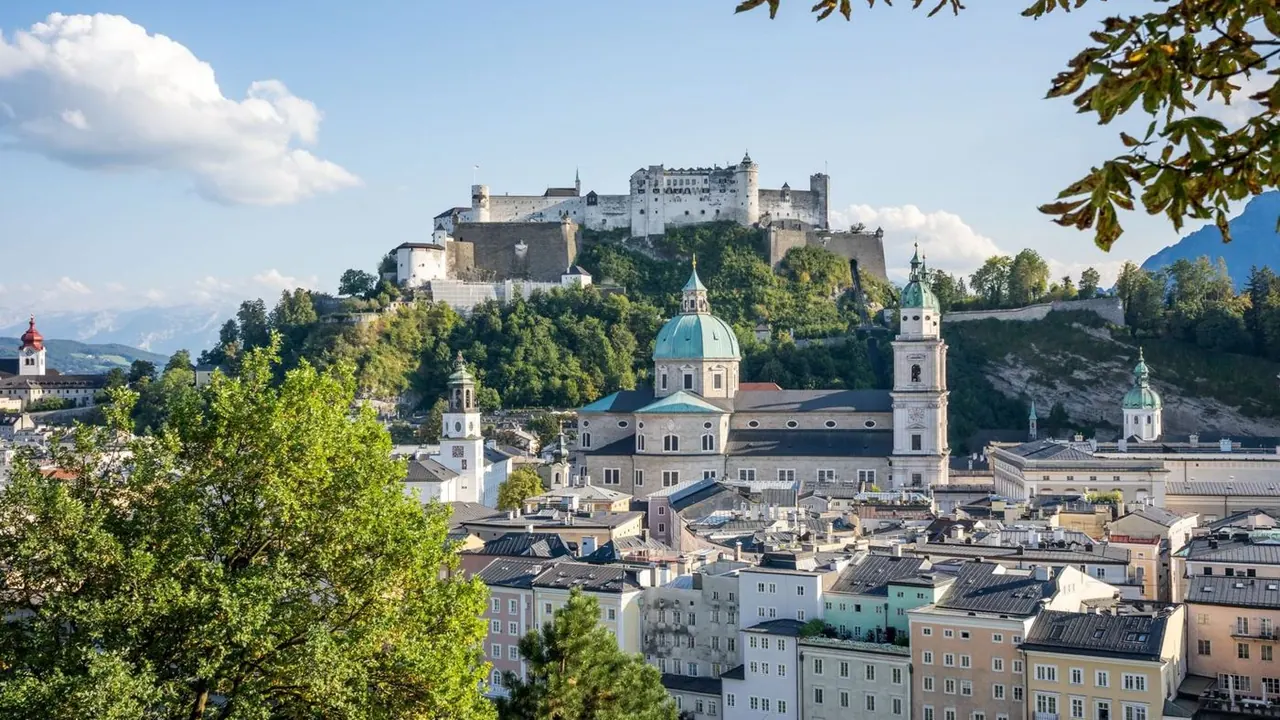
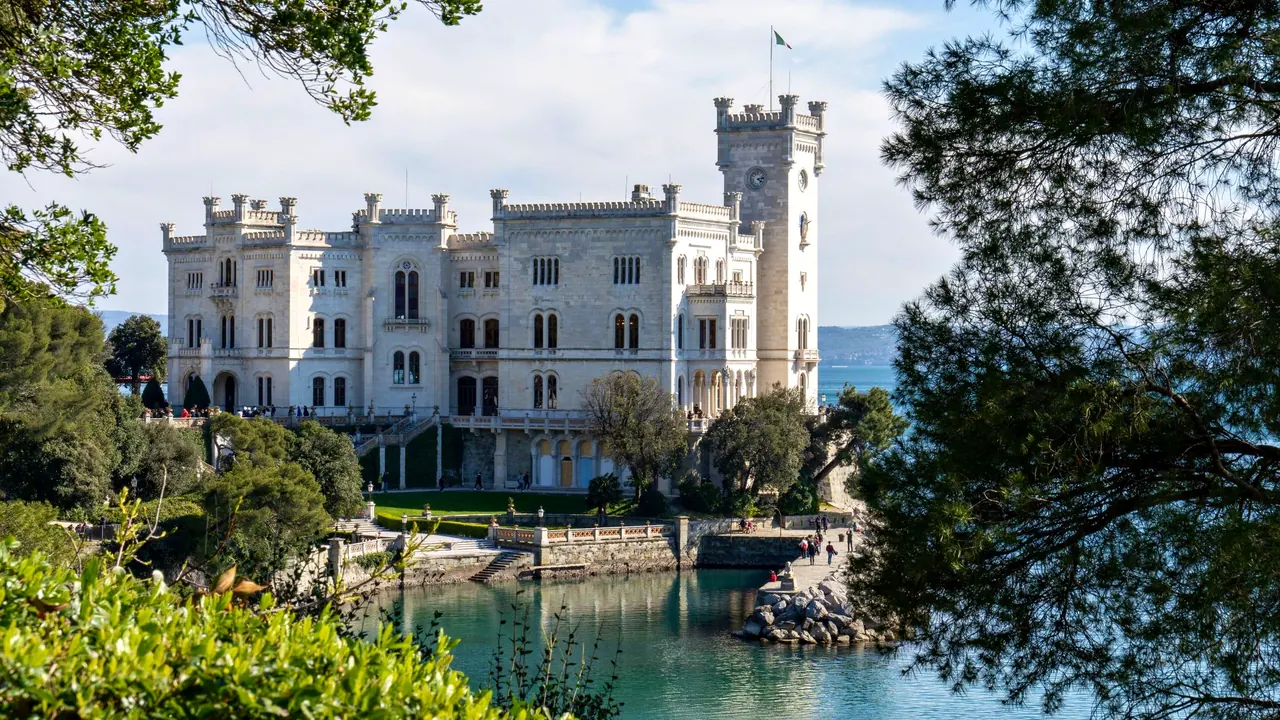
Photos: Salzburg by Leonhard Niederwimmer, Pexels License; Trieste by Tibor Szabo, Pexels License.
Salzburg or Trieste?
Our verdict in twelve categories, each scored against the same fixed benchmark cities, and the climate month by month, so you can choose for your trip.
Choose Salzburg for
- live music and the arts
- nature and the outdoors
- wellness
Salzburg suits travellers who come for music and mountains. The prince-archbishops' Baroque old town, the summer festival and the year-round concerts give it a cultural depth Trieste cannot match. The Untersberg, Berchtesgaden and the Salzkammergut lakes all start close to town. It is the better pick for families, for walkers and for anyone willing to pay more for a compact, polished city.
Choose Trieste for
- beaches
- prices
- food and drink
Pick Trieste if you want the sea, a smaller bill and a city that feels like a crossroads. In summer you swim off the Barcola promenade. The buffets and the Karst farmhouses give the food more character than Salzburg's schnitzel menus, and evenings mean aperitivo by the water. It is warmer, sunnier and less polished, a place for slow days rather than a packed sightseeing list.
Scoreboard
Twelve categories on one fixed scale from 0 to 100. The shaded stretch is the gap between the two.
Your match
Pick a travel style or drag the sliders, and both match scores follow your weighting.
Too close to call, 1 point apart
Wins on live music and the arts and nature and the outdoors with your weighting.
Wins on beaches and prices with your weighting.
What matters to you?
Category by category
What the scores mean for a trip.
Beaches & swimming
Neither city has a sandy beach, but only Trieste has the sea. Swimming in Salzburg means a trip out to Fuschlsee, Wolfgangsee or Mondsee. These are clear green lakes that you enter from lawns and wooden jetties, and they make a nice afternoon rather than the point of the trip.
In Trieste the Adriatic is part of daily life. Residents swim from the stepped concrete and the pine-shaded lawns at Barcola, and the prettier pebble coves at Sistiana, Duino and Grignano are close by. You swim off rocks and ladders, which suits confident swimmers better than small children who want sand.
Food & drink
Trieste has the more interesting food. In its buffets, boiled pork and sausages are carved from steaming pots, and jota and sardoni appear on menus next to presnitz and strudel. Up on the Karst, the farmhouse osmize pour their own Vitovska and Terrano. Salzburg serves hearty Austrian food such as schnitzel, Kasnocken and the Salzburger Nockerl, and too many old-town restaurants offer the same menus to tour groups.
Both are Habsburg coffee cities, so a long sit over cake works in either. Salzburg's most memorable meal is often a picnic in the monastery beer garden at Mülln. In Trieste it is an espresso at a standing bar, ordered in the city's own coffee vocabulary.
Culture & sights
Salzburg's sights are more concentrated and more striking. The UNESCO-listed Baroque old town, the cathedral and Residenz, the Hohensalzburg fortress on its cliff, Mirabell across the river and the two Mozart houses are all within a short walk. Add St Peter's catacombs and Hellbrunn and you have two or three full days of sightseeing.
Trieste offers a looser kind of culture. Piazza Unità and the Borgo Teresiano show off a grand Habsburg port, while Miramare Castle and the mosaics of San Giusto are the highlights. The Risiera di San Sabba adds a sobering note. Much of the city's appeal lies in its atmosphere and its links to Joyce and Svevo rather than in a list of essential sights.
Nightlife
Neither city is made for a big night out, but Trieste stays awake a little longer. Its aperitivo spreads across Piazza Unità, the Canal Grande and the lanes of Cavana. In summer the bars and kiosks on the Barcola seafront stay open into warm nights.
A typical Salzburg evening is a concert followed by a litre mug at a long table in a beer hall. A few student bars on Rudolfskai stay open later at weekends. There are few clubs in either city, and people in Salzburg who want one take the train to Munich.
Nature & outdoors
Salzburg is the stronger base for the outdoors. Wooded ridges rise inside the city, and the Untersberg cable car takes you to limestone ridge walks at about 1,800m. Berchtesgaden National Park and the Königssee are half an hour away, and the ski areas of the Salzburger Land are within an hour's drive.
Trieste's landscape is smaller in scale but just as close. Behind the city you can walk the Strada Napoleonica above the gulf, the Rilke Path at Duino and the Val Rosandra gorge, or visit the Karst caves. It also offers something Salzburg lacks: sea water for sailing, and snorkelling and kayaking in the Miramare marine reserve.
Day trips
Both cities are excellent bases for day trips, and the difference is in where they take you. Salzburg's trips are Alpine. You can visit Hallstatt and the Salzkammergut lake villages, the salt mines at Hallein and Berchtesgaden and the clifftop fortress at Werfen, or take the train to Munich. The lake villages are easier with a car.
Trieste reaches into three countries. In Friuli there are Roman Aquileia, star-shaped Palmanova and the Collio vineyards. Piran and Ljubljana are across the border in Slovenia, and Venice by train makes a long but realistic day.
Good for families
Salzburg does more for children. The trick fountains at Hellbrunn, the zoo next to them, Haus der Natur, the fortress funicular and the marionette theatre fill a couple of days. The salt mines nearby, with wooden slides and underground lakes, make a memorable outing.
Trieste is just as safe but has fewer attractions aimed at children. The main ones are the gardens at Miramare, the huge Grotta Gigante, a small aquarium and summer days at Barcola. With all its steps and its rocky swimming spots, it works better for older children than for toddlers.
Getting around
The two cities are much alike here: neither has a metro, the centres are walkable and dense bus networks cover the rest. Salzburg's trolleybuses run to Hellbrunn and the Untersberg, and its flat river paths are good for cycling. The slow regional buses push many visitors into a hire car for the lakes.
Trieste's centre is flat along the sea, but the climb to San Giusto involves long flights of steps. Its extra is the passenger boats across the bay to Muggia.
Shopping & style
Salzburg has the more distinctive shopping, and its speciality is Tracht. Workshops around the old town sell dirndls, loden jackets and leather goods, many made to measure. Getreidegasse, with its wrought-iron guild signs, and the Advent market on Domplatz add the setting.
Trieste offers ordinary Italian clothing shops around Corso Italia, and its best browsing is in the antique and second-hand shops of the old town lanes. In both cities the souvenirs most worth packing are edible: Mozartkugeln and regional cheese from Salzburg, roasted coffee and Karst wine from Trieste.
Affordability
Salzburg costs more at almost every turn. Hotels near the old town are dear all year, and during the summer festival and the Advent markets both beds and dinner tables become scarce and expensive. The usual way to save is to sleep across the river or in the suburbs, buy the city card for transport and museums, and eat in the inns of the outer districts.
Trieste is the easier of the two on the wallet, though it is fairly priced rather than cheap. Rooms tighten mainly around the Barcolana regatta in autumn and in high summer, and the buses cost little. Seafood dinners and the smarter hotels charge ordinary Italian city prices, so the savings come from eating and moving about the way residents do, not from a city that is cheap across the board.
Live music & performing arts
This is Salzburg's great strength. The Salzburg Festival brings leading performers to the Grosses Festspielhaus and the Felsenreitschule, and Jedermann is played outdoors in front of the cathedral. Mozart Week and the Easter Festival add two more seasons. Outside the festivals, the Mozarteum, the Landestheater and chamber concerts in Mirabell and the fortress mean there is music almost every evening.
Trieste has a real opera house in the Teatro Verdi, a fondness for operetta that is rare in Italy, and summer concerts in the castle courtyard on San Giusto. Beyond that the programme thins out, and a music lover will run out of evenings much sooner.
Wellness & relaxation
Salzburg has real spa bathing close by. The brine spa town of Bad Reichenhall is twenty minutes across the border, and the radon springs of the Gastein valley lie further south. In town, the Paracelsus Bad in the city park has saunas and a pool facing the Kapuzinerberg.
Trieste offers a different kind of calm: long sittings in old coffee houses and sunset walks along the Molo Audace. For treatments there are only hotel and day spas, so it suits a slow, literary pace rather than a spa break.
When should you go?
Pick your month. The climate figures are measured averages, not a forecast.
Salzburg in July
Trieste in July
Daytime high, °C
Rainfall in the month, mm
Temperature and rainfall are climate normals, averaged over the years shown. Salzburg: 1991-2020 normals, Salzburg (3.4 km from centre). Trieste: 1991-2020 normals, Trieste (1.6 km from centre).
Salzburg is an inland Alpine city. Winters are cold and snow often reaches the town. The warmest months, July and August, reach about 25°C, but summer is also the wettest part of the year, with around 165mm a month from June to August, so leave some flexibility in hiking plans. May, June and September are the most pleasant months for walking the old town and the ridges, and the lakes are warm enough for swimming from June to early September.
Trieste is milder and much sunnier all year. July and August reach 29°C, which is warm for its steep streets at midday but ideal for swimming. The sea reaches about 25°C in high summer and is pleasant from June to September. Its rain arrives in autumn and peaks near 125mm in November. Winters stay mild, though the Bora can make some days raw. Spring and early autumn are the best times for sightseeing on foot.
Which traveller are you?
For a beach and sun trip, Trieste is the clear choice. The Adriatic is on its doorstep, with swimming from Barcola's steps and the coves at Sistiana, and summers are far sunnier. Salzburg's lakes make a pleasant afternoon, but they are not a reason to go.
On a culture and arts trip, Salzburg comes out ahead. The Baroque old town, the fortress and the Mozart houses are a few minutes' walk apart. The festival, the Mozarteum and nightly chamber concerts give your evenings a musical depth that Trieste's Teatro Verdi cannot match.
On a tight budget, your money goes further in Trieste. Coffee at the bar and plates at a buffet cost little, rooms are reasonable for most of the year, and swimming at Barcola and walks on the Karst are free. Salzburg's old town is expensive for its size.
Before you go
| Measure | Salzburg | Trieste |
|---|---|---|
| Official language | German, Austrian Sign Language | Italian |
| Currency | Euro (EUR) | Euro (EUR) |
| Sockets | CF230 V, 50 Hz | CFL230 V, 50 Hz |
| Driving side | Right | Right |
| Time zone | UTC+1, UTC+2 in summer | UTC+1, UTC+2 in summer |
| Emergency number | 112 | 112 |
| Elevation | 424 m | 2 m |
| Main airport | Salzburg Airport (SZG)3 km from centre64 non-stop destinations | Trieste Airport (TRS)31 km from centre32 non-stop destinations |
| Public holidays this year | 16 days | 13 days |
By the numbers
| Measure | Salzburg | Trieste |
|---|---|---|
| City population | 155,021 | 198,417 |
| People per km² | 2,360 | 2,332 |
| Museums within 10 km | 38 | 33 |
| UNESCO World Heritage sites within 50 km | 3 | 5 |
| Swim season, months above 21 °C | - | 4 months |
Where else could you go?
Every comparison below shares a destination with this one, so you can follow Salzburg or Trieste somewhere new.
- Hallstattvs Salzburg
- Rovinjvs Trieste
- Ljubljanavs Trieste
- Bledvs Trieste
- Venicevs Trieste
- Munichvs Salzburg