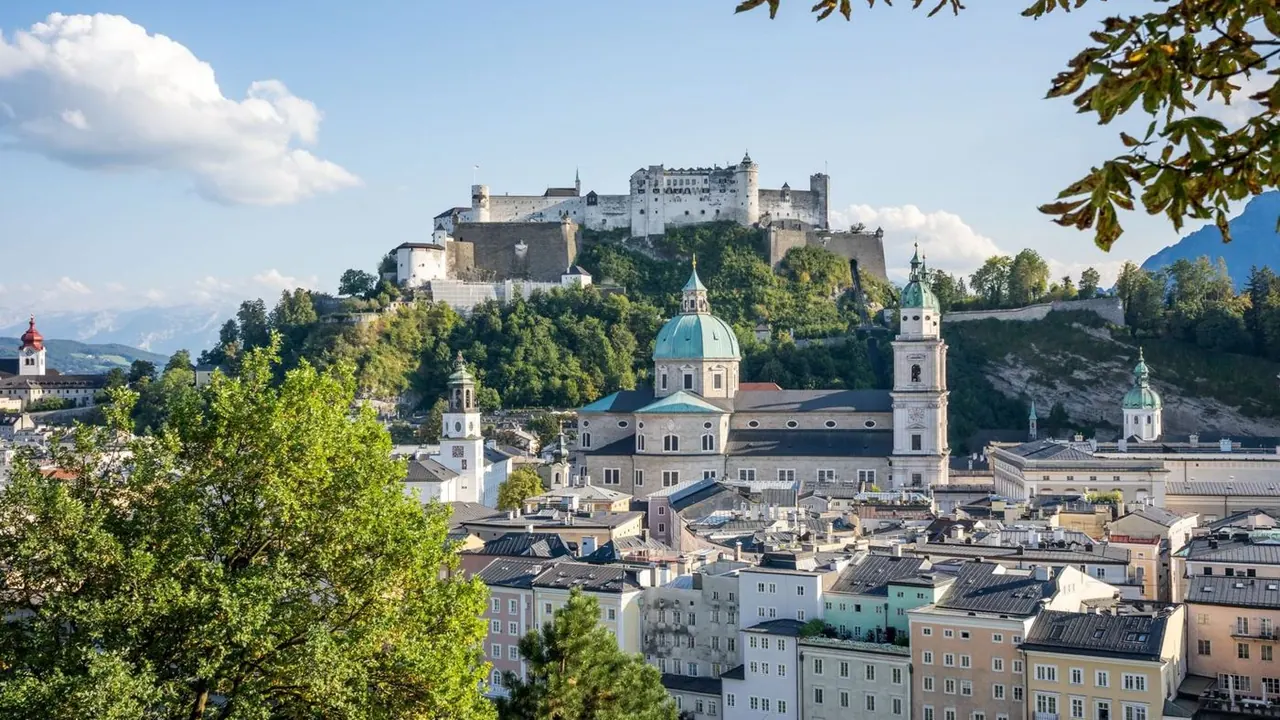
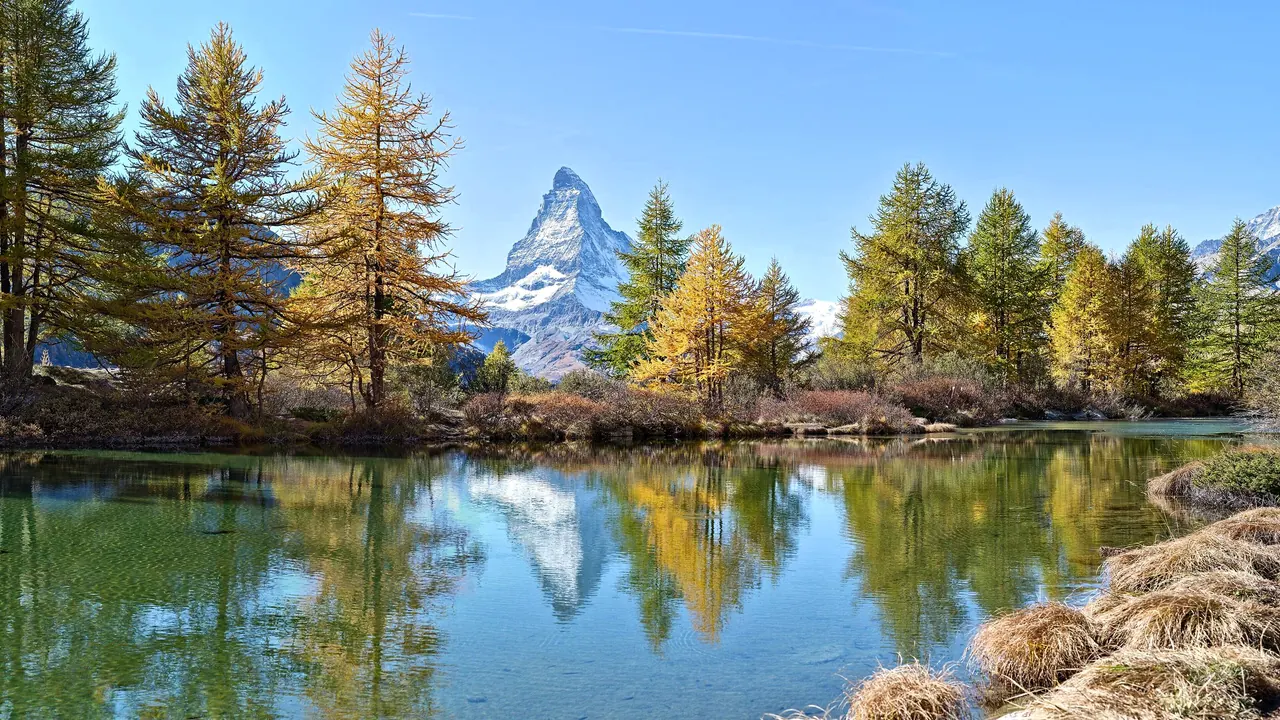
Photos: Salzburg by Leonhard Niederwimmer, Pexels License; Zermatt by Roy Egloff, CC BY-SA 4.0, cropped.
Salzburg or Zermatt?
Our verdict in twelve categories, each scored against the same fixed benchmark cities, and the climate month by month, so you can choose for your trip.
Choose Salzburg for
- live music and the arts
- culture and sights
- day trips
Salzburg suits travellers who want a real city with the Alps on its doorstep. The Baroque old town, the fortress, Mozart and the summer festival fill the days and evenings, and the Salzkammergut lakes, Hallstatt and the salt mines make easy outings. It is also the easier place for families, and far less punishing on the wallet.
Choose Zermatt for
- nature and the outdoors
- getting around
- nightlife
Zermatt is the choice when the mountains themselves are the reason for the trip. The Matterhorn rises straight above a car-free village, lifts climb to glacier terrain, and skiing or high-altitude hiking starts at the hotel door. Expect to pay heavily for it, and accept that there are few sights, little music and quiet evenings outside après-ski.
Scoreboard
Twelve categories on one fixed scale from 0 to 100. The shaded stretch is the gap between the two.
Your match
Pick a travel style or drag the sliders, and both match scores follow your weighting.
Wins on live music and the arts and culture and sights with your weighting.
Wins on nature and the outdoors and getting around with your weighting.
What matters to you?
Category by category
What the scores mean for a trip.
Beaches & swimming
Neither is a beach destination, but Salzburg at least offers summer swimming. Fuschlsee, Wolfgangsee and Mondsee are under an hour away, with clear water of around 20-24°C in high summer, entered from lawns and wooden jetties.
Zermatt has no bathing lake at all. Its tarns are fed by meltwater that stays too cold to swim in, so a swim there means a hotel pool.
Food & drink
The food in both places is filling Alpine cooking with a fairly narrow range. Where they differ is in setting and style. Salzburg's best moments are in its coffee houses over cake, and in the Augustiner brewery's halls and chestnut garden in Mülln. Schnitzel, Kasnocken and Salzburger Nockerl are the dishes to try, and the better cooking is in the outer inns rather than the old-town tourist menus.
In Zermatt the highlight is a long lunch at a chalet in Findeln, Furi or Zum See, reached on skis or on foot, with raclette, air-dried beef and a glass of Petite Arvine or Cornalin in front of the Matterhorn. Out of season many of those kitchens close.
Culture & sights
Salzburg is far richer here. The cathedral, the Residenz, the arcaded squares, Mirabell Palace, St Peter's catacombs and the clifftop fortress make a UNESCO-listed old town worth two or three full days.
Zermatt's heritage is about mountaineering. The Matterhorn Museum tells the story of the 1865 first ascent and its fatal descent, there is the climbers' cemetery, and the old larch barns of the Hinterdorf are still standing. Together they make a good morning, but nobody chooses Zermatt for its monuments.
Nightlife
Neither suits a serious night out, and the evenings feel different. Salzburg's evenings mean a concert, then litre mugs at long tables in a beer hall, with a few student bars along Rudolfskai open later in term. Its clubs are few enough that people take the train to Munich.
Zermatt's fun is seasonal and louder. In winter, slope-side après-ski bars fill with ski boots from late afternoon, and a few bars and small clubs on the main street carry on past midnight. In summer the hikers go to bed early.
Nature & outdoors
Both are superb, but Zermatt puts you in the high Alps rather than at their edge. The Matterhorn, a ring of four-thousand-metre peaks and the Gorner Glacier rise around the village. Lifts reach above 3,800m, skiing carries on across into Italy and on the glacier in summer, and trails such as the Five Lakes walk and the Europaweg start from the lift stations.
Salzburg's outdoors is gentler and mixed with the city: wooded walks on the Mönchsberg, the Salzach bike path, Untersberg ridge walks, Salzkammergut lakes for paddling, and Berchtesgaden and the Königssee half an hour away.
Day trips
Salzburg is the far better base for days out. Hallstatt and its prehistoric salt mine, the lake villages of St Wolfgang and St Gilgen, the salt mine at Hallein, Werfen's clifftop fortress, Berchtesgaden and Munich are all within reach, though a car helps for the lakes.
From Zermatt, every outing starts with a long train ride down the valley. Sion's castle hills and vineyards are the best reward, with Brig and Saas-Fee as alternatives, and most visitors simply spend their spare days back up the mountain.
Good for families
Salzburg gives children more to do. The trick fountains at Hellbrunn, the zoo beside them, the hands-on Haus der Natur, the fortress funicular and the marionettes fill the city days, and the salt mines add miners' slides and underground boat rides. The cobbles are hard work with a pushchair.
Zermatt's traffic-free streets are relaxing for parents, with nursery slopes at Sunnegga, ski schools, marmots and cog railways. But it works mainly for families who ski or hike: rainy days are hard to fill, and the thin air at the top viewpoints can be too much for small children.
Getting around
Zermatt is slightly easier once you arrive. The whole village is car-free and compact, and the cog railway, the underground funicular and the gondolas all start within walking distance. Getting there means changing to the train at Täsch, and leaving the valley takes over an hour.
Salzburg's centre is just as walkable, with the main sights a short stroll apart and trolleybuses for Hellbrunn and the Untersberg. The weak spot is beyond the city, where slow regional buses lead many visitors to hire a car for the lakes.
Shopping & style
Salzburg has the more interesting shopping. Getreidegasse has its wrought-iron guild signs, and the old town has workshops making dirndls and loden jackets to measure. There are farmers' stalls by the Andräkirche and one of the region's best-known Christmas markets on Domplatz.
Zermatt's single main street mixes Swiss watch boutiques and souvenir cowbells with excellent ski and mountaineering outfitters. If you need gear it serves you well, but there is little else to browse.
Affordability
Salzburg is expensive for a city its size, but Zermatt is on a different level, and the difference affects every part of the trip. In Salzburg, rooms and old-town meals cost the most during the summer festival and Advent. Even then, local transport is moderately priced, the inns of the outer districts cost far less than the centre, and a city card covers the fortress and most museums.
Zermatt has no cheaper side to fall back on. Even plain hotel rooms in season, a lunch on a mountain terrace and the lift and cog-railway tickets that every visitor needs cost well above most of Europe. Self-catering apartments, supermarket picnics and a bed down the valley in Täsch help, but they only reduce the bill.
Live music & performing arts
For music, Salzburg is in another class. The summer festival fills the Grosses Festspielhaus and the cliff-cut Felsenreitschule, Jedermann is played outside the cathedral, and Mozart Week and the Easter Festival add further seasons. The Mozarteum, the Landestheater and the Marionette Theatre keep a programme going all year.
Zermatt has no theatre or concert hall. Zermatt Unplugged in spring and a late-summer chamber music festival in the church are the only times worth planning evenings around.
Wellness & relaxation
The two are close for a restful trip, but the rest takes different forms. In Salzburg the calm belongs to the city itself. Once the day-trippers have gone, an afternoon can drift between a coffee house, the Mirabell gardens and the woods of the Mönchsberg, and anyone can walk into the public Paracelsus Bad in the city park for a sauna. For real bathing tradition there are the brine baths of Bad Reichenhall and the radon springs of the Gastein valley, both within a day's reach.
Zermatt has no bathing culture of its own, so relaxing there mostly happens inside a hotel, in a spa with the peaks outside after a day on the slopes or trails. It suits travellers who book somewhere well equipped and stay in, more than those who want to drop into a public pool. The village is quiet because there are no cars, but the days are not slow: most visitors are up early for the lifts.
When should you go?
Pick your month. The climate figures are measured averages, not a forecast.
Salzburg in July
Zermatt in July
Daytime high, °C
Rainfall in the month, mm
Where the figures come from
Zermatt has no weather station within reach, so its figures come from a gridded climate model rather than a measured record, and read a broad area rather than the city itself.
Temperature and rainfall are climate normals, averaged over the years shown. Salzburg: 1991-2020 normals, Salzburg (3.4 km from centre). Zermatt: 1991-2020 normals, TerraClimate 4 km grid at the town, no weather station within 90 km.
Salzburg is at its best from May to September, when the old town is pleasant for walking and July and August reach about 25°C, warm enough for the lakes from June to early September. Those summer months are also the wettest, with well over 150mm of rain in each, so plan for showers. They are also the sunniest. Winter is cold, with January highs around 3°C and snow often in town, which suits the Advent markets more than sightseeing on foot.
Zermatt runs on two seasons. Summer highs only reach about 14°C in July and August, which is good hiking weather but never beach weather, and days above the village are much colder. From December to February daytime highs stay below freezing, the snow season for skiing. November is the wettest month, at around 130mm, and spring and autumn are the in-between months when the village is quieter.
Which traveller are you?
On a culture and arts trip, Salzburg wins easily. The prince-archbishops' Baroque old town, Hohensalzburg and the Mozart houses fill two or three days, and the festivals and Mozarteum concerts fill the evenings. Zermatt's heritage, by contrast, fits into a single morning.
For an outdoors trip, Zermatt is the stronger pick. The Matterhorn, glacier lifts above 3,800m, year-round skiing and hundreds of kilometres of high trails beat Salzburg's gentler ridges, lakes and the Untersberg. Salzburg still has good walking, but Zermatt has the high mountains.
On a trip with a tight budget, Salzburg is the realistic option. It is expensive, but a city card, staying across the river and eating in beer halls help. Zermatt's rooms, terrace meals and lift tickets cost a great deal whatever you do.
Before you go
| Measure | Salzburg | Zermatt |
|---|---|---|
| Official language | German, Austrian Sign Language | French, German, Italian, Romansh |
| Currency | Euro (EUR) | Swiss Franc (CHF) |
| Sockets | CF230 V, 50 Hz | CJ230 V, 50 Hz |
| Driving side | Right | Right |
| Time zone | UTC+1, UTC+2 in summer | UTC+1, UTC+2 in summer |
| Emergency number | 112 | 112 |
| Elevation | 424 m | 1,624 m |
| Main airport | Salzburg Airport (SZG)3 km from centre64 non-stop destinations | Geneva International Airport (GVA)128 km from centre150 non-stop destinations |
| Public holidays this year | 16 days | 9 days |
By the numbers
| Measure | Salzburg | Zermatt |
|---|---|---|
| City population | 155,021 | 6,023 |
| People per km² | 2,360 | 25 |
| Museums within 10 km | 38 | 2 |
| UNESCO World Heritage sites within 50 km | 3 | 2 |
Where else could you go?
Every comparison below shares a destination with this one, so you can follow Salzburg or Zermatt somewhere new.
- Hallstattvs Salzburg
- Chamonixvs Zermatt
- Interlakenvs Zermatt
- Luganovs Zermatt
- Lausannevs Zermatt
- Turinvs Zermatt