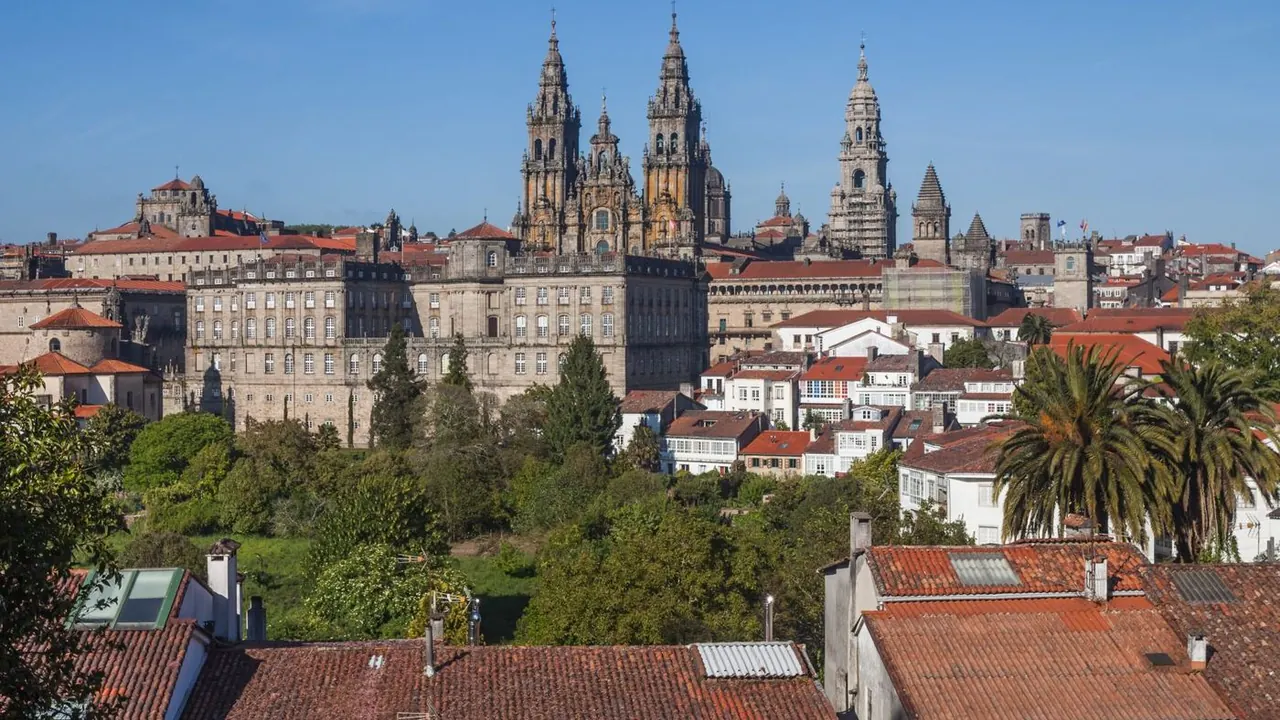
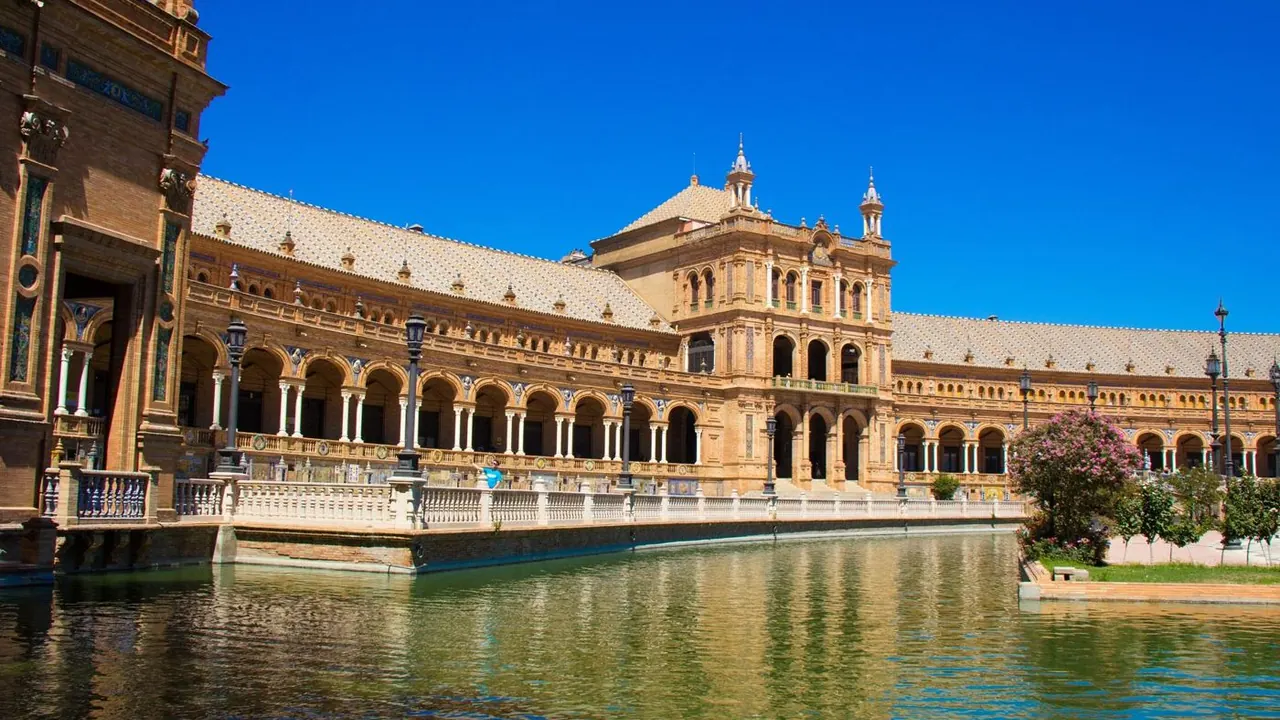
Photos: Santiago de Compostela by Luis Miguel Bugallo Sánchez (Lmbuga), CC BY-SA 3.0, cropped; Seville by Tibor Kovacs, CC BY 2.0, cropped.
Santiago de Compostela or Seville?
Our verdict in twelve categories, each scored against the same fixed benchmark cities, and the climate month by month, so you can choose for your trip.
Choose Santiago de Compostela for
- beaches
- nature and the outdoors
- prices
Santiago de Compostela suits travellers who like their cities small, green and a little rain-washed. Pick it if you are ending the Camino, want to eat Galician seafood at the source, or plan to walk the coast and woodland of Galicia from a quiet base. Summers stay mild enough for walking all day, and the money goes a little further.
Choose Seville for
- live music and the arts
- shopping
- nightlife
Seville is the stronger choice for a fuller city trip. Its monuments are grander and more numerous, flamenco is on every night, the evenings run long and outdoors, and Córdoba, Jerez and Cádiz all make easy days out. Go in spring or autumn, when the heat lets you enjoy it.
Scoreboard
Twelve categories on one fixed scale from 0 to 100. The shaded stretch is the gap between the two.
Your match
Pick a travel style or drag the sliders, and both match scores follow your weighting.
Wins on beaches and nature and the outdoors with your weighting.
Wins on live music and the arts and shopping with your weighting.
What matters to you?
Category by category
What the scores mean for a trip.
Beaches & swimming
Neither city is on the coast, but Santiago makes the easier beach outing. The sheltered Ría de Muros e Noia and Ría de Arousa are about 35km away and have fine white sand in calm inlets, a pleasant July or August excursion if you can cope with chilly Atlantic water.
From Seville, the Huelva beaches of Matalascañas and Mazagón take well over an hour by car. The water there is warmer, but the trip takes most of a day, so in town swimming means a rooftop or municipal pool, and sea lovers usually add a few nights on the coast.
Food & drink
Both cities eat very well, but in different ways. Santiago is about the sea: octopus, scallops in the shell and percebes, with the Mercado de Abastos at the centre and Albariño in the glass along Rúa do Franco.
Seville is about the tapas crawl, standing at tiled counters in Triana or Santa Cruz over salmorejo, pork cheek and fried fish, with cold manzanilla to drink. It also has a few more inventive kitchens around the Alameda. Both are thin on international cooking.
Culture & sights
Seville has the greater weight of sights. The Real Alcázar, the vast Gothic cathedral with its Giralda and the Archivo de Indias form a UNESCO-listed trio, and Casa de Pilatos, Plaza de España and Murillo at the Bellas Artes add enough for three or four full days.
Santiago gathers its interest around one great building: the pilgrimage cathedral with the Pórtico da Gloria, set on the Obradoiro and surrounded by a compact granite old town of monasteries and convent squares. It is deeply atmospheric, but two or three days see it well.
Nightlife
Seville offers longer and livelier evenings, mostly outdoors. Dinner starts around ten, then the crowds move between terraces on the Alameda de Hércules, Triana and the Alfalfa, with riverside bars filling once the summer heat breaks.
Santiago's nights belong to its students: wine along Rúa do Franco, pub-like bars around the Praza de Cervantes, folk sessions and a big Thursday night. In summer the students leave and the pilgrims go to bed early, so it is quieter just when Seville is at its liveliest outdoors.
Nature & outdoors
Santiago is the better base for the outdoors. Green hills of oak and stone-walled fields begin at the edge of town, the Camino paths make ready-made walks, and the Costa da Morte cliffs and the old woodland of the Fragas do Eume are within a couple of hours. Rain comes with the green.
Seville is surrounded by flat farmland and olive groves, and summer heat shuts down most activity. Its trump card is Doñana, one of Europe's great wetlands, with flamingos and a slim chance of lynx on guided trips. The Sierra de Aracena adds gentle hiking in spring and autumn.
Day trips
Seville has the stronger list of day trips. Córdoba's Great Mosque is under an hour away by high-speed train, Jerez and Cádiz are easy by rail, and Carmona and the Roman ruins of Itálica are closer still. Arcos opens up the white villages.
Santiago is a good base for Galicia: A Coruña's Tower of Hercules is half an hour by train, and Lugo's Roman walls and Ourense's thermal springs are within reach. The Rías Baixas wine villages and Fisterra, though, really need a car or a tour.
Good for families
Seville gives children more to enjoy. The flat centre suits pushchairs, the boats at Plaza de España and the maze in the Alcázar gardens hold young attention, and La Cartuja adds a theme park with summer water rides. The catch is midsummer heat, so families do better in spring.
Santiago is safe and relaxed, but its sights are churches and museums, its lanes are steep and cobbled, and rain can keep everyone indoors. Most families do the city quickly and then head for A Coruña's aquarium or the coast.
Getting around
Both centres are best on foot, and both are compact. In Santiago you can cross the old town in twenty minutes, but the granite is hilly and slippery when wet, and regional trains run to A Coruña, Vigo and Ourense.
Seville is flat and a little larger, with a tram, a metro line and bike lanes with a public bike scheme that make cycling easy. There the obstacle is not rain but summer heat, which makes a midday walk an ordeal.
Shopping & style
Seville has more to browse. Triana's pottery workshops sell hand-painted tiles, the streets around Sierpes and Cuna are full of flamenco dresses, shawls, fans and guitars made for local use, and Sierpes and Tetuán add the main chain stores. The Thursday flea market on Calle Feria is good for browsing.
In Santiago the choice is narrower: jet amulets on the Azabachería, Sargadelos ceramics and good food gifts such as tetilla cheese and tinned seafood. Much of the rest is pilgrim souvenirs.
Affordability
Santiago goes slightly further for the money. Tapas often come free with a drink, entry to the cathedral itself costs nothing, and pensiones and pilgrim hostels keep rooms cheap, except around the feast of Saint James in July.
Seville is still reasonably priced, with cheap tapas evenings and modest room rates in the summer heat. Holy Week and the April Fair push hotel rates up sharply, though, and the Alcázar and cathedral tickets add up.
Live music & performing arts
Seville is a real reason to travel for live performance. It is the heartland of flamenco, with shows every night in tablaos, cultural centres and local peñas, and the Bienal brings top performers in autumn of even-numbered years. The Maestranza stages opera in the city where Carmen is set.
Santiago's offer is smaller and more local. The Real Filharmonía de Galicia plays at the Auditorio, and the real pleasure is Galician bagpipes in old-town bars and caped student tunas singing in the streets. There is no opera to speak of.
Wellness & relaxation
Neither city is a spa destination, and the ways to unwind differ. Santiago's real asset is Galicia's hot springs, with Caldas de Reis, Cuntis and Ourense's riverside pools all within an easy outing.
Seville keeps its bathing in town, in Arab-style bath houses inside old mansions, and its calm in shaded courtyards and the slow afternoon. Its noisy streets at night and festival crowds disturb the peace more than Santiago's quiet evenings do.
When should you go?
Pick your month. The climate figures are measured averages, not a forecast.
Santiago de Compostela in July
Seville in July
Daytime high, °C
Rainfall in the month, mm
Temperature and rainfall are climate normals, averaged over the years shown. Santiago de Compostela: 1991-2020 normals, Santiago / Labacolla (8.4 km from centre). Seville: 1991-2020 normals, Sevilla / San Pablo (8.1 km from centre).
Santiago is at its best in summer. From June to September daytime highs reach about 25°C, the rain eases and the days are at their sunniest, so this is the time for long walks and for the beaches of the rías, although the sea only reaches about 17°C. From October to March the Atlantic weather sets in, and most of those months bring over 200mm of rain. The wet season has its own charm in the granite streets, but bring a waterproof.
Seville runs the other way round. July and August reach 36°C, which makes walking hard work in the middle of the day, while March to May and October to November are warm, bright and comfortable for sightseeing. Its winter is mild and far less wet than Santiago's, although October to December are still Seville's rainiest months, so pack an umbrella. The two cities are at their best in opposite seasons.
Which traveller are you?
On an outdoors trip, choose Santiago. Its best walking months are June to September, exactly when Seville is too hot to be outside, and sea, cliffs and woodland lie in several directions. The price is rain, so pack waterproofs.
For a culture and arts trip, Seville is worth the extra days. Santiago revolves around one cathedral and is done in two, while Seville's palaces, churches and galleries fill four, and evenings bring flamenco and opera rather than folk sessions.
On a family trip with children, Seville wins as long as you avoid July and August. In spring it is warm, bright and easier to explore with children, while Santiago's mild summer mainly suits families who plan to spend most days on the coast.
Before you go
| Measure | Santiago de Compostela | Seville |
|---|---|---|
| Official language | Spanish | Spanish |
| Currency | Euro (EUR) | Euro (EUR) |
| Sockets | CF230 V, 50 Hz | CF230 V, 50 Hz |
| Driving side | Right | Right |
| Time zone | UTC+1, UTC+2 in summer | UTC+1, UTC+2 in summer |
| Emergency number | 112 | 112 |
| Elevation | 260 m | 18 m |
| Main airport | Santiago-Rosalía de Castro Airport (SCQ)10 km from centre29 non-stop destinations | Seville Airport (SVQ)9 km from centre96 non-stop destinations |
| Public holidays this year | 13 days | 12 days |
By the numbers
| Measure | Santiago de Compostela | Seville |
|---|---|---|
| City population | 100,965 | 689,423 |
| People per km² | 459 | 4,896 |
| Museums within 10 km | 6 | 24 |
| UNESCO World Heritage sites within 50 km | 2 | 1 |
| Swim season, months above 21 °C | None | - |
Where else could you go?
Every comparison below shares a destination with this one, so you can follow Santiago de Compostela or Seville somewhere new.