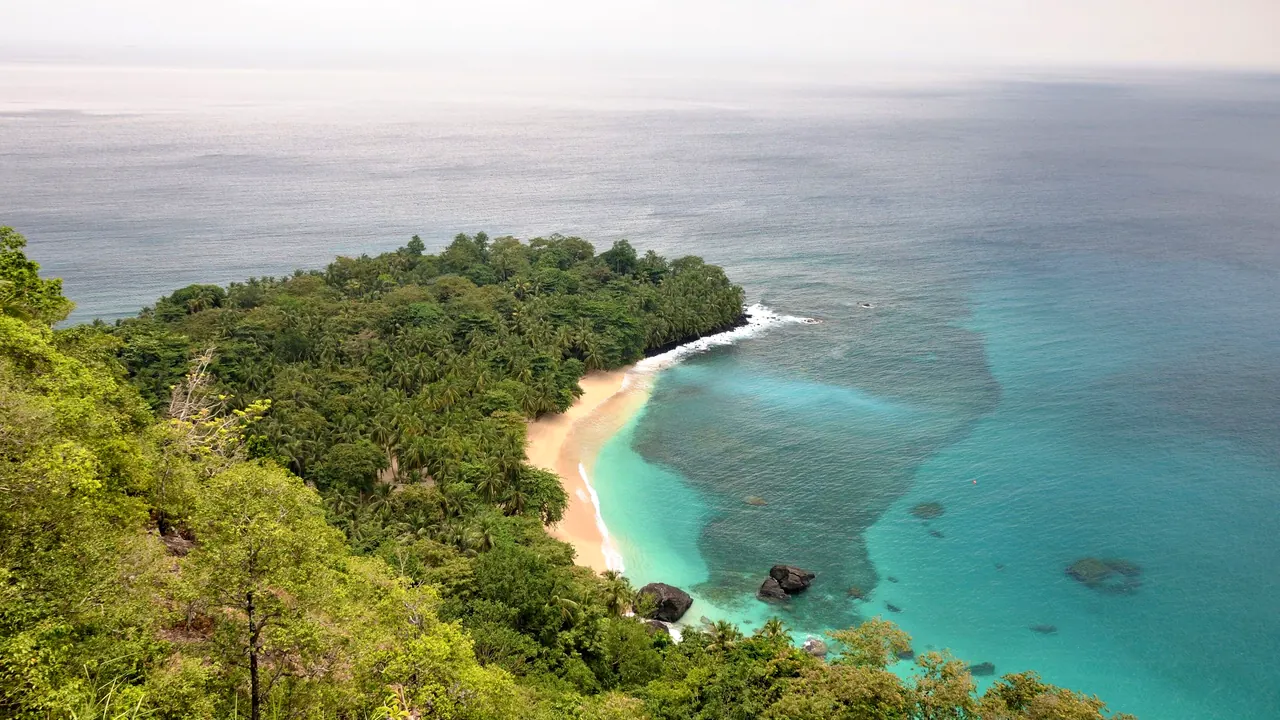
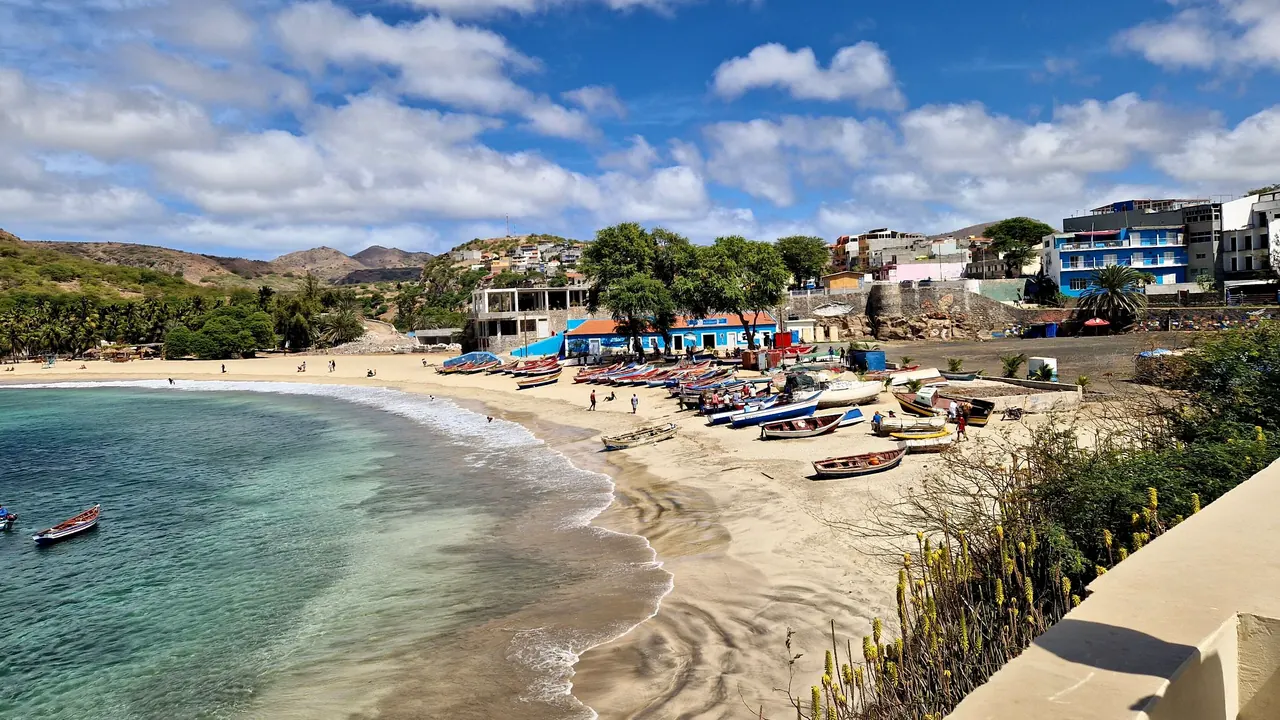
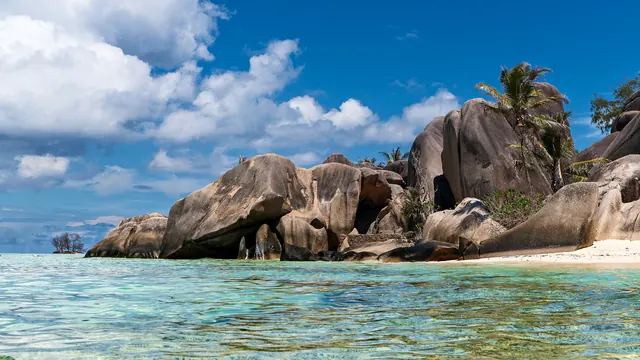
Photos: São Tomé and Príncipe by Josep M. Gracia, CC BY-SA 4.0, cropped; Cape Verde by Hanay, CC BY-SA 3.0, cropped.
São Tomé and Príncipe or Cape Verde?
Our verdict in twelve categories, each scored against the same fixed benchmark cities, and the climate month by month, so you can choose for your trip.
Choose São Tomé and Príncipe for
- nature and the outdoors
- culture and sights
São Tomé and Príncipe suits travellers who want the tropics at their least visited: rainforest running down to empty beaches, a sea warm enough to swim in every month, and old plantation estates sinking back into the jungle, with Príncipe as an even quieter second island. In return it asks for patience, with rough roads, few facilities and evenings that end at the lodge. It rewards independent adults and older, adventurous children far more than anyone looking for ease.
Choose Cape Verde for
- live music and the arts
- nightlife
- families
Cape Verde is the easier and more sociable choice. Sal and Boa Vista offer reliable dry sunshine, long pale beaches and resorts built around families, while Mindelo adds the bars and live morna that the other islands lack. Choose it for winter sun with almost no rain, a kitesurfing week, or a trip that pairs a beach island with walking on Santo Antão. Just expect wind on the desert islands and slow ferries between them.
Scoreboard
Twelve categories on one fixed scale from 0 to 100. The shaded stretch is the gap between the two.
Your match
Pick a travel style or drag the sliders, and both match scores follow your weighting.
Wins on nature and the outdoors and culture and sights with your weighting.
Wins on live music and the arts and nightlife with your weighting.
What matters to you?
Category by category
What the scores mean for a trip.
Beaches & swimming
These are two equally strong but very different shorelines. In São Tomé and Príncipe the sand is golden or dark volcanic, with palms and forest coming right down to the water. You can snorkel at Lagoa Azul on São Tomé's calmer north coast, explore wild southern coves such as Praia Jalé and the rock pool at Praia Piscina, take the boat to Ilhéu das Rolas, or fly to Príncipe for Banana Beach. Expect almost no facilities.
Cape Verde's beaches are open and treeless: long pale stretches backed by dunes on Boa Vista, such as Praia de Chaves, and a resort beach at Santa Maria on Sal with a sheltered bay for easy swimming. The trade wind and strong surf on exposed beaches limit swimming to the sheltered spots, and the winter sea is noticeably cooler than São Tomé's.
Where in São Tomé and Príncipe: Príncipe, São Tomé south coast, Ilhéu das Rolas, Lagoa Azul
Food & drink
The cooking in both places is simple island food built on fish from the boats, and neither is worth the trip for eating alone. What sets São Tomé and Príncipe apart is cacao and coffee: plantation estates around Monte Café offer coffee tastings and chocolate made from the islands' own beans, and calulu with breadfruit is the dish to try in São Tomé city's family-run places.
Cape Verde's equivalents are cachupa and drink. You can visit the small grogue mills on Santo Antão and drink wine grown on Fogo's volcano, while Mindelo and Praia have the best market halls and restaurants. Most meals on Sal and Boa Vista, though, are resort buffets, much as Príncipe's are lodge dinners.
Where in São Tomé and Príncipe: São Tomé city, Monte Café and the central highlands, Príncipe
Where in Cape Verde: Mindelo, Praia, Fogo, Santo Antão
Culture & sights
Both places offer a sobering colonial history rather than museums, and neither has enough for more than a day or two. In São Tomé and Príncipe that history is spread across the roças, plantation estates such as Agostinho Neto, Monte Café and Sundy on Príncipe, with their manor houses and workers' quarters crumbling into the forest. Sundy adds the story of the 1919 eclipse observation that confirmed Einstein's theory.
Cape Verde's history is concentrated in Cidade Velha on Santiago, a ruined slave-trade port with a cathedral, a fortress and a pillory, with the former prison camp at Tarrafal nearby. Mindelo's pastel streets make the more attractive town to wander, much as São Tomé city's colonial centre does on a smaller scale.
Where in São Tomé and Príncipe: São Tomé city, Roça Agostinho Neto, Roça Monte Café, Roça Sundy, Príncipe
Where in Cape Verde: Santiago, Mindelo, Fogo
Nightlife
Cape Verde has a genuine night out, which São Tomé and Príncipe mostly does not. Mindelo is the islands' most sociable town, with bars in the old centre and along the waterfront filling late at weekends and peaking at Carnival. Santa Maria on Sal has beach bars and a few clubs, and Praia's dance floors play kizomba and funaná.
In São Tomé and Príncipe, going out means a handful of bars in the capital and open-air weekend dancing that is friendly but small. Away from São Tomé city, and everywhere on Príncipe, the evening ends at your lodge.
Where in São Tomé and Príncipe: São Tomé city
Where in Cape Verde: Mindelo, Santa Maria, Praia
Nature & outdoors
Both are excellent for the outdoors, but in opposite ways: green and steamy against dry and volcanic. São Tomé and Príncipe is rainforest from end to end. The Obô park has cloud-forest trails to Lagoa Amélia's crater, there is a muddy two-day climb to Pico de São Tomé, and the needle of Pico Cão Grande rises out of the jungle. Add endemic birds, turtles nesting from November to March, whales from July to October, and Príncipe as a biosphere reserve with good diving.
Cape Verde splits its nature between islands. You walk the green ravines and mule paths of Santo Antão and climb Fogo's bare volcano above Chã das Caldeiras, then go to windblown Sal and Boa Vista for kitesurfing, windsurfing, summer loggerhead turtles and spring whales.
Where in São Tomé and Príncipe: Obô Natural Park, Pico Cão Grande, Príncipe, Pico de São Tomé
Day trips
Neither offers much beyond the island you are on, so the outings in both are about the journey rather than the destination. From São Tomé city, the coast roads run north to the fishing town of Neves and south through São João dos Angolares to the boat for Ilhéu das Rolas, where you can stand on the equator.
Cape Verde's best day out is Santiago's loop from Praia to Cidade Velha, Assomada's market and Tarrafal. Mindelo has the one easy island hop, an hour's ferry to Santo Antão's Ribeira Grande and Ponta do Sol. Sal's outings are slighter.
Where in São Tomé and Príncipe: São João dos Angolares, Ilhéu das Rolas, Neves
Where in Cape Verde: Santiago, São Vicente, Sal
Good for families
Cape Verde is much better set up for children. All-inclusive resorts on Sal and Boa Vista have pools, kids' clubs and direct access to the sand, and Santa Maria's bay is calm enough for little ones. Floating in the Pedra de Lume salt pools and watching turtles hatch in late summer give the week some highlights, and the short flight from Europe helps.
São Tomé and Príncipe is kind and safe but has nothing designed for families. Malaria, long rough drives, very little medical care, especially on Príncipe, and not much to do on rainy days mean it suits older, adventurous children. For them, a turtle night on the beach and gentle snorkelling at Lagoa Azul make up for a lot.
Where in São Tomé and Príncipe: São Tomé north coast, Príncipe
Getting around
Neither is easy, but Cape Verde is simpler as long as you stay on one island. Santa Maria on Sal is a short taxi ride from the international airport and walkable once you arrive, Mindelo is compact, and shared aluguer minibuses link the main towns. Combining islands is the hard part: flights cover only some routes, and ferries are infrequent and can be cancelled in rough seas.
In São Tomé and Príncipe the distances are short but the roads are slow. Taxis and minibuses run on no reliable schedule, so most visitors hire a driver or a four-wheel drive for the potholed south and the hills. On Príncipe, reached by small plane, you rely on your lodge.
Where in São Tomé and Príncipe: São Tomé city
Where in Cape Verde: Sal, São Vicente, Santiago
Shopping & style
Shopping is a minor part of a trip to either, though Cape Verde has a little more variety. You can bring home grogue, Fogo coffee and wine, goat cheese and woven cloth, browse the craft and music shops in Mindelo, and wander Praia's crowded Sucupira market. São Tomé and Príncipe offers its central market and a few craft stalls, and the best things to buy are the islands' own chocolate and coffee.
Where in São Tomé and Príncipe: São Tomé city
Where in Cape Verde: Mindelo, Praia
Affordability
Cape Verde is the somewhat cheaper of the two, as long as you stay away from the resort islands. On Sal and Boa Vista, eating out costs about what it does in southern Europe, and most people come on packages. Santiago, São Vicente and Santo Antão are noticeably cheaper, with simple guesthouses and set lunches. Inter-island flights are what push the cost up.
São Tomé and Príncipe surprises many visitors with its prices. Local food and shared taxis are cheap, but comfortable rooms are scarce and priced like southern Europe, a hired driver adds up, and Príncipe is mostly upmarket eco-lodges. Simple guesthouses around São Tomé city are the way to keep costs moderate.
Where in São Tomé and Príncipe: São Tomé city
Where in Cape Verde: Santo Antão, Santiago, São Vicente
Live music & performing arts
Music is where Cape Verde pulls well ahead. Morna, the melancholy song form associated with Cesária Évora and recognised by UNESCO, is played live in Mindelo's bars and restaurants most evenings. Praia has accordion-led funaná and batuque drumming, and Mindelo's Carnival and the Baía das Gatas festival are the big events of the year.
São Tomé and Príncipe has rarer and stranger traditions: tchiloli, a masked drama descended from a medieval European tale, and the Auto de Floripes performed in the streets of Santo António on Príncipe in August. Performances are occasional, though, so seeing one takes luck or local contacts.
Where in São Tomé and Príncipe: São Tomé city, Santo António, Príncipe
Where in Cape Verde: Mindelo, Praia
Wellness & relaxation
Neither has a bathing or spa culture of its own, and both are relaxing mainly because life moves slowly. São Tomé and Príncipe's version is leve-leve, a remote lodge on Príncipe or a quiet stretch of São Tomé's coast where there is nothing to do and nobody around, with only a few lodge spas.
Cape Verde's rest is drier and more organised, with resort spas on Sal and Boa Vista and the very salty brine pools in Pedra de Lume's crater. If you would rather switch off in a village, Santo Antão and Maio are the places to go.
Where in São Tomé and Príncipe: Príncipe, São Tomé north coast
When should you go?
Pick your month, and for a country the place in it. The climate figures are measured averages, not a forecast.
Where in São Tomé and Príncipe
São Tomé (São Tomé and Príncipe) in July
Sal (Cape Verde) in July
Daytime high, °C
Rainfall in the month, mm
Where the figures come from
São Tomé (São Tomé and Príncipe) has no weather station within reach, so its figures come from a gridded climate model rather than a measured record, and read a broad area rather than one spot.
Temperature and rainfall are climate normals, averaged over the years shown. São Tomé (São Tomé and Príncipe): 2001-2020 normals, NASA POWER reanalysis grid, no weather station within 90 km. Sal (Cape Verde): 1991-2020 normals, Sal (15.8 km from centre).
São Tomé and Príncipe is hot and humid all year, and the sea stays warm in every month, so the real question is rain. The dry gravana from June to September is the best time on both islands, with São Tomé down to around 20mm a month in July and August. Rain is heavy from March to May and again from October, and Príncipe has the wettest end of the year, at around 232mm in November. Trails turn muddy then and the southern roads slow down, but beach days are still possible between showers.
Cape Verde, measured on Sal, barely sees rain at all. September brings the only real showers. The heat builds steadily from about 25°C in January to 31°C in September, so winter is the comfortable time for walking about, while late summer and autumn suit people who want proper heat. The difference is the sea: it cools to about 22°C from February to April and is warmest from August to November. In the northern winter, then, Cape Verde is the drier choice and São Tomé and Príncipe the warmer one for swimming. In the northern summer, the gravana makes São Tomé and Príncipe the better tropical pick.
Which traveller are you?
For a food and nightlife trip, Cape Verde wins on the evenings. Both share the same simple island cooking, but Mindelo's late bars, Praia's kizomba and funaná clubs and live morna give you nights out. In São Tomé and Príncipe you get a few seafront bars and dinner at your lodge.
On an outdoors trip, São Tomé and Príncipe gives you more on one island. The Obô park's cloud forest, Pico Cão Grande, endemic birds, nesting turtles and passing whales are all close together. Cape Verde's best walking on Santo Antão and Fogo means taking a ferry or a flight from the beach islands.
More comparisons
Each shares a side with São Tomé and Príncipe or Cape Verde.

Where else could you go?
Set São Tomé and Príncipe or Cape Verde against any other country.