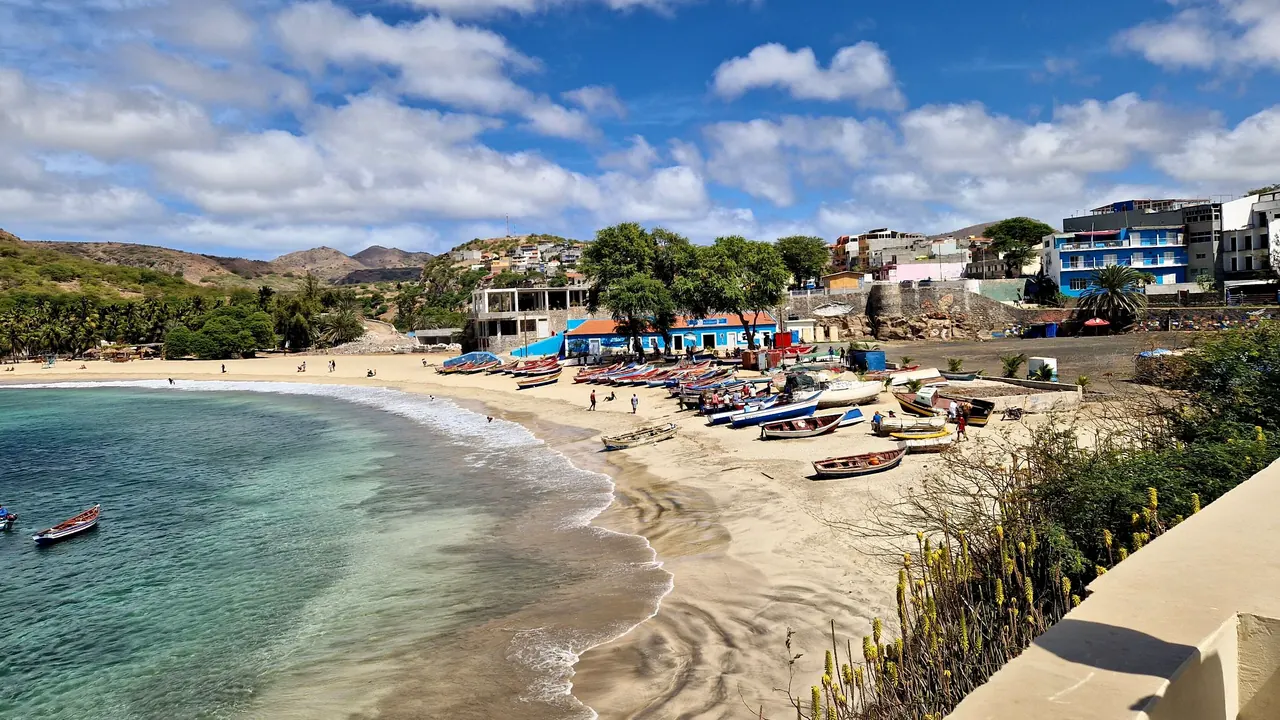
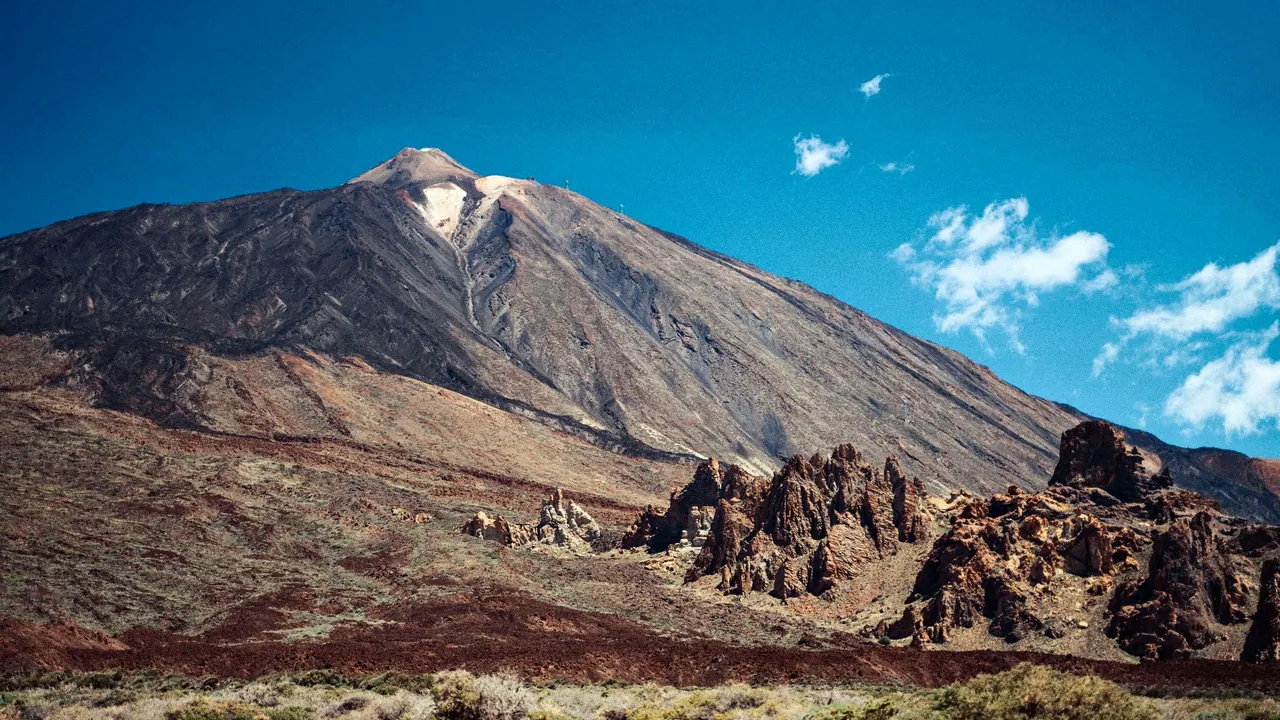
Photos: Cape Verde by Hanay, CC BY-SA 3.0, cropped; Canary Islands by Benni Fish, Pexels License.
Cape Verde or Canary Islands?
Our verdict in twelve categories, each scored against the same fixed benchmark cities, and the climate month by month, so you can choose for your trip.
Choose Cape Verde for
- live music and the arts
Cape Verde suits travellers who want sun further south and a sense of distance. It has the empty, dune-backed sands of Boa Vista, warmer water in autumn and winter, evenings of morna in Mindelo's bars, and wind on Sal for kitesurfers. It works best as a stay on one or two islands, with a ferry across to Santo Antão for walking, rather than as a tour, because travel between the islands is slow and unreliable.
Choose Canary Islands for
- families
- shopping
- nightlife
For most other trips the Canary Islands are the easier and broader choice. Families get calm sandy water and big attractions. Walkers get Teide, the Anaga laurel forest and a different landscape on every island. Away from the beach there is more to eat, more to see and more going on at night in places like La Laguna and Las Palmas. A hire car and short ferry crossings make it simple to explore.
Scoreboard
Twelve categories on one fixed scale from 0 to 100. The shaded stretch is the gap between the two.
Your match
Pick a travel style or drag the sliders, and both match scores follow your weighting.
Wins on live music and the arts with your weighting.
Wins on families and shopping with your weighting.
What matters to you?
Category by category
What the scores mean for a trip.
Beaches & swimming
In both places the best sand is on the flat eastern islands, and the volcanic west is mostly black sand or rock. Cape Verde's beaches stand out for being empty and warm. Boa Vista's long, dune-backed beaches such as Praia de Chaves have almost nothing built on them, and the sheltered bay at Santa Maria on Sal is the easy swim, in water a few degrees warmer than in the Canaries.
The Canaries have more good beaches and more variety. There are the dunes of Corralejo and Maspalomas, the lagoon at Sotavento, the Papagayo coves on Lanzarote, and Las Canteras in Las Palmas, a city beach protected by a reef. Trade winds and swell affect exposed shores in both places, so the sheltered bays matter either way.
Food & drink
Cape Verde's cooking is plain island food: cachupa stew, grilled tuna and wahoo, wine from Fogo and grogue from the cane mills of Santo Antão. The meals worth having are in Mindelo and Praia. On Sal and Boa Vista, most visitors eat from resort buffets.
The Canaries give a curious eater more to look for. There are wrinkled potatoes with mojo sauce, Majorero goat cheese, wines grown in the volcanic ash of La Geria, and the autumn guachinches in northern Tenerife. The catch is that you have to leave the southern resort strips and eat in Las Palmas, La Laguna or the harbour villages.
Where in Cape Verde: Mindelo, Praia, Fogo, Santo Antão
Culture & sights
Cape Verde has few sights, but they carry weight. Cidade Velha on Santiago, with its ruined cathedral and fortress, tells the story of the Atlantic slave trade. The former prison camp at Tarrafal is a sober museum, and Mindelo's pastel colonial streets make it the prettiest town. That is most of the list.
The Canaries have more to fill the days. There is the UNESCO-listed colonial grid of La Laguna, Vegueta and the Casa de Colón in Las Palmas, César Manrique's buildings shaped into the lava of Lanzarote, and the pre-Hispanic Cueva Pintada at Gáldar. Each makes a good half-day rather than a reason to go, but there are many more of them.
Where in Cape Verde: Santiago, Mindelo, Fogo
Nightlife
Cape Verde's best nights out are local, and most of them are in Mindelo, where the waterfront bars fill late at weekends. The other options are the kizomba and funaná clubs of Praia and the beach bars of Santa Maria. On Boa Vista and the mountain islands, evenings end early.
The Canaries go out bigger and later. Playa de las Américas and Playa del Inglés run bars and clubs until dawn all year, and Playa del Inglés has one of Europe's largest gay scenes. Las Palmas and La Laguna have student bars in their old quarters. Both places peak at carnival: Mindelo's in Cape Verde, and the all-night street parties of Santa Cruz and Las Palmas in the Canaries.
Where in Cape Verde: Mindelo, Santa Maria, Praia
Nature & outdoors
Both are excellent for the outdoors, and both split into two kinds of landscape. Cape Verde has the green ravines and mule paths of Santo Antão and the hard climb up Fogo's 2,829m volcano. Flat, windy Sal and Boa Vista are first-rate for kitesurfing, with loggerheads nesting in summer and humpbacks passing Boa Vista in spring. Getting to the mountain islands is a trip in itself.
The Canaries have more, and it is closer together. Tenerife alone has Teide at 3,715m, the laurel forest of Anaga, the Masca gorge, and pilot whales and dolphins all year. Timanfaya, Roque Nublo, Garajonay and the Caldera de Taburiente add a different landscape on each island, and Fuerteventura is the place for wind and wave sports.
Day trips
Cape Verde's islands are small, so there are few outings. The best is the circuit from Praia to Cidade Velha, Assomada and Tarrafal on Santiago. From Mindelo, an hour's ferry reaches Santo Antão for a day in Ribeira Grande and Ponta do Sol. Sal's outings to Pedra de Lume and Palmeira are slight.
The Canaries offer more choice, by ferry or hire car. From southern Tenerife you can reach La Gomera, the north has Garachico and the wine villages, and Las Palmas is a day out by fast ferry. From Lanzarote there are La Graciosa and the Sunday market at Teguise. The towns are pleasant rather than memorable, but there are enough of them for a week.
Where in Cape Verde: Santiago, São Vicente, Sal
Good for families
This is where the two differ most. Cape Verde suits families who are happy to stay put in an all-inclusive resort on Sal or Boa Vista. The highlights are the calm bay at Santa Maria, turtle hatching walks and floating in the salt pools of Pedra de Lume. There are no zoos or aquariums, the open beaches can be rough, and healthcare on the smaller islands is basic.
The Canaries are set up for children. There is calm sandy water at Corralejo, Sotavento and Playa Blanca, a zoo and marine park in Puerto de la Cruz, water parks on Tenerife and Gran Canaria, an aquarium in Las Palmas, and whale-watching boats. Winter stays mild, though the mountain roads are hard going for toddlers.
Getting around
Within a single island, Cape Verde is manageable. Santa Maria on Sal and Mindelo on São Vicente are easy on foot, and shared minibuses called aluguers run on Santiago and Sal. Combining islands is the hard part: flights are sparse and ferries are long and sometimes cancelled, so an island-hopping trip needs spare days.
The Canaries are simpler. Most visitors hire a car on one island. Tenerife and Gran Canaria have fast coastal motorways, buses to most towns and a tram between Santa Cruz and La Laguna. Inland roads are slow and full of hairpins, and other islands still mean a ferry or a flight, but crossings such as Tenerife to La Gomera are short.
Where in Cape Verde: Sal, São Vicente, Santiago
Shopping & style
Cape Verde has very little shopping. The things worth taking home are grogue, Fogo coffee, goat cheese and woven cloth. Mindelo has a handful of craft and music shops and Praia has the crowded Sucupira market, while the stalls on Sal and Boa Vista mostly sell imported souvenirs.
The Canaries have real shopping streets in Las Palmas, along Triana and Mesa y López, and a smaller version in Santa Cruz. The lower sales tax makes perfume and spirits a common buy. For lace, pottery made without a wheel and timple guitars, Teguise's Sunday market is the place to go.
Where in Cape Verde: Mindelo, Praia
Affordability
Overall the two cost much the same, but the money goes on different things. A package week on Sal or Boa Vista works out much like one in southern Tenerife or Gran Canaria. Step outside the hotel, though, and Cape Verde's resort islands feel dearer, because almost everything there is imported. In the Canaries, the lower sales tax keeps drinks and fuel cheap, a hire car costs little and self-catering is easy.
Both have a cheaper side for independent travellers. In Cape Verde it is Santiago, São Vicente and Santo Antão, with guesthouses, set lunches and aluguers, as long as you stick to one or two islands, because flights between them soon add up. In the Canaries it is the smaller islands and the northern towns. Avoid the winter peaks in the south and the luxury enclaves such as Costa Adeje.
Where in Cape Verde: Santo Antão, Santiago, São Vicente
Live music & performing arts
The two are close here, but they offer very different evenings. Cape Verde's strength is live music in ordinary places. Morna is played in Mindelo's bars and restaurants most nights, Praia has funaná and batuque, and São Vicente holds the Baía das Gatas festival. There is no opera or orchestra.
The Canaries have the formal stage instead. The Tenerife Symphony Orchestra plays at the Auditorio de Tenerife, and Las Palmas has the Gran Canaria Philharmonic and an opera season, with visiting orchestras in winter. Away from the capitals, the local sound is timple folk music at village fiestas, and the resorts mostly put on tribute acts.
Where in Cape Verde: Mindelo, Praia
Wellness & relaxation
Neither has a bathing tradition of its own. In Cape Verde, relaxation comes from the slow pace, the resort spas of Sal and Boa Vista and a float in the brine pools of Pedra de Lume, while the villages of Santo Antão and Maio are good for switching off.
The Canaries offer more ways to unwind. There are large hotel spas with seawater thalassotherapy in southern Tenerife and Gran Canaria, yoga and walking retreats on quiet La Gomera and El Hierro, and rural cottages in northern Tenerife and the Gran Canaria highlands.
When should you go?
Pick your month, and for a country the place in it. The climate figures are measured averages, not a forecast.
Sal (Cape Verde) in July
Canary Islands in July
Daytime high, °C
Rainfall in the month, mm
Temperature and rainfall are climate normals, averaged over the years shown. Sal (Cape Verde): 1991-2020 normals, Sal (15.8 km from centre). Canary Islands: 1991-2020 normals, Tenerife Sur (16.1 km from centre).
On Sal, Cape Verde's resort island, the weather hardly changes. Daytime highs run from about 25°C in winter to 31°C in September. There is almost no rain apart from a short damp spell in late summer, which peaks at 38mm in September. The sea is warmest from August to November, reaching 27°C in September and October, so autumn is the best time to swim there. The cooler winter months are the most comfortable for getting out on foot.
The Canary Islands are a few degrees cooler all year and a little wetter in winter. Most of their modest rain falls between October and February, and December is the wettest month. Summer is dry and very sunny, with July the brightest month. The sea falls to about 19°C from February to April, colder than Sal's sea in any month. So for winter swimming Cape Verde has the warmer water, while the Canaries are better for walking and sightseeing from autumn through to spring.
Which traveller are you?
On a family trip with young children, choose the Canary Islands. Gran Canaria alone has calm sandy beaches in the south, zoo and water parks nearby and an aquarium in Las Palmas. Cape Verde offers resort pools and the bay at Santa Maria, little more.
For a trip built around live music, choose Cape Verde. Morna, the song form made famous by Cesária Évora, is played in Mindelo's bars most evenings, and Praia has funaná and batuque. The Canaries have orchestras in their capitals, but their resort stages mostly host tribute acts.
More comparisons
Each shares a side with Cape Verde or Canary Islands.
Where else could you go?
Set Cape Verde against any other country.