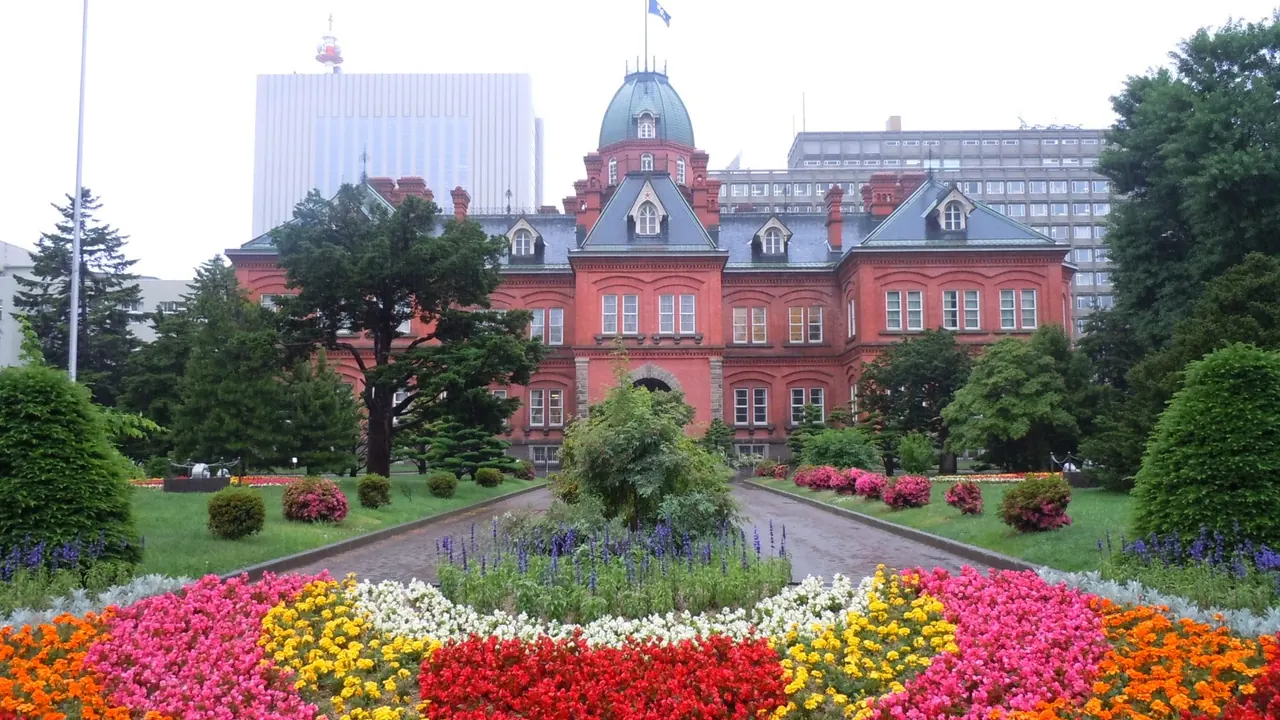
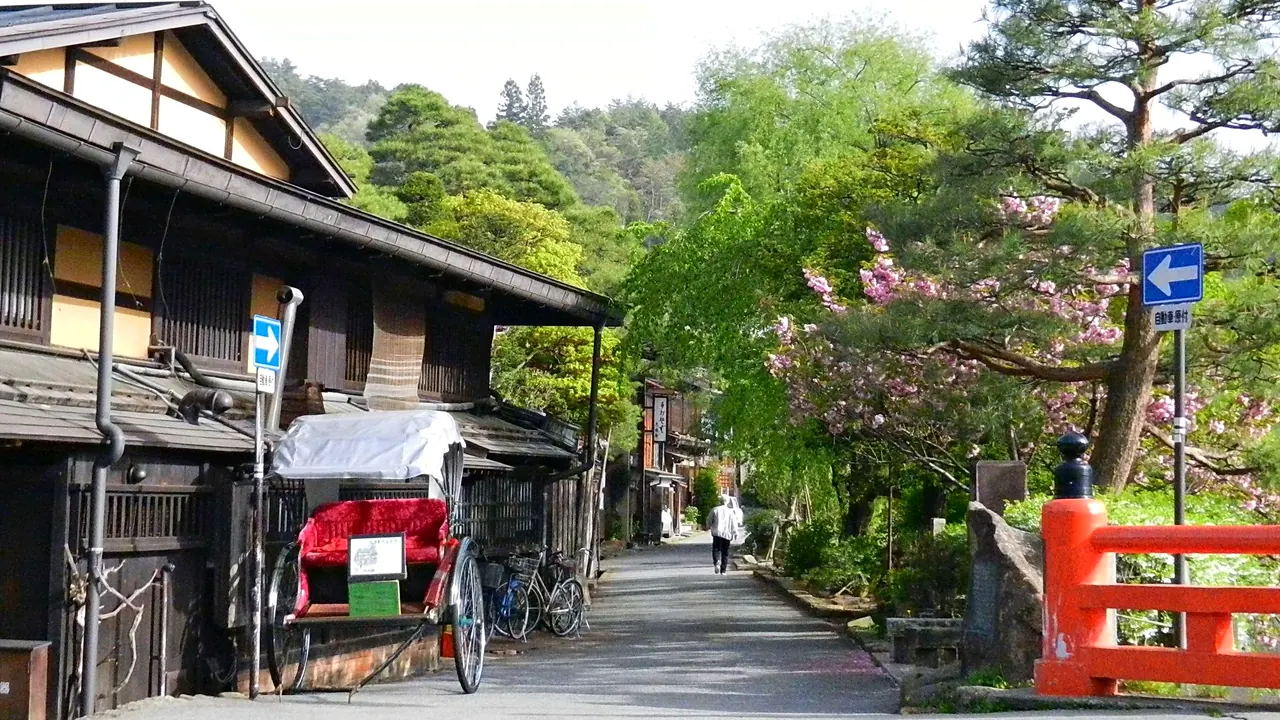
Photos: Sapporo by Feri88, CC BY 3.0, cropped; Takayama by lienyuan lee, CC BY 3.0, cropped.
Sapporo or Takayama?
Our verdict in twelve categories, each scored against the same fixed benchmark cities, and the climate month by month, so you can choose for your trip.
Choose Sapporo for
- nightlife
- food and drink
- live music and the arts
Sapporo is the better pick for a longer stay with plenty going on. It eats far better, has a proper night out in Susukino and works well for families. It also has ski slopes and mountain trails close enough to reach on the subway or a short bus ride. Choose it if you want a working city with snow, seafood and late evenings, and plan on spending your days outdoors rather than in old streets.
Choose Takayama for
- culture and sights
- day trips
Takayama suits travellers who want old Japan at a slower pace. The Edo-period merchant lanes, the sake breweries with cedar balls over the door and the thatched farmhouses of Shirakawa-go give it a character Sapporo, built in the 1870s, never had. Evenings end early and there is little for children, so it works best for two or three quiet nights with a ryokan bath, as part of a wider route through the Alps.
Scoreboard
Twelve categories on one fixed scale from 0 to 100. The shaded stretch is the gap between the two.
Your match
Pick a travel style or drag the sliders, and both match scores follow your weighting.
Wins on nightlife and food and drink with your weighting.
Wins on culture and sights and day trips with your weighting.
What matters to you?
Category by category
What the scores mean for a trip.
Beaches & swimming
Neither city is a beach destination. Sapporo at least has a coast within reach. Plain sand at Ishikari or near Otaru makes a summer afternoon out for a swim in late July and early August.
Takayama is deep in the mountains, about two hours from Toyama Bay, so on a trip there the sea plays no part at all.
Food & drink
Sapporo is one of Japan's great places to eat, and the gap is wide. Hokkaido's seafood and dairy feed seafood bowls at Nijo Market, whole winter crabs, miso ramen, soup curry and jingisukan lamb, with beer halls in the old brick brewery and the food halls on top.
Takayama has a narrower menu built around Hida beef, soy-glazed dango, local ramen and tastings at its old sake breweries. It is a delight for two or three days, but its restaurants close early and the choice soon repeats, where Sapporo could keep you eating well for a week.
Culture & sights
On culture, Takayama is the stronger stop, because its history has survived. Sanmachi Suji's dark-timbered merchant lanes, Takayama Jinya, the Kusakabe and Yoshijima houses and the temples along the Higashiyama walking course make the whole old town feel like a museum.
Sapporo is too young for any of that. It offers a Meiji clock tower, the red-brick former government building, the Ainu galleries of the Hokkaido Museum and Moerenuma Park, which is more interesting as a piece of design than as history.
Nightlife
This is one of the widest gaps between the two. Susukino stacks thousands of tiny bars, karaoke boxes and izakaya floor above floor, and stays busy past midnight even in winter, though the evening is about bar-hopping rather than clubbing.
In Takayama, a beer or sake in one of a handful of small bars near the station is about as far as an evening goes. Most visitors eat at their ryokan and are in bed early.
Nature & outdoors
Both are mountain bases, but Sapporo has the outdoors on its doorstep. Teine and Kokusai offer skiing inside the city limits, Niseko's powder is about two hours away, and Shikotsu-Toya's caldera lake and volcanoes make easy summer trips.
Takayama's scenery is higher and wilder. The Shin-Hotaka ropeway climbs towards 3,000m peaks and Kamikochi has trails beneath the Hotaka range. Reaching them depends on regional buses, though, and Kamikochi closes in winter.
Day trips
Takayama has slightly the better day trips. Shirakawa-go's UNESCO-listed thatched village is under an hour away by bus, the canal town of Hida-Furukawa is a short train ride, and Gero Onsen is a classic spa outing.
Sapporo's best day out is Otaru's canal and sushi, with the Yoichi whisky distillery on the way. Beyond that, Upopoy and Noboribetsu cover Ainu culture and volcanic hot springs, but most other trips lead to landscape rather than towns.
Good for families
Sapporo is the more practical base with children for a longer stay. The subway is simple to use, and when snow or rain sets in, the underground walkway from the station to Susukino keeps everyone moving under cover. Asahiyama Zoo makes a day out by train, and in summer the fountains and shallow pool at Moerenuma are a good way to cool off. The catch is January and February, when children need proper winter clothing to cope with the cold.
Takayama is gentler to manage but thinner on things to do. The flat old town begins a short walk from the station, so small legs are rarely tested, and winter brings snow to play in. Most of what there is to see is old houses and craft shops, though, so the town works best as a night or two on a wider route through Japan rather than as a family base.
Getting around
Sapporo has the fuller system. Three subway lines and a streetcar loop run across a numbered grid, and an underground walkway lets you cross the centre in winter without setting foot on the ice.
Takayama needs less of a system because its whole old town is a short, flat walk from the station. Leaving it is harder: Shirakawa-go and the Alps depend on regional buses that need planning around connections.
Shopping & style
Sapporo is better for general shopping. It has department stores and malls above the station, the long covered Tanukikoji arcade, and plenty of edible souvenirs such as Hokkaido chocolate, cheese and dried seafood.
Takayama has almost no fashion, but it is the place for traditional crafts. Look for amber Shunkei lacquerware, yew carvings, bentwood furniture and brewery sake, all things Sapporo cannot match.
Affordability
Sapporo is a little easier on the budget. Its business hotels are good value, ramen and soup curry are cheap, and many of its parks and landmarks are free to visit. Costs rise with crab dinners and ski passes, and during the Snow Festival week.
In Takayama, everyday eating is cheap, but the things most visitors come for are not: the ryokan night with a full dinner and a proper Hida beef meal both cost a lot. Rooms also become expensive in festival weeks.
Live music & performing arts
Sapporo has an actual performing arts calendar. The Kitara concert hall and its symphony orchestra play there year round, the Pacific Music Festival runs each July, there is a large theatre for touring shows, and Susukino has jazz bars and small live venues.
In Takayama, performance means the spring and autumn festival, with its floats, string-worked karakuri puppets and lantern processions. These are memorable if your dates match, but the rest of the year there is next to nothing.
Wellness & relaxation
Both cities do relaxation through hot springs, and they are about equal. In Sapporo, the bathing is a trip out of town, to the river gorge at Jozankei or to Noboribetsu. Back in the city there are wide streets and parks.
Takayama makes slowing down part of the stay itself. Many ryokan pipe spring water into their own baths, so a soak and a yukata evening come with the room, and the riverside pools of Okuhida and Gero Onsen are close by.
When should you go?
Pick your month. The climate figures are measured averages, not a forecast.
Sapporo in July
Takayama in July
Daytime high, °C
Rainfall in the month, mm
Where the figures come from
Takayama's sunshine is measured 65 km from the centre, at Matsumoto.
Temperature and rainfall are climate normals, averaged over the years shown. Sapporo: 1991-2020 normals, Sapporo (2.2 km from centre). Takayama: 1971-2000 (sunshine 1991-2020, rainfall 1981-2010) normals, Takayama (0.5 km from centre).
Sapporo is Japan's far north, with long, snowy winters that hover around freezing from December to February and short days. That is ideal for skiing and the Snow Festival but harsh for long walks. Summer is mild rather than hot. July and August reach about 26°C, and the sea only warms enough for a swim in early August. September is the wettest month, while late May and June are dry and sunny, the most comfortable time for walking the grid and the parks. October brings autumn colour.
Takayama is a few degrees warmer all year and much wetter in summer. July and September are its rainiest months, at well over 250mm, and August highs near 30°C feel close in the mountain basin. Its winters are cold, but they are sunnier than Sapporo's. Late April to May and October to early November are the best times for the old town and the high valleys.
Which traveller are you?
For a culture and arts trip, choose Takayama for its intact Edo merchant quarter, the old feudal government office and the folk village of thatched farmhouses. Sapporo's Meiji landmarks and Noguchi's park are interesting, but you can see them in a couple of days.
For a food and nightlife trip, Sapporo is easily ahead. It has miso ramen, soup curry, morning seafood bowls and lamb grilled at the table, followed by bar-hopping through Susukino's towers late into the night. Takayama's Hida beef and sake are excellent, but the town is quiet by eleven.
On a family trip with children, Sapporo works better. It has the Snow Festival slides, beginner ski slopes inside the city, a zoo with polar bears and big parks to run around in. Takayama's markets and floats will hold children's interest for a day, but nothing there is built for them.
Before you go
| Measure | Sapporo | Takayama |
|---|---|---|
| Official language | Japanese | Japanese |
| Currency | Yen (JPY) | Yen (JPY) |
| Sockets | AB100 V, 50 and 60 Hz depending on the region | AB100 V, 50 and 60 Hz depending on the region |
| Driving side | Left | Left |
| Time zone | UTC+9 | UTC+9 |
| Emergency number | Police 110, fire 119 | Police 110, fire 119 |
| Elevation | 5 m | 573 m |
| Main airport | New Chitose Airport (CTS)42 km from centre42 non-stop destinations | Chubu Centrair International Airport (NGO)149 km from centre43 non-stop destinations |
| Public holidays this year | 16 days | 16 days |
By the numbers
| Measure | Sapporo | Takayama |
|---|---|---|
| City population | 1,959,313 | 85,199 |
| People per km² | 1,747 | 39 |
| Museums within 10 km | 33 | 14 |
| UNESCO World Heritage sites within 50 km | 1 | 1 |
| Swim season, months above 21 °C | 1 month | - |
Where else could you go?
Every comparison below shares a destination with this one, so you can follow Sapporo or Takayama somewhere new.