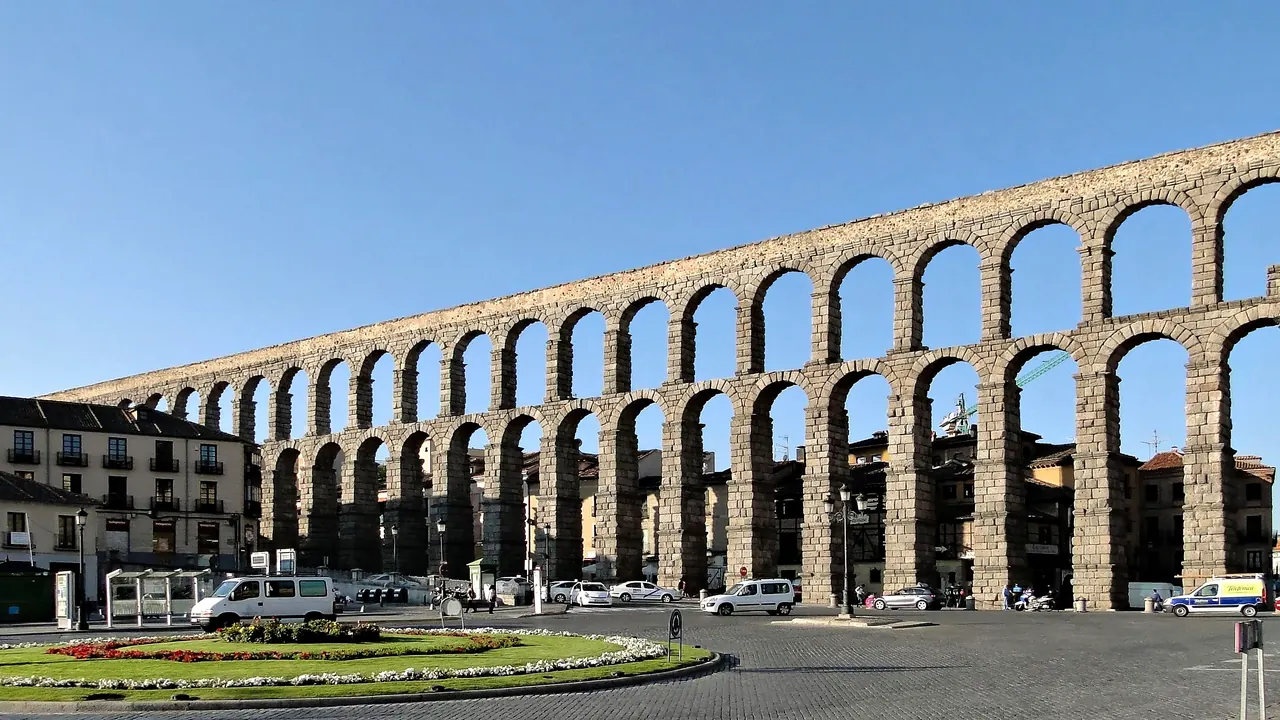
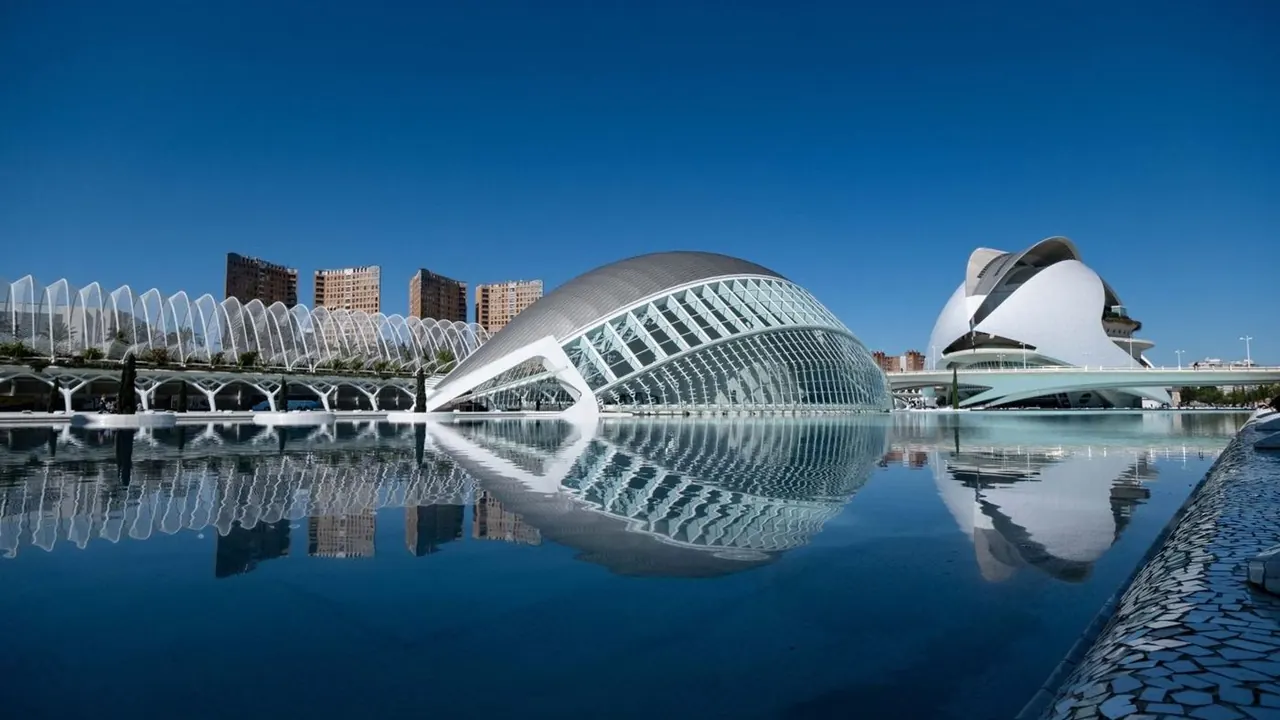
Photos: Segovia by Bernard Gagnon, CC BY-SA 3.0, cropped; Valencia by Francesco Ungaro, Pexels License.
Segovia or Valencia?
Our verdict in twelve categories, each scored against the same fixed benchmark cities, and the climate month by month, so you can choose for your trip.
Choose Segovia for
- nature and the outdoors
- day trips
- culture and sights
Segovia suits travellers who want a compact monument town with mountains on the doorstep. The aqueduct, cathedral and Alcázar sit along a single ridge, the Sierra de Guadarrama starts within half an hour, and fast trains and short drives put Madrid, La Granja, Ávila and the walled villages within easy reach. It works best as a quiet base for two or three days of sightseeing and walking, with long lunches of roast suckling pig rather than late nights.
Choose Valencia for
- beaches
- nightlife
- shopping
Valencia is the better pick for a fuller, more varied trip. It adds what Segovia cannot: wide sandy beaches, the home of paella and a great market hall, late nights in Ruzafa, an opera house, and the aquarium and science museum that keep children busy. Its flat streets and bike lanes make it easy to get around, and its winters are far milder, so it rewards a longer stay at almost any time of year.
Scoreboard
Twelve categories on one fixed scale from 0 to 100. The shaded stretch is the gap between the two.
Your match
Pick a travel style or drag the sliders, and both match scores follow your weighting.
Wins on nature and the outdoors and day trips with your weighting.
Wins on beaches and nightlife with your weighting.
What matters to you?
Category by category
What the scores mean for a trip.
Beaches & swimming
Segovia has no beach at all, and the coast is a long day's drive away. In summer the options are pools and the cold reservoirs and river pools of the Guadarrama foothills, which are fine for cooling off but not something to plan a trip around.
Valencia is a genuine beach city. The wide golden sand of Las Arenas, Malvarrosa and Patacona is about twenty minutes from the centre, with shallow, calm water. Further south, El Saler and La Devesa give quieter beaches backed by pine woods and dunes.
Food & drink
Segovia is a destination for one kind of meal: cochinillo and lechazo from wood-fired ovens, with judiones beans from La Granja and ponche segoviano to finish. Beyond those roasts the choice narrows quickly, and the dining rooms by the aqueduct are built around lunchtime coach groups.
Valencia offers more range and more everyday pleasure. Paella and the other rice dishes are at their best by the sea at Las Arenas or in the Albufera villages, the modernista Mercado Central is a sight in itself, and Ruzafa adds tapas bars and creative cooking. Horchata with fartons gives summer afternoons a local ritual Segovia has no answer to.
Culture & sights
The two are evenly matched, but in very different ways. Segovia is a concentrated monument town: the Roman aqueduct, the late Gothic cathedral, the clifftop Alcázar and a run of Romanesque churches line one ridge, and the essentials fit into a full day. Its museums are modest; the buildings are the point.
Valencia spreads its sights across more centuries and more space. The silk exchange of the Lonja, the cathedral with its Holy Grail chalice and the medieval gates sit in Ciutat Vella, while the City of Arts and Sciences brings futuristic architecture. The Museo de Bellas Artes and IVAM give it the stronger galleries, and it needs two or three days.
Nightlife
Segovia's evenings are a tapas round on Plaza Mayor and the streets around it, busy on summer terraces but quiet early on weeknights and in winter. Clubs are few, and locals head to Madrid for a big night.
Valencia keeps Spanish hours. Ruzafa's cocktail and wine bars run past midnight, El Carmen and the university areas are cheaper and younger, and in summer open-air clubs near the port and Malvarrosa last until dawn. During Fallas in March the whole city parties in the street.
Nature & outdoors
Segovia has the mountains. The Sierra de Guadarrama fills the view from the Alcázar, with the pine forests of Valsaín and the passes of Navacerrada and Cotos within half an hour, trails up Peñalara at 2,428m and snow in winter. The Eresma valley path and the vultures of the Hoces del Duratón gorge add gentler outings.
Valencia's outdoors is flat and watery: sunset boat trips on the Albufera lagoon among rice fields and herons, dune walks in the Devesa del Saler and about 9km of the Turia gardens for running and cycling. For climbing or hill walking you need to drive to the Sierra Calderona or Chulilla.
Day trips
Segovia is the better base, because so much lies close by. The palace and fountain gardens of La Granja are twenty minutes away, high-speed trains reach Madrid in under half an hour, and Ávila is about an hour. With a car, Pedraza, Sepúlveda, El Escorial and the Ribera del Duero vineyards all make easy days out.
Valencia's outings are good but more spread out. Sagunto and Xàtiva, each with a castle, are about half an hour by train, and Cuenca's hanging houses are an hour on the fast train. Peñíscola, Elche and the Costa Blanca take closer to two hours.
Good for families
Segovia works for a short visit with children, who love climbing the Alcázar tower and staring up at the aqueduct arches. After that there is little aimed at them, and the steep cobbles are hard work with a pushchair, though La Granja's gardens give them room to run.
Valencia is much easier for a family stay. The Oceanogràfic, the hands-on science museum and Bioparc fill several days, the Turia gardens have the giant Gulliver playground and flat paths for scooters, and the shallow city beaches suit small children.
Getting around
In Segovia everything worth seeing lies along one ridge from the aqueduct to the Alcázar, so a morning on foot covers it, though the streets are steep and cobbled. The high-speed station is a bus ride out of town, and the villages and mountain trailheads really need a car.
Valencia is easier to move around. The centre is flat, the Turia gardens form a car-free cycling route across the city, and bike lanes and a bike-share scheme cover the rest. Metro and tram lines reach the beaches, the port and the airport, so a car is only needed for the hills.
Shopping & style
Segovia's shopping is souvenirs on Calle Real, some local ceramics and embroidery, and boxed ponche or La Granja beans to take home. For anything more, people go to Madrid.
Valencia offers a proper shopping street scene in the Ensanche around Calle Colón, with chains, labels and luxury boutiques, plus independent and vintage shops in El Carmen and Ruzafa. Saffron and rice from the Mercado Central and ceramics from Manises make better gifts than anything in Segovia.
Affordability
Costs are broadly similar, but they rise at different times. Segovia is cheapest midweek and in winter, with plenty of small family-run guesthouses, while summer weekends bring visitors from Madrid and the famous roasts make one meal a splurge.
Valencia stays reasonable for most of the year, helped by set lunch menus, cheap tapas, inexpensive public transport and free or cheap museums. The pressure points are beach hotels in high summer and Fallas in March, and the City of Arts and Sciences attractions add up for families.
Live music & performing arts
Segovia's stage life comes in seasons: the Titirimundi puppet festival in spring, summer concerts in churches and palace gardens, and touring shows at the Teatro Juan Bravo. Outside those times there is little on.
Valencia has a year-round programme. The Palau de les Arts Reina Sofía stages opera and ballet with its own orchestra, the Palau de la Música hosts the city orchestra, and Ruzafa has a small jazz circuit. The wind bands heard all through Fallas are a local tradition of their own.
Wellness & relaxation
Neither city is a spa destination, but Valencia offers a little more. Arab-style bath houses and hotel spas cover the basics, and slow walks along the seafront promenade and the shady Turia gardens set a relaxed Mediterranean pace.
Segovia's calm is of a different kind: a small old town that empties once the day visitors leave in the late afternoon, evening strolls along the walls and pine-scented air from the sierra, with only a few hotel spas.
When should you go?
Pick your month. The climate figures are measured averages, not a forecast.
Segovia in July
Valencia in July
Daytime high, °C
Rainfall in the month, mm
Temperature and rainfall are climate normals, averaged over the years shown. Segovia: 1991-2020 normals, Segovia (0.3 km from centre). Valencia: 1991-2020 normals, Valencia (1.6 km from centre).
Segovia sits high on the Castilian plateau and has proper seasons. Winter highs of around 8°C make December to February cold for long days on the streets, though they are often bright. July and August reach about 30°C and are very sunny and dry, pleasant in the mountains but hot on the old town's exposed squares at midday. The most comfortable months for walking are late May and June, then September and early October, with May and October bringing the most rain of the year.
Valencia is milder all year, with winter highs near 17°C, so it makes sense as a winter city break when Segovia is chilly. The sea warms enough for comfortable swimming from June into October, peaking at about 26°C in August, when the city itself is hot and humid for sightseeing. Summer is almost dry, but September and October are the wettest months, with around 70mm falling in short heavy bursts, so late spring and early autumn are the best balance of beach and streets.
Which traveller are you?
On a beach and sun trip, Valencia is the clear choice. Malvarrosa and Las Arenas are a short tram ride from the centre, the wilder dunes of El Saler lie to the south, and the sea is warm for months. Landlocked Segovia offers only pools and reservoirs.
For an outdoors trip, Segovia has the edge. The Sierra de Guadarrama rises right behind the town, with pine forests at Valsaín, trails up Peñalara and its glacial lakes, and winter snow. Valencia's nature is flat wetland and coast, with real hills a drive away.
On a food and nightlife trip, Valencia gives far more. Rice dishes by the sea, the Mercado Central and horchata in Alboraya fill the days, and Ruzafa and El Carmen keep going past midnight. Segovia's roasts are superb, but its evenings end early.
Before you go
| Measure | Segovia | Valencia |
|---|---|---|
| Official language | Spanish | Spanish |
| Currency | Euro (EUR) | Euro (EUR) |
| Sockets | CF230 V, 50 Hz | CF230 V, 50 Hz |
| Driving side | Right | Right |
| Time zone | UTC+1, UTC+2 in summer | UTC+1, UTC+2 in summer |
| Emergency number | 112 | 112 |
| Elevation | 1,002 m | 15 m |
| Main airport | Adolfo Suárez Madrid–Barajas Airport (MAD)68 km from centre241 non-stop destinations | Valencia Airport (VLC)9 km from centre111 non-stop destinations |
| Public holidays this year | 12 days | 13 days |
By the numbers
| Measure | Segovia | Valencia |
|---|---|---|
| City population | 52,375 | 840,792 |
| People per km² | 320 | 6,242 |
| Museums within 10 km | 11 | 45 |
| UNESCO World Heritage sites within 50 km | 2 | 2 |
| Swim season, months above 21 °C | - | 5 months |
Where else could you go?
Every comparison below shares a destination with this one, so you can follow Segovia or Valencia somewhere new.
- Madridvs Segovia
- Benidormvs Valencia
- Toledovs Segovia
- Alicantevs Valencia
- Salamancavs Segovia
- Zaragozavs Valencia