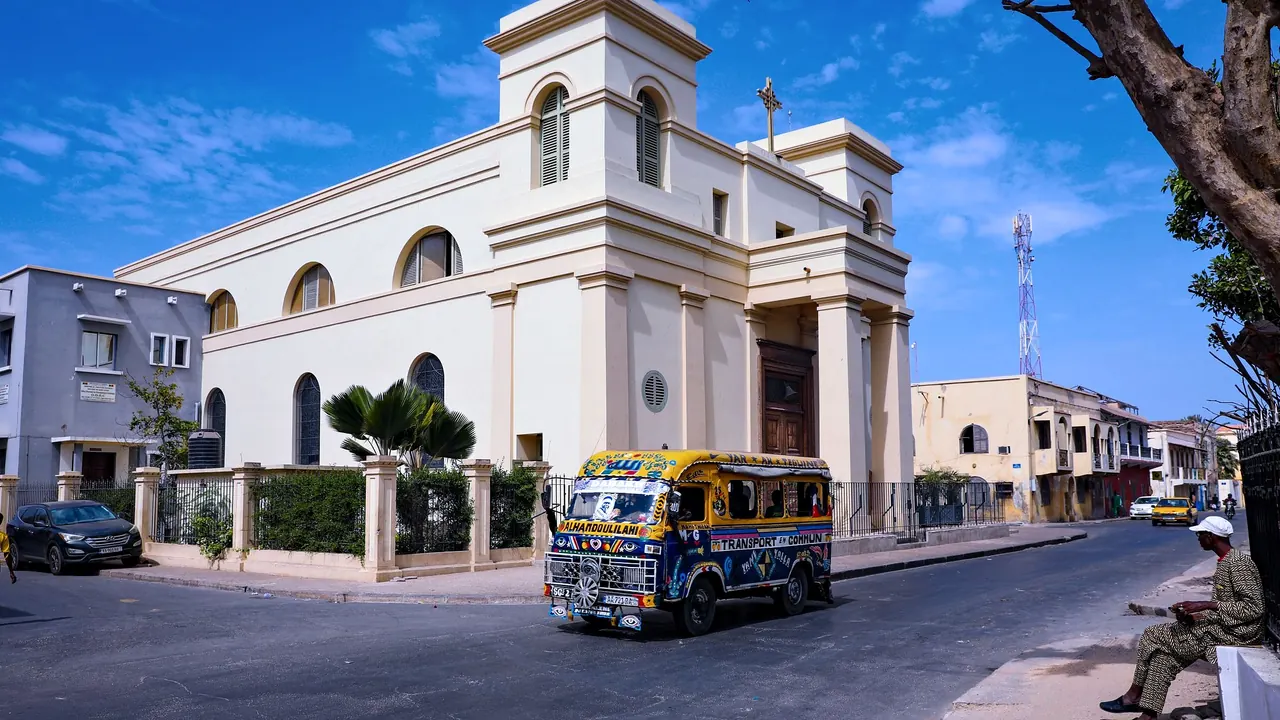
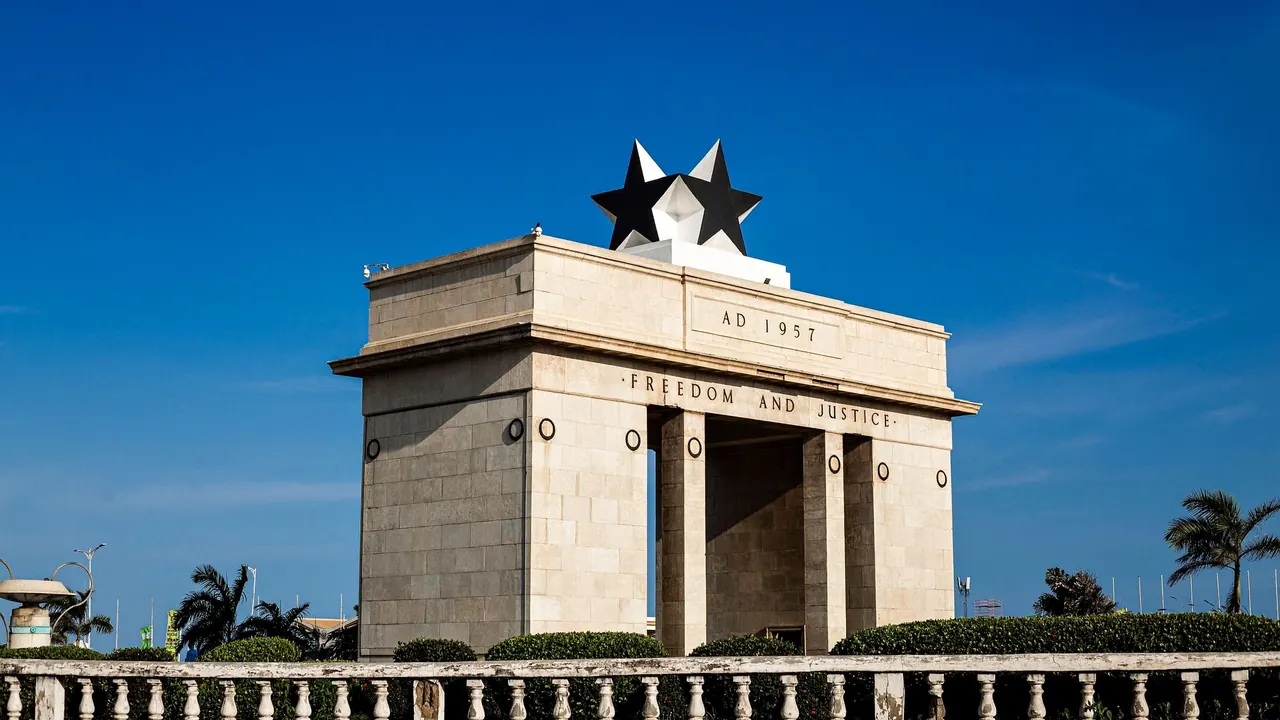
Photos: Senegal by Lom Doudou, Pexels License; Ghana by Axel Dagrou, Pexels License.
Senegal or Ghana?
Our verdict in twelve categories, each scored against the same fixed benchmark cities, and the climate month by month, so you can choose for your trip.
Choose Senegal for
- wellness
- beaches
- live music and the arts
Senegal suits travellers who want the beach and the music to carry much of the trip. Cap Skirring and the Petite Cote give it the better swimming, and Dakar's late nights of live mbalax give it the stronger stage. The mangrove ecolodges of the Saloum Delta make it easy to slow down, while Goree and Saint-Louis supply the history in compact doses.
Choose Ghana for
- shopping
- culture and sights
- day trips
Choose Ghana if heritage is the main reason for going. The slave castles at Cape Coast and Elmina carry more weight than anything on the Senegalese coast, and Kumasi with its craft villages makes a richer base for day trips and for buying cloth. Kakum and Mole add forest and elephants. The beach is best treated as a few closing days on the Western Region coast, not the centre of the trip.
Scoreboard
Twelve categories on one fixed scale from 0 to 100. The shaded stretch is the gap between the two.
Your match
Pick a travel style or drag the sliders, and both match scores follow your weighting.
Too close to call, level with your weighting
Wins on wellness and beaches with your weighting.
Wins on shopping and culture and sights with your weighting.
What matters to you?
Category by category
What the scores mean for a trip.
Beaches & swimming
Senegal has the better swimming, as long as you choose the right stretch. Cap Skirring in Casamance has wide sand and warm water in the dry season, and the Petite Cote around Saly and Somone has calm resort beaches within reach of Dakar. The capital's own open beaches are cool in winter and have strong currents.
Ghana's sea stays warm all year, but heavy surf and rip currents mean much of the coast is better for sitting than for swimming. Busua's sheltered bay and the calm river side of the sandbar at Ada Foah are the exceptions. Most visitors spend only a few days on the beach.
Where in Senegal: Cap Skirring, Petite Cote, Ngor
Where in Ghana: Western Region coast, Busua, Kokrobite, Ada Foah
Food & drink
There is little between the two at the table, but they eat differently. Senegal's cooking is built on fish and sharp, bright flavours, and Dakar gives it the broader setting, where a plate of thieboudienne at a canteen and a serious dinner on the Almadies fit into the same day. Away from the capital the pleasures are simpler, from the grilled catch on the Petite Cote to Saint-Louis's pride in its own rice and fish. Plan around the midday meal, which is when the best pots are full.
Ghana's food is heavier and hotter, a matter of pounded staples, groundnut soups and pepper, and it is at its best eaten informally at chop bars and roadside grills. Kumasi is the place to go for fufu at its source, and Cape Coast serves smoked fish with kenkey. Accra's restaurant scene is narrower than Dakar's, and once you leave it you are choosing between local food and hotel menus.
Where in Senegal: Dakar, Saint-Louis, Petite Cote
Where in Ghana: Accra, Kumasi, Cape Coast
Culture & sights
Both countries confront the history of the Atlantic slave trade, but Ghana's coast does so on a larger scale. Cape Coast Castle and Elmina, with a chain of smaller forts nearby, go further than Goree's House of Slaves. Kumasi adds the living Asante kingdom and its palace museum.
Senegal's sights are fewer and closer together: car-free Goree, the balconied streets of Saint-Louis, and Dakar's Museum of Black Civilisations. Beyond those, the sights are few and far apart.
Where in Senegal: Dakar, Goree Island, Saint-Louis, Touba
Where in Ghana: Cape Coast and Elmina, Kumasi, Accra, Larabanga
Nightlife
Nights out are much the same in both countries: they happen in the capital, the crowd dresses up and nothing starts early. Dakar is about dancing until dawn in the clubs around the Almadies and Ngor, with beach bars along the Corniche. In Accra, Osu and Labone run on Afrobeats and amapiano in rooftop bars and lounges, and the beach bars at Labadi fill at weekends.
Outside the capitals, Senegal has Saly's resort bar strip and a few bars in Saint-Louis, and Ghana has a smaller version of Accra's scene in Kumasi.
Where in Senegal: Dakar, Saly, Saint-Louis
Where in Ghana: Accra, Kumasi
Nature & outdoors
The two countries are close here, but the landscapes are different. Senegal is flat and its nature is about water and birds: pirogue trips through the mangrove channels of the Saloum Delta, pelicans and flamingos at Djoudj in winter, and a night in the orange dunes of Lompoul.
Ghana is greener and more wooded. It has the canopy walkway at Kakum, hiking in the Volta Region up Mount Afadjato and to Wli Falls, and walks with a ranger near the elephants of Mole. Birdwatchers should lean towards Senegal, and anyone who wants forest, hills or big animals towards Ghana.
Where in Senegal: Saloum Delta, Djoudj National Park, Lompoul, Kedougou
Where in Ghana: Mole National Park, Volta Region, Kakum National Park, Lake Volta
Day trips
Ghana offers more day trips, as long as you stay somewhere other than Accra. From Cape Coast, Elmina and Anomabo are easy to reach, and from Kumasi you can visit the kente, adinkra and woodcarving villages and the crater lake at Bosomtwe.
Senegal's best outing, the ferry to Goree, is short and well worth it, and Lac Rose and Joal-Fadiouth fill another day or two. After that the choice thins out, and Saint-Louis needs a stay of its own.
Where in Senegal: Goree, Joal-Fadiouth, Lac Rose, Toubab Dialaw
Where in Ghana: Cape Coast, Kumasi, Accra
Good for families
Neither country is easy with small children, and the problems are the same in both: malaria, constant heat and long road journeys. Senegal's answer is the Petite Cote, with resort pools, calmer water and the giraffes and rhinos of the Bandia reserve nearby, which suits younger children.
Ghana works better with older children, who will enjoy the Kakum canopy walkway and walking near Mole's elephants. The surf and the grim history of the castles both call for care.
Where in Senegal: Petite Cote, Saloum Delta
Where in Ghana: Western Region coast, Kakum National Park, Mole National Park, Cape Coast
Getting around
Both countries are easiest to see with a hired car and driver. Senegal's toll motorway links Dakar, the airport and the Petite Cote, and the walkable islands of Goree and Saint-Louis are a welcome break from the car. Reaching Casamance takes a flight or the overnight ferry.
Ghana's advantage over long distances is its intercity coaches and domestic flights to Kumasi and Tamale. Accra itself is harder to get around on foot than Dakar's Plateau.
Where in Senegal: Dakar, Saint-Louis, Petite Cote
Where in Ghana: Accra, Kumasi, Cape Coast
Shopping & style
Senegal's shopping is mostly in Dakar. The HLM market is a sprawl of wax prints, bazin and embroidered cloth bought by the length, Sandaga and Kermel cover everything else, and the Soumbedioune craft village gathers carvings, leather and jewellery. Further out, Thies is known for woven tapestries and Saint-Louis for filigree silver, but there is little beyond the markets, and opening prices for visitors are high.
Ghana offers more, because so much of what you buy is made in workshops you can visit. At Ntonso adinkra cloth is still stamped by hand, the Ewe weaving towns of the Volta Region make their own kente, and brass weights and carved stools round out the classic finds. In Accra, Makola market and the arts centre by the sea add sheer volume, with hard bargaining at both.
Where in Senegal: Dakar, Thies, Saint-Louis
Where in Ghana: Kumasi and the Ashanti craft villages, Accra, Volta Region
Affordability
Costs work much the same way in both countries. Local food, shared transport and simple rooms are cheap, comfortable hotels and imported wine in the capital cost close to European prices, and a driver is one of the biggest costs of the trip.
The savings lie in different places. In Senegal, rooms are better value in Saint-Louis and the Saloum Delta, though ecolodges charge for their setting. In Ghana they lie in Kumasi, Cape Coast and the Busua lodges, but foreigners pay more to enter the castles and parks.
Where in Senegal: Saint-Louis, Saloum Delta, Petite Cote
Where in Ghana: Western Region coast, Kumasi, Cape Coast
Live music & performing arts
Senegal is the stronger choice for live music. Dakar's mbalax bands play for hours on weekend nights, griots keep the kora tradition going, and sabar drumming spills out of neighbourhood celebrations. Saint-Louis adds its spring jazz festival.
Ghana is the home of highlife, but you can count on fewer bands. Its finest performances come on set dates: Akwasidae in Kumasi, Homowo in Accra and Fetu Afahye in Cape Coast. If your trip coincides with one, it is remarkable; otherwise, catching live music is down to luck.
Where in Senegal: Dakar, Saint-Louis, Casamance
Where in Ghana: Accra, Kumasi, Cape Coast
Wellness & relaxation
Neither country has a spa tradition, but Senegal is the easier place to rest. The ecolodges of the Saloum Delta, reached by boat, are built for idle days and quiet nights, and the resorts at Saly and Somone add pools and massage.
Ghana's options are narrower: an eco-lodge on the Western Region coast or a quiet stay by Lake Bosomtwe. Between them, travel in Ghana is hot, loud and demanding.
Where in Senegal: Saloum Delta, Casamance, Petite Cote
Where in Ghana: Western Region coast, Lake Bosomtwe
When should you go?
Pick your month, and for a country the place in it. The climate figures are measured averages, not a forecast.
Dakar (Senegal) in July
Accra (Ghana) in July
Daytime high, °C
Rainfall in the month, mm
Temperature and rainfall are climate normals, averaged over the years shown. Dakar (Senegal): 1991-2020 normals, Dakar / Yoff (10 km from centre). Accra (Ghana): 1991-2020 normals, Accra (5.9 km from centre).
Both countries are driest in roughly the same months, but the two coasts feel quite different. Around Dakar, winter and spring are dry, sunny and pleasantly mild for walking the streets. The Atlantic cools to near 20°C from February to April, though, so the best time to swim there is November and December, when the water is still warm and the rains have ended. The wet season arrives in July and peaks in August at 162mm, when the sea is at its warmest but the air turns humid.
Accra is hotter, around 33°C from January to April, and its sea is warm enough to swim in almost all year. The main rains fall in May and June, peaking at 167mm, and there is a shorter wet spell in October. July and August are cooler and fairly dry but cloudier. November to February is the dry, sunny stretch that suits both the coast and long drives inland.
Which traveller are you?
On a beach and sun trip, Senegal is the better choice. Cap Skirring and the Petite Cote have calm, swimmable water through the dry season. Along much of Ghana's coast, heavy surf and rip currents limit swimming to a few sheltered places such as Busua.
For a culture and arts trip built around history, Ghana leads. Cape Coast Castle, Elmina and the Asante palace museum in Kumasi carry more weight than Senegal's shorter list, although travellers who come mainly for music will find Dakar's live scene the stronger draw.
On a shopping trip, Ghana offers more. You can buy kente at the looms of Bonwire, beads from the Krobo towns and almost anything in Kumasi's huge Kejetia market, which gives it more range than Dakar's markets. Both countries share the habit of having wax print tailored.
More comparisons
Each shares a side with Senegal or Ghana.
Where else could you go?
Set Senegal or Ghana against any other country.