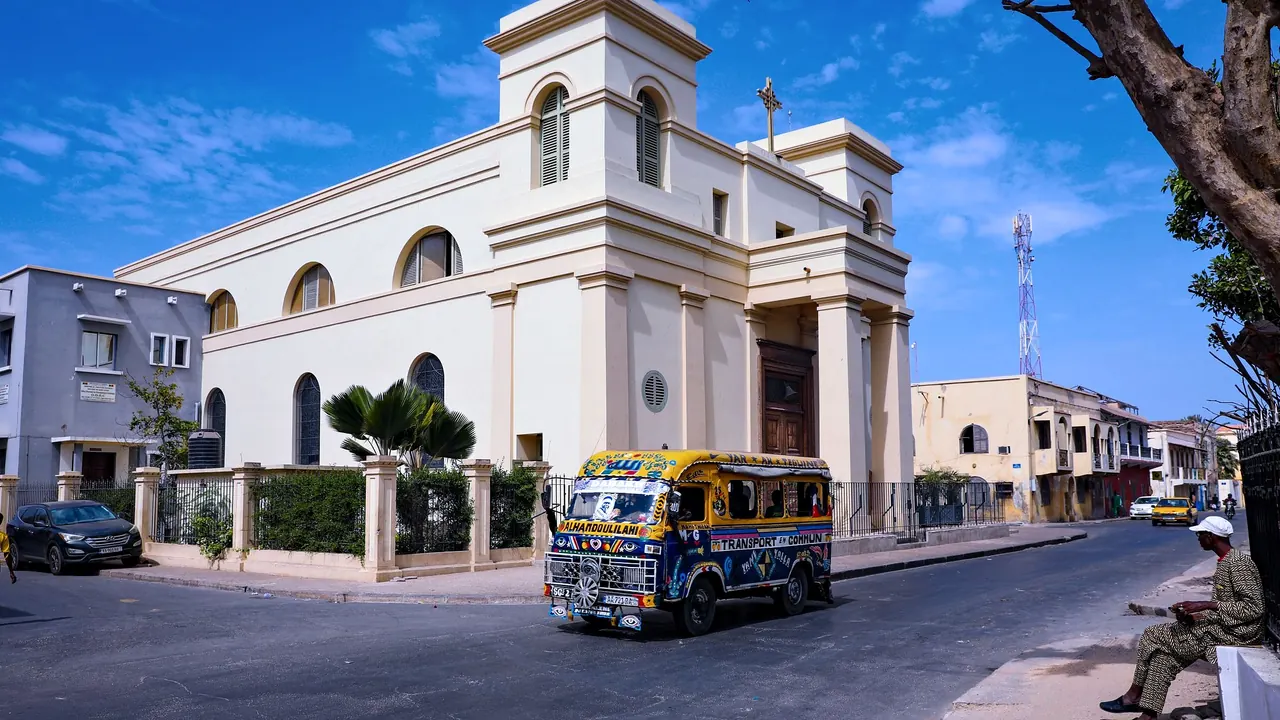
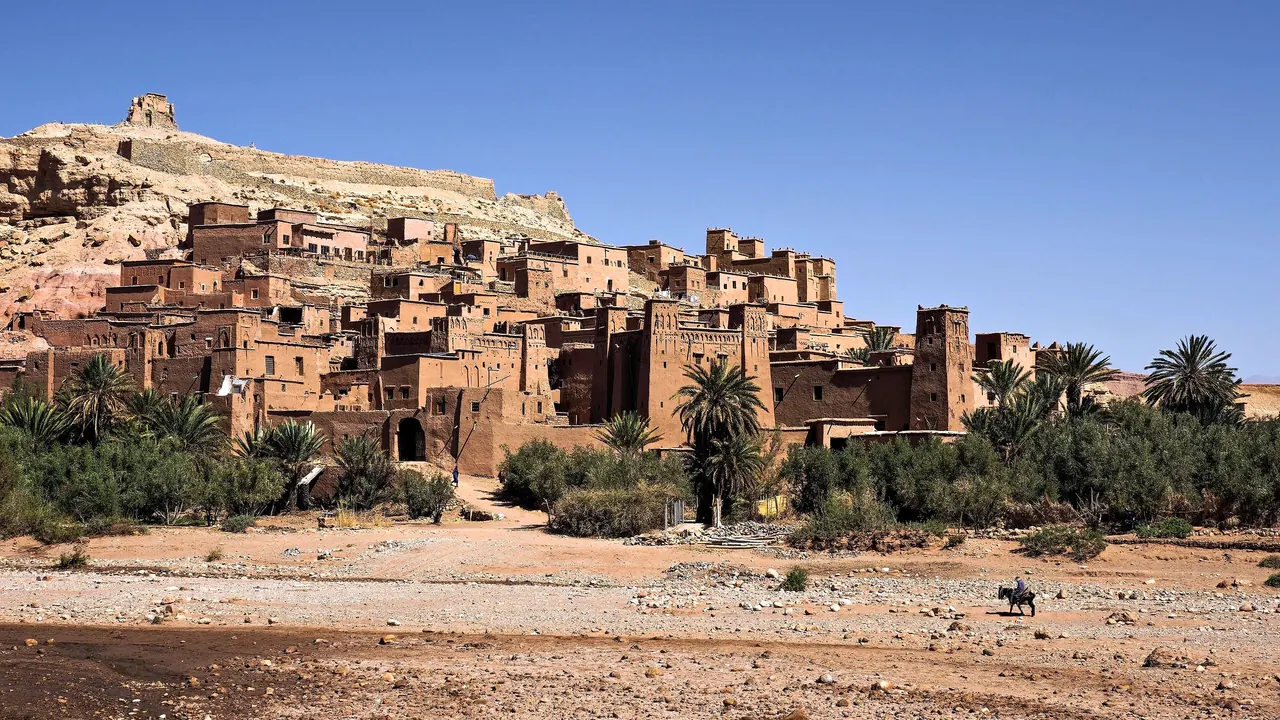
Photos: Senegal by Lom Doudou, Pexels License; Morocco by Petar Milošević, CC BY-SA 4.0, cropped.
Senegal or Morocco?
Our verdict in twelve categories, each scored against the same fixed benchmark cities, and the climate month by month, so you can choose for your trip.
Choose Senegal for
- live music and the arts
- nightlife
- beaches
Senegal suits a traveller drawn by sound, water and evenings that run late. Dakar's mbalax bands and dance clubs, the memorial island of Goree and the mangrove channels of the Saloum Delta make a short, focused trip that feels very different from North Africa. It works best for someone happy to hire a driver and keep the route short, perhaps adding Cap Skirring for warm-water beach days.
Choose Morocco for
- wellness
- shopping
- culture and sights
Morocco is the stronger choice for most other trips. Its run of medina cities, from Fes el-Bali to Marrakech, is backed by the High Atlas, the Erg Chebbi dunes and souks full of carpets, lanterns and leather. Add trains between the main cities, a hammam in every old quarter and lower everyday costs, and it suits first-timers, shoppers, walkers and anyone who wants the most variety from one trip.
Scoreboard
Twelve categories on one fixed scale from 0 to 100. The shaded stretch is the gap between the two.
Your match
Pick a travel style or drag the sliders, and both match scores follow your weighting.
Wins on live music and the arts and nightlife with your weighting.
Wins on wellness and shopping with your weighting.
What matters to you?
Category by category
What the scores mean for a trip.
Beaches & swimming
These two are about level for beaches, but in different ways. Senegal's best sand is far south at Cap Skirring, wide and backed by palms, with warm water through the dry season, though getting there means a flight or the overnight ferry. The Petite Cote around Saly and Somone is closer to Dakar and calmer, while the open beaches by the capital have cool winter water and strong currents, leaving Ngor island and the Almadies coves for a swim.
Morocco's Atlantic stays cool all year. Agadir has a sheltered crescent of sand for a resort stay, and Taghazout is better for surfing than for lying on the beach. The Mediterranean coves around Al Hoceima and the family beaches at Saidia are warm and calm in July and August. Senegal's sea is warm then too, but on its coast those are the months of the summer rains.
Where in Senegal: Cap Skirring, Petite Cote, Ngor
Where in Morocco: Agadir, Al Hoceima, Saidia, Taghazout
Food & drink
Morocco has the deeper and more varied cooking: tagines with preserved lemon, pigeon pastilla, the evening grills of Jemaa el-Fna and the refined home cooking inside the Fes medina. It also eats well across the country, from Essaouira's harbour sardines to Tangier's Spanish-tinged seafood.
Senegal's food is distinctive, with thieboudienne, yassa and dibi lamb, and Dakar has real range. Away from the capital, Saint-Louis and the beach grills of the Petite Cote, though, meals get plain and repetitive. That makes eating something to pursue in a few places rather than something the whole trip offers.
Where in Senegal: Dakar, Saint-Louis, Petite Cote
Culture & sights
Morocco is far ahead here. It has a whole circuit of historic cities: the tanneries and madrasas of Fes el-Bali, the Koutoubia and Bahia Palace in Marrakech, the sultans' Meknes and Rabat, then Volubilis, Ait Benhaddou and Chefchaouen beyond them. You could spend two weeks on sights alone.
Senegal's heritage is powerful but small. Goree's House of Slaves is deeply moving, Saint-Louis has its balconied island grid and the Faidherbe Bridge, and Dakar has the Museum of Black Civilisations. Beyond those few places the sights are scattered and far apart.
Where in Senegal: Dakar, Goree Island, Saint-Louis, Touba
Where in Morocco: Fes, Marrakech, Meknes and Volubilis, Rabat
Nightlife
Senegal gives the better night out, almost all of it in Dakar. Weekends start well after dinner and carry on until dawn in the clubs of the Almadies and Ngor and the beach bars along the Corniche. Dressing up is part of the evening.
Morocco's nightlife is limited to a few districts: hotel clubs and rooftop lounges in Marrakech's Hivernage and Gueliz, and the Corniche in Casablanca. Elsewhere a Moroccan evening usually means a long dinner and tea on a terrace, and Marrakech's medina goes quiet once the square empties.
Where in Senegal: Dakar, Saly, Saint-Louis
Where in Morocco: Marrakech, Casablanca, Agadir
Nature & outdoors
Morocco has the far wider range of landscapes. You can climb Jebel Toubkal in the High Atlas, drive through the red Dades and Todra gorges, spend a night in the Erg Chebbi dunes and walk the green Rif hills around Chefchaouen, all within a few days of each other.
Senegal is flat, and its nature is about water and birds. Its high points are a pirogue trip through the Saloum Delta mangroves and the pelicans and flamingos of Djoudj in winter. The Lompoul dunes are a small taste of desert, while the hills around Kedougou are a long trip of their own.
Where in Senegal: Saloum Delta, Djoudj National Park, Lompoul, Kedougou
Where in Morocco: High Atlas, Erg Chebbi, Dades and Todra gorges, Rif mountains
Day trips
Morocco gives you more to do from one base. From Fes, Meknes, Volubilis and Moulay Idriss fit into a single easy day, and from Tangier you can reach Asilah and Tetouan. Rabat and Casablanca are a short train ride apart.
In Senegal the list is shorter. From Dakar there is Goree by ferry and Lac Rose's salt pans, and from the Petite Cote there is the shell island of Joal-Fadiouth. Saint-Louis and Touba are too far for comfortable day trips.
Where in Senegal: Goree, Joal-Fadiouth, Lac Rose, Toubab Dialaw
Good for families
Neither country is built around children, but Morocco is the easier of the two. Agadir has pool hotels and a sandy beach, and Essaouira's small, flat medina is easy with a pushchair. A camel ride to a desert camp at Merzouga is the kind of outing children remember.
In Senegal, families base themselves at the Petite Cote resorts, with a half day at the Bandia reserve to see giraffes and rhinos. You need malaria precautions there, and Dakar's traffic is hard going with small children.
Where in Senegal: Petite Cote, Saloum Delta
Where in Morocco: Agadir, Essaouira, Merzouga and Erg Chebbi
Getting around
Morocco is easier to travel around. A high-speed line runs from Tangier to Casablanca, ordinary trains continue to Fes and Marrakech, and coaches fill most of the gaps, so you can tour the main cities without a driver. You only need a driver or a tour for the desert and the Atlas.
In Senegal you need a car and driver for almost everything. Between towns the alternative is cramped shared taxis with no timetable, and getting to Casamance means a flight or an overnight ferry. Only Goree, the Plateau and the island of Saint-Louis are pleasant on foot.
Where in Senegal: Dakar, Saint-Louis, Petite Cote
Where in Morocco: Tangier, Rabat, Casablanca, Fes
Shopping & style
Morocco is one of the great craft-shopping countries. The souks of Marrakech are arranged by trade, Fes has the dye pits and brass workshops where much of it is made, and Chefchaouen's blankets and Middle Atlas carpets add to it.
Senegal's shopping is narrower but still personal. You buy wax print or bazin at Dakar's HLM market and have a tailor make it up within a day or two. Thies tapestries and Saint-Louis filigree silver are the other things worth looking for.
Where in Senegal: Dakar, Thies, Saint-Louis
Where in Morocco: Marrakech, Fes, Essaouira, Chefchaouen
Affordability
Morocco goes further on a budget. Trains, coaches, street food and simple riads in Fes, Chefchaouen or Essaouira all cost little, and only Marrakech's design hotels and desert tours push the bill up.
Senegal is cheap at street level but costs more once you want comfort. Dakar's good hotels and Western-style restaurants charge close to European prices, and hiring a driver, the usual way to travel, is one of the biggest expenses.
Where in Senegal: Saint-Louis, Saloum Delta, Petite Cote
Where in Morocco: Fes, Chefchaouen, Essaouira, Taghazout
Live music & performing arts
Senegal has the stronger music culture, and you can hear it on any weekend. Mbalax bands play late in Dakar's dance halls, griots perform kora and praise songs, and sabar drumming fills neighbourhood celebrations. Saint-Louis also hosts a well-known spring jazz festival.
Morocco's traditions are just as deep, from gnawa trance music to Andalusian orchestras, but outside the squares of Jemaa el-Fna and Essaouira they mostly appear at festivals. Unless your dates match the Fes sacred music festival or Essaouira's gnawa festival, there is little regular programme to plan around.
Where in Senegal: Dakar, Saint-Louis, Casamance
Wellness & relaxation
Morocco has a real bathing culture. Every medina has a neighbourhood hammam with black soap and a kessa scrub, Marrakech has riad and hotel spas at every level, and the hot springs of Moulay Yacoub near Fes have been used for centuries.
Senegal has no bathing tradition of its own, so here relaxation comes from slowing down. That means quiet nights at Saloum Delta ecolodges reached by boat, the slow pace of Casamance in the dry season, or massages in the Petite Cote resorts around Saly and Somone.
Where in Senegal: Saloum Delta, Casamance, Petite Cote
When should you go?
Pick your month, and for a country the place in it. The climate figures are measured averages, not a forecast.
Where in Morocco
Dakar (Senegal) in July
Marrakech (Morocco) in July
Daytime high, °C
Rainfall in the month, mm
Temperature and rainfall are climate normals, averaged over the years shown. Dakar (Senegal): 1991-2020 normals, Dakar / Yoff (10 km from centre). Marrakech (Morocco): 1991-2020 normals, Marrakech (5.1 km from centre).
Senegal's dry season runs from November to May, with sunny, warm days in Dakar and almost no rain. The catch is the sea: around Dakar it cools through late winter and spring, so beach days are best at the start and end of the dry season, or in Casamance. The water is warmest in the rainy summer, near 28°C by August, but August is also the wettest month at 162mm, and few visitors come then.
Morocco's seasons depend on where you go. Spring and autumn are the times for Marrakech, Fes and the mountains. By July Marrakech reaches 38°C and the Sahara around 42°C, far too hot for medinas or dunes, while Fes turns wet and cool from late autumn into winter. Agadir is mild and dry for most of the year, but its sea never gets past about 20°C, so northern summer is the time for the warmer Mediterranean coast. In short, Senegal is a winter escape and Morocco a spring and autumn one.
Which traveller are you?
For travellers who plan around live music and late nights, Senegal has the edge. Mbalax bands play for hours in Dakar's dance halls, griots keep the kora tradition going, and clubs on the Almadies stay open until dawn. Morocco's music mostly comes in festival seasons and early-closing evenings.
More comparisons
Each shares a side with Senegal or Morocco.
Where else could you go?
Set Senegal or Morocco against any other country.