Senegal
Dakar
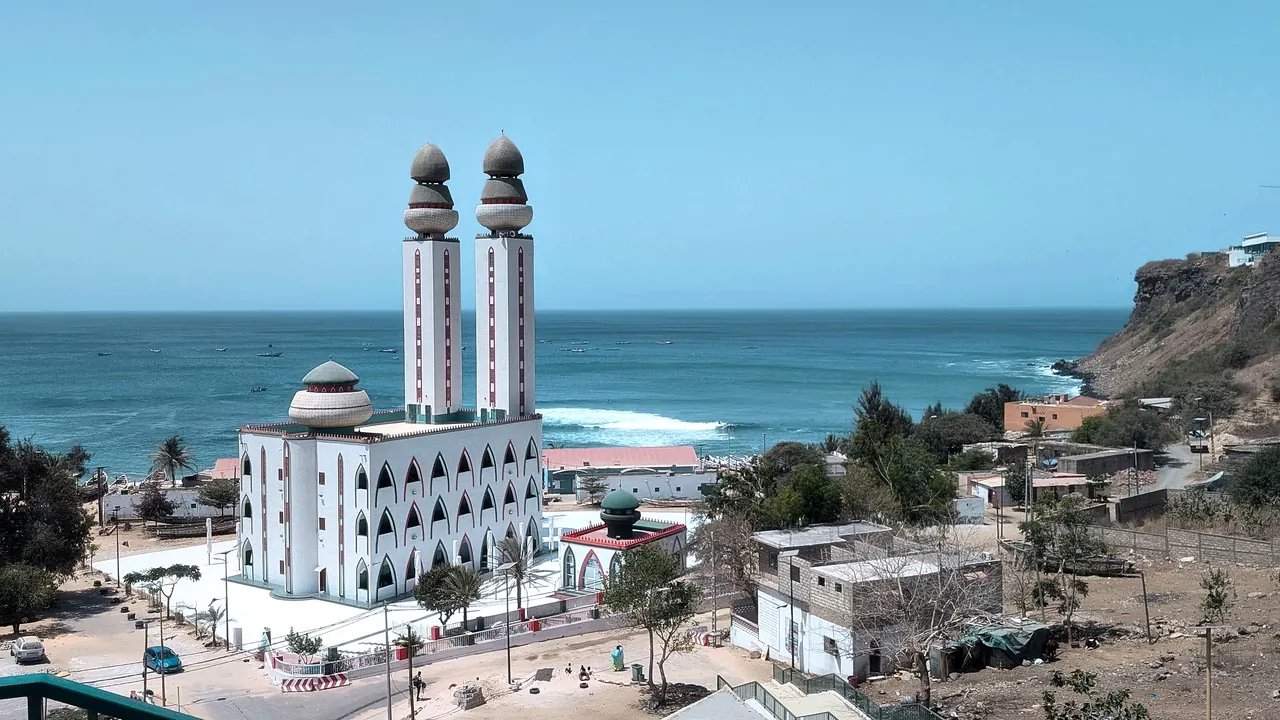
The Mosque of the Divinity above the Atlantic
- Food & drink62
- Nightlife60
- Live music & the arts58
Photo: Issathiome, CC BY-SA 4.0, cropped
Match
47
Every category weighted equally
- Beach & sun47
- Culture & arts49
- Food & nightlife51
- Family trip45
- Outdoors45
- Relax & unwind45
- Shopping & style48
- On a budget48
Dakar in twelve categories
Our verdict on each, scored 0 to 100 against the same fixed benchmark cities, so a score means the same thing on every page.
Beaches & swimming. Scores 56 out of 100.
Food & drink. Scores 62 out of 100.
Culture & sights. Scores 55 out of 100.
Nightlife. Scores 60 out of 100.
Nature & outdoors. Scores 44 out of 100.
Day trips. Scores 38 out of 100.
Good for families. Scores 33 out of 100.
Getting around. Scores 35 out of 100.
Shopping & style. Scores 45 out of 100.
Affordability. Scores 55 out of 100.
Live music & performing arts. Scores 58 out of 100.
Wellness & relaxation. Scores 24 out of 100.
Dakar category by category
Beaches & swimming
56Dakar sits on the tip of the Cap-Vert peninsula, so the ocean is never far away, and the beach is part of daily life. N'Gor and Yoff on the north shore, the small sheltered Anse Bernard below the Plateau and the coves around the Almadies point are all in town. The car-free island of N'Gor, a few minutes by pirogue, has the calmest water. On Sundays the long sands fill with football games and runners.
The Atlantic here behaves differently by season. From about December to May cool upwelling keeps the sea near 19-21°C and the surf is strong. From July to November it warms to around 27°C, but that is also the hot, humid rainy season. Water near the port and Hann Bay is not clean. Calmer resort beaches at Somone and Saly are about an hour or more down the Petite Côte.
Food & drink
62Senegalese cooking is one of West Africa's most respected cuisines, and Dakar is the best place to eat it. Thieboudienne, the national dish of fish and broken rice in a tomato sauce, is a lunchtime staple, along with chicken or fish yassa with onions and lemon and mafé in peanut sauce. In the evening the dibiteries grill mutton over charcoal. The fish market at Soumbédioune is where pirogues land their catch at dusk, and grills along the shore at Ngor and Ouakam cook it for you.
On the street you find spiced café Touba, sweet attaya tea poured from a height, fataya pastries, and bissap and ginger juices. French bakeries and a long-established Lebanese community add bread, pastries and mezze. Fine dining and wine are limited and mostly in Almadies and the Plateau. Most of the cooking is home-style and comes in generous portions, not refined.
Culture & sights
55The most important site is Gorée Island, a short ferry ride from the port. It is a UNESCO-listed island of ochre colonial houses and narrow lanes, and its House of Slaves is a powerful memorial to the Atlantic slave trade. On the mainland, the Museum of Black Civilisations and the IFAN museum of African arts hold strong collections of masks, textiles and sculpture from across the continent. The Village des Arts gives you studios where you can meet working artists.
The rest is a scattered set of landmarks. There is the colossal African Renaissance Monument on one of the Mamelles hills, the seafront Mosque of the Divinity at Ouakam, the Grand Mosque, the cathedral and the colonial streets of the Plateau. Every two years the city also hosts the Dak'Art biennale of contemporary African art. Three or four days covers the main sights.
Nightlife
60Dakar goes out late. Bars barely fill before midnight and clubs often keep going until dawn, especially from Thursday to Saturday. The scene is spread out. Almadies and Ngor have beach bars and lounges facing the ocean. The Plateau has bars and clubs with an expat crowd, and Point E and Mermoz have more local spots where Senegalese pop and Afrobeats fill the dance floor.
This is a mostly Muslim city, and alcohol is available but not central to street life. A night out is about dressing up, dancing and staying late more than drinking hard. Most venues are a taxi ride from each other, and during Ramadan things go noticeably quiet.
Nature & outdoors
44The best of Dakar's outdoors is its coast. Basalt cliffs, the twin Mamelles hills topped by a lighthouse, and the westernmost point of mainland Africa at the Almadies give it a rugged edge. This is a real surf city, with reef and point breaks around Ngor, Ouakam and Yoff that work for much of the year. The Corniche is lined with outdoor gyms and joggers at dusk.
Offshore, the small Madeleine Islands are a national park for seabirds. About an hour inland, the pink-tinged Lac Rose sits among dunes, and the Bandia reserve has giraffes, rhinos and antelope you can see from a vehicle. The land is otherwise flat, dry and largely built-up, and there is little shade or forest. The mangroves of the Saloum Delta are a longer trip of several hours.
Day trips
38Within a couple of hours you have a short, modest list of outings. Down the Petite Côte, the artists' village of Toubab Dialaw, the lagoon at Somone and the fishing port of Mbour make easy days. At Mbour the pirogues come in through the surf in the late afternoon. Further on, Joal-Fadiouth, a village built on an island of shells and joined to the mainland by a long wooden bridge, is the most memorable stop, though it makes a long day. Inland, Thiès has a tapestry workshop and some colonial railway heritage.
Touba, the holy city of the Mouride brotherhood, is about two hours or a little more by motorway. That makes it a long but realistic day out to see its Great Mosque, one of the largest in Africa, with its tall central minaret. Dress modestly, go with a local guide, and remember that alcohol and tobacco are banned in the city. The UNESCO-listed colonial town of Saint-Louis is about four hours north and needs at least one night.
Good for families
33Senegalese culture is warm towards children, and families are welcomed everywhere. Still, Dakar has very little made for them. The calmer beaches, especially N'Gor island, are the main draw. The ferry to Gorée and a vehicle safari at the Bandia reserve, where you see giraffes and rhinos, make good outings. The Hann park and zoo is basic.
Getting around is the hard part. Traffic is heavy, pavements are broken or missing, and the heat and dust tire small children quickly. You need malaria precautions and care with food and water. Families usually do best staying in Almadies or Ngor near the sea, or at a resort on the Petite Côte.
Getting around
35Dakar is spread along a long peninsula. The Plateau is at the southern tip, and Almadies, Ngor and Yoff are a long ride north, so you will need wheels for most of a stay. The TER suburban railway and a rapid bus line run along the main corridors and are clean and simple to use. Beyond them, the buses and shared minibuses are hard for a newcomer to work out.
In practice you travel by taxi. Cabs are everywhere and you agree the fare before getting in, and ride-hailing apps work well. Congestion at peak hours can be severe. Within the Plateau and around Ngor you can walk, but pavements are often broken or taken over by traders and parked cars.
Shopping & style
45Fabric is the reason to shop in Dakar. At the HLM market, stalls are stacked with wax prints, bazin and woven cloth. The city's many tailors will turn your chosen fabric into a shirt, dress or boubou within a few days, a souvenir that is unique to the place. Sandaga and the sprawling Colobane market are chaotic and crowded, while the covered Kermel market in the Plateau is easier to handle.
For crafts, the artisan village at Soumbédioune sells wood carving, leather, silver jewellery and drums. Bargaining is expected everywhere. Small design and fashion boutiques by Senegalese designers are scattered around Almadies and Mermoz. There is no luxury shopping street, and the malls are ordinary.
Affordability
55Dakar costs more than you might expect for West Africa. Street food, local lunch spots, taxis and market shopping are cheap, and you can eat thieboudienne for very little. Rooms are the expensive part. Comfortable hotels in Almadies, Ngor and the Plateau charge prices close to southern Europe, and budget options of a decent standard are few. Restaurants, imported goods and wine aimed at expats and business travellers are similarly expensive. If you eat locally and stay in guesthouses, you spend modestly. If you want international comfort, you pay for it.
Live music & performing arts
58Dakar is the home of mbalax, the fast, drum-driven sound that carried Senegalese music to the world. The best of it is live. Bands take the stage late in the clubs and music bars of the city, often well after midnight, and the biggest names still play hometown shows. On the street, sabar drumming and dance break out at weddings, wrestling matches and neighbourhood celebrations.
For formal performance, the Daniel Sorano National Theatre hosts the national ballet and traditional ensembles, and the large Grand Théâtre national stages concerts and touring shows. There is also a lively scene of hip-hop, jazz and Afro-fusion. Opera and classical music are almost absent.
Wellness & relaxation
24Dakar has no bathing or spa tradition of its own. Wellness here means hotel spas and massage in Almadies and Ngor, plus a few yoga classes. The city is noisy, congested and dusty, especially during the harmattan season. Rest comes more easily on the car-free island of N'Gor or at a guesthouse facing the ocean. If unwinding is the priority, consider the quieter resorts and lagoons of the Petite Côte.
When should you go?
Pick a month to see what it is like. The climate figures are measured averages, not a forecast.
Dakar in July
Daytime high, °C
Rainfall in the month, mm
The whole year
Shaded against this city’s own year: the deepest cell is its best month for that figure and the palest its weakest.
Temperature and rainfall are climate normals, averaged over the years shown. Dakar: 1991-2020 normals, Dakar / Yoff (10 km from centre).
Before you go
| Measure | Dakar |
|---|---|
| Official language | French, Wolof, Balanta, Badyara |
| Currency | CFA Franc BCEAO (XOF) |
| Sockets | CEK230 V, 50 Hz |
| Driving side | Right |
| Time zone | UTC |
| Emergency number | Police 17, fire 18 |
| Elevation | 10 m |
| Main airport | Blaise Diagne International Airport (DSS)39 km from centre32 non-stop destinations |
| Public holidays this year | 9 days |
By the numbers
| Measure | Dakar |
|---|---|
| City population | 1,438,725 |
| People per km² | 18,029 |
| Museums within 10 km | 8 |
| UNESCO World Heritage sites within 50 km | 1 |
| Swim season, months above 21 °C | 8 months |
Compare Dakar with
Every comparison with a written verdict behind it.