Morocco
Fes
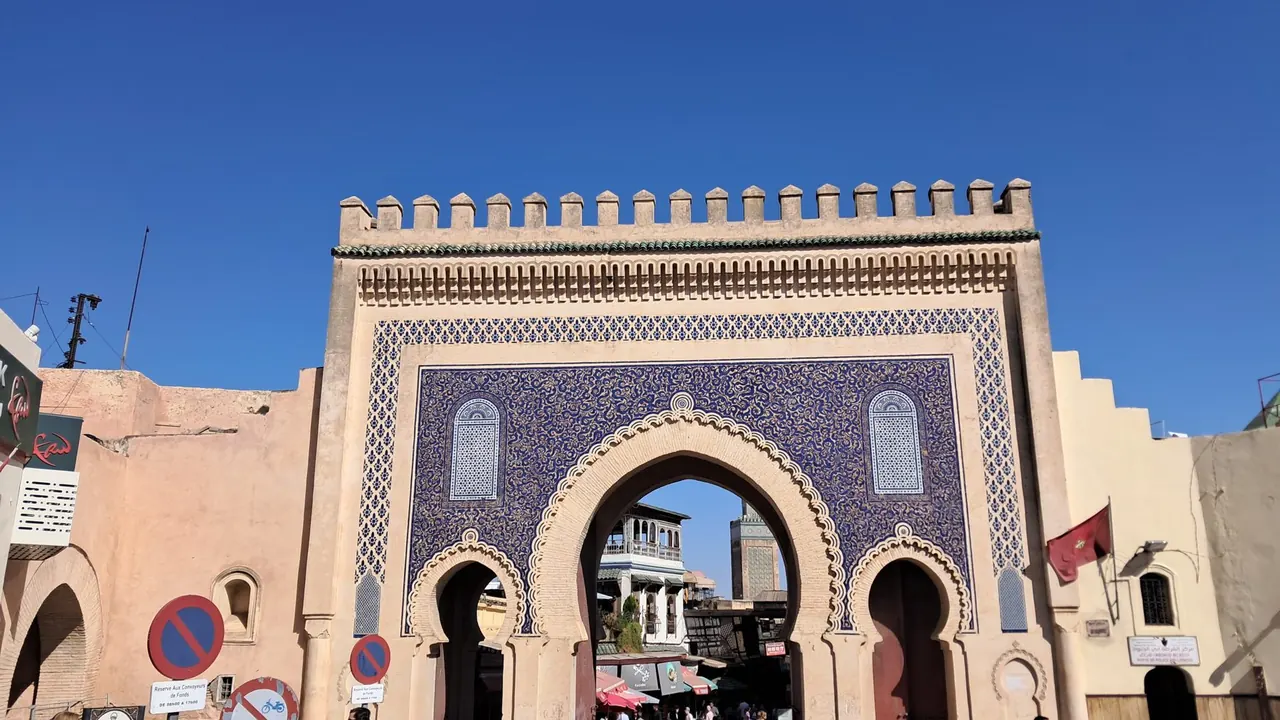
The blue gate of Bab Bou Jeloud
- Culture & sights80
- Affordable cities80
- Wellness & relaxation70
Photo: Ideophagous, CC BY-SA 4.0, cropped
Match
49
Every category weighted equally
- Beach & sun46
- Culture & arts54
- Food & nightlife48
- Family trip48
- Outdoors52
- Relax & unwind51
- Shopping & style52
- On a budget52
Fes in twelve categories
Our verdict on each, scored 0 to 100 against the same fixed benchmark cities, so a score means the same thing on every page.
Beaches & swimming. Scores 5 out of 100.
Food & drink. Scores 62 out of 100.
Culture & sights. Scores 80 out of 100.
Nightlife. Scores 12 out of 100.
Nature & outdoors. Scores 52 out of 100.
Day trips. Scores 62 out of 100.
Good for families. Scores 22 out of 100.
Getting around. Scores 40 out of 100.
Shopping & style. Scores 68 out of 100.
Affordability. Scores 80 out of 100.
Live music & performing arts. Scores 32 out of 100.
Wellness & relaxation. Scores 70 out of 100.
Fes category by category
Beaches & swimming
5Fes is an inland city, and the nearest coast is about three hours away on either the Atlantic or the Mediterranean, so a beach is out of reach for a normal stay. Swimming means a hotel pool or the small plunge pools some riads tuck into their courtyards or rooftops. Summers in the city are hot and dry, so if you want a pool, pick your accommodation with that in mind.
Food & drink
62Fes has a reputation within Morocco for its cooking. Its kitchen leans on the old city's urban, Andalusian-influenced tradition: pastilla layering pigeon or chicken with almonds and cinnamon, slow tagines with preserved lemon and quince, harira and dates at dusk. The best versions are often served in riad dining rooms, where a long multi-course meal is part of the stay.
In the medina, food is part of daily life: bowls of bissara at breakfast counters, sfenj doughnuts, grilled skewers, snail broth stalls and mint tea everywhere, with produce and spice stalls near the main gates. What it lacks is range. International food and modern restaurants are few, and alcohol is mostly limited to hotels and a handful of licensed places, many of them in the Ville Nouvelle.
Culture & sights
80The reason to come is Fes el-Bali, the UNESCO-listed medieval medina, a car-free warren of thousands of lanes that has kept its trades, fountains and quarters for centuries. The Bou Inania and Al-Attarine madrasas are among the finest Marinid buildings anywhere, with carved cedar, stucco and zellige tilework, and the Quaraouiyine mosque and university sits at the medina's heart, though non-Muslims can only look in through the doors.
The Chouara tannery seen from surrounding terraces, the Nejjarine fountain and woodwork museum, the Batha museum and the Seffarine metalworkers' square fill out the old city. Beyond it lie the gilded gates of the Royal Palace, the Mellah with its Jewish cemetery, and the Marinid tombs above the city at sunset. The museums are modest in size; the city itself is the sight.
Nightlife
12Fes goes quiet after dark. The medina empties once the shops shut, alcohol is hard to find, and evenings mostly mean a long dinner on a riad rooftop followed by tea. In the Ville Nouvelle there are a few hotel bars and licensed lounges, but no club scene or late street life. If going out matters to you, this is the wrong city.
Nature & outdoors
52The city sits in a broad valley at the foot of the Middle Atlas. About an hour south, the land climbs into cedar forests around Azrou, where Barbary macaques live wild, and on to limestone plateaux dotted with small lakes, good for walks and gentle hikes. Tazekka National Park, to the east, adds caves, cork oak and higher ridges.
Nearer town there are olive-covered hills and the viewpoints by the Marinid tombs and the Borj Nord. None of this is reachable without a car or a hired driver, and summer heat on the plain makes spring and autumn the best seasons to get outside. In winter the higher ground sometimes gets snow.
Day trips
62The classic outing goes west. Meknes, the imperial city of Moulay Ismail, is about 45 minutes away by train, with monumental gates, granaries and its own medina. Beyond it lie the Roman ruins of Volubilis, with mosaics still in place on a hillside of olive groves, and the white holy town of Moulay Idriss just below. Many visitors cover all three in one long day with a driver.
To the south, Ifrane, a tidy hill town of Alpine-style roofs, makes an odd but pleasant contrast, and Sefrou and nearby Bhalil offer small-town medinas and cave houses. The other big names, Chefchaouen and Rabat, are too far for a comfortable day.
Good for families
22Fes is hard work with young children. The medina is a steep, narrow maze shared with loaded donkeys and handcarts, touts are persistent, and the tannery quarter's smell is strong. There is almost nothing built for children, and summer afternoons are very hot. Older children who enjoy getting lost, watching craftsmen at work and eating street snacks can love it. With small ones, pick a riad or hotel with a pool, keep medina outings short, and hire a guide.
Getting around
40Inside the medina everything is on foot: no cars can get in, and porters with handcarts carry luggage from the gates. Most sights are close together, but the lanes twist, dead-end and climb, maps help only partly, and getting lost is part of the experience. Many first-time visitors hire an official guide for the first day.
Outside the old walls, small red petit taxis are the practical way between the medina gates, the Ville Nouvelle and the railway station. City buses exist but are of little use to visitors. For day trips beyond Meknes, which is on the railway, you need a hired car or driver.
Shopping & style
68Fes is a craft city, and its medina is where much of Morocco's handwork is made as well as sold. Leather from the tanneries is turned into bags, jackets and babouche slippers. The Seffarine square rings with copper and brass, and blue-and-white Fassi pottery, zellige tiles, carved cedar and woven textiles fill whole lanes, often with the workshop behind the counter.
Bargaining is expected, and guides often steer you to shops that pay them commission, so it pays to wander on your own. What the city lacks is everything else: no fashion streets, luxury brands or design boutiques worth a trip. The Ville Nouvelle has ordinary modern shops and a mall.
Affordability
80Fes is an inexpensive city to visit. Street food, mint tea, petit taxis and entry to the madrasas and museums cost very little, and modest riads in the medina are good value for their character. Spending rises with comfort: the grander restored riads, multi-course dinners, private guides and drivers for day trips are where the money goes. Alcohol is the one thing that costs much more than everything else.
Live music & performing arts
32Fes has a serious musical heritage, above all the Andalusian classical tradition and Sufi devotional music, and its annual Festival of World Sacred Music brings concerts to palace gardens and old gates. Outside festival time the offer thins out: occasional Sufi or Andalusian evenings, music at riad dinners and a few cultural-centre concerts. There is no regular theatre or opera.
Wellness & relaxation
70Bathing is part of everyday life here. Every medina quarter has a public hammam, used by locals for steam, black soap and a vigorous scrub, and many riads and hotels run their own calmer hammam and massage rooms. About half an hour out of town, the hot springs of Moulay Yacoub have been used for centuries, with a modern thermal centre alongside the traditional pools, and Sidi Harazem's spring is closer still.
The medina itself is intense, crowded and loud by day, so rest comes from where you stay: a riad courtyard with a fountain, a shaded roof terrace at dusk, and quiet once the lanes empty at night.
When should you go?
Pick a month to see what it is like. The climate figures are measured averages, not a forecast.
Fes in July
Daytime high, °C
Rainfall in the month, mm
The whole year
Shaded against this city’s own year: the deepest cell is its best month for that figure and the palest its weakest.
Where the figures come from
Fes's station stands 171 m above the city centre, so the centre is likely a little warmer than the figures say.
Fes has no rain gauge within 25 km of the centre, so its rainfall comes from a gridded climate dataset read at the city rather than from a gauge further away.
Fes's sunshine is measured 52 km from the centre, at Meknes.
Temperature and rainfall are climate normals, averaged over the years shown. Fes: 1999-2020 (sunshine 1991-2020, rainfall 1991-2020) normals, Fes-Sais (12.4 km from centre).
Before you go
| Measure | Fes |
|---|---|
| Official language | Arabic, Standard Moroccan Tamazight |
| Currency | Moroccan Dirham (MAD) |
| Sockets | CE50 Hz |
| Driving side | Right |
| Time zone | UTC+1 |
| Emergency number | Police 19/112, ambulance 15, fire 15 |
| Elevation | 408 m |
| Main airport | Fes Saïss International Airport (FEZ)13 km from centre35 non-stop destinations |
| Public holidays this year | 11 days |
By the numbers
| Measure | Fes |
|---|---|
| City population | 1,167,842 |
| People per km² | 3,650 |
| Museums within 10 km | 2 |
| UNESCO World Heritage sites within 50 km | 1 |
Compare Fes with
Every comparison with a written verdict behind it.