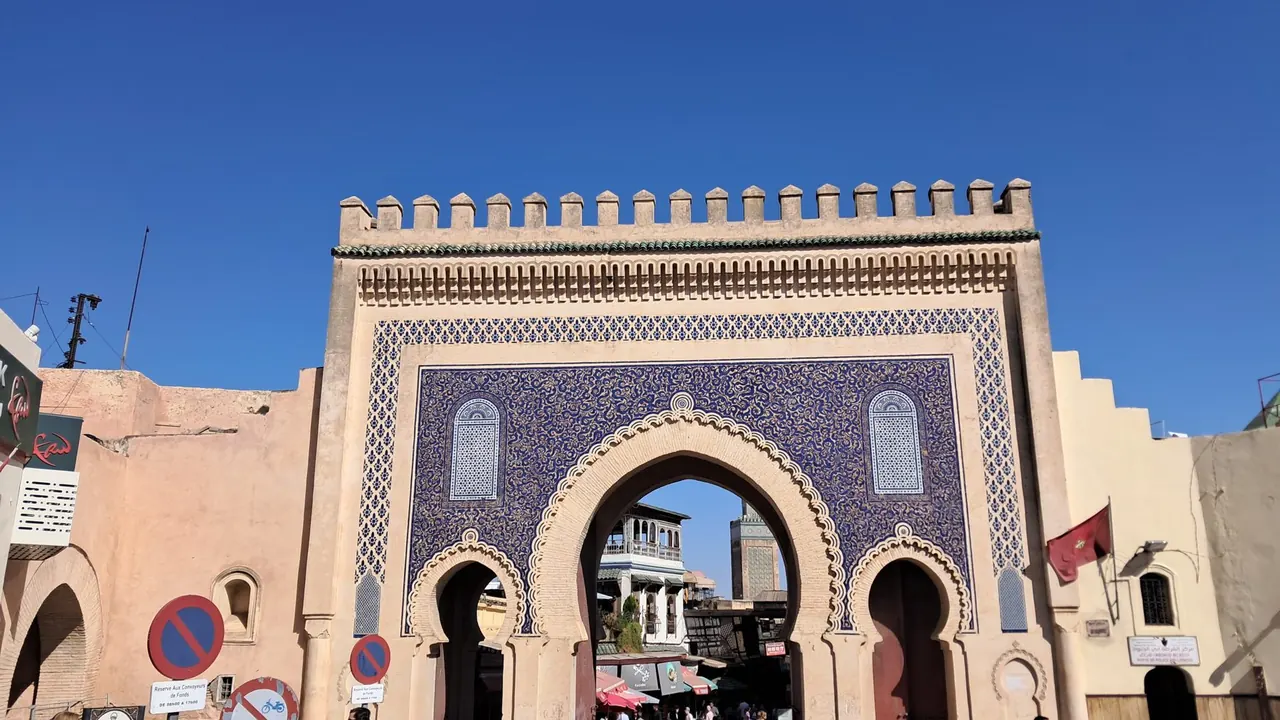
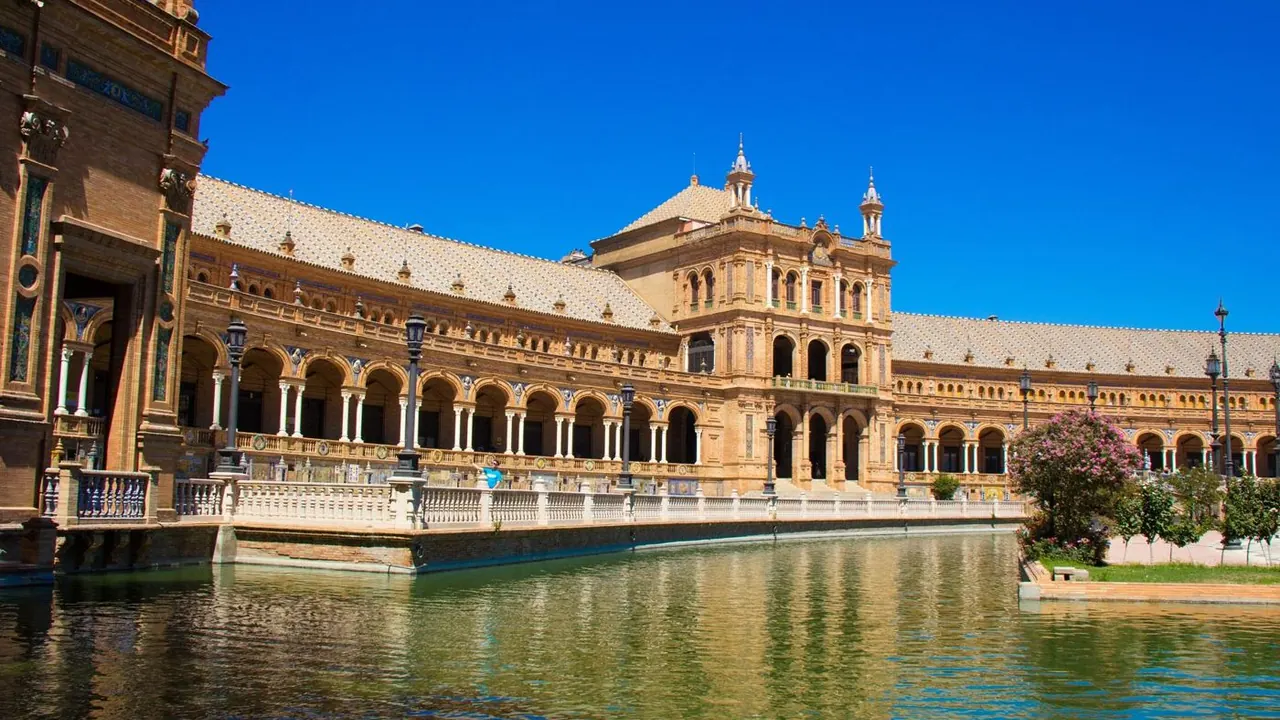
Photos: Fes by Ideophagous, CC BY-SA 4.0, cropped; Seville by Tibor Kovacs, CC BY 2.0, cropped.
Fes or Seville?
Our verdict in twelve categories, each scored against the same fixed benchmark cities, and the climate month by month, so you can choose for your trip.
Choose Fes for
- wellness
- prices
- shopping
Fes suits travellers who want somewhere unfamiliar. Its car-free medieval medina still makes the leather, brass and tiles it sells, its Marinid madrasas are among the finest anywhere, and evenings mean a long riad dinner and a hammam scrub. Day to day it costs less. It also takes patience: the lanes are a disorienting maze, the touts are persistent and there is almost nothing to do after dark.
Choose Seville for
- nightlife
- live music and the arts
- families
Seville is the easier and more sociable choice. Its monuments match anything in Fes, but they sit in a flat centre you can walk around, and the days run on into late tapas, flamenco and outdoor terraces. It suits families, first-time visitors to the region and anyone who wants to range further, with Córdoba, Jerez and Cádiz all within reach by train.
Scoreboard
Twelve categories on one fixed scale from 0 to 100. The shaded stretch is the gap between the two.
Your match
Pick a travel style or drag the sliders, and both match scores follow your weighting.
Wins on wellness and prices with your weighting.
Wins on nightlife and live music and the arts with your weighting.
What matters to you?
Category by category
What the scores mean for a trip.
Beaches & swimming
Neither city is on the coast, but Seville gets you to the sea more easily. The Atlantic sands of Huelva, such as Matalascañas and Mazagón, are about an hour and a quarter away by car, so a beach day works, and some visitors add a few nights on the coast.
From Fes the sea is about three hours off in either direction, which rules it out on a normal stay. Swimming means a hotel pool or a riad plunge pool, so it is worth booking with that in mind for the summer heat.
Food & drink
Fes cooks some of Morocco's most refined food. Its urban tradition has Andalusian roots: pastilla with almonds and cinnamon, and tagines with preserved lemon and quince, best eaten as a long dinner in a riad. By day there are bissara, sfenj and grilled skewers at the medina counters. The range stops there, though, and alcohol is mostly limited to hotels and a handful of licensed places.
Seville is the stronger food city overall, with more places to eat well and more variety from one evening to the next. You can work through pork cheek, salmorejo, spinach with chickpeas and fried fish from the Cádiz coast in the old tiled bars of Santa Cruz, El Arenal and Triana, with an orange-blossom vermouth on the side. The Mercado de Triana adds produce and casual stalls, and the Alameda has more inventive kitchens, although international cooking is thin in both cities.
Culture & sights
Both are first-rate, but in different ways. In Fes the whole medina is the sight: a working medieval city where you watch dyers at the Chouara tannery and coppersmiths in Seffarine, and step into the carved cedar and zellige of the Bou Inania and Al-Attarine madrasas. Its museums are small.
Seville offers monuments on a grand scale. The Alcázar's Mudéjar courtyards, a vast Gothic cathedral built onto a mosque whose minaret is now the Giralda, and the Murillo and Zurbarán paintings at the Museo de Bellas Artes give it the stronger galleries and the bigger landmarks.
Nightlife
This is where the two cities differ most. Fes empties once the medina shops close, and a night out means tea on a riad roof or a drink in a hotel bar in the Ville Nouvelle.
Seville stays up late. Dinner starts around ten and the evening carries on through the bars of the Alameda de Hércules, the streets around Plaza de la Alfalfa and, in summer, open-air bars along the river. It is a city for long evenings outdoors rather than clubbing.
Nature & outdoors
There is about as much to do outdoors from either city, but the landscapes differ. Fes lies at the foot of the Middle Atlas, so an hour's drive takes you up into the cedar forests around Azrou, home to Barbary macaques, and on to the lakes on the plateaux and the caves of Tazekka. All of this needs a car or a driver.
Seville is surrounded by flat farmland. It does have the river for rowing and kayaking in town, and Doñana, one of Europe's great wetlands, for flamingos and migrating birds, with the gentler cork-oak hills of Aracena further out.
Day trips
Seville makes the stronger base. High-speed trains reach Córdoba's Great Mosque in under an hour, Jerez is an hour away for sherry bodegas, and Carmona, Itálica, Cádiz and the white villages give you a fresh trip for every day of a longer stay.
Fes has one excellent day out: Meknes by train, then the Roman mosaics of Volubilis and the holy town of Moulay Idriss with a driver. Beyond that, Ifrane and Sefrou are pleasant but smaller, and Chefchaouen is too far for a day.
Good for families
Seville is much easier with children. The centre is flat, children are welcome in squares and tapas bars late into the evening, and there are rowing boats at Plaza de España, the maze in the Alcázar gardens, an aquarium and a summer water park on La Cartuja.
Fes suits older children who like getting lost and watching craftsmen at work more than toddlers. The steep lanes shared with donkeys and handcarts, persistent touts and the smell of the tanneries make short outings and a pool back at the riad essential.
Getting around
Getting around Fes is part of the adventure. Inside the medina you go everywhere on foot through lanes that twist, climb and dead-end, so many people hire a guide for the first day, and you take red petit taxis between the gates, the Ville Nouvelle and the station.
Seville is far simpler. Its flat centre takes about half an hour to cross on foot along shaded, pedestrianised streets, and a tram, a metro line, buses and a public bike scheme fill the gaps. In both cities the summer heat is the real obstacle.
Shopping & style
Fes is the better place to buy crafts, because so much of it is made in the same lane where it is sold. You find tannery leather, babouches, hammered brass in Seffarine, blue Fassi pottery and carved cedar, though you will have to bargain and steer clear of guides' commission shops.
Seville's best shopping has a local character too: Triana's hand-painted tiles, and the flamenco dresses, shawls and fans on Calle Sierpes and Calle Cuna. It adds Spanish high-street chains and the Thursday flea market on Calle Feria, which Fes cannot match.
Affordability
Fes is the cheaper of the two, and the gap shows most in the ordinary spending of each day. Costs rise when you pay for comfort or help: a grand restored riad, a multi-course dinner, a private guide or a driver to Volubilis. Drink is the exception, priced well above everything else, so a budget that includes wine with dinner goes less far than you might expect.
Seville costs more almost everywhere, but the gap narrows at the table. A tapas evening with beer or a glass of wine is good value, and drinking with dinner is cheap there, which is the reverse of Fes. The Alcázar and cathedral cost far more to visit than the madrasas. The biggest difference is the room bill: during Holy Week and the April Fair, Seville's hotel rates climb steeply and the best-placed rooms fill months ahead, so a stay timed for those weeks costs far more than a riad in Fes.
Live music & performing arts
Fes has a serious musical heritage in Andalusian classical and Sufi devotional music, and its annual Festival of World Sacred Music brings concerts to palace gardens and old city gates. Outside the festival you mostly hear it at an occasional concert or during a riad dinner, and the city has no regular theatre or opera.
Seville has much more on an ordinary night. It is a heartland of flamenco, which is performed every evening in small tablaos around Santa Cruz and Triana and in the informal peñas where local enthusiasts gather. The Teatro de la Maestranza adds opera and the city's symphony orchestra, fitting for the city where Carmen and The Barber of Seville are set.
Wellness & relaxation
In Fes bathing is part of daily life. Every quarter has a public hammam for steam and a black-soap scrub, riads offer gentler versions, and the thermal springs at Moulay Yacoub and Sidi Harazem are close by. The medina is loud by day, but its courtyards fall silent at night.
Seville's version is a few Arab-style bath houses in old mansions plus hotel spas. Its calm comes more from the slow afternoons and the shade of the Alcázar gardens, and its narrow streets can be noisy late at night.
When should you go?
Pick your month. The climate figures are measured averages, not a forecast.
Fes in July
Seville in July
Daytime high, °C
Rainfall in the month, mm
Where the figures come from
Fes's station stands 171 m above the city centre, so the centre is likely a little warmer than the figures say.
Fes has no rain gauge within 25 km of the centre, so its rainfall comes from a gridded climate dataset read at the city rather than from a gauge further away.
Fes's sunshine is measured 52 km from the centre, at Meknes.
Temperature and rainfall are climate normals, averaged over the years shown. Fes: 1999-2020 (sunshine 1991-2020, rainfall 1991-2020) normals, Fes-Sais (12.4 km from centre). Seville: 1991-2020 normals, Sevilla / San Pablo (8.1 km from centre).
Spring is the best season in both cities, but Fes takes a little longer to get going. March is still damp there, and at 65mm it is the wettest month of the Fes spring. The rain only really eases in May, when afternoons reach about 27°C. Seville dries out and warms sooner, so April there is already good for long walks. From June to August both reach around 36°C with almost no rain. That makes midday sightseeing an ordeal and leaves a pool as the only way to cool off, and Seville has slightly more sunshine in high summer.
Autumn is the other good time. September is still hot and October is warm, and in both cities the rain comes back in October. From November to February both are mild but wetter, with days of about 16°C that suit walking. Fes is the wetter of the two in November, at about 80mm, but it gets a little more winter sun, and the higher ground above the city sometimes gets snow.
Which traveller are you?
For a food and nightlife trip, Seville is the clear choice. Evenings move from tapas counters to terraces on the Alameda and in Triana, with sherry and cold beer along the way, while Fes goes quiet after dinner and alcohol is hard to find.
On a relaxing and wellness trip, Fes has the edge. Every quarter of the medina has its public hammam, many riads have their own, and the hot springs at Moulay Yacoub are nearby. Seville offers slow afternoons but has no bathing tradition of its own.
On a tight budget, Fes goes further. Street food, mint tea, petit taxis and entry to the madrasas all cost little, and a modest riad offers a lot of character for the money. Seville is moderate, but its hotel rates jump at Holy Week and the April Fair.
Before you go
| Measure | Fes | Seville |
|---|---|---|
| Official language | Arabic, Standard Moroccan Tamazight | Spanish |
| Currency | Moroccan Dirham (MAD) | Euro (EUR) |
| Sockets | CE50 Hz | CF230 V, 50 Hz |
| Driving side | Right | Right |
| Time zone | UTC+1 | UTC+1, UTC+2 in summer |
| Emergency number | Police 19/112, ambulance 15, fire 15 | 112 |
| Elevation | 408 m | 18 m |
| Main airport | Fes Saïss International Airport (FEZ)13 km from centre35 non-stop destinations | Seville Airport (SVQ)9 km from centre96 non-stop destinations |
| Public holidays this year | 11 days | 12 days |
By the numbers
| Measure | Fes | Seville |
|---|---|---|
| City population | 1,167,842 | 689,423 |
| People per km² | 3,650 | 4,896 |
| Museums within 10 km | 2 | 24 |
| UNESCO World Heritage sites within 50 km | 1 | 1 |
Where else could you go?
Every comparison below shares a destination with this one, so you can follow Fes or Seville somewhere new.