Morocco
Essaouira
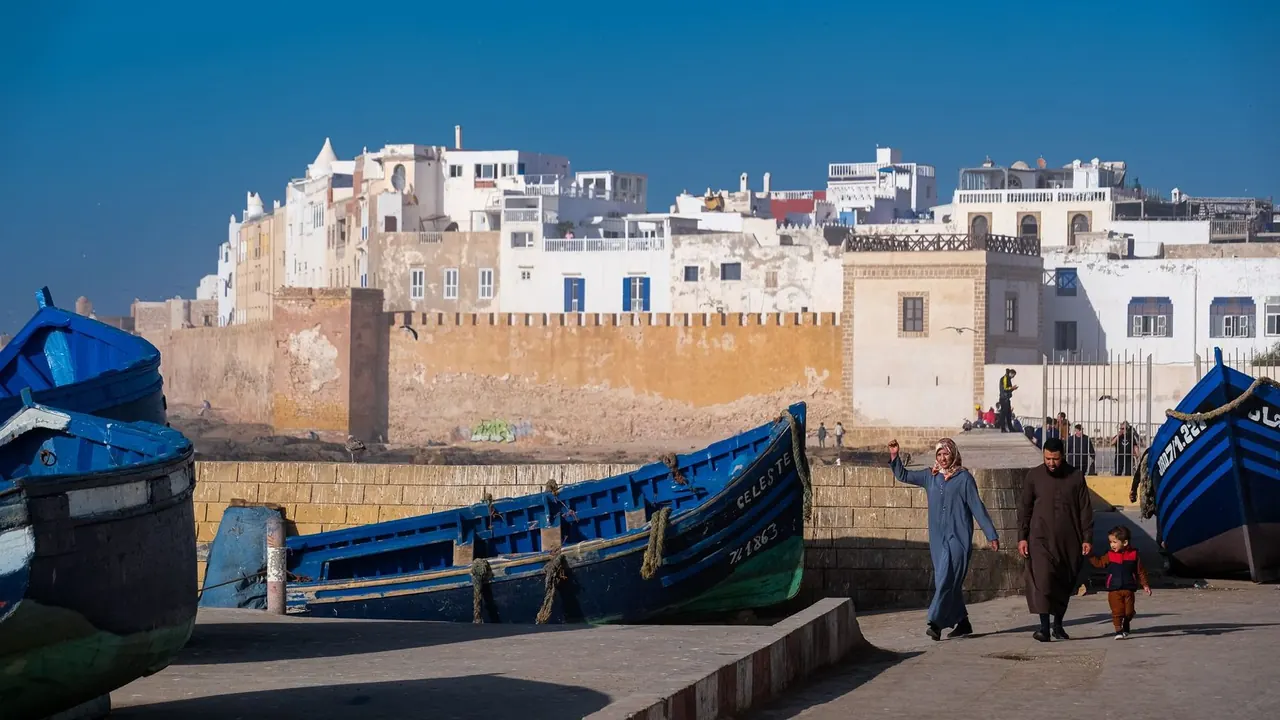
The white medina above the harbour walls
- Affordable cities74
- Wellness & relaxation66
- Getting around58
Photo: Manel Cusido, Pexels License
Match
45
Every category weighted equally
- Beach & sun48
- Culture & arts43
- Food & nightlife41
- Family trip49
- Outdoors46
- Relax & unwind50
- Shopping & style44
- On a budget48
Essaouira in twelve categories
Our verdict on each, scored 0 to 100 against the same fixed benchmark cities, so a score means the same thing on every page.
Beaches & swimming. Scores 47 out of 100.
Food & drink. Scores 44 out of 100.
Culture & sights. Scores 48 out of 100.
Nightlife. Scores 14 out of 100.
Nature & outdoors. Scores 57 out of 100.
Day trips. Scores 17 out of 100.
Good for families. Scores 42 out of 100.
Getting around. Scores 58 out of 100.
Shopping & style. Scores 44 out of 100.
Affordability. Scores 74 out of 100.
Live music & performing arts. Scores 28 out of 100.
Wellness & relaxation. Scores 66 out of 100.
Essaouira category by category
Beaches & swimming
47A wide crescent of pale sand runs south from the medina walls, so the beach is part of every day here, but mostly for walking, riding and watching kites rather than lying in the sun. The Atlantic rarely gets above about 21°C, and from spring to late summer a steady trade wind blows sand across the bay for much of the day. Swimming is possible on calmer mornings and in the sheltered corner by the port.
Further south, Sidi Kaouki is a quieter, wilder beach about 25km away, with the same cool water and surf. People who want hot, still beach days go to Morocco's Mediterranean coast or further south instead.
Food & drink
44Eating here revolves around the fishing port. At the grill stalls by the harbour you pick sardines, sea bream, prawns and spider crab straight from the catch and they are cooked in front of you, and the fish market inside the medina gives a sense of how much of the town still lives from the sea. Beyond that the food is Moroccan home cooking: fish tagines, couscous on Fridays, msemen and mint tea in the squares, and argan oil and amlou from the surrounding countryside.
The range is narrow for a town this popular, with a cluster of riad dining rooms and European-style cafés for variety, and alcohol is served in only a limited number of places.
Culture & sights
48The whole medina is the sight. Laid out in the 1760s for Sultan Mohammed ben Abdallah by a French engineer, it is an unusually regular grid of whitewashed houses with blue shutters inside sea walls, and it is listed by UNESCO as a rare example of a European-style fortified port in North Africa. The Skala ramparts, lined with old bronze cannons, look over the rocks and the Atlantic, and the Skala du Port frames the blue fishing boats below.
The old Jewish quarter, the mellah, recalls a time when the town was a major trading port with a large Jewish community, and a small ethnographic museum covers local crafts and music. It is a compact, atmospheric place rather than a deep one, and most visitors have seen it in a day or two.
Nightlife
14Evenings are slow. After dinner there are a few rooftop terraces for a drink at sunset, some hotel and riad bars, and a small number of licensed bars around the edge of the medina and along the beachfront road, but there are no clubs to speak of and drinking is not part of street life in the old town. Most people end the night with a walk along the ramparts or a last mint tea in a square.
The medina is quiet well before midnight, and the people out late are mostly the surfers and kitesurfers gathered in a couple of beach bars. Anyone looking for a real night out goes elsewhere.
Nature & outdoors
57The wind that spoils sunbathing makes this one of Africa's best-known kitesurfing and windsurfing spots, with schools on the main bay and rougher waves for experienced riders at Moulay Bouzerktoun to the north and Sidi Kaouki to the south. Horse and camel rides along the sand towards the dunes at Diabat are the other classic outing.
Inland, the argan forest covers the low hills, with goats climbing into the trees, and the coast to the south is a mix of dunes, headlands and empty beaches good for long walks. The islands off the bay are a protected breeding ground for Eleonora's falcons, visible from the shore in summer. There are no real mountains nearby; the High Atlas is a long drive away.
Day trips
17Essaouira is somewhat isolated. The realistic outings are small: the surf village of Sidi Kaouki, the thuya woodcarving workshops at Ghazoua, women's argan oil cooperatives along the inland roads, and the sand-swallowed fort ruins near Diabat. Safi, a working port known for its pottery quarter, is about two hours up the coast.
Marrakech and Agadir both take around three hours by road, so they work better as stops on the way in or out than as a day trip from here.
Good for families
42This is one of the easier places in Morocco to bring children. The medina is small, mostly car-free and calm by Moroccan standards, the beach is a few minutes' walk away, and children love the camels and horses on the sand, the fishing boats in the port and the gulls on the ramparts. Moroccan culture is warm towards children, and riads with roof terraces make a manageable base.
There is nothing built for children, though: no zoo, aquarium, theme park or museum aimed at them. The sea is cool, the summer wind can make beach days unpleasant for small children, and many riads have steep stairs and open terraces to watch.
Getting around
58Within the town, everything is on foot. The medina is compact and flat with mostly car-free lanes, the port is at one end and the beach promenade runs straight on from the walls, so a visitor rarely walks more than twenty minutes to anything. Porters with hand carts carry luggage from the car park at the gates to the riads.
Going further is another matter. Small blue taxis cover the town, grand taxis and occasional buses go to nearby villages, and Sidi Kaouki or the argan cooperatives realistically need a driver or a hired car. Long-distance coaches link the town with Marrakech and Agadir.
Shopping & style
44Shopping here is about crafts, and it is calmer than in the big Moroccan cities, with less pressure from sellers. The local speciality is thuya wood, a fragrant root wood carved and inlaid into boxes, trays and furniture in workshops under the ramparts. Argan oil and cosmetics, silver jewellery, leather slippers, rugs and woven blankets fill the souk lanes around the central market.
The town also has a long-standing community of painters, and small galleries selling naive and gnawa-inspired art are a distinctive find. There are no fashion streets, department stores or luxury brands.
Affordability
74Essaouira is inexpensive for European visitors. Grilled fish at the port, street snacks and mint tea cost little, taxis within town are cheap, and the main sight, the medina and ramparts, is free to wander. Riad rooms are good value, especially outside summer and the festival weekends.
Because the town is popular with foreign visitors, the smarter riads, rooftop restaurants and anywhere serving alcohol charge more than you would pay in an ordinary Moroccan town.
Live music & performing arts
28The town is the spiritual home of gnawa, the trance music of Morocco's Afro-Moroccan brotherhoods, with its iron castanets, guembri bass lute and hypnotic call-and-response. Once a year the Gnaoua World Music Festival fills the squares and ramparts with free concerts that pair gnawa masters with jazz and world musicians, and it is the one time the town feels crowded.
The rest of the year, gnawa is heard informally in a few restaurants, bars and squares, and sometimes at a lila ceremony if you know someone. There is no theatre, opera or regular concert programme.
Wellness & relaxation
66The pace is the main draw. With no traffic in the medina, sea air and little to tick off, many people come simply to slow down: long breakfasts on riad roof terraces, an afternoon with a book, sunset on the ramparts. Yoga retreats and surf-and-yoga stays in the villages along the coast lean into this.
The traditional neighbourhood hammams are still used by local families, and riad and hotel spas offer the tourist version, with black soap scrubs and massages using local argan oil. The bathing offer is modest in scale, and the wind that blows much of the year can make outdoor lounging less restful than it looks.
When should you go?
Pick a month to see what it is like. The climate figures are measured averages, not a forecast.
Essaouira in July
Daytime high, °C
Rainfall in the month, mm
The whole year
Shaded against this city’s own year: the deepest cell is its best month for that figure and the palest its weakest.
Where the figures come from
Essaouira has no rain gauge within 25 km of the centre, so its rainfall comes from a gridded climate dataset read at the city rather than from a gauge further away.
Temperature and rainfall are climate normals, averaged over the years shown. Essaouira: 1991-2020 normals, Essaouira (1.4 km from centre).
Before you go
| Measure | Essaouira |
|---|---|
| Official language | Arabic, Standard Moroccan Tamazight |
| Currency | Moroccan Dirham (MAD) |
| Sockets | CE50 Hz |
| Driving side | Right |
| Time zone | UTC+1 |
| Emergency number | Police 19/112, ambulance 15, fire 15 |
| Elevation | 11 m |
| Main airport | Essaouira-Mogador Airport (ESU)15 km from centre13 non-stop destinations |
| Public holidays this year | 11 days |
By the numbers
| Measure | Essaouira |
|---|---|
| City population | 82,962 |
| People per km² | 16,592 |
| Museums within 10 km | 2 |
| UNESCO World Heritage sites within 50 km | 1 |
| Swim season, months above 21 °C | None |
Compare Essaouira with
Every comparison with a written verdict behind it.