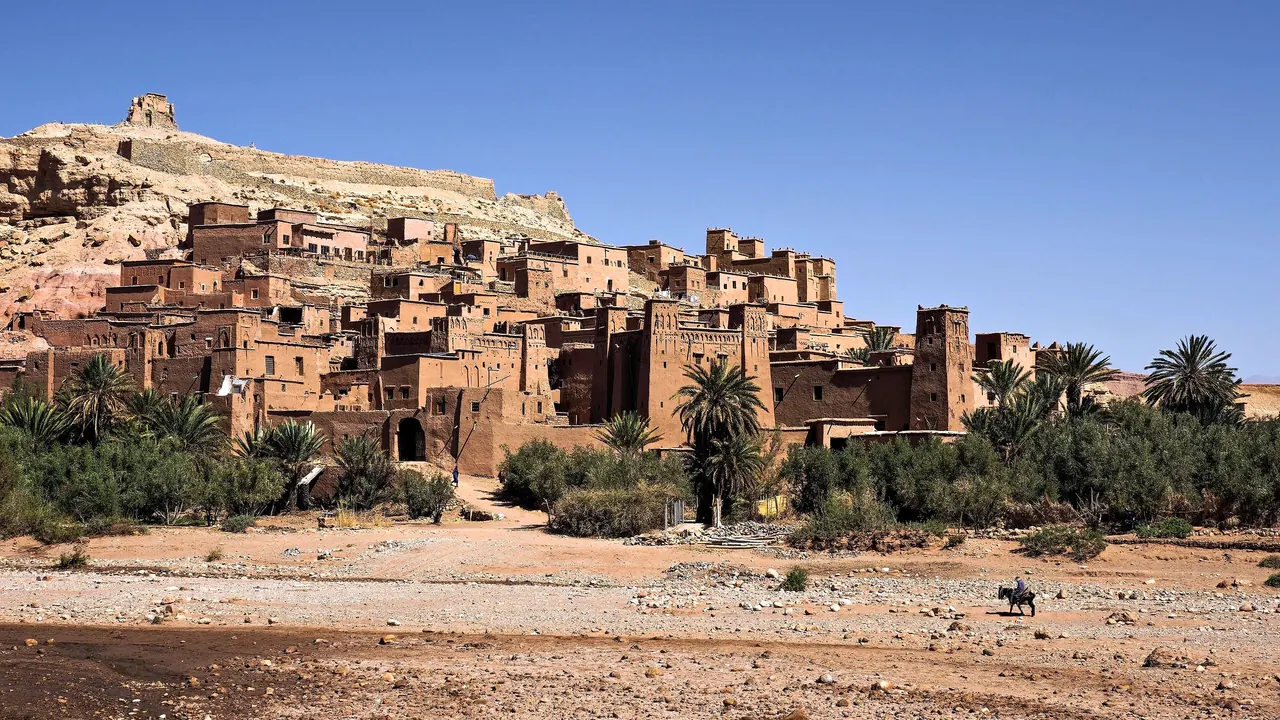
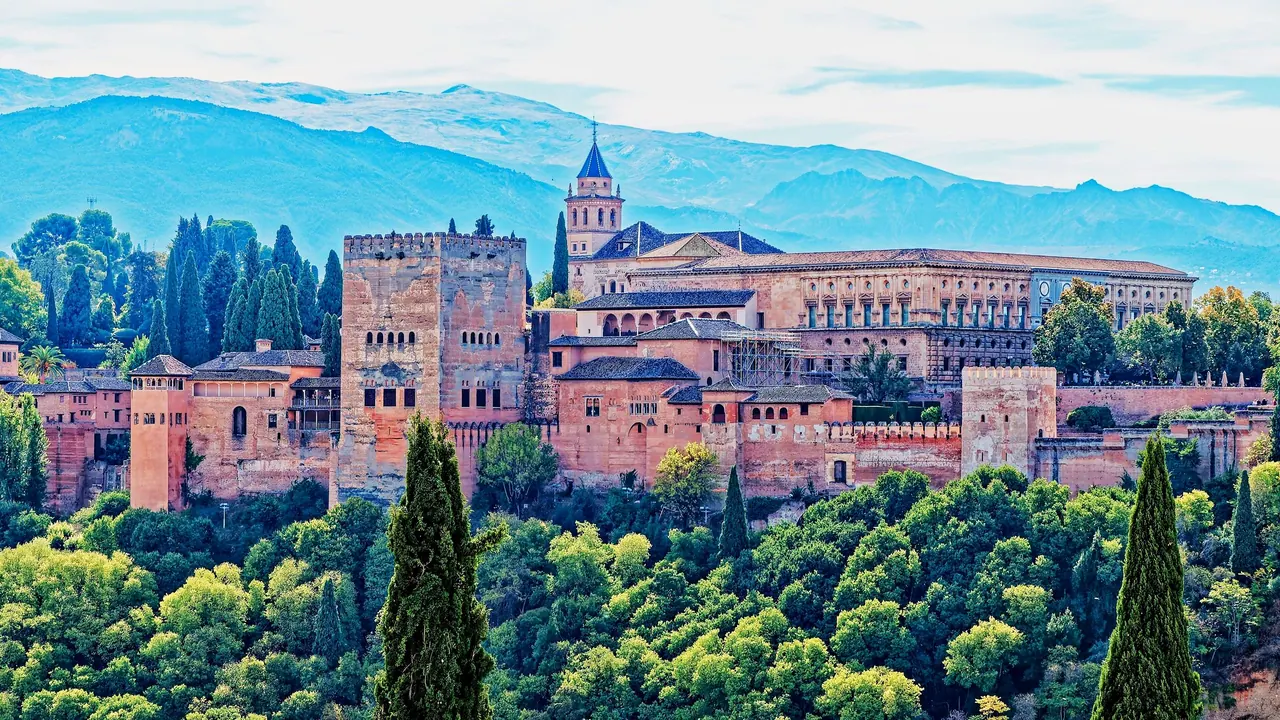
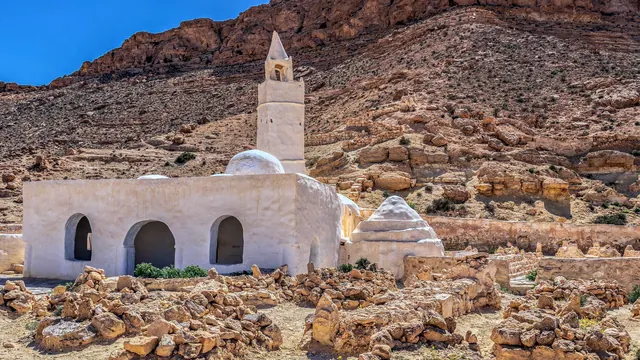
Photos: Morocco by Petar Milošević, CC BY-SA 4.0, cropped; Spain by Holger Uwe Schmitt, CC BY-SA 4.0, cropped.
Morocco or Spain?
Our verdict in twelve categories, each scored against the same fixed benchmark cities, and the climate month by month, so you can choose for your trip.
Choose Morocco for
- prices
- wellness
- shopping
Morocco suits travellers who want a trip that feels far from home without a long flight: medinas where crafts are still made and sold, a night in the Saharan dunes, Berber villages in the High Atlas and a hammam at the end of the day. It costs less on the ground, but it asks more of you. Most visitors travel in a loop with a driver, and evenings mean a long dinner and mint tea rather than bars.
Choose Spain for
- nightlife
- families
- live music and the arts
Choose Spain for an easier and more varied vacation where the sea, the table and the night all count. Its warm Mediterranean beaches, regional cooking, late nights and fast trains let you stay in two or three cities and see a great deal from each. It also suits families with children far better.
Scoreboard
Twelve categories on one fixed scale from 0 to 100. The shaded stretch is the gap between the two.
Your match
Pick a travel style or drag the sliders, and both match scores follow your weighting.
Wins on prices and wellness with your weighting.
Wins on nightlife and families with your weighting.
What matters to you?
Category by category
What the scores mean for a trip.
Beaches & swimming
Spain is the far stronger beach destination. The turquoise coves of Menorca and Mallorca, Formentera's white sand, the inlets of the Costa Brava and the wide beaches of the Costa Blanca all have warm water through the summer. The Costa de la Luz gives you wild Atlantic dunes if you want fewer buildings.
Morocco's coast is mostly an extra at the end of a tour. Agadir has a good sheltered crescent of sand, but the Atlantic stays cool, Taghazout's bays are for surfers and Essaouira belongs to the wind. The warmer Mediterranean coves around Al Hoceima and Saidia are lovely in July and August, but few foreign visitors reach them.
Where in Morocco: Agadir, Al Hoceima, Saidia, Taghazout
Where in Spain: Balearic Islands, Costa Brava, Costa de la Luz, Canary Islands
Food & drink
Both countries eat well, but Spain gives you more range and more places to enjoy it. Basque pintxo bars, Barcelona's neighbourhood markets, Madrid's old taverns, Andalusian sherry and fried fish, Valencian paella and Galician shellfish make up a different food trip in every region, with wine always on the table.
Morocco's strength is depth in a single home cuisine. There are slow tagines, pastilla and harira, the evening grills of Jemaa el-Fna, refined cooking inside the Fes medina and sardines grilled at Essaouira's harbour. It is best eaten in riads and at street stalls. Outside Marrakech and Casablanca there is little else on offer, and alcohol sits apart from everyday meals.
Where in Morocco: Marrakech, Fes, Essaouira, Tangier
Where in Spain: Basque Country, Barcelona, Madrid, Andalusia
Culture & sights
Both countries can fill a long trip with sightseeing, and they share a Moorish thread: the carved courtyards of the Fes madrasas have their counterpart in Granada's Alhambra and Cordoba's Mosque-Cathedral. In Morocco, the old cities themselves are the attraction. Car-free Fes el-Bali, Marrakech's palaces and tombs, Roman Volubilis and the earthen ksar of Ait Benhaddou are lived in and walked through, and the museums are modest.
Spain adds great collections and many more periods of history. There is the Prado in Madrid, Gaudi's Barcelona, and the Gothic cathedrals of Burgos and Leon among the sandstone and walled towns of Castile.
Where in Morocco: Fes, Marrakech, Meknes and Volubilis, Rabat
Where in Spain: Andalusia, Madrid, Barcelona, Castile and Leon
Nightlife
There is no real contest here. Spain goes out late everywhere, from Malasana's terraces and Madrid's all-night clubs to Barcelona's electronic scene and the club island of Ibiza, and even small-town plazas stay full long after dark.
In Morocco, a night out has to be planned around a few places: hotel clubs and rooftop lounges in Marrakech's Hivernage and Gueliz, the Corniche in Casablanca and Agadir's seafront. Elsewhere, evenings end with tea.
Where in Morocco: Marrakech, Casablanca, Agadir
Nature & outdoors
The two are evenly matched outdoors, with very different landscapes. Morocco has what Spain cannot offer: a camel ride into the dunes of Erg Chebbi and a night in a desert camp, the red canyons of the Dades and Todra gorges, and the climb of Jebel Toubkal from Imlil, all within a few days' drive of Marrakech.
Spain's mountains are more varied and greener. You can walk the canyons of Ordesa in the Pyrenees, the Picos de Europa above the Asturian coast or the Tramuntana ridges on Mallorca, or head to Teide's volcanic slopes in the Canaries for winter walking. In both countries the south is too hot for hiking in high summer.
Where in Morocco: High Atlas, Erg Chebbi, Dades and Todra gorges, Rif mountains
Where in Spain: Pyrenees, Picos de Europa, Canary Islands, Sierra Nevada
Day trips
Spain is built for staying in one city and taking day trips. Fast trains put Toledo and Segovia about half an hour from Madrid and Cordoba within an hour of Seville, and Barcelona has Girona, Montserrat and Tarragona close by.
Morocco has one excellent base in Fes, with Meknes, Volubilis and Moulay Idriss all close, and Tangier works well for Asilah and Tetouan. From Marrakech the main outings, Essaouira and Ait Benhaddou, are long enough to need an overnight stay, so a Moroccan trip moves from place to place rather than returning to one base.
Good for families
Spain is much easier with children. Calm, shallow beaches on the Costa Dorada and in the Balearics, PortAventura near Salou, Valencia's aquarium and the water parks of the Canaries give you plenty of choice, and children are welcome at the table late into the evening.
Moroccans are warm towards children, but there is little made for them. Agadir's beach and pool hotels and Essaouira's small, flat medina are the easy options, and a night in the Erg Chebbi dunes is the outing children remember. Long drives, interior heat and crowded big-city medinas make it harder going.
Where in Morocco: Agadir, Essaouira, Merzouga and Erg Chebbi
Where in Spain: Costa Dorada, Valencia, Canary Islands, Balearic Islands
Getting around
Spain's high-speed network links Madrid with Barcelona, Seville, Malaga and Valencia, and the big cities have metros. Without a car, you only miss the white villages, the Picos and rural Galicia.
Morocco's rail line works well from Tangier through Rabat and Casablanca to Fes and Marrakech. Beyond it, the desert, the gorges, the Atlas valleys and Chefchaouen all mean long road journeys, usually with a hired driver or on a tour.
Where in Morocco: Tangier, Rabat, Casablanca, Fes
Shopping & style
Both are good for shopping, but the experience is quite different. In Morocco you bargain in the souks of Marrakech and Fes, where carpets, lanterns, leather slippers and brass are often made a few lanes from where they are sold, and Essaouira and Chefchaouen add woodwork and woven blankets.
Spain is more about fashion, with Madrid's Salamanca district, Barcelona's Passeig de Gracia and the Born, and the Rastro flea market on Sundays. Its crafts are fixed-price, such as Toledo metalwork and Seville ceramics, along with saffron and sherry to take home.
Where in Morocco: Marrakech, Fes, Essaouira, Chefchaouen
Affordability
Morocco is noticeably cheaper on the ground. Simple riads in Fes, Essaouira and Chefchaouen, street food, trains and coaches all cost little, and only Marrakech's design riads and spa hotels, private drivers and desert tours push the budget up.
Spain is moderately priced. You can keep costs down by staying inland in Andalusia, Extremadura or Galicia, or by using Granada's free tapas, but Barcelona, San Sebastian and Ibiza, and the coast in July and August, are expensive.
Where in Morocco: Fes, Chefchaouen, Essaouira, Taghazout
Where in Spain: Andalusia, Galicia, Castile and Leon, Extremadura
Live music & performing arts
Spain has far more to attend. You can see flamenco in Seville's Triana, in Jerez and in Granada's Sacromonte caves, opera at Madrid's Teatro Real and Barcelona's Liceu, and concerts in the Palau de la Musica Catalana.
Morocco's music is rich but mostly happens outside formal venues: gnawa and storytellers gathering crowds in Jemaa el-Fna at dusk, or gnawa groups in Essaouira's small houses. Beyond festivals such as the Fes Festival of World Sacred Music, there are few concerts or shows to book.
Where in Morocco: Essaouira, Fes, Marrakech, Rabat
Where in Spain: Seville, Madrid, Barcelona, Jerez de la Frontera
Wellness & relaxation
Morocco is the better place to unwind. The hammam is an everyday ritual there, from the neighbourhood bathhouse with black soap and a kessa scrub to palatial argan-oil spas in Marrakech, with the old hot springs of Moulay Yacoub near Fes and a slower pace in Essaouira.
Spain has the Arab-style baths of Granada and Cordoba, which recreate that same hammam tradition, along with Ourense's riverside hot springs and resort spas on Mallorca and the Canaries. Even so, these are usually extras rather than the reason to go.
Where in Morocco: Marrakech, Fes, Moulay Yacoub, Essaouira
Where in Spain: Ourense, Granada, Canary Islands, Mallorca
When should you go?
Pick your month, and for a country the place in it. The climate figures are measured averages, not a forecast.
Where in Morocco
Where in Spain
Marrakech (Morocco) in July
Barcelona (Spain) in July
Daytime high, °C
Rainfall in the month, mm
Temperature and rainfall are climate normals, averaged over the years shown. Marrakech (Morocco): 1991-2020 normals, Marrakech (5.1 km from centre). Barcelona (Spain): 1991-2020 normals, Barcelona / Aeropuerto (14.4 km from centre).
Morocco's cities and desert are at their best in spring and autumn. Marrakech reaches 38°C in July and the interior bakes, while Fes gets most of its rain from October to April and can be grey and damp in late autumn. Agadir is mild all year and works as a winter-sun stop, but its sea never passes about 20°C, so swimming there is always on the cool side. March to May and late September to November suit a circuit that combines the medinas, the Atlas and Erg Chebbi.
Spain has a longer warm season on its coast. The Mediterranean is warm enough for swimming from June into October and reaches about 25°C off Barcelona in August, with Malaga a little cooler. Inland, summer is hot for walking the streets: Madrid peaks at 33°C in July and Seville at 36°C, so spring and autumn are better for city sightseeing, and Seville gets heavy rain in November. In winter Tenerife stays mild and sunny, while Bilbao and the green north are wet for much of the year.
Which traveller are you?
For a food and nightlife trip, Spain is the clear choice. You can follow pintxos in San Sebastian with tapas in Madrid's La Latina, and dinner after ten leads on to bars and clubs. Morocco's cooking is excellent, but its nights are mostly quiet.
On a trip on a tight budget, Morocco stretches money further. It has cheap riads in Fes and Chefchaouen, street food at Jemaa el-Fna, inexpensive trains and surf houses at Taghazout. Spain can be done cheaply, but only if you stay in inland Andalusia, Galicia or Castile.
More comparisons
Each shares a side with Morocco or Spain.
Where else could you go?
Set Morocco or Spain against any other country.