Spain
Madrid
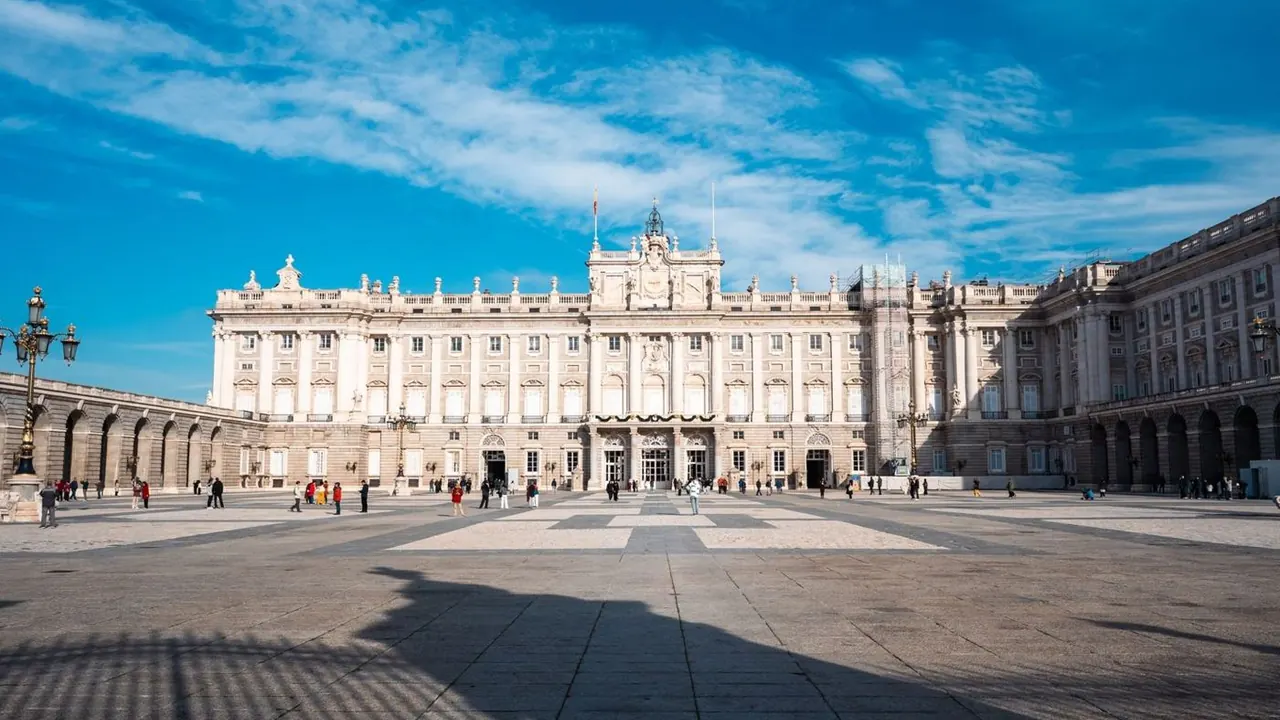
The Royal Palace
- Day trips89
- Culture & sights86
- Nightlife85
Photo: Mert Ocak, Pexels License
Match
66
Every category weighted equally
- Beach & sun56
- Culture & arts75
- Food & nightlife73
- Family trip62
- Outdoors64
- Relax & unwind57
- Shopping & style72
- On a budget64
Madrid in twelve categories
Our verdict on each, scored 0 to 100 against the same fixed benchmark cities, so a score means the same thing on every page.
Beaches & swimming. Scores 5 out of 100.
Food & drink. Scores 80 out of 100.
Culture & sights. Scores 86 out of 100.
Nightlife. Scores 85 out of 100.
Nature & outdoors. Scores 60 out of 100.
Day trips. Scores 89 out of 100.
Good for families. Scores 68 out of 100.
Getting around. Scores 84 out of 100.
Shopping & style. Scores 75 out of 100.
Affordability. Scores 50 out of 100.
Live music & performing arts. Scores 77 out of 100.
Wellness & relaxation. Scores 36 out of 100.
Madrid category by category
Beaches & swimming
5Madrid sits on a high plateau in the middle of Spain, and the nearest sea is a long journey away, well beyond a day out. In summer, when the city often goes above 35°C, madrileños head for the big municipal open-air pools or drive to the reservoirs at the foot of the Sierra de Guadarrama. Anyone who wants the beach on this trip should add a few days on the coast. Madrid itself won't give you one.
Food & drink
80Eating in Madrid is a social, standing-up, late-night habit. The tapas crawl is the heart of it: small plates and a caña of beer at the zinc counters of La Latina's Cava Baja, around Plaza de Santa Ana and in Lavapiés, with vermouth on tap at Sunday lunchtime. The city's own dishes are hearty Castilian food: cocido madrileño, callos, bocadillos de calamares near Plaza Mayor, and churros with thick chocolate in the small hours. As the capital, Madrid also gathers the best of every Spanish region, so Galician seafood houses and Basque grills sit alongside a serious tier of high-end tasting menus.
Market halls such as San Miguel, Antón Martín and San Fernando mix fresh produce with places to eat. Lunch is the big meal, and the fixed menú del día is a good way to eat well at midday. Dinner rarely starts before 9pm.
Culture & sights
86Madrid's great strength is painting. Along the Paseo del Prado, three museums sit within a short walk of each other. The Prado holds the deepest collection of Velázquez, Goya and El Greco anywhere, along with Bosch, Titian and Rubens. The Reina Sofía has Picasso's Guernica and a strong run of Spanish modernism, and the Thyssen-Bornemisza fills in the centuries between. Serious art lovers can spend days here.
The city around the museums is grand rather than ancient. Habsburg Madrid has the arcaded Plaza Mayor and narrow streets, and the Bourbon centuries left the vast Royal Palace, Almudena Cathedral and the fountains of Cibeles and Neptune. There are also early twentieth-century façades along the Gran Vía and smaller treasures such as the Sorolla house and the Goya frescoes in San Antonio de la Florida. There is little medieval fabric, so the older history is found on day trips.
Nightlife
85Madrid is one of Europe's latest cities. Dinner ends near midnight, bars fill after that, and the clubs don't get going until two and keep going past dawn, all week in summer and every weekend year round. Each neighbourhood has its own character. Malasaña has rock bars and scruffy indie haunts, Chueca is the heart of the gay scene, La Latina and Lavapiés are good for terraces and bar-hopping, and Huertas is a cheerful, touristy pub crawl. Large clubs around Gran Vía and Sol cover everything from mainstream to techno.
Much of the life is on the street, with crowded terraces on warm nights and plazas that stay busy well after midnight. The centre feels relaxed at late hours, and the night often ends with a stop for churros.
Nature & outdoors
60Within the city, the green spaces are the formal Retiro park, the large woodland of Casa de Campo and the long riverside park of Madrid Río, all good for running and cycling. The real outdoors lies about an hour north in the Sierra de Guadarrama. Granite peaks rise above 2,400m there, and trails cross the boulder maze of La Pedriza and climb to the glacial lakes below Peñalara. There is modest skiing at Navacerrada and Valdesquí in winter.
Spring and autumn are the best seasons. Summer on the plateau is hot and dry, and the plains around the city are open farmland. There is no sea, lake country or dramatic scenery close at hand beyond the sierra.
Day trips
89Day trips are one of the best reasons to stay in Madrid. Fast trains run out in every direction to a ring of historic cities. Toledo is about half an hour away by high-speed train: a hilltop of churches, synagogues and mosques above the Tagus gorge. Segovia takes a similar time and has its Roman aqueduct, cathedral and fairy-tale Alcázar. Ávila, inside complete medieval walls, is a little further.
The list goes on. Salamanca's golden sandstone university town and Cuenca's houses hanging over a gorge are each about an hour to an hour and a half by fast train. Closer in are the monastery-palace of El Escorial, the royal gardens of Aranjuez and Cervantes' Alcalá de Henares. Córdoba is just within reach for a long day.
Good for families
68Spanish family life is very public, and children out in restaurants and plazas until late in the evening are normal, so families fit in easily. The Retiro, with rowing boats, puppet shows and playgrounds, is the classic outing. Casa de Campo has the zoo and aquarium, a cable car and the Parque de Atracciones funfair. Further out are a Warner Bros theme park and Faunia, a nature park with animals.
The metro has lifts at many stations, and the flat centre is easy with a pushchair. The catches are the summer heat, which makes July and August hard work, the late meal times, and the fact that the great museums are aimed at adults.
Getting around
84Getting around Madrid is easy. The historic centre, from the Royal Palace through Sol and Huertas to the Prado, is flat enough and compact enough to walk. The metro is one of Europe's largest: clean, air-conditioned, simple to follow, and with a line straight to the airport. Buses and the Cercanías commuter trains fill the gaps, and the main stations at Atocha and Chamartín link straight into the high-speed network.
You don't need a car for anything in the city. The only real effort is the summer heat on long walks between districts.
Shopping & style
75Madrid's shopping is divided by neighbourhood. The grid of the Salamanca district, especially Calle Serrano and Calle Ortega y Gasset, holds the international luxury houses and polished Spanish labels. Gran Vía and the streets around Sol and Preciados are the place for high-street flagships and the big department stores. Malasaña, Chueca and the Conde Duque area have independent fashion, vintage and design shops.
On Sunday mornings El Rastro, the old flea market, fills the sloping streets below La Latina with antiques, junk and crowds. For traditional crafts, look for guitar workshops, hand-painted fans, espadrilles and capes in the older shops around Plaza Mayor.
Affordability
50Madrid sits in the middle for a Western European capital. Hotels cost about what you would expect for a major city and rise around big events, but eating out is a pleasant surprise. The fixed-price midday menu, tapas with a drink and the late-night bars keep a day's food fairly modest. The metro is inexpensive, and the great museums have free entry at set times. It isn't a budget destination, but nor is it one of Europe's expensive cities.
Live music & performing arts
77Madrid has a broad stage life. The Teatro Real, facing the Royal Palace, is a major opera house, and the Auditorio Nacional is the home of the national orchestra and the main stop for touring orchestras. The Teatro de la Zarzuela keeps Spain's own light opera alive. Gran Vía is lined with theatres staging long-running musicals, and smaller playhouses around Lavapiés and Huertas put on Spanish drama.
Flamenco is the draw for many visitors. Tablaos in the old centre stage it every night, and the best of them present serious singers, guitarists and dancers rather than a dinner show. There are also several long-established jazz clubs and a busy circuit of rock and indie venues around Malasaña.
Wellness & relaxation
36Madrid has no bathing culture of its own. Relaxing means one of a handful of Arab-style bathhouses in the old centre, with warm and cold pools under brick vaults, or a hotel spa. The city's rhythm is late, social and noisy, and Madrid is not a place to slow down by design. The quiet moments come from long lunches, a lazy afternoon in the Retiro or the shade of the Botanical Garden, and the emptier streets in the heat of a summer afternoon.
When should you go?
Pick a month to see what it is like. The climate figures are measured averages, not a forecast.
Madrid in July
Daytime high, °C
Rainfall in the month, mm
The whole year
Shaded against this city’s own year: the deepest cell is its best month for that figure and the palest its weakest.
Temperature and rainfall are climate normals, averaged over the years shown. Madrid: 1991-2020 normals, Madrid (1.7 km from centre).
Before you go
| Measure | Madrid |
|---|---|
| Official language | Spanish |
| Currency | Euro (EUR) |
| Sockets | CF230 V, 50 Hz |
| Driving side | Right |
| Time zone | UTC+1, UTC+2 in summer |
| Emergency number | 112 |
| Elevation | 663 m |
| Main airport | Adolfo Suárez Madrid–Barajas Airport (MAD)14 km from centre239 non-stop destinations |
| Public holidays this year | 12 days |
By the numbers
| Measure | Madrid |
|---|---|
| City population | 3,506,730 |
| People per km² | 5,801 |
| Museums within 10 km | 88 |
| UNESCO World Heritage sites within 50 km | 4 |
Compare Madrid with
Every comparison with a written verdict behind it.