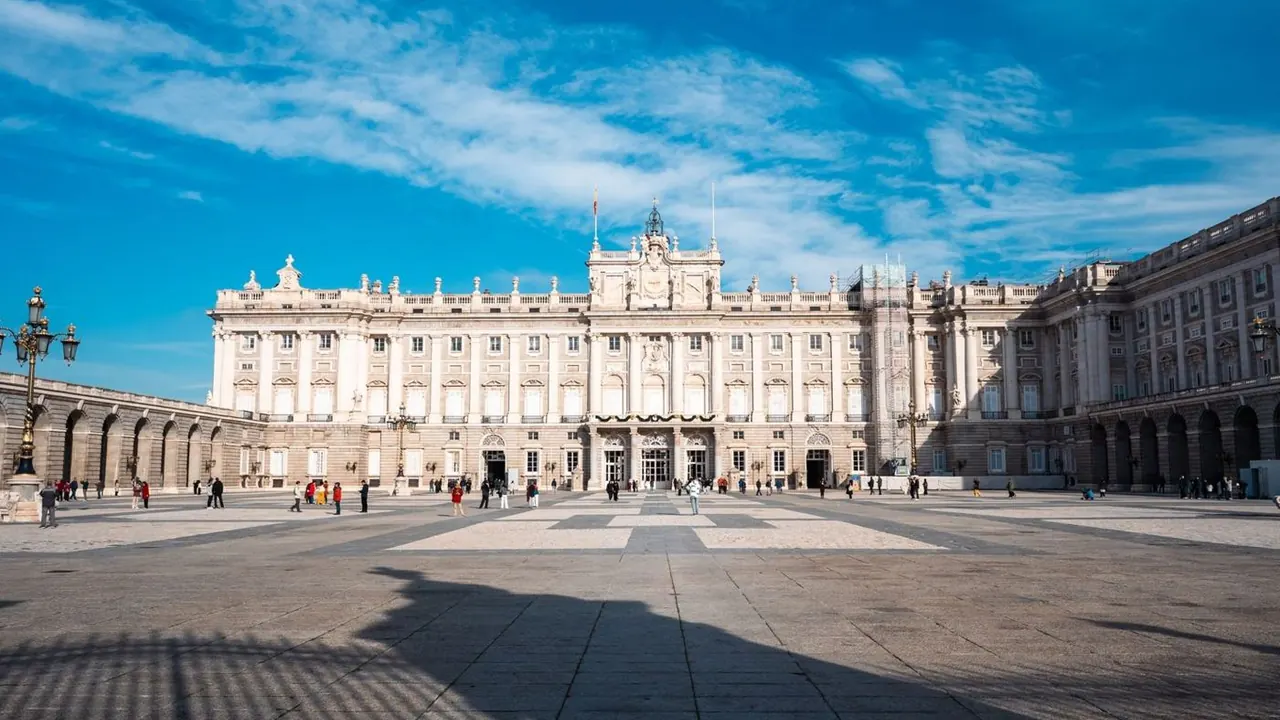
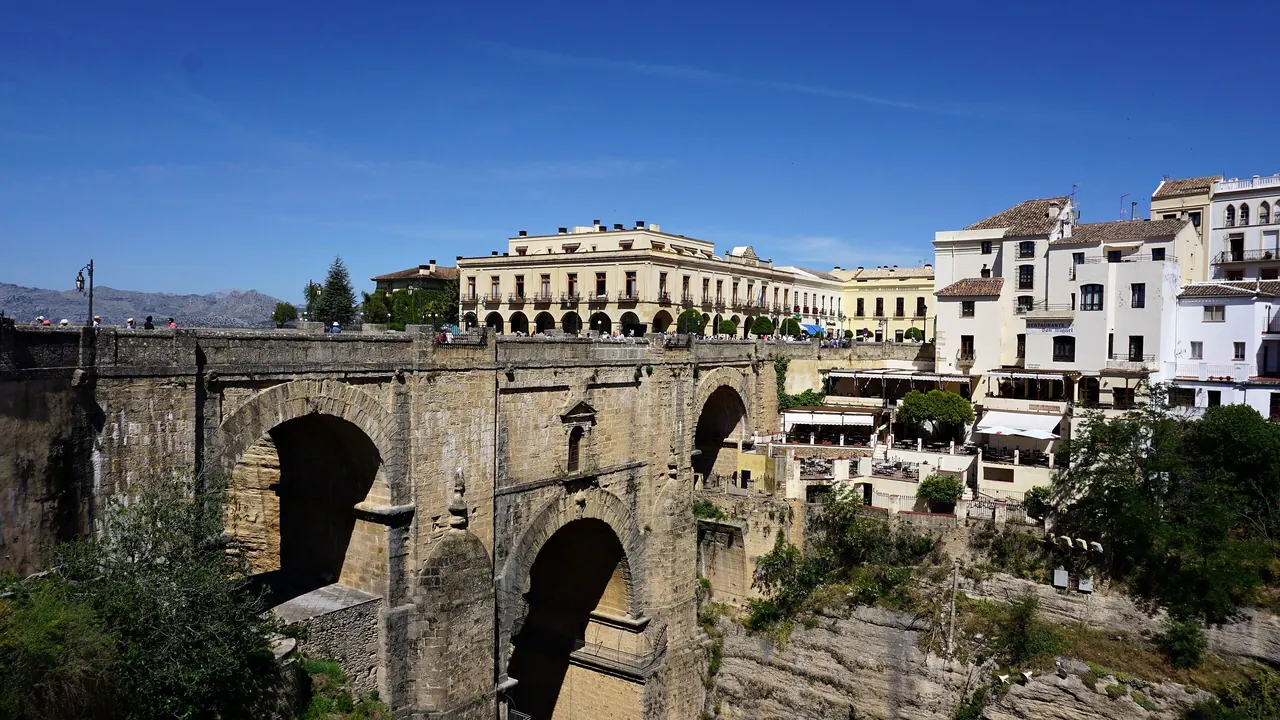
Photos: Madrid by Mert Ocak, Pexels License; Ronda by Julia Kostecka, CC BY 2.0, cropped.
Madrid or Ronda?
Our verdict in twelve categories, each scored against the same fixed benchmark cities, and the climate month by month, so you can choose for your trip.
Choose Madrid for
- nightlife
- live music and the arts
- shopping
Madrid suits travellers who want a capital at full strength: the Prado and its neighbours, a food scene drawing on every region of Spain, opera, serious flamenco and nights that end at dawn. It is also the easier base, with a metro for the city and fast trains to Toledo, Segovia and Salamanca, so nobody needs a car.
Choose Ronda for
- nature and the outdoors
- beaches
- prices
Choose Ronda for landscape and a slower pace. The town on its gorge takes a day or two of sightseeing, but the real reason to stay is the mountains around it, the white villages and a quiet farmhouse with a pool, all for less than the big cities charge. Bring a car, and save nightlife and great museums for another trip.
Scoreboard
Twelve categories on one fixed scale from 0 to 100. The shaded stretch is the gap between the two.
Your match
Pick a travel style or drag the sliders, and both match scores follow your weighting.
Wins on nightlife and live music and the arts with your weighting.
Wins on nature and the outdoors and beaches with your weighting.
What matters to you?
Category by category
What the scores mean for a trip.
Beaches & swimming
Neither is a beach destination, but Ronda at least has the sea within reach. The Costa del Sol near Estepona is about 50km south, an hour down a twisting mountain road, with long sandy, built-up beaches and warm water in late summer. It takes a car and a whole day.
Madrid has no such option. The coast is too far for any day out, so summer swimming means the municipal open-air pools or the reservoirs below the Sierra de Guadarrama.
Food & drink
Madrid is much the better place to eat. The tapas counters on Cava Baja and around Santa Ana, market halls such as San Miguel and Antón Martín, Galician and Basque cooking and a top tier of tasting menus give you weeks of variety.
Ronda's food is narrower but has a clear identity: oxtail stew, mountain lamb and game, hams, and chestnuts and mushrooms in autumn, with Sierras de Málaga wine and winery tastings just outside town. Eat in the Mercadillo's tapas bars rather than on the gorge terraces, and expect to have tried most of it within a few days.
Culture & sights
Madrid's culture is on a different scale. The Prado, Reina Sofía and Thyssen-Bornemisza stand close together on one boulevard and hold enough painting for several days, and the Royal Palace and Plaza Mayor add a capital's grandeur, though there is little medieval building.
In Ronda the setting is the sight. The Puente Nuevo over the Tajo, the Moorish old town, one of Spain's oldest bullrings and well-preserved Arab baths give it the older layers Madrid lacks. Its museums are small, though, and one or two days see it properly.
Nightlife
This is where the two differ most. Madrid goes out after midnight and its clubs run past dawn, with a different scene in each district: rock bars in Malasaña, the gay scene in Chueca, terraces in La Latina and Lavapiés, big clubs around Gran Vía.
Ronda's evening is a long dinner and a drink around the Plaza del Socorro. The town is quiet by the early hours except during the September fair.
Nature & outdoors
Ronda is surrounded by the kind of landscape Madrid has to drive out to. Vultures circle over the Sierra de Grazalema and the Garganta Verde, the Sierra de las Nieves protects rare fir forests, a path drops into the Tajo, and the Caminito del Rey is within an hour. That makes it a real base for walking and climbing.
Madrid has the Retiro, Casa de Campo and Madrid Río for a run. For more, you go to the Sierra de Guadarrama about an hour north, with its granite peaks, La Pedriza and some modest winter skiing that Ronda cannot match.
Day trips
Both are good bases, but Madrid is the stronger and easier one. High-speed trains reach Toledo and Segovia in about half an hour, and Ávila, Salamanca, Cuenca and El Escorial are close too, so you can see a run of historic cities without a car.
From Ronda the draw is the white villages: Setenil under its rock, Zahara below its castle and Grazalema, plus the ruins of Acinipo and the painted Cueva de la Pileta. Seville and Málaga are possible but make long days, and the villages really need a hire car.
Good for families
Madrid gives children far more to do: rowing boats and puppet shows in the Retiro, the zoo, aquarium and funfair in Casa de Campo, and theme parks further out. Metro lifts and a flat centre make pushchairs manageable, though July and August are hard going.
Ronda is good for an outing or two with older children: the bridge, the walk into the gorge and the caves nearby. Steep cobbles and exposed viewpoints make it awkward with small ones, so a country house with a pool is the better plan.
Getting around
In Madrid a large air-conditioned metro, commuter trains and buses cover the whole city. There is a direct line to the airport and fast trains leave from Atocha and Chamartín, so you never need a car.
Ronda is small enough to cross on foot in minutes, despite the steep lanes into La Ciudad. Beyond the town, though, the slow and infrequent trains and buses are only really useful for arriving, and the villages and natural parks need a car.
Shopping & style
Madrid is a proper shopping city, with luxury houses on Calle Serrano, flagship stores around Gran Vía and Preciados, independent and vintage shops in Malasaña and Chueca, and El Rastro on Sunday mornings. In Ronda, Carrera Espinel and the souvenir streets by the bridge are modest, and the best things to take home are wine, cured meats, olive oil and convent sweets.
Affordability
Ronda is easier on the wallet. Tapas and set lunches in the Mercadillo are good value, the sights cost little and the town is free to walk. Hotels with gorge views, Easter and the fair push prices up, and a hire car adds a real cost.
Madrid costs about what you would expect of a capital, with ordinary big-city hotel prices. The menú del día, a cheap metro and free museum hours keep the daily spending down.
Live music & performing arts
Madrid has a full stage calendar: opera at the Teatro Real, the national orchestra at the Auditorio Nacional, zarzuela, musicals on Gran Vía, serious flamenco tablaos, and jazz and indie venues in Malasaña. Ronda has small flamenco shows, an occasional theatre programme and, once a year, the Corrida Goyesca at the September fair, so evenings there are for dinner rather than a performance.
Wellness & relaxation
Neither is built for a wellness break, but each offers calm in a different way. Madrid has a few Arab-style bathhouses where you can actually bathe under brick vaults, yet the city runs late and loud, and resting means a long lunch or an afternoon in the Retiro.
Ronda's Arab baths are a monument to visit, not to bathe in. The town goes quiet once the coach parties leave, though, and a farmhouse in the hills with a pool and olive groves gives you the slow days that Madrid does not.
When should you go?
Pick your month. The climate figures are measured averages, not a forecast.
Madrid in July
Ronda in July
Daytime high, °C
Rainfall in the month, mm
Where the figures come from
Ronda has no weather station within reach, so its figures come from a gridded climate model rather than a measured record, and read a broad area rather than the city itself.
Temperature and rainfall are climate normals, averaged over the years shown. Madrid: 1991-2020 normals, Madrid (1.7 km from centre). Ronda: 1991-2020 normals, TerraClimate 4 km grid at the town, no weather station within 90 km.
Madrid is at its best in May and June and again from September into early October. July and August are hot and very sunny, with highs around 33°C that make long walks between districts tiring. Winters are cold but bright, near 10°C in January. Rain is light all year, with the wettest spell coming in October and November.
Ronda is milder in winter, around 13°C in January, but much wetter, with heavy rain from October to March and the most, about 120mm, in December. Summer is almost dry and the afternoons are as hot as Madrid's, so April, May and late September are the walking months. The coast below has its warmest sea in August, around 22°C.
Which traveller are you?
For a food and nightlife trip, Madrid is the clear choice. Its evenings run in one long arc from a late dinner to bars after midnight and dancing until dawn, and a week barely dents the places to eat. Ronda gives you one good meal, then bed.
On a family trip with children, Madrid works better. Children's days out are easy to fill between the sights, and a flat, well-connected city spares small legs in the heat. Ronda holds young children's interest for an afternoon or so.
On an outdoors trip, Ronda wins. The walking starts from town rather than after an hour on the road, with green limestone ranges on either side and spring and autumn made for hiking. For Madrid, the mountains make a good day out, but the city itself is not a mountain base.
Before you go
| Measure | Madrid | Ronda |
|---|---|---|
| Official language | Spanish | Spanish |
| Currency | Euro (EUR) | Euro (EUR) |
| Sockets | CF230 V, 50 Hz | CF230 V, 50 Hz |
| Driving side | Right | Right |
| Time zone | UTC+1, UTC+2 in summer | UTC+1, UTC+2 in summer |
| Emergency number | 112 | 112 |
| Elevation | 663 m | 724 m |
| Main airport | Adolfo Suárez Madrid–Barajas Airport (MAD)14 km from centre239 non-stop destinations | Málaga-Costa del Sol Airport (AGP)60 km from centre166 non-stop destinations |
| Public holidays this year | 12 days | 12 days |
By the numbers
| Measure | Madrid | Ronda |
|---|---|---|
| City population | 3,506,730 | 33,671 |
| People per km² | 5,801 | 87 |
| Museums within 10 km | 88 | 5 |
| UNESCO World Heritage sites within 50 km | 4 | 0 |
| Swim season, months above 21 °C | - | 1 month |
Where else could you go?
Every comparison below shares a destination with this one, so you can follow Madrid or Ronda somewhere new.