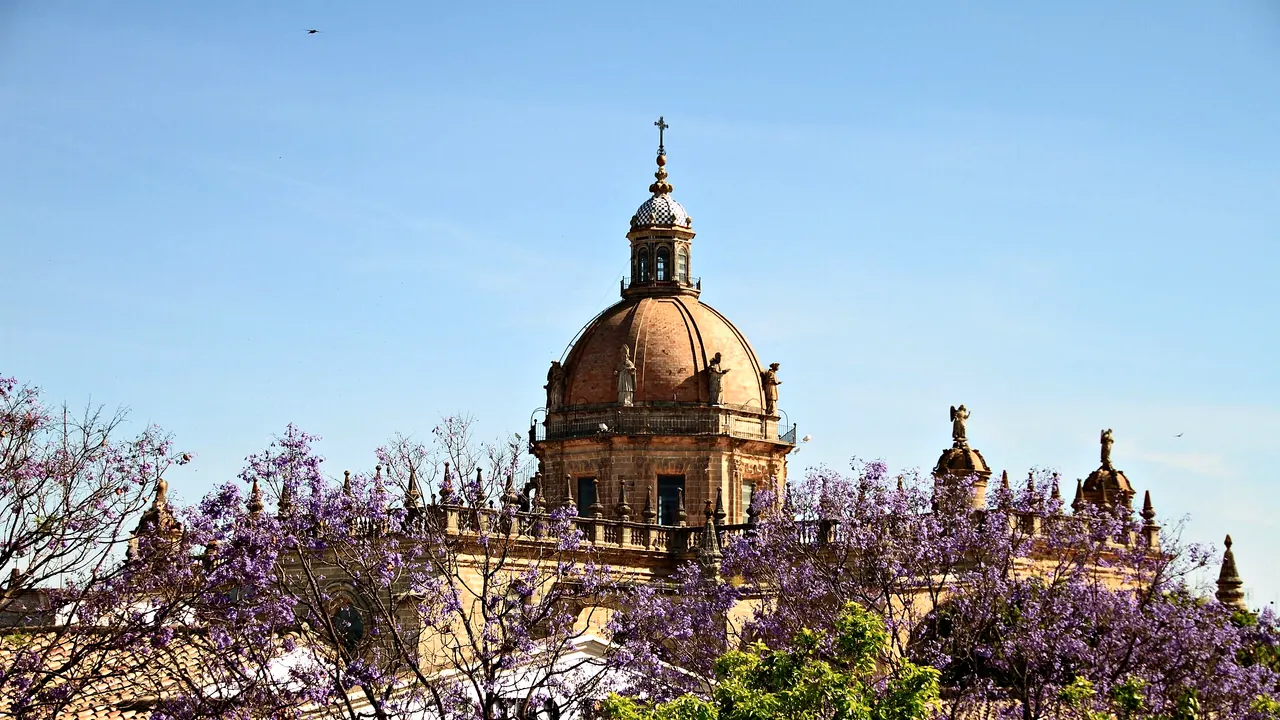
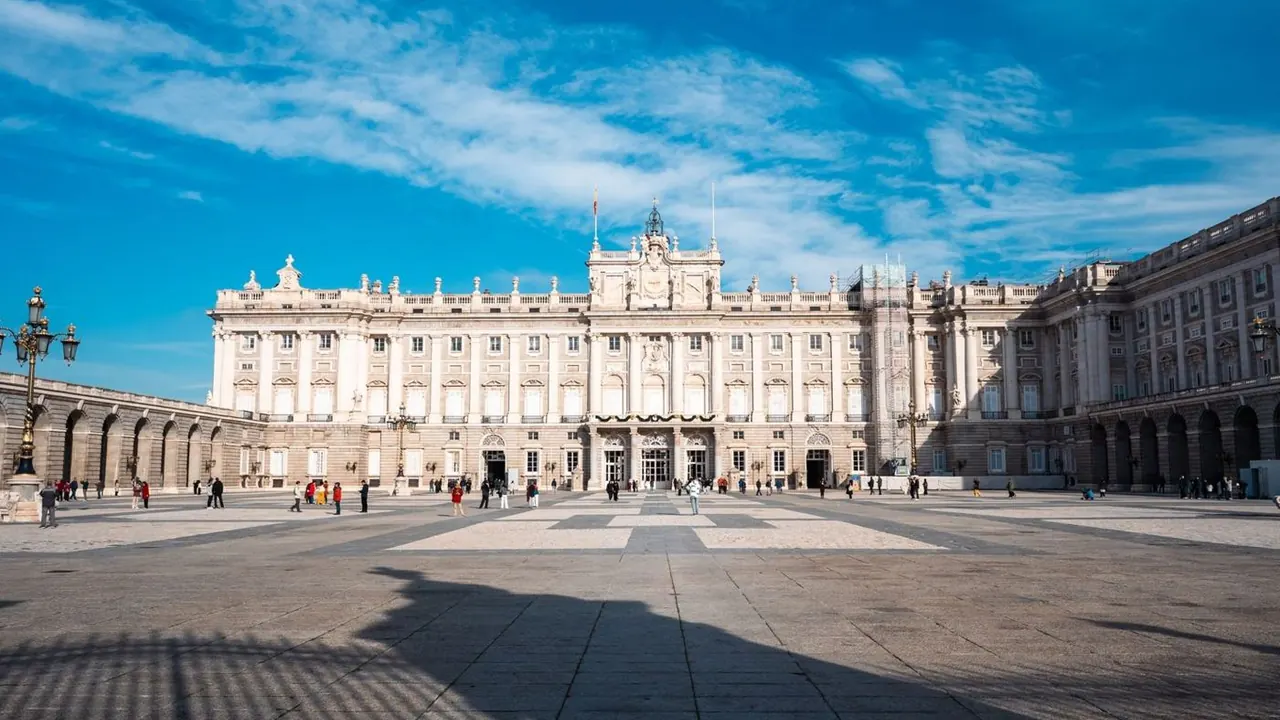
Photos: Jerez de la Frontera by PEPE GADEIRAS, CC BY 4.0, cropped; Madrid by Mert Ocak, Pexels License.
Jerez de la Frontera or Madrid?
Our verdict in twelve categories, each scored against the same fixed benchmark cities, and the climate month by month, so you can choose for your trip.
Choose Jerez de la Frontera for
- beaches
- prices
- nature and the outdoors
Jerez suits a slower Andalusian trip built around sherry, flamenco in the quarters where it took shape, and the Atlantic beaches of the Costa de la Luz. It costs less day to day, and the centre is small enough to cover on foot. Direct trains reach Seville and Cádiz easily, and a hired car is only needed for the white towns and the Sierra de Grazalema.
Choose Madrid for
- nightlife
- shopping
- culture and sights
Anyone who wants a full capital-city trip should pick Madrid. If you care about painting, the Prado, the Reina Sofía and the Thyssen alone are worth the journey. Nights run far later and offer more choice, and between the shopping, the stage life and the fast trains to Toledo and Segovia you can fill a week without a car. There is no sea, though, so beach time means adding a second stop.
Scoreboard
Twelve categories on one fixed scale from 0 to 100. The shaded stretch is the gap between the two.
Your match
Pick a travel style or drag the sliders, and both match scores follow your weighting.
Wins on beaches and prices with your weighting.
Wins on nightlife and shopping with your weighting.
What matters to you?
Category by category
What the scores mean for a trip.
Beaches & swimming
Neither city has a beach of its own, but Jerez is well placed for the coast. Valdelagrana, Cádiz's La Caleta and Playa de la Victoria, and further out the wide sands of Sanlúcar and La Barrosa are all a short train ride or drive away. These are long Atlantic beaches of fine sand that make an easy day out, and the Levante wind is the main catch.
Madrid sits on the central plateau, too far from any sea for a day out. In summer, swimming there means the big municipal open-air pools or the reservoirs below the Sierra de Guadarrama.
Food & drink
Jerez offers depth in one tradition. Sherry from the barrel in the tabancos comes with chacina or chicharrones, and it goes into the oxtail and kidneys too, alongside berza stew and fried fish from the nearby coast.
Madrid eats more widely and at a higher level overall. There are the counters of Cava Baja and Santa Ana, Castilian cocido and callos, Galician seafood houses, Basque grills and a serious tier of tasting menus, with market halls such as San Miguel and Antón Martín for grazing. Pick Jerez for a trip that revolves around one wine. Pick Madrid for range.
Culture & sights
Jerez rewards two or three days of wandering. It has the Almohad Alcázar with its Arab baths, the Baroque cathedral, the Gothic-Mudéjar parish churches, and the Santiago and San Miguel quarters where flamenco took shape. Its unique sights are the cathedral-like sherry bodegas and the dancing horses of the Royal Andalusian School.
Madrid is in another league for art. The Prado, the Reina Sofía with Guernica and the Thyssen sit within a short walk of each other along the Paseo del Prado, around the grand Habsburg and Bourbon city of Plaza Mayor and the Royal Palace. Oddly, Jerez has more of the medieval fabric that Madrid lacks.
Nightlife
A night out in Jerez means tapas, sherry in the tabancos and copas around Plaza del Arenal and Calle Larga, busy past midnight but with few clubs. The week of the Feria del Caballo in May is the one time the city dances until dawn.
Madrid keeps that pace all year. The clubs around Gran Vía and Sol open at two and close after sunrise, and each district has its own crowd: Malasaña's rock and indie bars, Chueca's gay scene, the terraces of La Latina and Lavapiés.
Nature & outdoors
The two are broadly level, but the outdoors is different in kind. Around Jerez it means water and birds: the salt marshes of the Bay of Cádiz, Doñana across the Guadalquivir from Sanlúcar, and the kitesurfing coast towards Tarifa. There is also limestone hiking in the Sierra de Grazalema, riding in horse country and gentle cycling through the white vineyards.
Madrid's outdoors is mountains and city parks. The Retiro, Casa de Campo and Madrid Río are good for running inside the city, and an hour north the granite peaks of the Guadarrama offer the boulders of La Pedriza, glacial lakes and modest winter skiing.
Day trips
Jerez is an excellent base. Seville is an hour away by train, Cádiz half an hour, and Sanlúcar and El Puerto are closer still, though the white towns from Arcos to Ronda really need a car.
Madrid goes further, and almost all of it is by rail. Fast trains reach Toledo and Segovia in about half an hour, with Ávila, Salamanca and Cuenca not much further. El Escorial, Aranjuez and Alcalá de Henares are closer in, so a week of different historic cities needs no driving at all.
Good for families
Madrid gives children more to do. The Retiro has rowing boats and puppet shows, and Casa de Campo has the zoo, aquarium, cable car and funfair. Theme and animal parks lie beyond the city, and the metro's lifts make pushchairs manageable.
Jerez has fewer attractions built for children. Its good zoo and botanical garden, the dancing-horse show and the gentle sandy beaches nearby are the highlights. Both cities are very hot in July and August, and both welcome children at late dinners.
Getting around
Both centres are flat and walkable, and in Jerez the Alcázar, the bodegas and the tapas streets are only a few minutes apart. Leaving town is the problem there: buses to the white towns, the sierra and many beaches are slow, so a hired car makes a real difference.
Madrid needs no car at all. Its large air-conditioned metro runs straight to the airport, and Atocha and Chamartín connect to the high-speed network.
Shopping & style
Shopping in Jerez is mostly about local specialities. You can buy sherry and brandy at the bodegas, saddlery and leather riding boots from craftsmen serving the horse world, and flamenco dresses and guitars near the old quarters. Calle Larga covers the rest with Spanish chains.
Madrid is a real shopping city. Luxury houses line Serrano in the Salamanca district, the flagships are on Gran Vía, and Malasaña and Conde Duque have independent and vintage shops. On Sunday mornings there is El Rastro, and the older shops around Plaza Mayor sell fans and espadrilles.
Affordability
The biggest gap is in what you pay for a bed. In Jerez a central room a few minutes from the Alcázar and the bodegas costs well below its Madrid equivalent, and the days themselves cost little because the sights are close together and an evening of copas adds little to the bill. The exceptions are the weeks of the Feria del Caballo, the flamenco festival and the motorcycle races, when beds become scarce and much dearer.
In Madrid, the hotel takes the largest share of the budget, because rooms there are charged at big-city rates. The rest is kinder than you might expect. Making lunch the main meal of the day keeps eating out modest, metro rides are cheap, and planning museum visits around the free hours saves money on the city's biggest attraction.
Live music & performing arts
In Jerez, flamenco is still a local art. In the peñas of Santiago and San Miguel and in informal sessions in the tabancos, the bulería is sung close up, and the late-winter festival brings major dancers to the Teatro Villamarta. Beyond flamenco, the stage season is modest.
Madrid offers much more variety. It has opera at the Teatro Real, the national orchestra at the Auditorio Nacional, zarzuela, musicals on Gran Vía, jazz clubs and Malasaña's rock venues, as well as serious nightly flamenco in the best tablaos.
Wellness & relaxation
Neither city has a bathing culture of its own, and in both the choice is an Arab-style bathhouse in the old town or a hotel spa, with a little more choice in Madrid. The real difference is the pace. Jerez is easy to slow down in, with shaded patios, quiet afternoon hours and evening strolls. Madrid stays late and noisy, so calm there means an afternoon in the Retiro or the Botanical Garden.
When should you go?
Pick your month. The climate figures are measured averages, not a forecast.
Jerez de la Frontera in July
Madrid in July
Daytime high, °C
Rainfall in the month, mm
Temperature and rainfall are climate normals, averaged over the years shown. Jerez de la Frontera: 1991-2020 normals, Jerez De La Fronteraaeropuerto (9.9 km from centre). Madrid: 1991-2020 normals, Madrid (1.7 km from centre).
Jerez warms up earlier in the year and stays warm longer. By May the days are warm enough for the beach, and June to September suit the coast best, with the Atlantic at about 23°C in July and August and almost no rain all summer. In town, though, midsummer afternoons reach 34°C, so spring and early autumn are better for walking the old quarters. The rain arrives in October, and the wettest stretch runs to December at about 85mm a month, though winter days stay mild.
Madrid has a sharper inland swing between seasons. Winter days peak around 10°C, too cold to linger on terraces, and July and August bring 33°C on the plateau, which makes the walks between museums hard going. April, May, late September and early October are the comfortable months for the streets. Both cities get long hours of sunshine through the summer, and both turn wetter in October and November.
Which traveller are you?
For a beach and sun trip, Jerez is clearly the better choice. The long golden sands of Cádiz, El Puerto and Sanlúcar are half an hour or so away, while Madrid has no sea within a day out and offers only pools and reservoirs.
On a food and nightlife trip, Madrid gives far more. Its tapas crawls run through La Latina and Lavapiés, every Spanish region cooks there, and the nights move from terraces to clubs that keep going past dawn. Jerez keeps to sherry, tabancos and provincial bar-hopping.
For a trip on a tight budget, Jerez stretches the money further. Sherry and tapas in the tabancos cost little, bodega tours are inexpensive and everything is a walk apart. Madrid's cheap midday menus help, but its hotels are priced like a capital's.
Before you go
| Measure | Jerez de la Frontera | Madrid |
|---|---|---|
| Official language | Spanish | Spanish |
| Currency | Euro (EUR) | Euro (EUR) |
| Sockets | CF230 V, 50 Hz | CF230 V, 50 Hz |
| Driving side | Right | Right |
| Time zone | UTC+1, UTC+2 in summer | UTC+1, UTC+2 in summer |
| Emergency number | 112 | 112 |
| Elevation | 58 m | 663 m |
| Main airport | Jerez Airport (XRY)10 km from centre26 non-stop destinations | Adolfo Suárez Madrid–Barajas Airport (MAD)14 km from centre241 non-stop destinations |
| Public holidays this year | 12 days | 12 days |
By the numbers
| Measure | Jerez de la Frontera | Madrid |
|---|---|---|
| City population | 213,634 | 3,506,730 |
| People per km² | 180 | 5,801 |
| Museums within 10 km | 14 | 88 |
| UNESCO World Heritage sites within 50 km | 1 | 4 |
| Swim season, months above 21 °C | 3 months | - |
Where else could you go?
Every comparison below shares a destination with this one, so you can follow Jerez de la Frontera or Madrid somewhere new.
- Cadizvs Jerez de la Frontera
- Toledovs Madrid
- Segoviavs Madrid
- Sevillevs Jerez de la Frontera
- Rondavs Jerez de la Frontera
- Marbellavs Jerez de la Frontera