Spain
Jerez de la Frontera
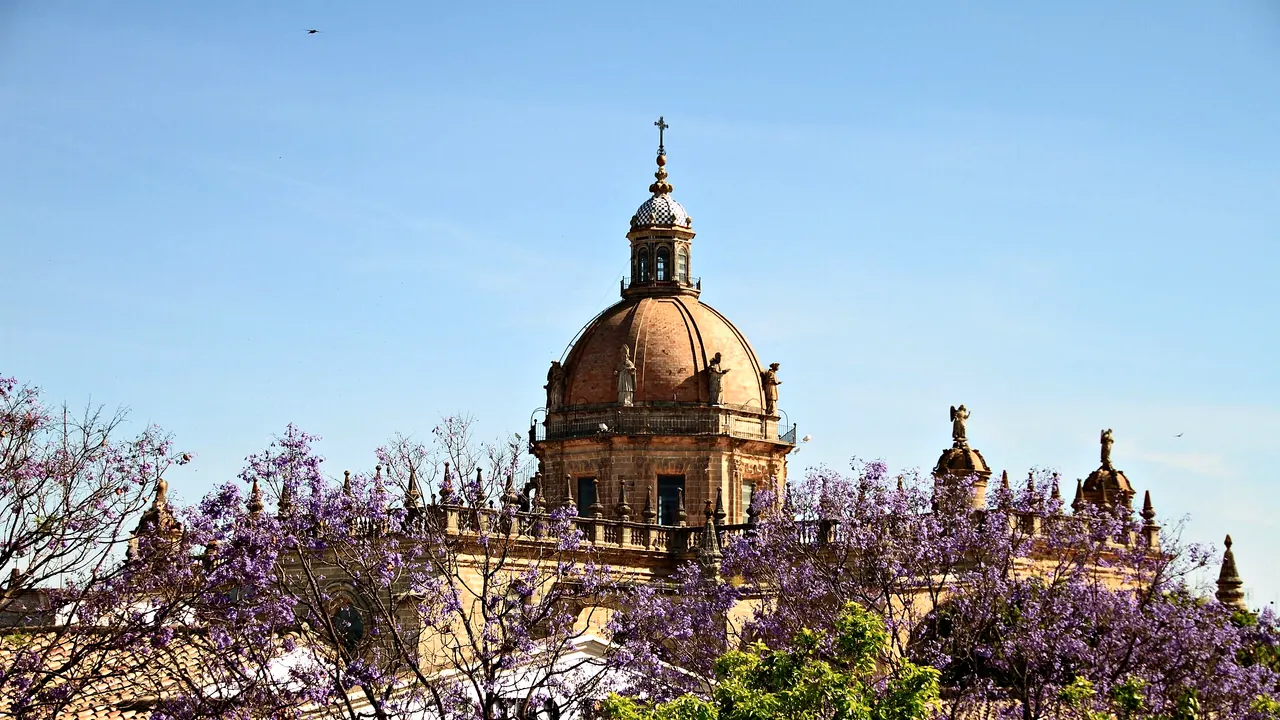
The cathedral dome behind jacaranda in flower
- Day trips80
- Affordable cities66
- Food & drink64
Photo: PEPE GADEIRAS, CC BY 4.0, cropped
Match
56
Every category weighted equally
- Beach & sun56
- Culture & arts58
- Food & nightlife55
- Family trip59
- Outdoors61
- Relax & unwind56
- Shopping & style54
- On a budget57
Jerez de la Frontera in twelve categories
Our verdict on each, scored 0 to 100 against the same fixed benchmark cities, so a score means the same thing on every page.
Beaches & swimming. Scores 57 out of 100.
Food & drink. Scores 64 out of 100.
Culture & sights. Scores 56 out of 100.
Nightlife. Scores 38 out of 100.
Nature & outdoors. Scores 64 out of 100.
Day trips. Scores 80 out of 100.
Good for families. Scores 52 out of 100.
Getting around. Scores 62 out of 100.
Shopping & style. Scores 33 out of 100.
Affordability. Scores 66 out of 100.
Live music & performing arts. Scores 63 out of 100.
Wellness & relaxation. Scores 40 out of 100.
Jerez de la Frontera category by category
Beaches & swimming
57Jerez sits about 12km inland, so there is no beach in town. The Costa de la Luz is close, though. Valdelagrana and the beaches of El Puerto de Santa María are a short drive or train ride away, and Cádiz, with La Caleta and the long Playa de la Victoria, is about half an hour by train. Further out, the wide sands at Sanlúcar, Chipiona and La Barrosa are all within an hour.
These are long, open Atlantic beaches of fine golden sand. In August the water reaches about 21°C to 23°C, warm for the Atlantic but cooler than the Mediterranean, and the Levante wind can make some days rough. Most visitors here take the beach as a day out from a city stay.
Food & drink
64Jerez is the home of sherry, and that shapes how you eat and drink here. Fino, amontillado, oloroso and sweet Pedro Ximénez are poured in the bodegas, which you can tour and taste in, and in the tabancos, plain old taverns where sherry comes from the barrel with chicharrones, chacina or cheese, sometimes with flamenco on the side. The cooking is Andalusian: berza jerezana stew, kidneys and oxtail cooked in sherry, fried fish and prawns from the nearby coast.
The tapas bars around Plaza del Arenal, Calle Larga and the San Miguel quarter fill up late, and the central market hall is good for fish and produce. There are a few ambitious modern kitchens, but the strength is depth in one tradition rather than range.
Culture & sights
56The historic centre is a good place to wander, with whitewashed lanes, palaces and fine churches. The Almohad Alcázar has a mosque turned chapel, Arab baths and gardens. The Baroque cathedral stands just below it, and the Gothic-Mudéjar churches of San Miguel, Santiago and San Mateo mark the old parishes. The Barrio de Santiago and San Miguel are the old gypsy quarters where flamenco took shape, and the Andalusian Flamenco Centre keeps its archive in a palace there.
Two things are unique to Jerez. The great sherry bodegas, cathedral-like warehouses full of stacked barrels, are heritage you can visit. The Royal Andalusian School of Equestrian Art shows off its dressage horses and carriages. The archaeological museum and a clock museum round out a modest list, which two or three days cover well.
Nightlife
38Evenings follow the Andalusian clock. Dinner starts late, and the tapas bars and terraces around Plaza del Arenal, Calle Larga and the old quarters stay busy until well after midnight, especially at weekends. Tabancos and copa bars are the core of a night out, and there are a few clubs and late music bars. It is a sociable scene but a provincial one.
The big exception is the Feria del Caballo in May, when the fairground's casetas dance and drink until dawn for a week. Some visitors head to El Puerto de Santa María for summer nights on the coast.
Nature & outdoors
64Jerez stands among rolling chalky vineyards, the white albariza soil of sherry country, which is pleasant to drive or cycle through but gentle. The bigger landscapes lie further out. The Sierra de Grazalema, a limestone range with gorges and good marked trails, is a little over an hour east. The cork-oak forests of Los Alcornocales lie to the south-east. From Sanlúcar, boats cross the Guadalquivir to the edge of Doñana, one of Europe's great wetlands for birds.
Closer in, the salt marshes of the Bay of Cádiz natural park are good for birdwatching. The coast towards Tarifa is a major kitesurfing and windsurfing area. This is horse country too, and riding is easy to arrange. Summer heat inland pushes hiking to spring and autumn.
Day trips
80Jerez makes an excellent base. Seville is about an hour by train, with its cathedral, the Alcázar and the old quarters. Cádiz, one of the oldest cities in Western Europe, is about half an hour away on its narrow peninsula. El Puerto de Santa María and Sanlúcar de Barrameda, the other two corners of the sherry triangle, are close. Sanlúcar is the home of manzanilla and its fried fish is the best in the area.
By car the white towns open up. Arcos de la Frontera sits on its cliff about half an hour away, then come Medina Sidonia and Vejer, and Grazalema and Ronda in the hills further on. Tarifa and Gibraltar take about an hour and a half by road.
Good for families
52Children are welcome everywhere in Andalusian life, including late dinners on café terraces. The zoo and botanical garden is one of the better ones in Spain, and the dancing-horse show at the equestrian school usually goes down well. Bodega tours are an adult pleasure, though some include carriage rides or a look at the barrel cellars that children enjoy.
The nearby beaches are wide and sandy with gentle slopes, and they add a lot in summer. On the other hand, July and August are very hot in town, there are no big attractions built for children, and the centre is easy but not very exciting for younger ones.
Getting around
62The centre is compact and flat. The Alcázar, the cathedral, the bodegas, the old quarters and the main tapas streets are all within a short walk of each other, so you hardly need transport in town. City buses cover the rest. The train station is near the centre, with direct services to Seville, El Puerto and Cádiz, and the airport is a few minutes away by train.
Public transport stops being enough once you head inland. The white towns, the Sierra de Grazalema and many of the better beaches are much easier with a hired car, and buses to them are slow and infrequent.
Shopping & style
33Calle Larga and the streets around it are a pleasant provincial shopping district with Spanish chains and some older family shops. The things worth buying are local. You can take home sherry and brandy straight from the bodegas, and Jerez has long-standing craftsmen in saddlery, harness and leather riding boots who serve the horse world. Shops near the old quarters sell flamenco dresses, shawls and guitars. Apart from these, there is little to shop for.
Affordability
66Jerez is good value for Western Europe. Tapas and sherry in the tabancos cost little, mid-range hotels in the centre are moderately priced, bodega tours are inexpensive, and most of what you want to see is within walking distance. Rooms cost much more, and are harder to find, during the Feria del Caballo, the winter flamenco festival and the big motorcycle race weekends at the nearby circuit.
Live music & performing arts
63Jerez is one of the places where flamenco was born, and the bulería is its own rhythm. Flamenco here is still a local art, not just a show for tourists. The peñas, members' clubs in the old quarters of Santiago and San Miguel, hold regular evenings open to visitors, and some tabancos have informal sessions where the singing is close up and unpolished. Several tablaos put on more polished shows.
The flamenco festival in late winter is the highlight of the year, with major dancers on stage at the Teatro Villamarta and courses that bring students from around the world. Outside flamenco, the Villamarta runs a modest season of opera, zarzuela, dance and theatre.
Wellness & relaxation
40Jerez has no bathing culture of its own. There is an Arab-style bathhouse with warm pools and massage in the old town, and a few hotel spas, but that is about all. What the city has is a slow rhythm. Long lunches, quiet hours in the afternoon heat, shaded patios and evening strolls make it an easy place to slow down, especially in spring and autumn. If spas matter to you, you will find little to choose from.
When should you go?
Pick a month to see what it is like. The climate figures are measured averages, not a forecast.
Jerez de la Frontera in July
Daytime high, °C
Rainfall in the month, mm
The whole year
Shaded against this city’s own year: the deepest cell is its best month for that figure and the palest its weakest.
Temperature and rainfall are climate normals, averaged over the years shown. Jerez de la Frontera: 1991-2020 normals, Jerez De La Fronteraaeropuerto (9.9 km from centre).
Before you go
| Measure | Jerez de la Frontera |
|---|---|
| Official language | Spanish |
| Currency | Euro (EUR) |
| Sockets | CF230 V, 50 Hz |
| Driving side | Right |
| Time zone | UTC+1, UTC+2 in summer |
| Emergency number | 112 |
| Elevation | 58 m |
| Main airport | Jerez Airport (XRY)10 km from centre26 non-stop destinations |
| Public holidays this year | 12 days |
By the numbers
| Measure | Jerez de la Frontera |
|---|---|
| City population | 213,634 |
| People per km² | 180 |
| Museums within 10 km | 14 |
| UNESCO World Heritage sites within 50 km | 1 |
| Swim season, months above 21 °C | 3 months |
Compare Jerez de la Frontera with
Every comparison with a written verdict behind it.
- Albufeira
- Alicante
- Barcelona
- Benidorm
- Bilbao
- Cadiz
- Casablanca
- Cascais
- Chefchaouen
- Coimbra
- Cordoba
- Faro
- Fes
- Girona
- Granada
- Lagos, Portugal
- Lisbon
- Madrid
- Malaga
- Marbella
- Rabat
- Ronda
- Salamanca
- San Sebastian
- Santiago de Compostela
- Segovia
- Seville
- Sintra
- Tangier
- Toledo
- Valencia
- Zaragoza