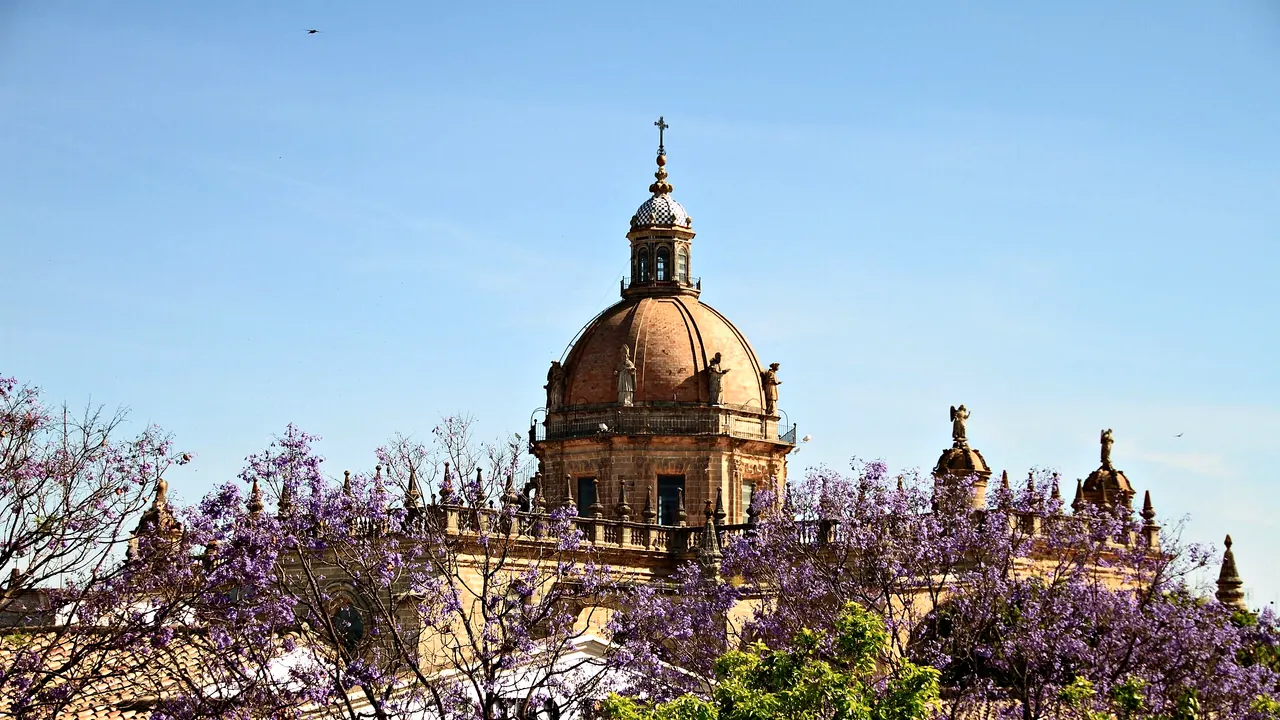
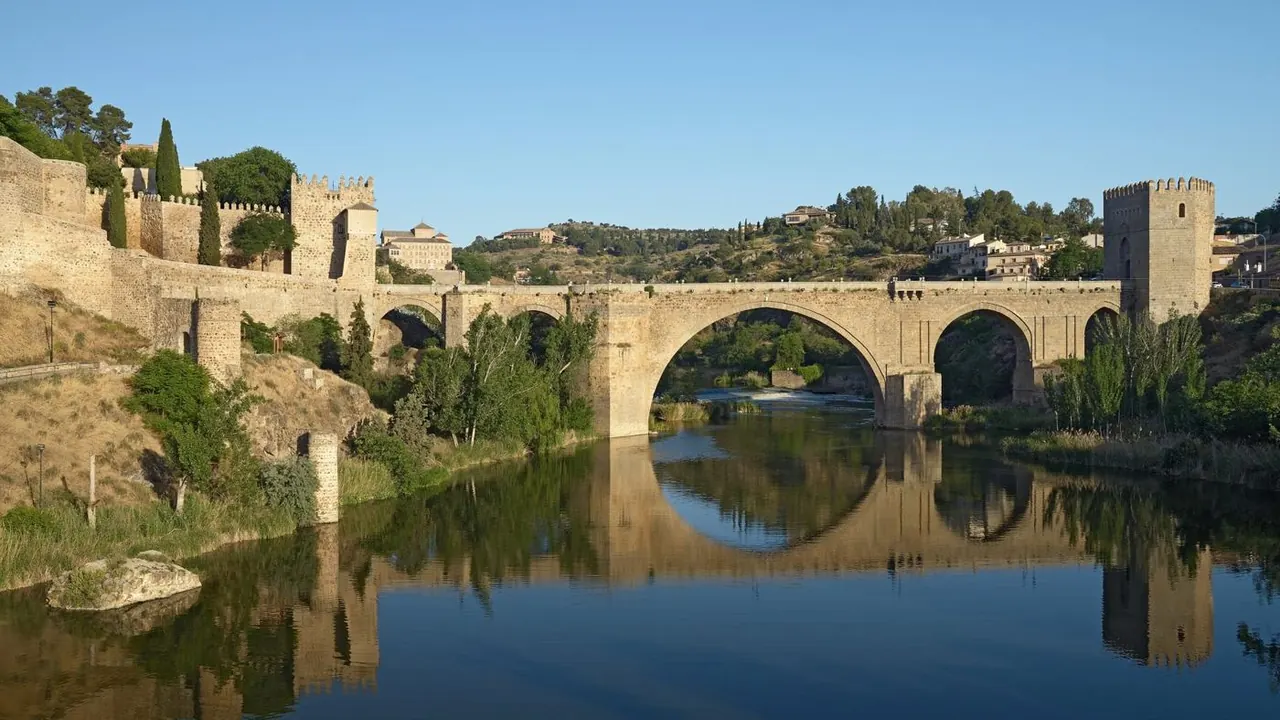
Photos: Jerez de la Frontera by PEPE GADEIRAS, CC BY 4.0, cropped; Toledo by Ввласенко, CC BY-SA 3.0, cropped.
Jerez de la Frontera or Toledo?
Our verdict in twelve categories, each scored against the same fixed benchmark cities, and the climate month by month, so you can choose for your trip.
Choose Jerez de la Frontera for
- beaches
- live music and the arts
- food and drink
Jerez suits travellers who want a city they can live in for a few days rather than tour. Its strengths are sherry poured from the barrel in old tabancos, flamenco in the peñas of Santiago and San Miguel, and the Atlantic beaches of the Costa de la Luz a short train ride away. It also costs a little less day to day, and the evenings last longer.
Choose Toledo for
- culture and sights
- getting around
Toledo is the stronger choice if the point of the trip is history you can walk through. On its hill above the Tagus, a cathedral hung with El Greco and Goya stands within minutes of a mosque, two synagogues and a Gothic cloister. Go there for monuments and painting, and accept that the food is plainer, the evenings are quiet and the sea is far away.
Scoreboard
Twelve categories on one fixed scale from 0 to 100. The shaded stretch is the gap between the two.
Your match
Pick a travel style or drag the sliders, and both match scores follow your weighting.
Wins on beaches and live music and the arts with your weighting.
Wins on culture and sights and getting around with your weighting.
What matters to you?
Category by category
What the scores mean for a trip.
Beaches & swimming
Jerez has no beach of its own, but the Costa de la Luz is close. Valdelagrana and El Puerto are a short hop away, Cádiz's La Caleta and Playa de la Victoria are about half an hour by train, and the wide sands of Sanlúcar, Chipiona and La Barrosa are within an hour. These are long Atlantic beaches with fine golden sand and water that is fresher than the Mediterranean.
Toledo is about as far from the sea as Spain gets, and the Tagus in its gorge is not a river for swimming. If a beach day matters at all, only Jerez can give you one.
Food & drink
Jerez eats and drinks around sherry. You can taste fino, oloroso and Pedro Ximénez in the bodegas, then move on to tabancos for chicharrones and cheese, kidneys cooked in sherry and fried fish brought in from the coast. The tapas streets around Plaza del Arenal and Calle Larga give it real depth in one tradition.
Toledo's cooking is the hearty food of La Mancha: partridge in escabeche, game from the Montes de Toledo, carcamusas and Manchego, with convent marzipan for dessert. It is good for a few meals, but the tourist menus near the cathedral take some avoiding, and Jerez is the more rewarding place to eat.
Culture & sights
Toledo is in another league for sights. The whole hilltop town is layered with Roman, Islamic, Jewish and Christian history. The Gothic cathedral, Santa María la Blanca, El Tránsito with its Sephardic Museum, Cristo de la Luz and San Juan de los Reyes all stand within a short walk, and El Greco's paintings fill Santo Tomé and the Hospital de Tavera.
Jerez has a pleasant old centre with the Almohad Alcázar, a Baroque cathedral and Gothic-Mudéjar parish churches. What sets it apart is the sherry bodegas and the Royal Andalusian School of Equestrian Art, a heritage you will not find in Toledo, but its list of sights is shorter.
Nightlife
Neither city is a party destination, but Jerez stays up later. Its tabancos, copa bars and terraces around Plaza del Arenal keep going past midnight at weekends, and in May the Feria del Caballo dances until dawn for a week.
Toledo goes quiet once the day-trippers leave for Madrid. There are a few student bars and some late tapas around Zocodover, and for a proper night out people take the train to the capital.
Nature & outdoors
Jerez gives you more to do outdoors. The limestone gorges and marked trails of the Sierra de Grazalema are a little over an hour away, and the cork forests of Los Alcornocales and the Doñana wetlands are within reach. Closer to town there are salt marshes for birdwatching, and the coast towards Tarifa is good for kitesurfing.
Toledo's best outdoor moment is the path along the Tagus gorge under its walls, with views back from the cigarrales on the far bank. Beyond that there is open, flat La Mancha farmland and the low Montes de Toledo, and Cabañeros, with its red deer, is about two hours away.
Day trips
Both make excellent bases, and the difference is in the kind of trip. From Jerez you get Andalusia: Seville by train, ancient Cádiz, the sherry towns of El Puerto and Sanlúcar, and with a car the white villages from Arcos to Ronda, and then Tarifa and Gibraltar.
From Toledo you reach the great collections and royal sites of central Spain. Madrid's Prado is half an hour away by high-speed train, and Aranjuez and El Escorial are close. Further out lie the windmills of Consuegra, Almagro and long days to Segovia or Cuenca.
Good for families
Jerez is the easier of the two with children. Its flat centre, its zoo and botanical garden, the dancing-horse show and wide, gently sloping beaches nearby give a family more to do, although the summer heat in town is hard going.
Toledo's swords, armour and castle-like Alcázar catch young imaginations, and a large history-show theme park sits on the outskirts. Steep cobbled lanes, struggling pushchairs and a long list of churches and paintings mean shorter stays work best there.
Getting around
Getting around is equally easy in both, but the ground underfoot is very different. In Jerez the bodegas, Alcázar and tapas streets all lie in a flat, compact centre, and the station is close by. In Toledo everything is packed onto a steep hill of twisting cobbled lanes. Public escalators lift you up from the car parks, while the station sits across the river below.
Either way, you will want a car for the countryside: the white towns and sierra from Jerez, or La Mancha from Toledo.
Shopping & style
Both are modest places to shop, and in both the best buys are traditional local goods. Jerez sells sherry and brandy from the bodegas, saddlery and leather riding boots made for the horse world, and flamenco dresses and guitars.
Toledo's specialities are damascene gold-on-steel inlay, swords and convent marzipan, but much of the stock around the cathedral is souvenir quality. Anyone wanting fashion will need Madrid.
Affordability
Jerez is the cheaper stay. Tapas and sherry in the tabancos cost little, bodega tours are inexpensive and central hotels are moderately priced. Rooms are dearer only during the Feria, the flamenco festival and the motorcycle race weekends.
Toledo is reasonable for eating, with a free tapa with many drinks and fair set lunches. However, rooms with views inside the walls cost more, and paying entry at each monument adds up over a full day of sightseeing.
Live music & performing arts
Jerez is far ahead here. It is one of the cradles of flamenco, and the art is still part of local life rather than a show put on for visitors. The peñas in Santiago and San Miguel hold evenings open to outsiders, some tabancos have raw, informal sessions, and the late-winter festival brings major dancers to the Teatro Villamarta.
Toledo has the Teatro de Rojas with its regional programme, occasional organ and choral music in the churches, and the processions of Corpus Christi. On most evenings, though, there is little on stage, and for serious performances people go to Madrid.
Wellness & relaxation
Neither city has much of a bathing culture, though Jerez offers a little more. It has an Arab-style bathhouse in the old town, a few hotel spas and an unhurried rhythm of long lunches and shaded patios that makes it easy to slow down for several days.
Toledo has similar vaulted bathhouses and hotel spas, and it is calmest early and late, once the tour groups have gone. That suits a quiet night or two more than a restful week.
When should you go?
Pick your month. The climate figures are measured averages, not a forecast.
Jerez de la Frontera in July
Toledo in July
Daytime high, °C
Rainfall in the month, mm
Temperature and rainfall are climate normals, averaged over the years shown. Jerez de la Frontera: 1991-2020 normals, Jerez De La Fronteraaeropuerto (9.9 km from centre). Toledo: 1991-2020 normals, Toledo (2.3 km from centre).
Jerez is the milder of the two in the cool months, with highs around 17°C even in January. Toledo sits on the Castilian plateau and gets down to about 12°C in mid-winter, so walking its hill from November to February means a coat. Spring and autumn suit sightseeing in both. From June to September both are very hot, with afternoons around 35°C in Toledo and not far below that in Jerez, so exploring on foot only works early in the morning or late in the day.
Summer is the beach season in Jerez. The Atlantic warms to about 23°C in July and August, and the days are long and sunny. Toledo has no sea to escape to. Both cities are close to dry in high summer, Jerez even more so. From October to December, though, Jerez gets about 85mm of rain a month, while Toledo stays clearly drier from October through April. Late autumn and winter there are often less wet, if colder.
Which traveller are you?
On a beach and sun trip, Jerez is the clear pick. The golden Atlantic sands of El Puerto, Cádiz and La Barrosa are within easy reach by train or car. Toledo is hours from any coast, and cooling off there means a pool.
For a culture and arts trip built around monuments and painting, Toledo wins. Its cathedral, synagogues, mosque and El Greco works are packed into one walkable old town. Jerez has fewer great sights, though its flamenco and bodegas are worth seeing.
On a food and nightlife trip, Jerez gives you far more. You can drink sherry in tabancos and bodegas, eat fried fish from the coast and stay out late around Plaza del Arenal. Toledo's set menus and early-quieting lanes offer much less after dark.
Before you go
| Measure | Jerez de la Frontera | Toledo |
|---|---|---|
| Official language | Spanish | Spanish |
| Currency | Euro (EUR) | Euro (EUR) |
| Sockets | CF230 V, 50 Hz | CF230 V, 50 Hz |
| Driving side | Right | Right |
| Time zone | UTC+1, UTC+2 in summer | UTC+1, UTC+2 in summer |
| Emergency number | 112 | 112 |
| Elevation | 58 m | 523 m |
| Main airport | Jerez Airport (XRY)10 km from centre26 non-stop destinations | Adolfo Suárez Madrid–Barajas Airport (MAD)80 km from centre241 non-stop destinations |
| Public holidays this year | 12 days | 13 days |
By the numbers
| Measure | Jerez de la Frontera | Toledo |
|---|---|---|
| City population | 213,634 | 87,216 |
| People per km² | 180 | 376 |
| Museums within 10 km | 14 | 14 |
| UNESCO World Heritage sites within 50 km | 1 | 2 |
| Swim season, months above 21 °C | 3 months | - |
Where else could you go?
Every comparison below shares a destination with this one, so you can follow Jerez de la Frontera or Toledo somewhere new.
- Cadizvs Jerez de la Frontera
- Madridvs Toledo
- Sevillevs Jerez de la Frontera
- Rondavs Jerez de la Frontera
- Marbellavs Jerez de la Frontera
- Segoviavs Toledo