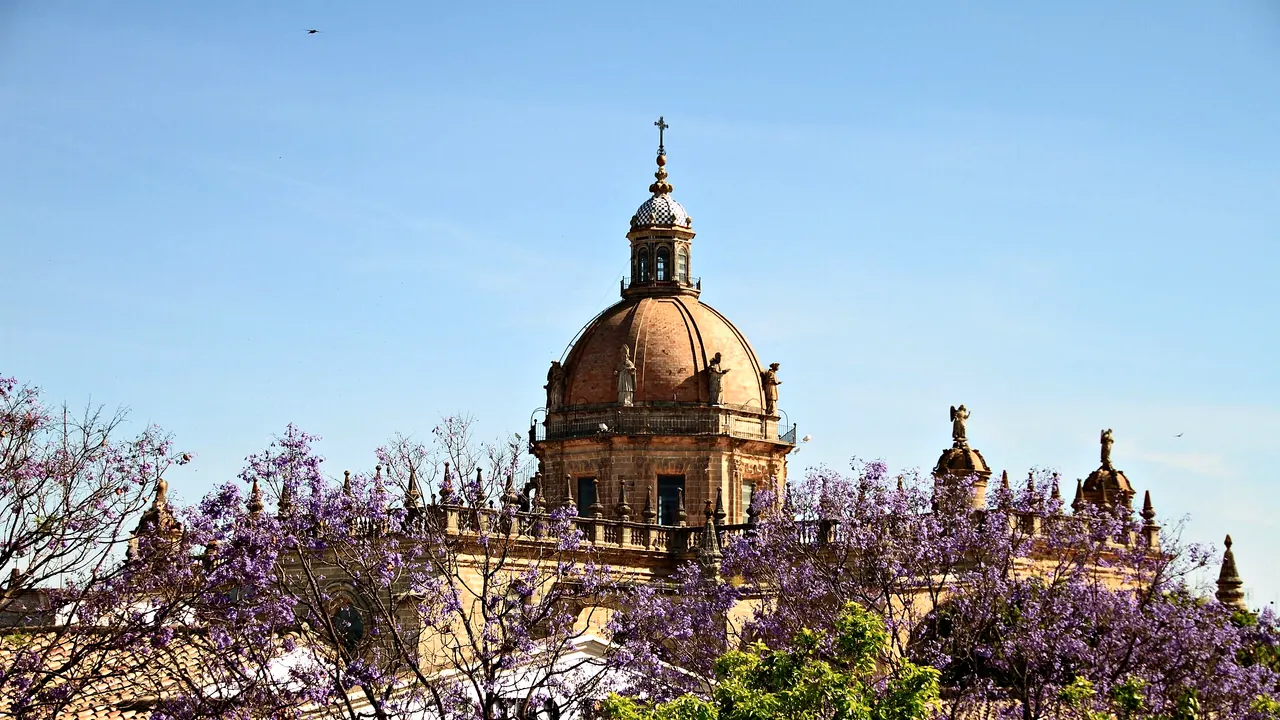
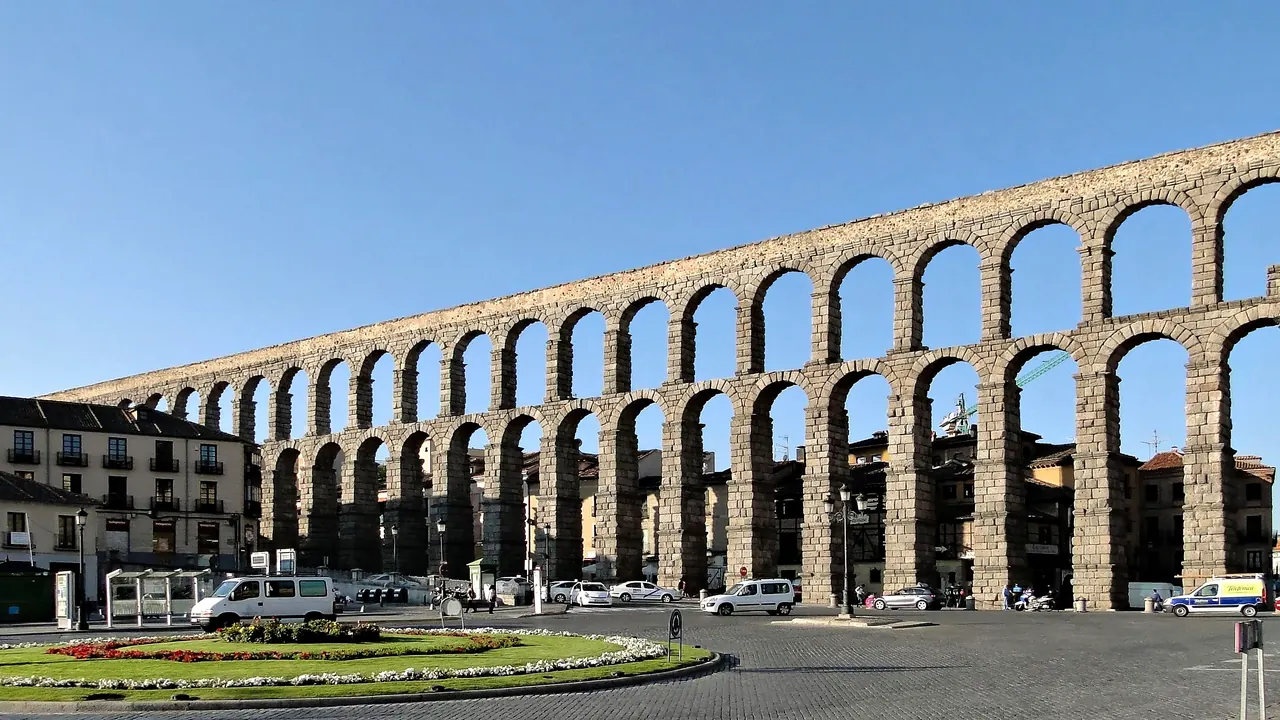
Photos: Jerez de la Frontera by PEPE GADEIRAS, CC BY 4.0, cropped; Segovia by Bernard Gagnon, CC BY-SA 3.0, cropped.
Jerez de la Frontera or Segovia?
Our verdict in twelve categories, each scored against the same fixed benchmark cities, and the climate month by month, so you can choose for your trip.
Choose Jerez de la Frontera for
- beaches
- live music and the arts
- food and drink
Jerez suits travellers who want southern warmth with the coast close by. Its sherry bodegas and tabancos, flamenco that still lives in the peñas of Santiago and San Miguel, and Atlantic sands a short train ride away make it a good base for a slower stay. Evenings out and beach days fit easily around the sightseeing.
Choose Segovia for
- culture and sights
- nature and the outdoors
Anyone who travels to look at old stone will be happier in Segovia. The Roman aqueduct, the Romanesque churches and the Alcázar on its ridge give it the stronger monuments, and the Sierra de Guadarrama on the doorstep adds real mountain walking. It is quieter after dark and has no beach, but it pairs well with Madrid and the Castilian heartland.
Scoreboard
Twelve categories on one fixed scale from 0 to 100. The shaded stretch is the gap between the two.
Your match
Pick a travel style or drag the sliders, and both match scores follow your weighting.
Wins on beaches and live music and the arts with your weighting.
Wins on culture and sights and nature and the outdoors with your weighting.
What matters to you?
Category by category
What the scores mean for a trip.
Beaches & swimming
Here the gap is as wide as it gets. Jerez has no sand of its own, but the Costa de la Luz is close. Valdelagrana and El Puerto are a short trip, Cádiz with La Caleta is about half an hour by train, and the broad beaches of Sanlúcar and La Barrosa are within an hour. Expect Atlantic water and the odd windy Levante day rather than a calm Mediterranean.
Segovia sits on the Castilian plateau, far from any coast. Swimming there means a hotel or municipal pool, or a cold dip in a Guadarrama reservoir, so beach days have to happen somewhere else on the trip.
Food & drink
Both cities stick closely to their regional cooking, but Jerez has more depth. Sherry runs through everything, from bodega tastings to tabancos pouring fino from the barrel with chacina. The nearby coast adds fried fish and prawns to the berza stew and the oxtail cooked in sherry.
Segovia's food centres on the wood-fired oven, and cochinillo and lechazo are the reason to book lunch, with judiones from La Granja and ponche to finish. That makes for a memorable meal or two, but the choice narrows quickly beyond the roasts, and the asadores by the aqueduct fill with tour groups at midday.
Culture & sights
The old centre of Jerez is a pleasant place to wander, with the Almohad Alcázar, the cathedral and the Gothic-Mudéjar parish churches. It also has two things found nowhere else: the cathedral-like sherry bodegas and the Royal Andalusian School of Equestrian Art. Beyond those, the list is modest.
Segovia's monuments are on another level. The Roman aqueduct alone is worth the journey. The walk from it up to the cathedral and the Alcázar at the tip of the ridge passes Romanesque churches with arcaded porches, the old Jewish quarter and the walls, all within the UNESCO-listed old town.
Nightlife
Neither is a clubbing city, but Jerez stays out later. Its tabancos, copa bars and terraces around Plaza del Arenal and Calle Larga keep going past midnight at weekends. During the Feria del Caballo in May the fairground parties until dawn for a week, and El Puerto is close for summer nights by the sea.
An evening in Segovia means a tapas crawl around Plaza Mayor, plus a few student bars at weekends, and the old town goes quiet early in winter. For a real late night, Madrid is the place to go.
Nature & outdoors
Right around Jerez the country is gentle, rolling vineyards on white albariza soil, and the bigger landscapes take a drive. The gorges of Grazalema are over an hour east, Doñana is reached by boat from Sanlúcar, and the salt marshes on the Bay of Cádiz are good for birds. Jerez also has kitesurfing on the coast towards Tarifa and easy horse riding, but the summer heat limits hiking to spring and autumn.
Segovia has the mountains on its doorstep, which gives it the edge. The pine forests of Valsaín and the passes of Navacerrada and Cotos are within half an hour, with trails towards Peñalara and its glacial lakes. There is snow in winter, and an easy path runs along the Eresma valley right below the Alcázar.
Day trips
Both make excellent bases, so the real question is which part of Spain you want to see. From Jerez it is the south: Seville about an hour away by train, ancient Cádiz half an hour away, and the sherry towns of El Puerto and Sanlúcar. With a car you can reach the white towns, from Arcos to Ronda.
From Segovia it is the Castilian heartland. The palace and gardens of La Granja are twenty minutes away, and Madrid and Valladolid are quick by high-speed train. Walled Ávila, the medieval villages of Pedraza and Sepúlveda, and El Escorial across the mountains are all within reach.
Good for families
Jerez is the easier of the two with children. In summer there are wide beaches of gently shelving sand, the zoo and botanical garden is among the better ones in Spain, and the dancing horses at the equestrian school usually go down well. The flat centre is easy with a pushchair, though July and August are very hot.
Segovia has the best single treat for children: a turreted cliff-top castle with a tower to climb, plus the giant arches of the aqueduct. Beyond those there is little aimed at children, and the steep cobbles are hard going with small wheels, so a day or two is the right length.
Getting around
In both cities you can walk to the sights and barely need transport. The centre of Jerez is flat, with the station close by and the airport a few minutes away by train. Segovia's sights line one narrow ridge of steep cobbles, and its high-speed station lies several kilometres out, a bus ride from town.
In both, a hired car makes the surrounding country much easier to reach: the white towns and Grazalema from Jerez, and Pedraza, Sepúlveda and the sierra trailheads from Segovia.
Shopping & style
The best things to buy in Jerez come from its horse and sherry traditions. Long-standing craftsmen make saddlery, harness and leather riding boots, and the bodegas sell sherry and brandy at the source. Shops near the old quarters add flamenco dresses, shawls and guitars, while Calle Larga covers the everyday with Spanish chains and older family shops.
Segovia has less to take home. Calle Real is lined with souvenir stalls, and a few shops sell local ceramics, embroidery, boxed ponche and La Granja beans. For fashion or design, people head to Madrid.
Affordability
Jerez makes a budget go a little further. Sherry and tapas in the tabancos cost little, bodega tours are inexpensive and almost everything is within walking distance. Rooms become scarce and dear during the Feria, the flamenco festival and the motorcycle race weekends.
Segovia is moderately priced too, with plenty of small family-run guesthouses and fair lunch menus in the newer town. The famous roasts are an expensive meal, though, and rooms in the old town cost more at weekends and in summer, when visitors arrive from Madrid. Midweek in winter it is cheap.
Live music & performing arts
This is one of the sharpest differences between the two. Jerez is one of the birthplaces of flamenco. You can hear it close up in the peñas of Santiago and San Miguel and in informal tabanco sessions, or see more polished shows in the tablaos. The late-winter festival at the Teatro Villamarta draws major dancers and students from around the world.
Segovia's live arts come with its festivals: the Titirimundi puppet festival in spring, summer concerts in churches and palace gardens, and touring shows at the Teatro Juan Bravo. Between festivals, little is on.
Wellness & relaxation
An Arab-style bathhouse in the old town gives Jerez somewhere to soak, with warm pools and massage, and a few hotel spas add to it. The rest of its calm comes from the southern day itself: long lunches, a quiet afternoon and shaded patios. It is at its best in spring and autumn, when the heat eases.
Segovia has no baths, only a handful of hotel spas. What it offers instead is the hush after the day coaches leave, with evening walks along the walls and pine-scented air coming down from the sierra.
When should you go?
Pick your month. The climate figures are measured averages, not a forecast.
Jerez de la Frontera in July
Segovia in July
Daytime high, °C
Rainfall in the month, mm
Temperature and rainfall are climate normals, averaged over the years shown. Jerez de la Frontera: 1991-2020 normals, Jerez De La Fronteraaeropuerto (9.9 km from centre). Segovia: 1991-2020 normals, Segovia (0.3 km from centre).
Jerez is a warm-weather city with a mild winter. Spring, from March to May, and October are the best months for walking the old quarters. July and August reach about 34°C, which is too hot for sightseeing in the afternoon. Beach weather runs from June to September, and the Atlantic is warmest in July and August at around 23°C. Summer is almost dry. The rain comes in autumn, with the wettest stretch from October to December at around 85mm a month, though winter days stay mild and fairly sunny.
Segovia, high on the Castilian plateau, is much cooler all year. Winter highs are near 8°C, which is cold for long walks along the ridge, and spring is fresher and a little damper, with May the wettest month. July and August are very sunny at about 30°C, comfortable here while Jerez is baking. June and September are ideal for both the old town and the sierra trails.
Which traveller are you?
For a beach and sun trip, Jerez is the clear choice. The long golden Atlantic beaches at Valdelagrana, Cádiz and La Barrosa are a short train ride or drive away. Segovia is landlocked and offers little more than pools and chilly reservoirs.
On a culture and arts trip built around monuments, Segovia gives you more. The aqueduct, cathedral, Alcázar and Romanesque churches all stand on one ridge in a UNESCO-listed old town. Jerez answers with far deeper flamenco, but it has fewer sights.
For a food and nightlife trip, choose Jerez. Sherry from the barrel in the tabancos, tapas rounds around Plaza del Arenal that go on past midnight, and flamenco sessions make for longer evenings than Segovia's roast dinners and early-quiet streets.
Before you go
| Measure | Jerez de la Frontera | Segovia |
|---|---|---|
| Official language | Spanish | Spanish |
| Currency | Euro (EUR) | Euro (EUR) |
| Sockets | CF230 V, 50 Hz | CF230 V, 50 Hz |
| Driving side | Right | Right |
| Time zone | UTC+1, UTC+2 in summer | UTC+1, UTC+2 in summer |
| Emergency number | 112 | 112 |
| Elevation | 58 m | 1,002 m |
| Main airport | Jerez Airport (XRY)10 km from centre26 non-stop destinations | Adolfo Suárez Madrid–Barajas Airport (MAD)68 km from centre241 non-stop destinations |
| Public holidays this year | 12 days | 12 days |
By the numbers
| Measure | Jerez de la Frontera | Segovia |
|---|---|---|
| City population | 213,634 | 52,375 |
| People per km² | 180 | 320 |
| Museums within 10 km | 14 | 11 |
| UNESCO World Heritage sites within 50 km | 1 | 2 |
| Swim season, months above 21 °C | 3 months | - |
Where else could you go?
Every comparison below shares a destination with this one, so you can follow Jerez de la Frontera or Segovia somewhere new.
- Cadizvs Jerez de la Frontera
- Madridvs Segovia
- Sevillevs Jerez de la Frontera
- Rondavs Jerez de la Frontera
- Marbellavs Jerez de la Frontera
- Toledovs Segovia