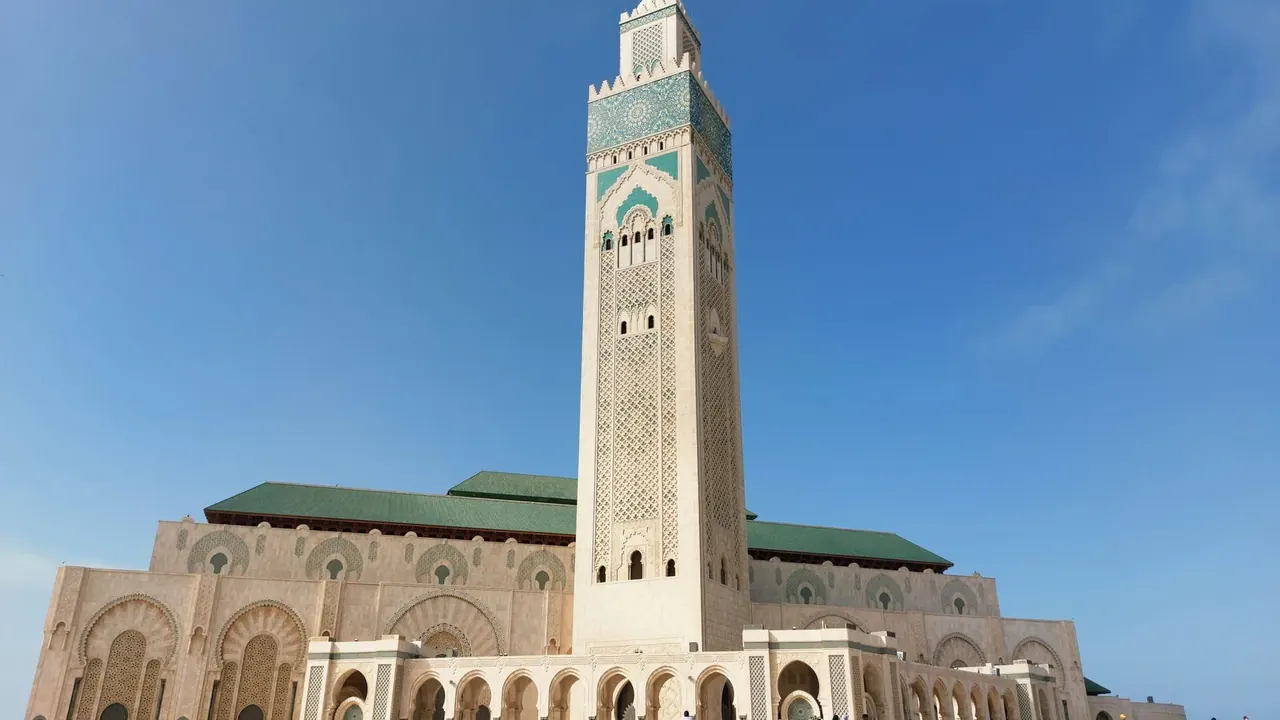
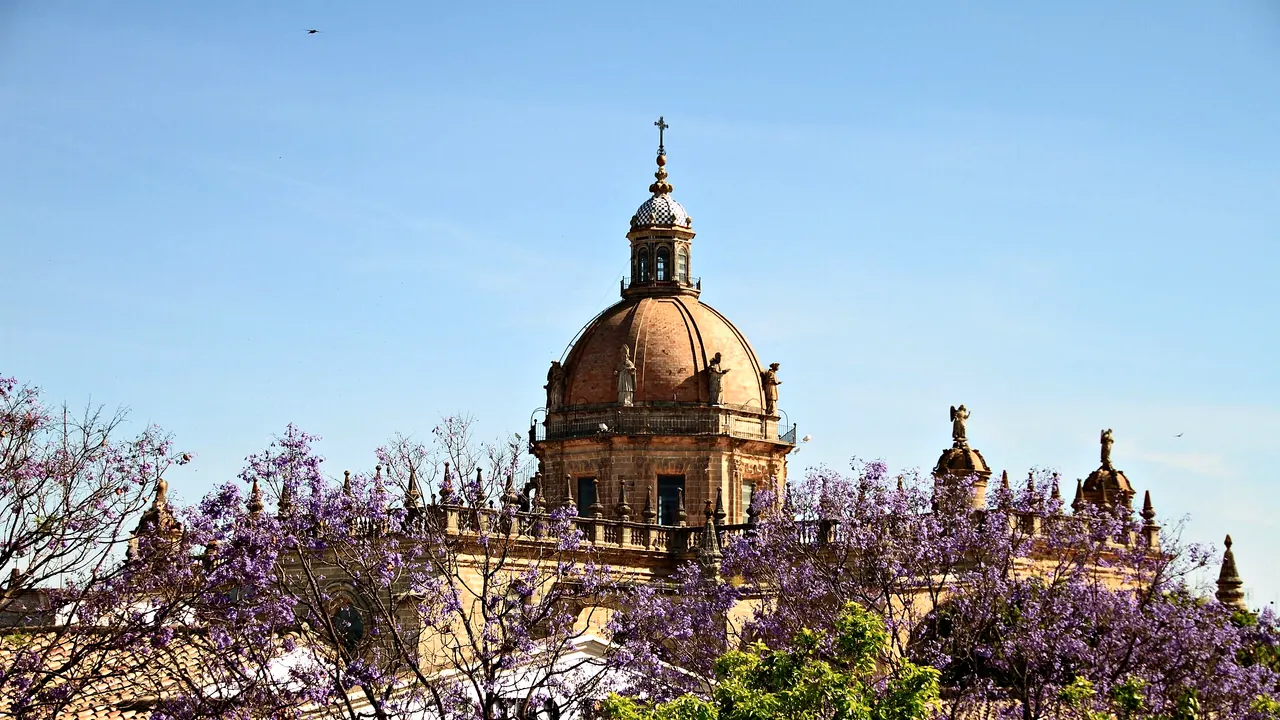
Photos: Casablanca by Samir Bakkah, Pexels License; Jerez de la Frontera by PEPE GADEIRAS, CC BY 4.0, cropped.
Casablanca or Jerez de la Frontera?
Our verdict in twelve categories, each scored against the same fixed benchmark cities, and the climate month by month, so you can choose for your trip.
Choose Casablanca for
- shopping
- wellness
- nightlife
Casablanca suits a traveller who wants modern Morocco rather than the postcard version. You get the Hassan II Mosque over the ocean, streets of Art Deco from the protectorate, a neighbourhood hammam for a scrub, the country's best modern shopping and smart weekend clubs on the Corniche. Summers stay mild. It works best as two or three days at the start or end of a longer journey through Morocco, with Rabat an easy train ride away.
Choose Jerez de la Frontera for
- nature and the outdoors
- day trips
- live music and the arts
Jerez is the better pick for a slower trip built around sherry, flamenco and southern Spain. The compact centre is easy to walk, there are tabancos and peñas in the old gypsy quarters, and Seville, Cádiz, the white towns and the Sierra de Grazalema are all within reach. For a week of day trips and Andalusian evenings it gives far more than Casablanca does.
Scoreboard
Twelve categories on one fixed scale from 0 to 100. The shaded stretch is the gap between the two.
Your match
Pick a travel style or drag the sliders, and both match scores follow your weighting.
Wins on shopping and wellness with your weighting.
Wins on nature and the outdoors and day trips with your weighting.
What matters to you?
Category by category
What the scores mean for a trip.
Beaches & swimming
Casablanca has a beach inside the city. The long sand at Ain Diab runs below the Corniche, but the Atlantic swell is strong, the currents can be dangerous and water quality along the city front varies, so many locals swim in beach-club pools instead. Better sand at Dar Bouazza or Bouznika means a drive.
Jerez has no beach at all, yet it comes out ahead because the Costa de la Luz is so close and so good. Valdelagrana, Cádiz's La Caleta and the long sands at La Barrosa or Sanlúcar are a short train or car ride away. They are wide, golden and gently shelving, though the Levante wind can roughen some days.
Food & drink
The two eat equally well in quite different ways. Casablanca is a port city, so it is best for seafood: pick your fish at the Marché Central and have it grilled, or eat at the plain places by the fishing harbour. Tagines, Friday couscous and French-style pâtisseries in Maarif and Gauthier fill out the rest, while alcohol stays discreet.
In Jerez, food is built around sherry. It is poured from the barrel in tabancos with chicharrones and cheese, and it goes into the cooking itself, in kidneys, oxtail and berza stew. Late tapas rounds around Plaza del Arenal and San Miguel make eating the main evening ritual.
Culture & sights
These two are about level on sightseeing, and both need two or three days, but they come from different centuries. Casablanca is a twentieth-century city. The Hassan II Mosque, which non-Muslims can tour inside, is its great set piece, and the Art Deco and neo-Moorish boulevards and the planned Habous quarter are where its character lies.
Jerez is older and more layered. It has an Almohad Alcázar with Arab baths, a Baroque cathedral and Gothic-Mudéjar parish churches. It also has two sights you will find nowhere else: the cathedral-like sherry bodegas and the dressage horses of the Royal Andalusian School of Equestrian Art.
Nightlife
Casablanca has more going on late, though it is a dressed-up scene. Lounges, beach clubs and clubs along the Corniche at Ain Diab play house and Arabic pop into the small hours at weekends, and hotel bars and old protectorate-era bars fill the rest of the week. There is little life on the streets, and you take a taxi from one venue to the next.
Jerez is the opposite. Evenings are spent outside, moving between tapas terraces and tabancos until after midnight, but there are only a few clubs and the scene stays provincial. The exception is the Feria del Caballo in May, when the casetas run until dawn.
Nature & outdoors
Jerez is far better placed for landscape. Beyond its gentle chalk-white vineyards lie the gorges and trails of the Sierra de Grazalema, the cork-oak forests of Los Alcornocales and the Doñana wetlands across the Guadalquivir. Add the birdwatching in the Bay of Cádiz salt marshes, riding in horse country and kitesurfing towards Tarifa.
Casablanca sits on a flat plain, and its outdoor life is the sea. You can run along the Corniche to the El Hank lighthouse, surf as a learner at Ain Diab or Dar Bouazza, or ride the mountain-bike trails in the Bouskoura eucalyptus forest. The Atlas mountains are too far for a day out.
Day trips
From Casablanca there is one easy outing: Rabat, an hour away by train, with the Kasbah des Oudayas and the Chellah ruins. Beyond that come the Portuguese sea walls of El Jadida and the whitewashed medina of Azemmour. Marrakech and Fes are too far away and work better as onward stops.
Jerez is a far richer base. Seville is an hour away by train, and the ancient port of Cádiz is half an hour. The sherry towns of El Puerto and Sanlúcar are close by, and with a car you can reach Arcos, Vejer, Ronda and even Gibraltar. You could fill a week without repeating yourself.
Good for families
Jerez is the easier choice with children. The zoo and botanical garden is a good one, the dancing-horse show usually delights, and the nearby beaches are sandy and gently sloping. The catch is the heat in town in July and August.
Casablanca has more built for children than most Moroccan cities, including the aquarium and rides in the Corniche mall, the Ain Diab amusement park and calm beach-club pools. Outside those, though, heavy traffic, broken pavements and the risky sea make it harder going, and it suits older children best.
Getting around
In Jerez you hardly need transport. The Alcázar, the bodegas, the old quarters and the tapas streets are all within a short, flat walk, and the station has direct trains to Seville and Cádiz, with the airport only minutes away. Only the white towns and the sierra call for a hire car.
Casablanca is spread out, so you combine the clean modern tram with the cheap red petits taxis, which often pick up other passengers and don't always use the meter. Only the downtown core is walkable. The mosque and the Corniche are a long way off, and the big roundabouts are hard to cross on foot.
Shopping & style
Casablanca is the better place to shop. It has Morocco's biggest modern retail, with a vast mall on the Corniche, the designer streets of Maarif and the low-pressure craft shops of the Habous quarter. For something rougher, the Derb Ghallef flea market is the place, though serious carpet hunters should look elsewhere in Morocco.
Shopping in Jerez is mainly about local specialities. You can buy sherry and brandy at the bodegas, saddlery and leather riding boots from long-standing craftsmen, and flamenco dresses and guitars near the old quarters. Calle Larga itself is mostly Spanish chains.
Affordability
The two cities cost about the same, but the expense falls in different places. In Casablanca, taxis, the tram, grilled fish and café terraces cost little, while rooms do not: hotels are aimed at business travellers and good guesthouses are scarce.
Jerez is the other way round. Central mid-range hotels are reasonably priced and bodega tours are cheap. Rooms become expensive and hard to find during the Feria, the winter flamenco festival and the motorcycle race weekends, so it pays to check dates.
Live music & performing arts
Jerez is one of the places where flamenco was born, and the art is still part of local life. The peñas of Santiago and San Miguel hold evenings that visitors can attend, and some tabancos have raw sessions where the singing is close up. The late-winter festival brings major dancers to the Teatro Villamarta.
Casablanca has more formal stages than most Moroccan cities, plus a long-running jazz festival and a hip-hop festival rooted in the local scene. Outside those weeks there may be little on, whereas in Jerez you can find flamenco on an ordinary night.
Wellness & relaxation
Casablanca has a real bathing culture. Every neighbourhood has a public hammam for a black-soap scrub, there are calmer upscale versions in Maarif, and seafront centres offer Atlantic thalassotherapy. The city around them is loud and congested, though.
Jerez offers one Arab-style bathhouse and a few hotel spas. What it has instead is pace: shaded patios, long lunches and quiet afternoons that make it easy to unwind without booking any treatment.
When should you go?
Pick your month. The climate figures are measured averages, not a forecast.
Casablanca in July
Jerez de la Frontera in July
Daytime high, °C
Rainfall in the month, mm
Temperature and rainfall are climate normals, averaged over the years shown. Casablanca: 1991-2020 normals, Casablanca (5.6 km from centre). Jerez de la Frontera: 1991-2020 normals, Jerez De La Fronteraaeropuerto (9.9 km from centre).
Casablanca's climate stays mild all year. Summer highs peak at about 27°C in August, so the streets stay comfortable even in high summer, and from June to August it hardly rains. The sea is warm enough for a swim from July to September, at around 23°C. The wet season runs from November to January, with up to 78mm a month, but winter days stay mild and fairly sunny.
Jerez has a far stronger inland summer. July and August reach about 34°C, which is too hot for walking the old quarters at midday, though those are its sunniest months and the nearby Atlantic is as warm as Casablanca's. The best walking weather is April to early June and again in late September and October. Rain arrives later in the year and is heavier, with about 85mm in December, and winter days are cooler and greyer than in Casablanca.
Which traveller are you?
On a shopping trip, choose Casablanca. Moroccans themselves come here for brands and fashion, and the craft sellers are gentler than in the old medinas. Jerez is worth a bag or two of local specialities, not a whole day's browsing.
For a relaxing and wellness trip built around treatments, Casablanca wins, because bathing here is an everyday ritual rather than a hotel extra. If you simply want to slow down, though, Jerez's unhurried pace beats Casablanca's traffic.
For an outdoors trip, Jerez is far better placed. Mountain trails, wetlands and wind-sport beaches are all within a day's reach, best in spring or autumn away from the summer heat. Casablanca's outdoors comes down to surfing and seafront running.
Before you go
| Measure | Casablanca | Jerez de la Frontera |
|---|---|---|
| Official language | Arabic, Standard Moroccan Tamazight | Spanish |
| Currency | Moroccan Dirham (MAD) | Euro (EUR) |
| Sockets | CE50 Hz | CF230 V, 50 Hz |
| Driving side | Right | Right |
| Time zone | UTC+1 | UTC+1, UTC+2 in summer |
| Emergency number | Police 19/112, ambulance 15, fire 15 | 112 |
| Elevation | 115 m | 58 m |
| Main airport | Mohammed V International Airport (CMN)26 km from centre112 non-stop destinations | Jerez Airport (XRY)10 km from centre26 non-stop destinations |
| Public holidays this year | 11 days | 12 days |
By the numbers
| Measure | Casablanca | Jerez de la Frontera |
|---|---|---|
| City population | 3,215,935 | 213,634 |
| People per km² | 8,375 | 180 |
| Museums within 10 km | 3 | 14 |
| UNESCO World Heritage sites within 50 km | 0 | 1 |
| Swim season, months above 21 °C | 5 months | 3 months |
Where else could you go?
Every comparison below shares a destination with this one, so you can follow Casablanca or Jerez de la Frontera somewhere new.
- Cadizvs Jerez de la Frontera
- Sevillevs Jerez de la Frontera
- Rabatvs Casablanca
- Rondavs Jerez de la Frontera
- Marbellavs Jerez de la Frontera
- Malagavs Jerez de la Frontera