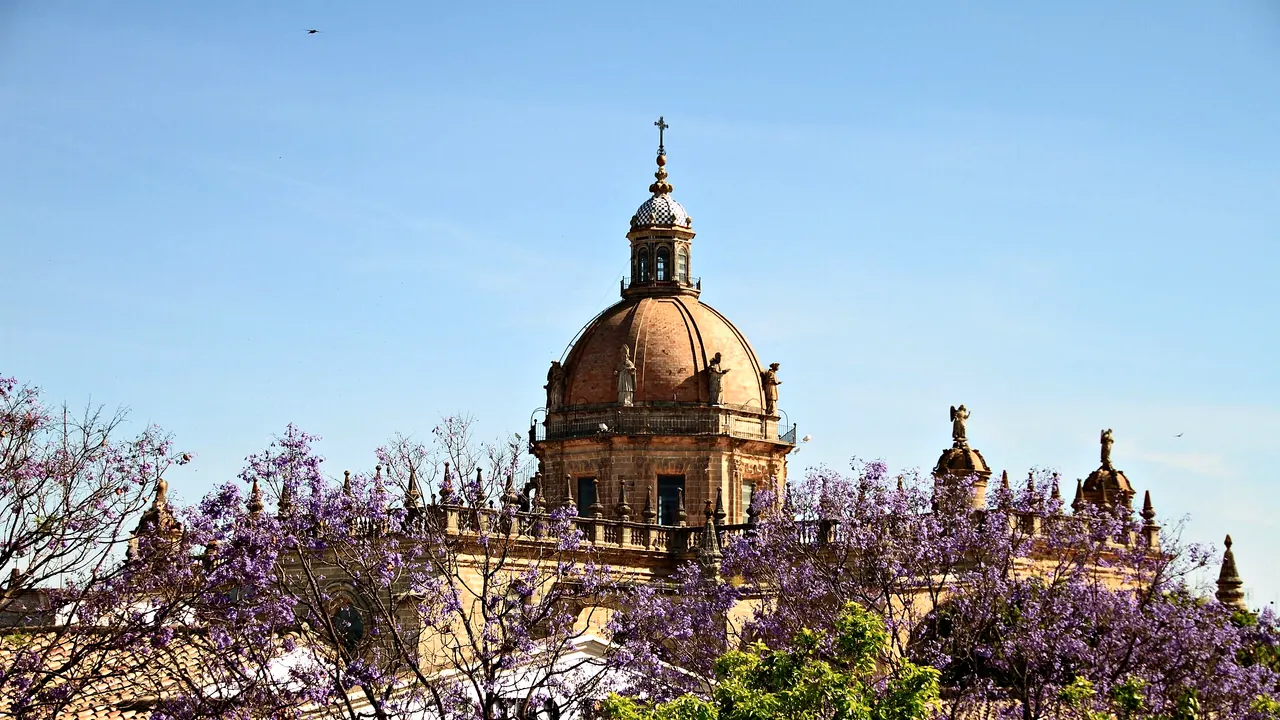
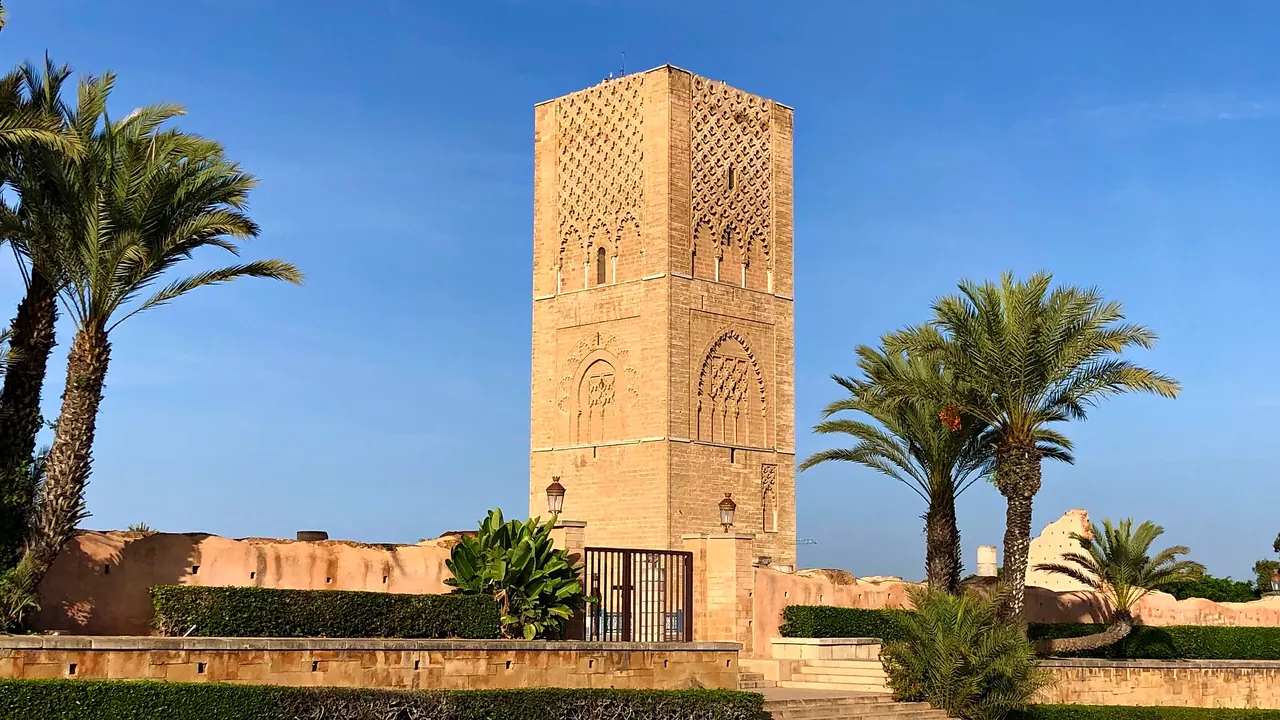
Photos: Jerez de la Frontera by PEPE GADEIRAS, CC BY 4.0, cropped; Rabat by Aemazy, CC BY-SA 4.0, cropped.
Jerez de la Frontera or Rabat?
Our verdict in twelve categories, each scored against the same fixed benchmark cities, and the climate month by month, so you can choose for your trip.
Choose Jerez de la Frontera for
- live music and the arts
- nature and the outdoors
- day trips
Jerez suits travellers who want an evening out and plenty of day trips. Sherry poured from the barrel in old tabancos, flamenco in the peñas of Santiago and San Miguel, and late tapas around Plaza del Arenal make the nights here far livelier than Rabat's. Seville, Cádiz, the white towns and long golden Atlantic beaches are all close, so a week spent here rarely stays in one place.
Choose Rabat for
- wellness
- shopping
- culture and sights
Rabat is the better pick for a calm, unhurried stay with more history to see. The Kasbah of the Udayas, the Hassan Tower and the overgrown Chellah span a far longer past than Jerez can show. Neighbourhood hammams, gentle haggling on Rue des Consuls and cheap daily costs add to the appeal, and its summers stay mild while inland Jerez bakes. Expect quiet evenings, though, and very little drinking culture.
Scoreboard
Twelve categories on one fixed scale from 0 to 100. The shaded stretch is the gap between the two.
Your match
Pick a travel style or drag the sliders, and both match scores follow your weighting.
Wins on live music and the arts and nature and the outdoors with your weighting.
Wins on wellness and shopping with your weighting.
What matters to you?
Category by category
What the scores mean for a trip.
Beaches & swimming
Neither city is a beach resort, but Jerez gives you better sand within an easy trip. The Costa de la Luz has long, open beaches of fine golden sand: Valdelagrana is a short ride away, La Caleta and Playa de la Victoria in Cádiz are half an hour by train, and La Barrosa and Sanlúcar are within an hour.
Rabat has a beach right in town, below the Kasbah walls. It is a rough, crowded local spot used more for football and surfing than for swimming. For calmer water you take a taxi south to Temara or Skhirat, where modest beachwear is the norm.
Food & drink
Jerez offers more depth, built on a single tradition: sherry, from fino to Pedro Ximénez, served in the bodegas and tabancos alongside kidneys and oxtail cooked in it, and fried fish from the nearby coast. Drinking is central to the whole experience.
Rabat offers Moroccan home cooking without the show of the bigger medinas: Friday couscous, harira, snail broth and msemen from evening stalls, and plain grilled Atlantic fish. Alcohol is kept discreet, and the international restaurants of Agdal and Hassan only widen the choice a little.
Culture & sights
Rabat has the richer set of sights, covering almost two thousand years. You can see the Almohad gate and Andalusian garden of the Kasbah of the Udayas, the unfinished Hassan Tower beside the Mausoleum of Mohammed V, and the Roman and Marinid ruins of the Chellah with their nesting storks. The art deco Ville Nouvelle adds a French colonial layer.
Jerez has its own Almohad Alcázar, a Baroque cathedral and Gothic-Mudéjar parish churches, but its strengths are more specialised: the cathedral-like sherry bodegas and the dressage horses of the Royal Andalusian School of Equestrian Art. Both cities take two or three days to see.
Nightlife
Jerez goes out much later. Tapas bars and copa bars around Plaza del Arenal stay busy past midnight, and during the Feria del Caballo in May the casetas dance until dawn. It is still a provincial scene, though.
Rabat's evenings are spent in cafés and on walks along the Bou Regreg. Drinking mostly happens in hotel bars and a few lounges in Agdal, and there are hardly any clubs, so people after a big night out go to Casablanca.
Nature & outdoors
Both cities have cork-oak forest nearby, Los Alcornocales near Jerez and the Maamora outside Rabat, but Jerez has far more beyond that. The limestone gorges and marked trails of the Sierra de Grazalema are a little over an hour away. Boats from Sanlúcar cross to Doñana's wetlands, and the coast towards Tarifa is one of Europe's main kitesurfing areas.
Around Rabat the landscape is mostly the estuary and low coastal cliffs, which are good for surfing, paddling and birdwatching at Sidi Boughaba. The Middle Atlas and the Rif are several hours away. On the other hand, Rabat is mild enough to be outdoors all summer, when Jerez is too hot for hiking.
Day trips
Jerez is the stronger base. Seville is an hour away by train, Cádiz is half an hour, and the sherry towns of El Puerto and Sanlúcar are next door. With a car you can add Arcos, Vejer, Ronda and even Gibraltar.
Rabat works well because of its railway. Casablanca's Hassan II Mosque is an hour away and Tangier is an hour and a half by high-speed train, with Asilah and Meknes also on the network. Salé is a half day by tram. Fez and Volubilis need an overnight stay, though, so the choice of easy outings is smaller.
Good for families
For families the two are much the same: each has a good zoo and few attractions built for children. What differs is the setting. Jerez has dancing-horse shows and wide, gently sloping beaches nearby, but town is very hot in midsummer. Rabat has an untroubled medina, a large modern zoo with open African enclosures and gardens to run around in, but its city beaches need close watching because of the waves.
Getting around
Getting around is about equally easy, since both centres are flat and walkable. Jerez is compact enough that you rarely need a bus, but you will want a hire car for the white towns, the sierra and the better beaches. In Rabat the tram and the plentiful blue petit taxis cover the outer sights, and the railway reaches the main day trips, so you can manage without a car.
Shopping & style
Rabat has more to shop for. The covered Rue des Consuls is lined with carpet dealers, brass, leather and embroidered textiles, Rabat's dense pile carpets are a craft of their own, and the haggling is gentler than in bigger souks. Salé, across the river, adds pottery.
In Jerez the things worth buying are specialist. You can take home sherry and brandy straight from the bodegas, saddlery and riding boots from long-standing craftsmen, and flamenco dresses or guitars. Beyond that, Calle Larga is mostly Spanish chain stores.
Affordability
Rabat is a little cheaper day to day. Medina meals, café terraces, the tram and taxis cost very little, and many sights are free or nearly so. Hotels and the Agdal restaurants cost more than elsewhere in Morocco, and alcohol is the expensive item.
Jerez is good value for Western Europe, with cheap sherry and tapas in the tabancos. Room prices jump during the Feria, the flamenco festival and the motorcycle race weekends, so it is worth planning around those dates.
Live music & performing arts
Jerez is far ahead for live performance, because flamenco is still a living local art there. You can hear it close up in the peñas of Santiago and San Miguel and in informal tabanco sessions, and the late-winter festival brings major dancers to the Teatro Villamarta.
Rabat's big draw is the Mawazine festival, with international pop stars and Gnawa musicians on open-air stages. At other times its national theatres run irregular programmes, mostly in Arabic and French, and you have to look for Andalusian and chaabi concerts.
Wellness & relaxation
Rabat has the real bathing culture. Neighbourhood hammams in the medina and in Salé offer steam and a black-soap scrub, and hotel spas provide the same ritual with more comfort. Add the calm boulevards and the kasbah garden, and the city is easy to relax in.
Jerez has a single Arab-style bathhouse and a few hotel spas. It is restful in a different way: long lunches, shaded patios and the quiet hours of the afternoon heat.
When should you go?
Pick your month. The climate figures are measured averages, not a forecast.
Jerez de la Frontera in July
Rabat in July
Daytime high, °C
Rainfall in the month, mm
Temperature and rainfall are climate normals, averaged over the years shown. Jerez de la Frontera: 1991-2020 normals, Jerez De La Fronteraaeropuerto (9.9 km from centre). Rabat: 1991-2020 normals, Rabat-Sale (7.6 km from centre).
Jerez is at its best in spring, when April and May are warm and mostly dry, good for walking the old quarters and driving through the vineyards. From June to September the inland heat is fierce, around 34°C in July and August, which makes midday sightseeing hard work. These are also the sunniest months, and the nearby sea is warm enough to swim in from June to September, reaching about 23°C at its warmest. October is still pleasantly warm, but the rain comes back with it, about 84mm, and the wet weather lasts until December.
Rabat sits right on the ocean and never gets that hot. Its warmest month stays near 28°C, so you can walk around the city comfortably all summer, with slightly less sunshine than Jerez. The sea there warms about as much and is swimmable over the same months. The rain also comes later than in Jerez. October has only moderate showers, and the wettest weather comes in November and December, around 97mm. This makes September and October easy months in Rabat, so its good season runs longer than Jerez's.
Which traveller are you?
For a food and nightlife trip, Jerez is the clear choice. You can taste sherry in the bodegas and drink it from the barrel in tabancos with chacina, then stay out late around Calle Larga. Rabat offers good café culture, but its nights end early.
On an outdoors trip, Jerez gives you far more variety. The gorges and trails of the Sierra de Grazalema, birdwatching at Doñana and kitesurfing towards Tarifa are all within reach. Rabat has easy forest walks and surfing, but the mountains are hours away.
On a relaxing and wellness trip, Rabat is the better fit. Hammam bathing is part of everyday life there, from simple medina bathhouses to hotel spas with argan oil massages. The city also has the calmest pace of Morocco's major cities. Jerez has one bathhouse and little else.
Before you go
| Measure | Jerez de la Frontera | Rabat |
|---|---|---|
| Official language | Spanish | Arabic, Standard Moroccan Tamazight |
| Currency | Euro (EUR) | Moroccan Dirham (MAD) |
| Sockets | CF230 V, 50 Hz | CE50 Hz |
| Driving side | Right | Right |
| Time zone | UTC+1, UTC+2 in summer | UTC+1 |
| Emergency number | 112 | Police 19/112, ambulance 15, fire 15 |
| Elevation | 58 m | 87 m |
| Main airport | Jerez Airport (XRY)10 km from centre26 non-stop destinations | Rabat-Salé Airport (RBA)9 km from centre45 non-stop destinations |
| Public holidays this year | 12 days | 11 days |
By the numbers
| Measure | Jerez de la Frontera | Rabat |
|---|---|---|
| City population | 213,634 | 515,619 |
| People per km² | 180 | 4,370 |
| Museums within 10 km | 14 | 7 |
| UNESCO World Heritage sites within 50 km | 1 | 1 |
| Swim season, months above 21 °C | 3 months | 4 months |
Where else could you go?
Every comparison below shares a destination with this one, so you can follow Jerez de la Frontera or Rabat somewhere new.
- Cadizvs Jerez de la Frontera
- Sevillevs Jerez de la Frontera
- Casablancavs Rabat
- Rondavs Jerez de la Frontera
- Marbellavs Jerez de la Frontera
- Malagavs Jerez de la Frontera