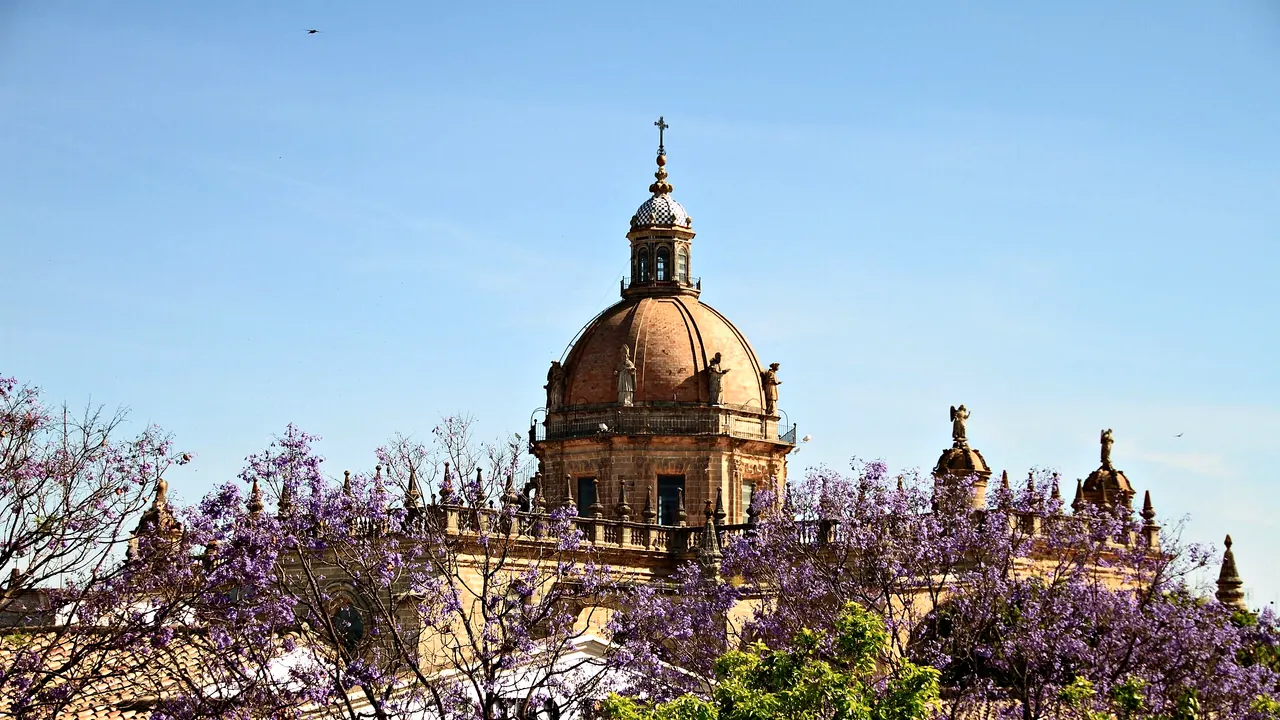
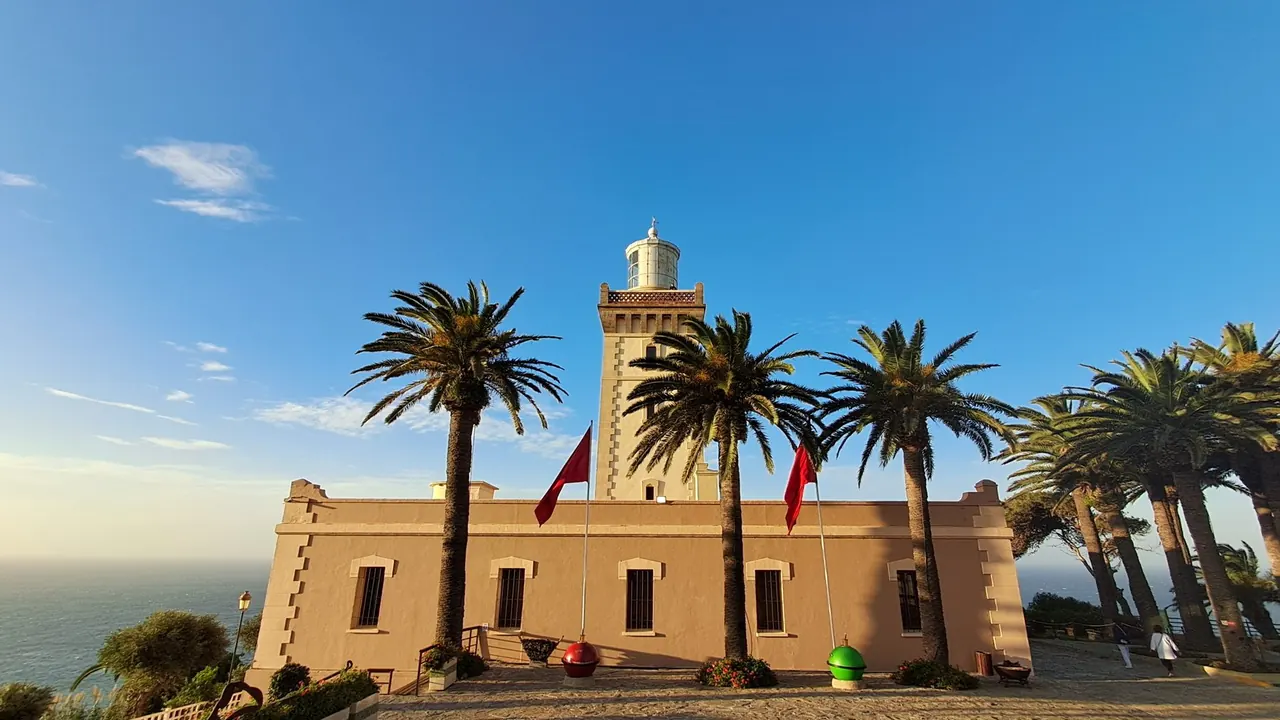
Photos: Jerez de la Frontera by PEPE GADEIRAS, CC BY 4.0, cropped; Tangier by Ideophagous, CC BY-SA 4.0, cropped.
Jerez de la Frontera or Tangier?
Our verdict in twelve categories, each scored against the same fixed benchmark cities, and the climate month by month, so you can choose for your trip.
Choose Jerez de la Frontera for
- live music and the arts
- getting around
- families
Jerez suits travellers who want flamenco in the quarters where it took shape, sherry poured in bodegas and old tabancos, and a flat, compact centre. From there, Seville, Cádiz, the white towns and the Costa de la Luz beaches are all easy outings. It is the steadier choice for families and for anyone planning to hire a car and explore Andalusia.
Choose Tangier for
- prices
- wellness
- shopping
Tangier is for the traveller who wants a different continent rather than another Spanish town. That means a medina climbing to the kasbah, mint tea above the Strait, the hammam as a daily ritual, and days out to Asilah, Tetouan or Chefchaouen. It costs less, but asks more patience: steep lanes, touts, and little in the way of evening drinking or live performance.
Scoreboard
Twelve categories on one fixed scale from 0 to 100. The shaded stretch is the gap between the two.
Your match
Pick a travel style or drag the sliders, and both match scores follow your weighting.
Wins on live music and the arts and getting around with your weighting.
Wins on prices and wellness with your weighting.
What matters to you?
Category by category
What the scores mean for a trip.
Beaches & swimming
Neither city has a beach you would choose right in town, but Jerez has more good sand within easy reach. Valdelagrana and El Puerto are a short train ride away. La Caleta and Playa de la Victoria in Cádiz are about half an hour off, and the long golden beaches of Sanlúcar, Chipiona and La Barrosa are within an hour, though the Levante wind roughens some days.
Tangier's city beach curves below the modern town, but the swimming is better out west at Achakar and Cap Spartel, where there is surf and the water is cooler, or down near Asilah. Beach life there is a modest local affair in summer, with more modest dress than on the Spanish side.
Food & drink
Jerez offers depth in one tradition. Sherry is poured from the barrel in tabancos and at bodega tastings, kitchens cook oxtail and kidneys in it, and the tapas bars around Plaza del Arenal and the San Miguel quarter fill up late. Food and a glass of fino go together all over town.
Tangier's table is Moroccan home cooking: sardines grilled at the port, tagines, bissara and harira, and snack stalls around the Grand Socco. It is honest food but a narrower choice. Wine and beer are limited to certain restaurants and hotels, so the long café session over mint tea takes the place of the bar.
Culture & sights
Both cities reward two or three days of wandering, but they differ in kind. Jerez has an Almohad Alcázar, a Baroque cathedral and Gothic-Mudéjar parish churches, plus two things found nowhere else: the great sherry bodegas and the dressage horses of the Royal Andalusian School.
Tangier's appeal is its atmosphere and its history where Europe meets Africa. There is the kasbah museum looking across to Spain, the whitewashed medina and the American Legation, and the Art Deco streets of the Ville Nouvelle carry traces of Paul Bowles and the Beat writers.
Nightlife
Jerez is the livelier of the two after dark, mostly because drinking is part of ordinary evening life. A round of tapas around Plaza del Arenal or Calle Larga leads easily into late sherry in a tabanco or a copa bar, and a handful of clubs and music bars are there for anyone who wants more. It is still a provincial town, but for one week in May the Feria del Caballo keeps the fairground casetas going until dawn. In summer, El Puerto de Santa María is close enough for a night by the sea.
Evenings in Tangier are sober by comparison. Social life happens over mint tea on café terraces and along the promenade, and if you want a drink you have to look for one of the old bars from the international era, a hotel lounge or, in summer, a beach club on the bay. There is no street drinking and no club district, so the city suits a quiet evening much better than a long night out.
Nature & outdoors
Jerez has the bigger landscapes within reach. The gorges and marked trails of the Sierra de Grazalema are just over an hour away, and there are the cork-oak forests of Los Alcornocales, boats across the Guadalquivir to the edge of Doñana, and kitesurfing on the coast towards Tarifa. Riding through the chalky vineyards is a gentler option.
Tangier's outdoors is closer to town but smaller: the cliffs and pine paths of Cap Spartel, the wooded Perdicaris park, and storks and raptors crossing the Strait on migration. Proper mountain walking in the Rif needs an overnight stay.
Day trips
Both are good bases, and Jerez is the stronger one. Seville is an hour away by train and Cádiz half an hour, the sherry towns of El Puerto and Sanlúcar are on the doorstep, and with a car you can reach Arcos, Vejer and Ronda.
Tangier's list is shorter but more varied. Asilah and Tetouan are within an hour, Chefchaouen makes a long day, Rabat is reachable by fast train, and ferries cross to Tarifa. In fact Tarifa can be reached from both cities, so a trip could easily combine the two.
Good for families
Jerez is the easier city for families. Its zoo and botanical garden is one of the better ones in Spain, the horse show usually delights children, and the wide sandy beaches nearby fill summer days, though July and August in town are very hot.
Tangier is warm towards children and cooler in summer, but it has no zoo or theme park. The stairways in the medina defeat a pushchair, and the touts can wear parents down. A hotel pool and short outings to the Perdicaris park or the Caves of Hercules work best.
Getting around
The centre of Jerez is flat and compact, and its sights, bodegas and tapas streets are a short walk apart. Trains from the central station run to Seville, Cádiz and the airport, and only the white towns and the hills really call for a hired car.
Tangier is walkable at its core, but the medina is steep and confusing at first, and there is no metro, no tram and no bus service of much use to visitors. Cheap petit taxis fill the gap. The ferry port in the city centre and the fast train south are the city's strongest connections.
Shopping & style
Tangier has more to browse. The medina lanes from the Petit Socco up towards the kasbah sell leather slippers, rugs, lanterns, ceramics and the striped cloth of the Rif, and bargaining is expected. On Saturdays, farm women from the hills bring produce and woven hats to the Grand Socco.
Jerez has less choice, but what it has is very local: sherry and brandy from the bodegas, saddlery and leather riding boots, flamenco dresses and guitars. Calle Larga covers the everyday chains.
Affordability
Jerez is reasonable for Western Europe, and its small size helps. The Alcázar, the bodegas and the tapas streets are a short walk apart, so you spend little on getting around. A bodega tour is cheap, and sherry costs little in the town that makes it, so an evening of tapas doesn't add up quickly. Watch the calendar, though: the horse fair, the flamenco festival and race weekends at the circuit all fill the town and push room rates up sharply.
Tangier is cheaper on almost every count, from a plate of tagine to a ticket for the kasbah museum or the American Legation. The gap shrinks the more European you want your stay to feel. A hotel with a sea view, a seafront terrace in high summer or a dinner with wine can bring costs much closer to Spanish levels. A riad room in spring or autumn is where Tangier offers the best value.
Live music & performing arts
This is where the two cities differ most. Jerez is one of the birthplaces of flamenco, and you can hear it close up in the peñas of Santiago and San Miguel, in informal tabanco sessions and in tablaos. The late-winter festival fills the Teatro Villamarta with major dancers.
Tangier's musical story lies mostly in the past, in the Jajouka musicians and the international era. Today there is gnawa and Andalusian classical music at festivals, a long-running jazz festival and the historic art-house cinema on the Grand Socco, but little to see on an ordinary night.
Wellness & relaxation
Tangier has the bathing tradition that Jerez lacks. Neighbourhood hammams offer the full ritual of steam, black soap and a scrub with the kessa glove, riads and larger hotels run more comfortable versions, and riad rooftops make good places to while away an afternoon.
Jerez has one Arab-style bathhouse and a few hotel spas. It relaxes you in other ways, through long lunches, shaded patios and the quiet of the afternoon heat, best enjoyed in spring and autumn.
When should you go?
Pick your month. The climate figures are measured averages, not a forecast.
Jerez de la Frontera in July
Tangier in July
Daytime high, °C
Rainfall in the month, mm
Temperature and rainfall are climate normals, averaged over the years shown. Jerez de la Frontera: 1991-2020 normals, Jerez De La Fronteraaeropuerto (9.9 km from centre). Tangier: 1991-2020 normals, Tanger Aerodrome (9.5 km from centre).
Both cities have dry, sunny summers and wet late autumns and winters, but Jerez runs much hotter. Inland, its July and August highs reach 34°C, which makes walking the streets hard in the middle of the day, so spring and October are kinder for sightseeing. Cooled by the Strait, Tangier peaks around 30°C and stays comfortable for exploring the medina all summer.
The sea is much the same on both coasts, at about 22°C to 23°C in July and August, so June to September is the beach season in either city. From October the rain returns. Tangier has the wetter winter, with over 110mm a month in November and December, while Jerez is drier and slightly sunnier through the cooler months.
Which traveller are you?
For a culture and arts trip, Jerez is the stronger pick. The historic sights are evenly matched, but flamenco is a living local art in Jerez, from peña evenings to the late-winter festival. Tangier offers little live performance outside its festivals.
On a family trip with children, Jerez works better, with a good zoo, the dancing-horse show, a flat and easy centre, and wide, gently shelving beaches nearby. Tangier's steep medina, its touts and its lack of attractions for children make it harder going.
On a tight budget, Tangier makes the money go further. Grilled fish, street snacks, mint tea, petit taxis and medina guesthouses all cost little, as long as you can do without much alcohol. Jerez is fair value for Western Europe, but not as cheap.
Before you go
| Measure | Jerez de la Frontera | Tangier |
|---|---|---|
| Official language | Spanish | Arabic, Standard Moroccan Tamazight |
| Currency | Euro (EUR) | Moroccan Dirham (MAD) |
| Sockets | CF230 V, 50 Hz | CE50 Hz |
| Driving side | Right | Right |
| Time zone | UTC+1, UTC+2 in summer | UTC+1 |
| Emergency number | 112 | Police 19/112, ambulance 15, fire 15 |
| Elevation | 58 m | 56 m |
| Main airport | Jerez Airport (XRY)10 km from centre26 non-stop destinations | Tangier Ibn Battuta Airport (TNG)11 km from centre50 non-stop destinations |
| Public holidays this year | 12 days | 11 days |
By the numbers
| Measure | Jerez de la Frontera | Tangier |
|---|---|---|
| City population | 213,634 | 1,275,428 |
| People per km² | 180 | 6,393 |
| Museums within 10 km | 14 | 6 |
| UNESCO World Heritage sites within 50 km | 1 | 1 |
| Swim season, months above 21 °C | 3 months | 3 months |
Where else could you go?
Every comparison below shares a destination with this one, so you can follow Jerez de la Frontera or Tangier somewhere new.
- Cadizvs Jerez de la Frontera
- Sevillevs Jerez de la Frontera
- Chefchaouenvs Tangier
- Rondavs Jerez de la Frontera
- Marbellavs Jerez de la Frontera
- Malagavs Jerez de la Frontera