Spain
Barcelona
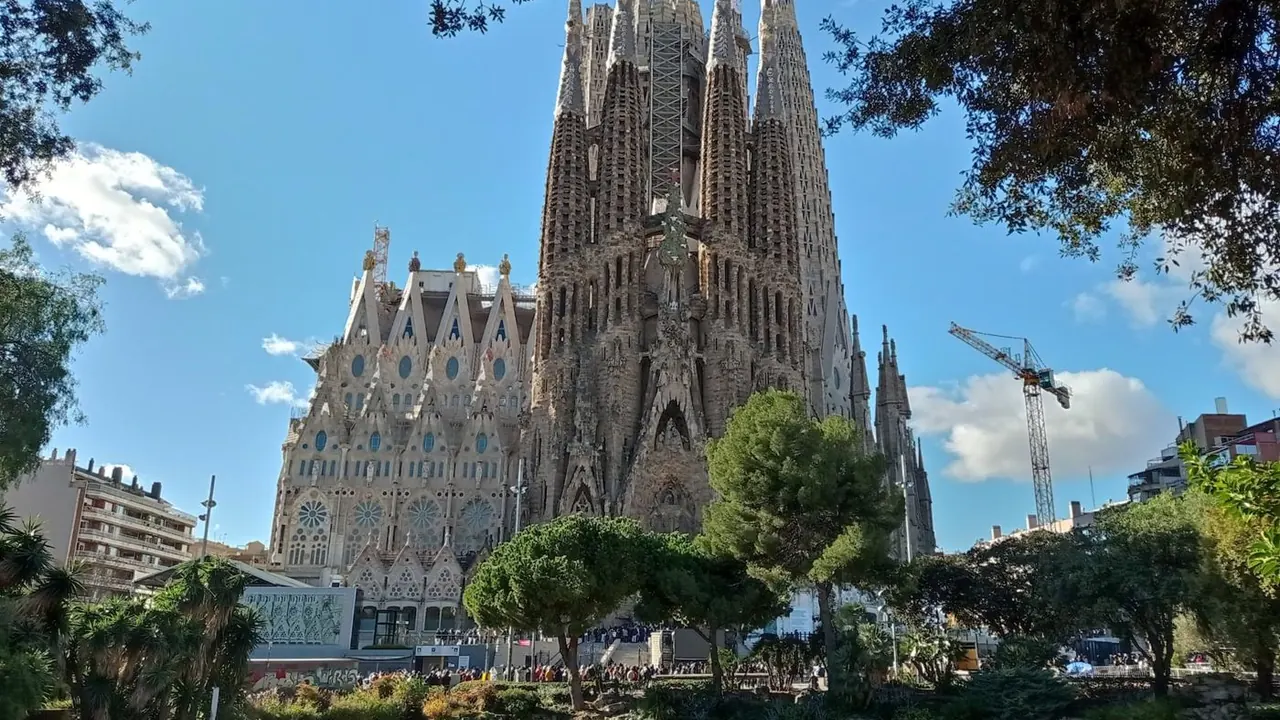
The Sagrada Família
- Culture & sights86
- Food & drink82
- Nightlife82
Photo: Canaan, CC BY-SA 4.0, cropped
Match
72
Every category weighted equally
- Beach & sun69
- Culture & arts75
- Food & nightlife74
- Family trip71
- Outdoors71
- Relax & unwind67
- Shopping & style74
- On a budget69
Barcelona in twelve categories
Our verdict on each, scored 0 to 100 against the same fixed benchmark cities, so a score means the same thing on every page.
Beaches & swimming. Scores 75 out of 100.
Food & drink. Scores 82 out of 100.
Culture & sights. Scores 86 out of 100.
Nightlife. Scores 82 out of 100.
Nature & outdoors. Scores 72 out of 100.
Day trips. Scores 80 out of 100.
Good for families. Scores 76 out of 100.
Getting around. Scores 80 out of 100.
Shopping & style. Scores 75 out of 100.
Affordability. Scores 44 out of 100.
Live music & performing arts. Scores 70 out of 100.
Wellness & relaxation. Scores 38 out of 100.
Barcelona category by category
Beaches & swimming
75Barcelona is a big city with a real beach along its edge. A run of sandy beaches, from Barceloneta past Nova Icària and Bogatell to Mar Bella, stretches several kilometres northeast of the old port, and the metro or a short walk from the Born gets you there. The sea warms to about 24°C by August and is comfortable to swim from June to late September. Beach life fills summer afternoons, from volleyball nets to people swimming after work.
The city beaches are man-made, though, and in July and August they are packed, with pickpockets working the towels and hawkers walking the sand. For more space and cleaner water, take the coastal trains south to Castelldefels and Sitges or north along the Maresme, where long sandy beaches are well under an hour away.
Food & drink
82Catalan cooking is the base here, and it is its own cuisine, not a regional take on Spanish food: pa amb tomàquet, escalivada, botifarra with white beans, suquet fish stew, calçots with romesco sauce in late winter, and crema catalana. On top of that come tapas bars, the late-morning vermouth habit, seafood rice dishes by the sea and cava from the hills inland. The covered markets are central to all of it. The Boqueria is the famous one, but Santa Caterina, Sant Antoni and the neighbourhood markets in Gràcia and Sant Andreu are where locals actually shop and eat at the counters.
The range runs from cheap set lunches in workers' bars to one of Europe's most serious tasting-menu scenes. Sant Antoni, Poble Sec, Gràcia and the Eixample are the best areas to eat. Be wary on and just off the Rambla, where frozen paella and inflated menus wait for passing tourists. People eat late, with dinner rarely before nine.
Culture & sights
86Barcelona's sights are dominated by something no other city has: the Modernista architecture of Gaudí and his contemporaries. The Sagrada Família is the headline, and the Eixample's grid holds Casa Batlló, La Pedrera and dozens of lesser-known façades along the Passeig de Gràcia. Park Güell, the Hospital de Sant Pau and the Palau de la Música Catalana fill out a UNESCO-listed collection.
Underneath that lies an older city. The Gothic Quarter keeps Roman walls, a cathedral and tight medieval squares, and Santa Maria del Mar in the Born is one of the finest Catalan Gothic churches anywhere. The museums are strong without being encyclopaedic: the Picasso Museum in a row of medieval palaces, the MNAC's Romanesque frescoes on Montjuïc, the Fundació Miró and the contemporary art of the MACBA in the Raval. A week goes by easily.
Nightlife
82Nights start late and finish later. Dinner runs to eleven, the bars fill after that, and the clubs only get busy around two and stay open until dawn. Each district has its own character. The Born and the Gothic Quarter have cocktail bars in medieval cellars. The Raval has scruffy bars and an alternative crowd. Gràcia's squares are full of people drinking outdoors on warm nights. Poble Sec's Blai street is lined with pintxos bars, and the Eixample has the main gay scene.
The big beachfront clubs at the Port Olímpic draw a young, mostly foreign crowd. Electronic music runs deeper, with serious club nights across the city and a summer of open-air parties. Students and visitors keep things busy midweek, and summer weekends barely end. The one thing it lacks is a sense of being off the tourist track, which you get more easily in Gràcia or Sant Antoni.
Nature & outdoors
72The city lies between the sea and the Collserola hills, a huge wooded park whose trails start from the edge of Sarrià and Gràcia. The Carretera de les Aigües is a flat path along the slope, and runners and cyclists use it for its views over the whole city. Montjuïc's gardens and paths rise above the port. On the water, sailing, paddleboarding and windsurfing go out from the beaches at the northern end of the seafront, around Mar Bella and the Fòrum.
Further out, the serrated rock of Montserrat is about an hour away, with trails among its pinnacles. To the south, the Garraf massif drops steeply into the sea. The Montseny range and the coastal paths of the Costa Brava, with cliffs, pines and small rocky inlets, are within two hours. The Pyrenees sit at the outer edge of day-trip range. Summers are too hot for serious hiking, so spring and autumn are the seasons for it.
Day trips
80Fast trains make Catalonia easy to explore. Girona is under forty minutes by high-speed rail, with a walled medieval town, a cathedral and a well-preserved Jewish quarter along the river. Figueres, a little further, has the Dalí Theatre-Museum. To the south, Tarragona has an amphitheatre on the sea and Roman walls, and the Cistercian monastery at Poblet can be added on the same trip.
Closer to home, the mountain monastery of Montserrat is a classic half-day. Sitges is an elegant seaside town barely half an hour away, and the Penedès around Sant Sadurní is cava country, with cellars to visit. With a car you can reach the medieval villages of Besalú and Pals and the whitewashed harbour towns of the Costa Brava. PortAventura is also about an hour away for anyone travelling with children.
Good for families
76Children do well here. The aquarium at the old port, the hands-on CosmoCaixa science museum, the zoo in the Ciutadella park and the old-fashioned funfair at the top of Tibidabo, reached by funicular, fill days easily. Gaudí's buildings and Park Güell tend to work on children too, since they look like something from a picture book. City beaches are a metro ride away, and PortAventura's theme parks are about an hour south.
Spanish culture welcomes children everywhere, including in restaurants late in the evening, and every neighbourhood square has a playground. On the downside, the old town is crowded and its narrow streets are hard work with a pushchair. July and August are hot, and you need to watch bags closely in busy areas.
Getting around
80The centre is flat and easy to walk. You can go from the Gothic Quarter up through the Eixample's wide grid to Gràcia in under an hour, and the seafront promenade connects the old port to the beaches. The metro is clean, colour-coded and simple to use, with buses, trams and local trains on the same tickets. A car is a burden here, never a help.
The effort comes at the edges. Park Güell, Montjuïc and Tibidabo are uphill, so plan on the metro plus a steep walk, a funicular, a cable car or a bus. The Sagrada Família and the upper districts are a ride away from the old town. Bike lanes cover much of the city and are a pleasant way to cover longer flat stretches.
Shopping & style
75The Passeig de Gràcia is the grand shopping avenue, where international luxury and Spanish fashion houses sit between Modernista façades, and the Rambla de Catalunya runs parallel with calmer, more local shops. Spain's high-street brands are everywhere and the big department store anchors Plaça de Catalunya. The more interesting shopping is in the small streets. The Born has independent designers and concept stores, Gràcia has small fashion and craft shops, and the Raval has vintage and record shops.
Good things to take home include espadrilles, ceramics, conserves, cava and turrón, and the food halls and Els Encants flea market by the Glòries tower are worth a browse. Luxury depth is limited, though, and the Rambla itself sells mostly souvenirs.
Affordability
44Barcelona is in the middle of Western Europe for cost, and pricier than most of Spain. Hotels are the big expense, especially in summer and anywhere near the old town or the seafront. On top of that there is a city tourist tax and steep entry fees for the main Gaudí buildings, which add up quickly on a sightseeing trip.
Eating keeps the budget in check if you eat like a local. The weekday set lunch, neighbourhood tapas bars, market counters and wine or vermouth by the glass are all reasonable, and public transport passes are good value. Restaurants on the Rambla and around the main sights charge noticeably more for worse food.
Live music & performing arts
70The Gran Teatre del Liceu on the Rambla is one of Europe's historic opera houses, with a full season of opera and ballet. Even an ordinary concert in the Palau de la Música Catalana, under its stained-glass ceiling, feels like an event. L'Auditori is home to the city's symphony orchestra. For theatre and dance, the Teatre Lliure and the Mercat de les Flors on Montjuïc and the Teatre Nacional de Catalunya near Glòries put on serious programmes, although most spoken theatre is in Catalan or Spanish.
Live music is strong too. There are long-established jazz cellars in the Gothic Quarter, flamenco stages, guitar recitals in old churches and a busy circuit of rock and indie rooms. Each year the Sónar electronic music festival and Primavera Sound fill the city in early summer, and the Grec festival brings theatre and music to the open-air stage on Montjuïc.
Wellness & relaxation
38Barcelona has no bathing tradition of its own. Wellness here means a few Arab-style bath houses with warm pools and massages in the old town, plus spas in the bigger hotels. The centre is not restful either: the old town is crowded and noisy, and the nights go late.
The calm comes from slowing down the way locals do. Take a long lunch, sit on a terrace in a Gràcia square, or walk the quiet paths of the Collserola hills or the Montjuïc gardens in the evening. Visitors who mainly want to rest are better off in a seaside town nearby than in the city itself.
When should you go?
Pick a month to see what it is like. The climate figures are measured averages, not a forecast.
Barcelona in July
Daytime high, °C
Rainfall in the month, mm
The whole year
Shaded against this city’s own year: the deepest cell is its best month for that figure and the palest its weakest.
Temperature and rainfall are climate normals, averaged over the years shown. Barcelona: 1991-2020 normals, Barcelona / Aeropuerto (14.4 km from centre).
Before you go
| Measure | Barcelona |
|---|---|
| Official language | Spanish |
| Currency | Euro (EUR) |
| Sockets | CF230 V, 50 Hz |
| Driving side | Right |
| Time zone | UTC+1, UTC+2 in summer |
| Emergency number | 112 |
| Elevation | 9 m |
| Main airport | Josep Tarradellas Barcelona-El Prat Airport (BCN)13 km from centre235 non-stop destinations |
| Public holidays this year | 14 days |
By the numbers
| Measure | Barcelona |
|---|---|
| City population | 1,731,649 |
| People per km² | 17,094 |
| Museums within 10 km | 95 |
| UNESCO World Heritage sites within 50 km | 3 |
| Swim season, months above 21 °C | 3 months |
Compare Barcelona with
Every comparison with a written verdict behind it.