Morocco
Casablanca
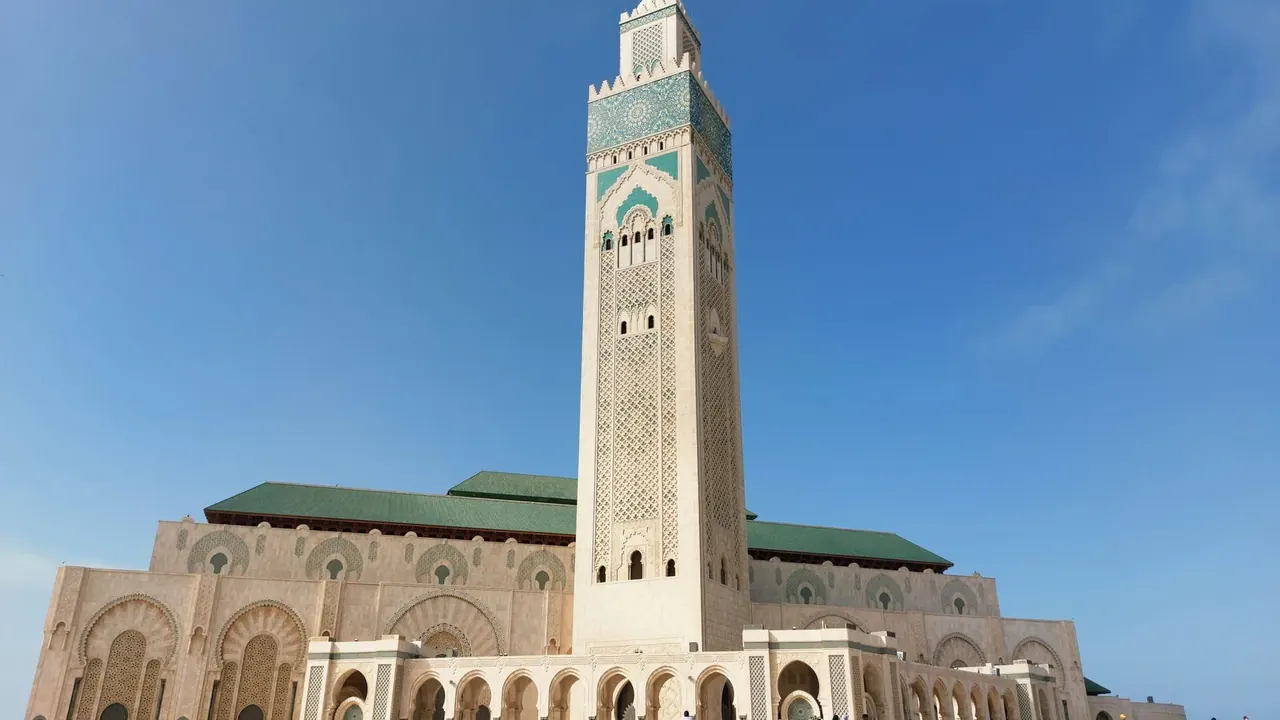
The Hassan II Mosque and its minaret
- Affordable cities68
- Food & drink60
- Day trips55
Photo: Samir Bakkah, Pexels License
Match
49
Every category weighted equally
- Beach & sun50
- Culture & arts49
- Food & nightlife50
- Family trip48
- Outdoors48
- Relax & unwind50
- Shopping & style49
- On a budget51
Casablanca in twelve categories
Our verdict on each, scored 0 to 100 against the same fixed benchmark cities, so a score means the same thing on every page.
Beaches & swimming. Scores 50 out of 100.
Food & drink. Scores 60 out of 100.
Culture & sights. Scores 52 out of 100.
Nightlife. Scores 44 out of 100.
Nature & outdoors. Scores 33 out of 100.
Day trips. Scores 55 out of 100.
Good for families. Scores 38 out of 100.
Getting around. Scores 42 out of 100.
Shopping & style. Scores 50 out of 100.
Affordability. Scores 68 out of 100.
Live music & performing arts. Scores 38 out of 100.
Wellness & relaxation. Scores 52 out of 100.
Casablanca category by category
Beaches & swimming
50Casablanca faces the open Atlantic, and its beach life centres on the Corniche at Ain Diab. A long sweep of sand runs below a line of beach clubs with private pools, where many locals swim instead of in the sea. In summer the water reaches about 21°C, but the swell is strong and currents can be dangerous, so swimming takes care, and water quality along the city front varies.
For a better beach day, people drive south to the wide sands around Dar Bouazza, or east to Bouznika and Mohammedia, which take less than an hour. Summer weekends are crowded with families from the city. For most visitors the beach fills a free afternoon rather than being the reason for the trip.
Food & drink
60Food here means Moroccan home cooking in a big port city. Tagines, couscous on Fridays, harira and grilled sardines are everyday food, and the seafood is the best thing to eat. At the Marché Central downtown you can pick fish from the stalls and have it grilled next door. The port and the fishing harbour have simple seafood places, and the Old Medina and the working districts sell street snacks such as msemen, snails in broth and fried fish.
The business crowd keeps a solid mid-range and upscale scene going in Maarif, Gauthier and along the Corniche, with French-influenced brasseries and pâtisseries. Mint tea and café terraces are part of every street. Alcohol is easier to find than in most Moroccan cities but stays out of sight, and the cooking is a step behind the old imperial cities.
Culture & sights
52The headline sight is the Hassan II Mosque. It stands on a platform over the ocean with a minaret of about 210m, and it is one of the few mosques in Morocco that non-Muslims can enter on guided tours. Beyond it, the city's character is twentieth-century. Downtown streets around Boulevard Mohammed V and the Place Mohammed V administrative square are lined with Art Deco and neo-Moorish buildings from the French protectorate, and the former Sacré-Cœur cathedral is a white Art Deco landmark.
The Habous quarter, a planned medina from the 1930s, is pleasant to wander, and the Old Medina by the port is small and workaday. The Museum of Moroccan Judaism and the Villa des Arts are worth an hour each. Two or three days cover it all.
Nightlife
44Of all Moroccan cities, Casablanca goes out the most, though discreetly. Most of the night happens along the Corniche at Ain Diab. Lounges, beach clubs and clubs there play house and Arabic pop until late, mainly at weekends, to a well-dressed local crowd. Downtown and in Maarif and Gauthier, hotel bars, a few old-fashioned bars from the protectorate era and cocktail lounges fill the evenings.
There is little street life after dark and no pub or bar-hopping culture. Alcohol is served in licensed venues away from the street. Taxis between districts are part of any night out. It suits travellers who want a smart night out with music, not a crawl through a lively quarter.
Nature & outdoors
33Casablanca sits on a flat coastal plain, and its outdoor life is mostly about the sea. Walkers and runners use the Corniche promenade and the paths out towards the El Hank lighthouse. Surfers use the breaks at Ain Diab, Dar Bouazza and Bouznika, which suit learners and intermediates for much of the year. The Bouskoura forest on the southern edge offers shaded walking and mountain-bike trails among eucalyptus.
There are no hills to speak of, and real mountain country in the Middle Atlas or the High Atlas is too far for an easy day out. A visitor who wants landscape needs to travel further inland.
Day trips
55The best day out is Rabat, about an hour away by train. The capital has the Kasbah des Oudayas above the river mouth, the Hassan Tower and Mohammed V mausoleum, the Roman and Merinid ruins of the Chellah, and a calm, orderly medina. South along the coast, El Jadida's Portuguese cistern and sea walls are a UNESCO site about an hour and a half away. Nearby Azemmour is a whitewashed medina on the river, popular with artists.
Mohammedia is a short hop for a seaside town, and Oualidia's lagoon and oyster beds make a longer outing. Marrakech and Fes are worth the trip but take more than two hours each way, so they are better as onward stops than as day trips.
Good for families
38Moroccan culture is warm towards children, and families are welcome in cafés and restaurants. Casablanca has more for children than most cities in the country. On the Corniche there is a huge mall with a large aquarium and indoor rides, an old amusement park and zoo at Ain Diab, and beach clubs whose calm pools are safer than the rough sea.
Away from those, the city is hard work. Traffic is heavy and pavements are often broken, many sights are architectural, and the Atlantic currents make sea swimming risky for young children. It works for a few days with older children, especially as a stop on a longer trip through Morocco.
Getting around
42Casablanca is a large, spread-out city, and visitors get around by mixing the tram with taxis. The modern tram lines are clean and simple and link downtown, the main stations, the university and the Corniche at Ain Diab, and busway lines add more routes. The red petits taxis are everywhere and cheap, though drivers often share rides and meters are sometimes ignored.
Downtown around the Marché Central and the Art Deco boulevards is walkable. The Hassan II Mosque and the Corniche are a long walk from there, and crossing the big roundabouts on foot takes nerve. Traffic is dense and driving is aggressive, so a hire car is no help inside the city. Fast trains reach Rabat and the rest of the country easily.
Shopping & style
50Casablanca is where Moroccans come for modern shopping. A vast mall on the Corniche holds international brands and a few luxury labels, and the Maarif district has fashion streets, local designers and the Twin Center towers. For crafts, the Habous quarter has a tidy set of shops selling leather, brass lamps, babouches, olives and spices, with less pressure from sellers than in the country's older medinas.
Derb Ghallef is a sprawling flea market for electronics, secondhand goods and curiosities, and the Old Medina sells everyday goods to locals. The choice of carpets and traditional crafts is limited, so shoppers who come for those will find this a thin hunting ground. The modern retail, though, is the deepest in the country.
Affordability
68For a visitor, Casablanca is cheap in daily life and pricier when it comes to rooms. Petits taxis, the tram, grilled fish at the market, café terraces and simple Moroccan meals cost little. Entry to the Hassan II Mosque is the only notable sightseeing cost.
As the country's business capital, though, the city has many hotels aimed at corporate travellers, with prices to match, and good guesthouses are scarcer than in the tourist cities. Wine, cocktails and dining along the Corniche are expensive by local standards. Budget travellers do well if they stay modest and eat where locals eat.
Live music & performing arts
38Casablanca has more formal stages than most Moroccan cities. A large modern theatre on Place Mohammed V hosts concerts, dance and touring productions, and the French and other cultural institutes run small programmes of film, theatre and music. Each year the calendar has a few highlights, including a long-running jazz festival that draws international and Moroccan acts, and a festival of urban music and hip-hop that grew out of the city's own scene.
The city is also a centre of Moroccan popular music, from chaabi to rap, and gnawa musicians perform at cultural centres and private events. A visitor on an ordinary week may find little to attend, so check the programme before building a trip around it.
Wellness & relaxation
52The hammam is part of daily life in Casablanca. Every neighbourhood has a public steam bath where locals go for a scrub with black soap and a kessa glove, and upscale hammams and spas in Maarif and the hotel districts offer the same ritual with massage in quieter surroundings. Along the Corniche, thalassotherapy centres and seafront spa hotels use the Atlantic for seawater treatments.
The city itself works against relaxing. It is loud, crowded and busy with traffic, without the calm courtyard houses of the old medinas. The slow moments come from a long hammam session, a seafront walk at sunset or mint tea on a café terrace.
When should you go?
Pick a month to see what it is like. The climate figures are measured averages, not a forecast.
Casablanca in July
Daytime high, °C
Rainfall in the month, mm
The whole year
Shaded against this city’s own year: the deepest cell is its best month for that figure and the palest its weakest.
Temperature and rainfall are climate normals, averaged over the years shown. Casablanca: 1991-2020 normals, Casablanca (5.6 km from centre).
Before you go
| Measure | Casablanca |
|---|---|
| Official language | Arabic, Standard Moroccan Tamazight |
| Currency | Moroccan Dirham (MAD) |
| Sockets | CE50 Hz |
| Driving side | Right |
| Time zone | UTC+1 |
| Emergency number | Police 19/112, ambulance 15, fire 15 |
| Elevation | 115 m |
| Main airport | Mohammed V International Airport (CMN)26 km from centre112 non-stop destinations |
| Public holidays this year | 11 days |
By the numbers
| Measure | Casablanca |
|---|---|
| City population | 3,215,935 |
| People per km² | 8,375 |
| Museums within 10 km | 3 |
| UNESCO World Heritage sites within 50 km | 0 |
| Swim season, months above 21 °C | 5 months |
Compare Casablanca with
Every comparison with a written verdict behind it.