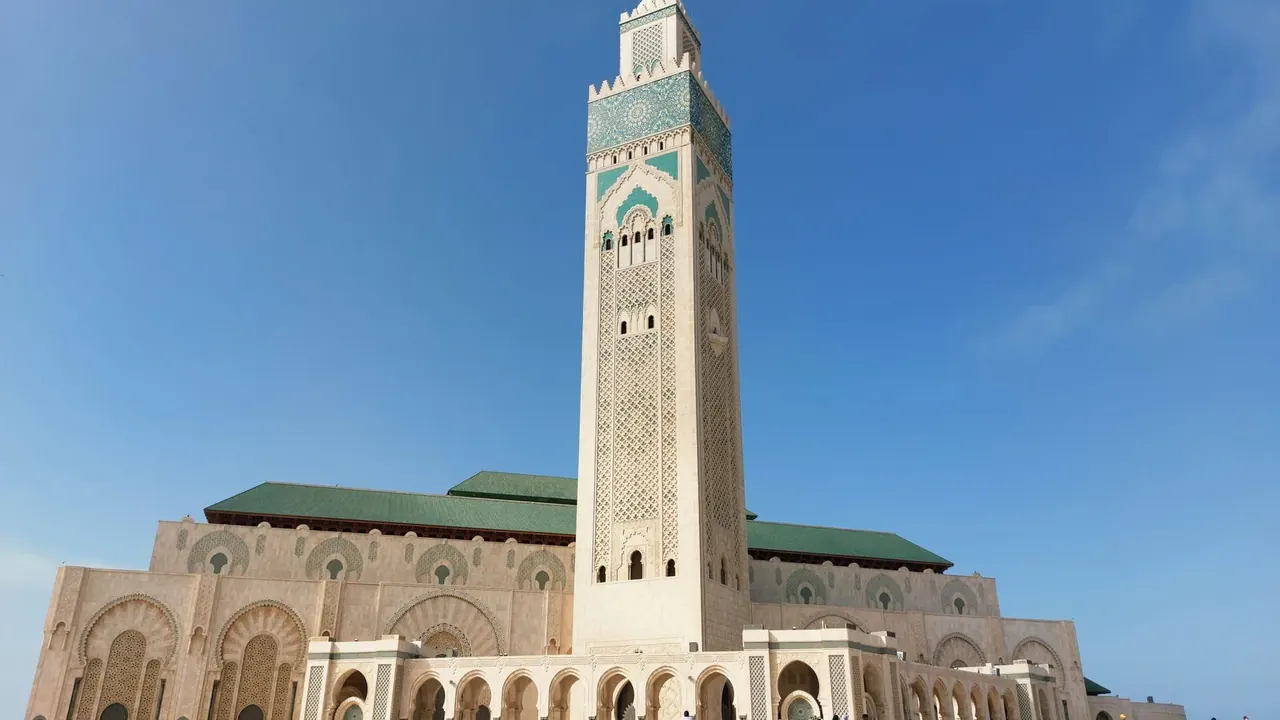
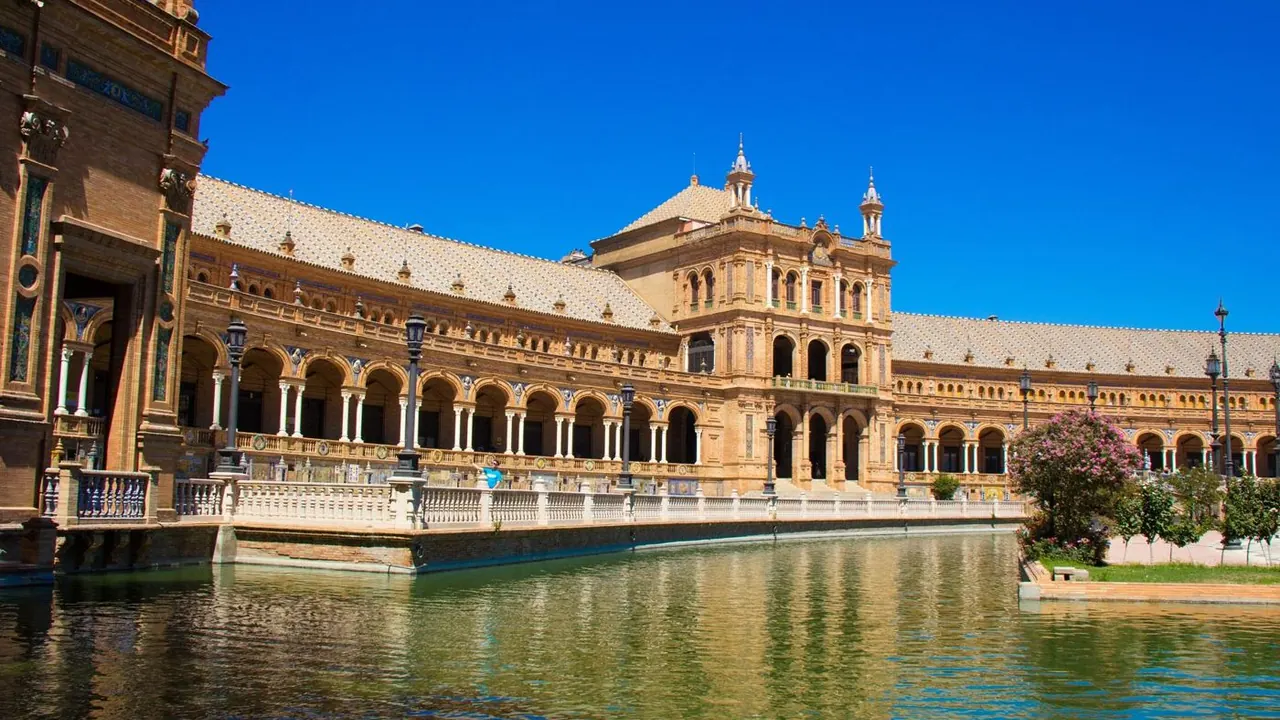
Photos: Casablanca by Samir Bakkah, Pexels License; Seville by Tibor Kovacs, CC BY 2.0, cropped.
Casablanca or Seville?
Our verdict in twelve categories, each scored against the same fixed benchmark cities, and the climate month by month, so you can choose for your trip.
Choose Casablanca for
- beaches
- wellness
- prices
Casablanca suits a traveller who wants a modern Moroccan city with the Atlantic on its doorstep. Its strengths are the sea at Ain Diab, the hammam as an everyday ritual, grilled fish from the port and daily costs that stay low. It works best as a short stop of two or three days, or as the start of a longer trip through Morocco, rather than as a destination for sightseeing in its own right.
Choose Seville for
- culture and sights
- getting around
- live music and the arts
Seville is the better choice for almost any trip built around the city itself. The Alcázar, the cathedral and the lanes of Santa Cruz are all within walking distance, flamenco can be seen any night, tapas evenings stretch late into the night and Córdoba, Jerez and Cádiz are easy day trips. You give up the sea and you have to avoid high summer, but in return you get a richer, easier and more varied stay.
Scoreboard
Twelve categories on one fixed scale from 0 to 100. The shaded stretch is the gap between the two.
Your match
Pick a travel style or drag the sliders, and both match scores follow your weighting.
Wins on beaches and wellness with your weighting.
Wins on culture and sights and getting around with your weighting.
What matters to you?
Category by category
What the scores mean for a trip.
Beaches & swimming
Casablanca at least has the sea in town. The long sand at Ain Diab lies below the Corniche, and better beaches at Dar Bouazza, Bouznika and Mohammedia are all under an hour away. The swell and currents make swimming a careful business, though, and many locals use the beach clubs' pools instead.
Seville is inland on the Guadalquivir. A day on the sand means driving or taking a coach to Matalascañas or Mazagón, and in the city summer swimming means a rooftop or municipal pool.
Food & drink
Seville eats better. Its tapas culture means a few plates at a time at the counter of an old tiled bar in Triana or El Arenal, washed down with manzanilla or cold beer, and that rhythm alone shapes an evening.
Casablanca's best food comes from the sea: fish chosen at the Marché Central and grilled next door, plus Moroccan home cooking and French-style brasseries in Maarif and Gauthier. It offers more mid-range and upscale range than Seville, but alcohol is kept out of sight and the cooking itself is a step behind.
Culture & sights
The gap here is wide. Seville's Real Alcázar, its Gothic cathedral with the Giralda, and the Archivo de Indias make up a UNESCO-listed group, with Plaza de España, Casa de Pilatos and the Murillos of the Bellas Artes close by. Three or four days fill easily.
Casablanca has one major sight in the Hassan II Mosque, which non-Muslims can enter on a guided tour. Beyond it, the city's appeal is its twentieth-century past: Art Deco boulevards, the 1930s Habous quarter and a couple of small museums.
Nightlife
Seville's evenings are the more sociable. Dinner starts late and the night moves outdoors through Triana, the Alfalfa squares and the Alameda de Hércules, with summer bars along the river once the heat breaks.
Casablanca goes out in a different way. Its nights are dressier and happen indoors, in lounges and clubs on the Corniche at Ain Diab playing house and Arabic pop, mostly at weekends, and you take a taxi between them rather than wandering from bar to bar. If you are looking for actual clubs, Casablanca has more of them than Seville's student-oriented scene.
Nature & outdoors
Both cities sit on flat ground, but Seville has more within reach. The Doñana wetlands, with their flamingos and migrating birds, are about an hour and a half away, and the cork-oak hills of Aracena and the Sierra Norte are good for gentle walks. Closer in, there is rowing and kayaking on the old river channel.
Casablanca's outdoor life is mostly coastal: surf breaks for learners at Ain Diab and Bouznika, runs out to the El Hank lighthouse and eucalyptus trails in the Bouskoura forest. Real mountains are too far away for a day out.
Day trips
Seville is a far better base. Córdoba is under an hour away by high-speed train, Carmona and the Roman ruins at Itálica are closer still, and Jerez, Cádiz and the white villages fill several more days.
From Casablanca, the clear first choice is Rabat, an hour away by train, with the Kasbah des Oudayas and the Chellah. Beyond that there are the Portuguese walls of El Jadida, Azemmour and the oyster lagoon at Oualidia, but Marrakech and Fes are too far for a comfortable return trip in a day.
Good for families
In both countries children are welcome in cafés and restaurants. Seville is the easier city with them. The centre is flat and compact, María Luisa Park has rowing boats and carriages, and the maze in the Alcázar gardens keeps children busy. Its weak point is the summer heat, which goes well past 40°C.
Casablanca has an aquarium in the Corniche mall and the amusement park and zoo at Ain Diab. Outside those, heavy traffic, broken pavements and a rough sea make it hard work, especially with young children.
Getting around
In Seville you walk. Everything from the cathedral to Triana and Plaza de España is within half an hour on foot, many lanes are pedestrianised, and the bike lanes make cycling genuinely practical.
Casablanca is spread out, so you combine the clean tram lines with red petits taxis whose drivers share rides and sometimes ignore the meter. Only the downtown core is comfortable on foot, and the busy roundabouts are hard to cross. Its advantage is the fast rail link to Rabat and beyond.
Shopping & style
The two are about level, but they suit different shoppers. Casablanca is Morocco's centre for modern retail, with international brands in the Corniche mall and local designers in Maarif. The Habous offers a tidy, low-pressure selection of leather, brass and babouches, and Derb Ghallef is a sprawling flea market.
Seville is about crafts made for local use. There are hand-painted tiles from the Triana workshops, flamenco dresses, mantillas, fans and guitars around Sierpes and Cuna, and the Thursday flea market on Calle Feria.
Affordability
Casablanca is the cheaper of the two day to day. Taxis, the tram, grilled fish at the market and café terraces cost little. Rooms are the exception: business hotels dominate and good guesthouses are scarce.
Seville is reasonably priced for Western Europe, especially for tapas and drinks, and the walkable centre keeps transport costs down. Hotel rates jump sharply during Holy Week and the April Fair.
Live music & performing arts
Seville is the home of flamenco, and you can see it on any night, from tablaos in Santa Cruz to the peñas where local fans gather. The Maestranza adds opera and a symphony orchestra.
Casablanca's live culture runs on its calendar: a long-running jazz festival, an urban music festival and the programme at the large theatre on Place Mohammed V. It is also a centre for chaabi, rap and gnawa, but in an ordinary week there may be little to see.
Wellness & relaxation
Casablanca has the stronger bathing tradition. Every neighbourhood has a public hammam with black soap and a kessa scrub, upmarket versions in Maarif add massage, and the Corniche has seawater thalassotherapy. The city around them is loud and congested, though.
Seville has only a few Arab-style bath houses in old mansions, along with hotel spas. Its calm comes from the pace of the day instead: long lunches, a quiet afternoon and the cool of tiled courtyards and the Alcázar gardens.
When should you go?
Pick your month. The climate figures are measured averages, not a forecast.
Casablanca in July
Seville in July
Daytime high, °C
Rainfall in the month, mm
Temperature and rainfall are climate normals, averaged over the years shown. Casablanca: 1991-2020 normals, Casablanca (5.6 km from centre). Seville: 1991-2020 normals, Sevilla / San Pablo (8.1 km from centre).
Casablanca's Atlantic air keeps it mild all year. August highs reach only about 27°C and winters are fresh rather than cold, so walking the city is comfortable in any season. Summer is almost completely dry and very sunny from May to August. The rains arrive in October and are heaviest from November to January. The sea is warmest in late summer at around 23°C, so July to September is the time to swim, and even then the water is bracing.
Seville's climate swings much more through the year. March to May is the best time, warm enough for long days in the streets and gardens. October is still pleasantly warm but brings the start of the rains, with about 74mm. July and August regularly reach 36°C, which makes walking at midday hard going, though Seville gets even more summer sun than Casablanca. The two wet seasons are similar. Seville is wetter in October and December, while Casablanca gets more rain in November and January. In high summer the coastal city is far more comfortable. In winter the two are close, with Seville a little cooler.
Which traveller are you?
On a beach and sun trip, Casablanca is the clear pick. The sand at Ain Diab lies within the city, and wider beaches are a short drive south at Dar Bouazza, though they get busy on summer weekends. From Seville, the sea is over an hour's drive away.
For a culture and arts trip, Seville is far ahead. The Alcázar, the cathedral and the Bellas Artes fill several days, and nightly flamenco in tablaos and peñas takes care of the evenings. Casablanca's Hassan II Mosque and Art Deco downtown are covered in two or three days.
On a relaxing and wellness trip, Casablanca has the edge because of its hammam culture. Every district has a steam bath and the Corniche has thalassotherapy spas. Seville has slow afternoons in shaded courtyards, but only a handful of bath houses.
Before you go
| Measure | Casablanca | Seville |
|---|---|---|
| Official language | Arabic, Standard Moroccan Tamazight | Spanish |
| Currency | Moroccan Dirham (MAD) | Euro (EUR) |
| Sockets | CE50 Hz | CF230 V, 50 Hz |
| Driving side | Right | Right |
| Time zone | UTC+1 | UTC+1, UTC+2 in summer |
| Emergency number | Police 19/112, ambulance 15, fire 15 | 112 |
| Elevation | 115 m | 18 m |
| Main airport | Mohammed V International Airport (CMN)26 km from centre112 non-stop destinations | Seville Airport (SVQ)9 km from centre96 non-stop destinations |
| Public holidays this year | 11 days | 12 days |
By the numbers
| Measure | Casablanca | Seville |
|---|---|---|
| City population | 3,215,935 | 689,423 |
| People per km² | 8,375 | 4,896 |
| Museums within 10 km | 3 | 24 |
| UNESCO World Heritage sites within 50 km | 0 | 1 |
| Swim season, months above 21 °C | 5 months | - |
Where else could you go?
Every comparison below shares a destination with this one, so you can follow Casablanca or Seville somewhere new.