Ghana
Accra
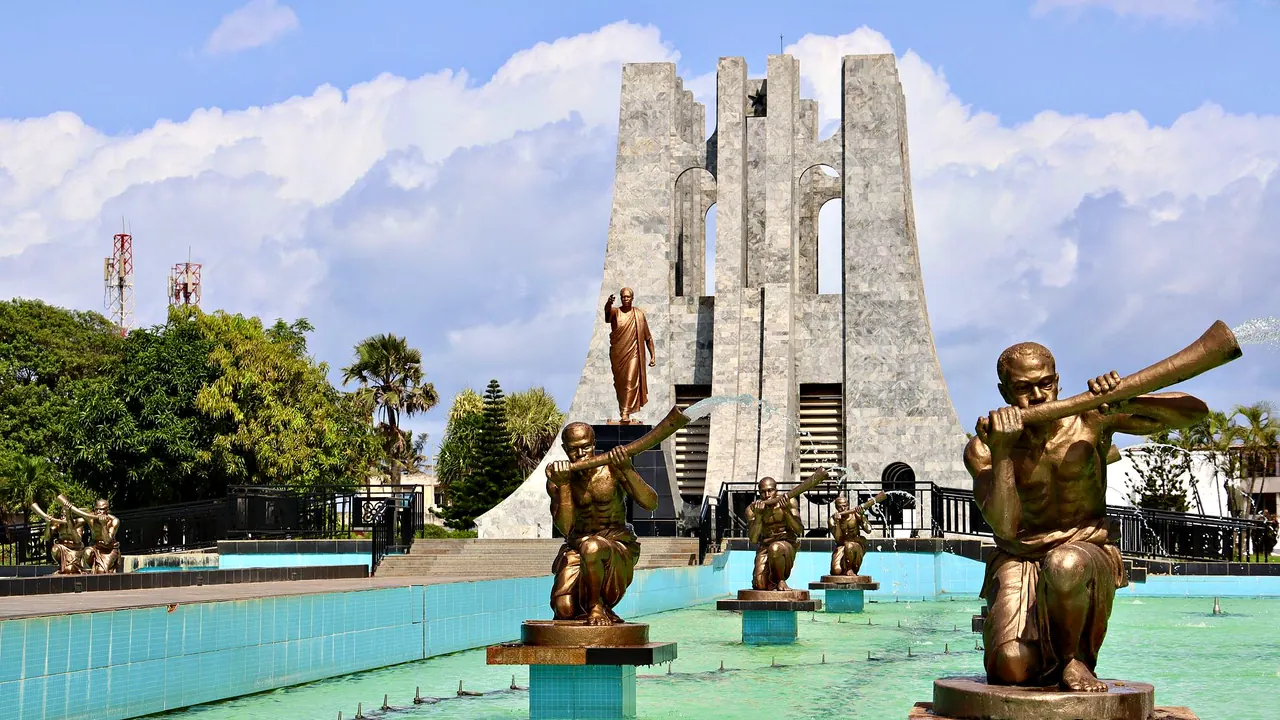
The Kwame Nkrumah Mausoleum and its fountains
- Nightlife62
- Affordable cities56
- Food & drink55
Photo: Ana Kenk, Pexels License
Match
41
Every category weighted equally
- Beach & sun41
- Culture & arts40
- Food & nightlife45
- Family trip38
- Outdoors38
- Relax & unwind38
- Shopping & style42
- On a budget42
Accra in twelve categories
Our verdict on each, scored 0 to 100 against the same fixed benchmark cities, so a score means the same thing on every page.
Beaches & swimming. Scores 44 out of 100.
Food & drink. Scores 55 out of 100.
Culture & sights. Scores 38 out of 100.
Nightlife. Scores 62 out of 100.
Nature & outdoors. Scores 36 out of 100.
Day trips. Scores 30 out of 100.
Good for families. Scores 30 out of 100.
Getting around. Scores 22 out of 100.
Shopping & style. Scores 45 out of 100.
Affordability. Scores 56 out of 100.
Live music & performing arts. Scores 48 out of 100.
Wellness & relaxation. Scores 20 out of 100.
Accra category by category
Beaches & swimming
44Accra lies along the Gulf of Guinea, and the water is warm all year, usually around 27°C. The swimming is harder than the temperature suggests. Atlantic swells break heavily, rip currents are common, and the city beaches, Labadi above all, are better for drumming, horse rides and weekend crowds than for a calm swim. Litter washes up on much of the urban shore.
The better beaches are outside the city. Bojo, west of town, sits on a sandbar reached by a short canoe crossing, and Kokrobite, under an hour away, is the relaxed surf-and-reggae beach village. Further east, Prampram and the Ada estuary are quieter. Treat beaches as a pleasant day out, not the reason to come.
Food & drink
55Ghanaian cooking is hearty, spicy and built on starches and stews: banku or fufu with light soup or groundnut soup, kenkey with fried fish and hot pepper, red-red, and waakye, rice and beans served from roadside stalls in the morning. Jollof rice is a point of national pride. Kelewele, spiced fried plantain, is the evening snack sold under lanterns on street corners.
The best way in is through chop bars, simple local eateries, and street vendors in Osu, Jamestown and around Makola Market. Grilled tilapia by the sea and palm wine or local beer fill a long evening. There is a modest international tier in Osu, Airport and East Legon, but the range is narrow beyond Ghanaian and Lebanese cooking.
Culture & sights
38Accra's sights tell the story of independence and the coast before it. The Kwame Nkrumah Memorial Park holds the mausoleum of Ghana's first president, and nearby Independence Square, with the Black Star Gate, is the vast parade ground built after 1957. The W.E.B. Du Bois Centre marks the African-American scholar's final home.
The older layer is in Jamestown, the fishing quarter around the red-and-white lighthouse and the remains of Ussher Fort and James Fort, best seen with a local guide. Osu Castle, built by the Danes, stands on the shore. Galleries and the bright painted fantasy coffins of the Teshie workshops add a lively contemporary side, but the city's museums are thin, and a visit takes two or three days.
Nightlife
62Going out is one of Accra's real draws. Evenings start at roadside spots with grilled meat and cold beer, move to rooftop and lounge bars in Osu, Labone and East Legon, and end in clubs playing Afrobeats, amapiano and hiplife until well after midnight. Weekend beach parties at Labadi and further out at Kokrobite run late.
The city reaches its peak in December, when the diaspora comes home for Christmas and a run of parties, concerts and street events turns the whole month into a festival. Outside that season the scene is smaller and more local, but still friendly and lively at weekends. Dress is sharp, and nights out lean on taxis or ride-hailing between districts.
Nature & outdoors
36The city is flat and built up, and heat and traffic limit outdoor time inside it. Achimota Forest offers shaded trails close to the centre. Within an hour or so the land rises to the Akuapem hills at Aburi, cooler and greener, with botanical gardens laid out in colonial times and walking and mountain-bike routes along the ridge.
East of the city, the Shai Hills reserve has rocky outcrops, caves, baboons and antelope on open savannah. The Volta River near Akosombo, about two hours away, gives boat trips on the great lake, and the Ada estuary has birdlife and mangroves. The well-known rainforest canopy walk at Kakum is too far for an easy day.
Day trips
30Accra's one great outing lies beyond easy reach. The castles of Cape Coast and Elmina, centres of the Atlantic slave trade and among the most moving heritage sites in Africa, are about three hours west along the coast road, and longer when traffic is bad. Most visitors make it an overnight trip rather than a day out.
Within two hours the list is short and modest. Aburi, up in the hills, has roadside woodcarving workshops. The Krobo villages around Somanya and Odumase are known for glass bead-making. Akosombo, the dam town on the Volta, and Ada Foah at the river mouth make relaxed outings. Along the coast, the fishing town of Winneba and small European forts at Prampram and Senya Beraku fill out the list. These are pleasant, but none is a reason to choose Accra, and Kumasi and the Ashanti heartland are too far for a day.
Good for families
30Ghanaians are warm towards children, and families are welcomed everywhere, but the city offers little built for them. The rough surf makes beaches better for paddling and playing on the sand than swimming, so hotel pools do much of the work. Achimota Forest, the Aburi gardens and the baboons at Shai Hills make easy outings, and shopping malls offer air-conditioned play areas.
The practical side is harder. Heat, traffic, broken pavements and open gutters make walking with small children tiring, and malaria precautions are essential. Families with older children who enjoy markets, drumming and history will get more out of a stay than those with toddlers.
Getting around
22Accra is spread out and has no metro or tram, so nearly every visitor relies on ride-hailing apps and taxis, which are easy to find but slowed by heavy traffic, especially at rush hour. The shared minibuses called trotros cover the whole city, but routes are learned by asking, and they are crowded and confusing for a newcomer.
Walking works within parts of Osu and around Jamestown, but elsewhere pavements are broken or absent, open drains line the roads and the midday heat is draining. For day trips most people hire a car with a driver.
Shopping & style
45Accra's shopping is about cloth and craft. Makola Market sprawls through the old centre with stalls of wax-print fabric, beads and household goods, crowded and hot but fascinating. The Centre for National Culture, known as the Arts Centre, gathers woodcarvings, drums, kente and leatherwork, with hard bargaining expected.
The local habit worth borrowing is buying fabric and having it made up by a tailor in a few days. A small number of Ghanaian fashion and design boutiques in Osu and Labone show the contemporary side, and air-conditioned malls cover the basics. There is little luxury shopping.
Affordability
56Accra is cheaper than it looks in some ways and dearer than expected in others. Street food, chop-bar meals, local beer and ride-hailing cost little, and a visitor who eats locally spends modestly.
Accommodation is the catch. Hotels with reliable power, water and air-conditioning are expensive for West Africa, and imported wine, Western-style restaurants and anything sold in malls carry high prices. Prices also climb during the busy December season.
Live music & performing arts
48Music runs through daily life in Accra, from church choirs to drumming at Labadi. Highlife, the guitar-and-horn dance music born on this coast, still has live band nights in bars and garden venues, and Afrobeats and hiplife artists fill arenas, above all during the December concert season.
The formal side is smaller. The National Theatre, a striking building shaped like a ship, hosts dance troupes, drama and the national symphony, but programmes are irregular. Traditional drumming and dance can be seen at cultural centres and festivals, and the Chale Wote street art festival takes over Jamestown each year with performance, music and painting.
Wellness & relaxation
20Accra has no bathing or spa tradition of its own, and wellness means the spas and pools of the larger hotels and a scattering of massage and beauty salons. The city itself is hot, loud and slowed by traffic, which makes it a tiring place to unwind.
Visitors who want rest usually leave town: the beach lodges of Kokrobite and the cooler air of the Aburi hills offer a slower pace, and a night or two there helps balance a busy city stay.
When should you go?
Pick a month to see what it is like. The climate figures are measured averages, not a forecast.
Accra in July
Daytime high, °C
Rainfall in the month, mm
The whole year
Shaded against this city’s own year: the deepest cell is its best month for that figure and the palest its weakest.
Temperature and rainfall are climate normals, averaged over the years shown. Accra: 1991-2020 normals, Accra (5.9 km from centre).
Before you go
| Measure | Accra |
|---|---|
| Official language | English |
| Currency | Ghana Cedi (GHS) |
| Sockets | G230 V, 50 Hz |
| Driving side | Right |
| Time zone | UTC |
| Emergency number | 999 |
| Elevation | 61 m |
| Main airport | Kotoka International Airport (ACC)6 km from centre36 non-stop destinations |
| Public holidays this year | 11 days |
By the numbers
| Measure | Accra |
|---|---|
| City population | 1,782,150 |
| People per km² | 10,301 |
| Museums within 10 km | 3 |
| UNESCO World Heritage sites within 50 km | 1 |
| Swim season, months above 21 °C | 12 months |
Compare Accra with
Every comparison with a written verdict behind it.