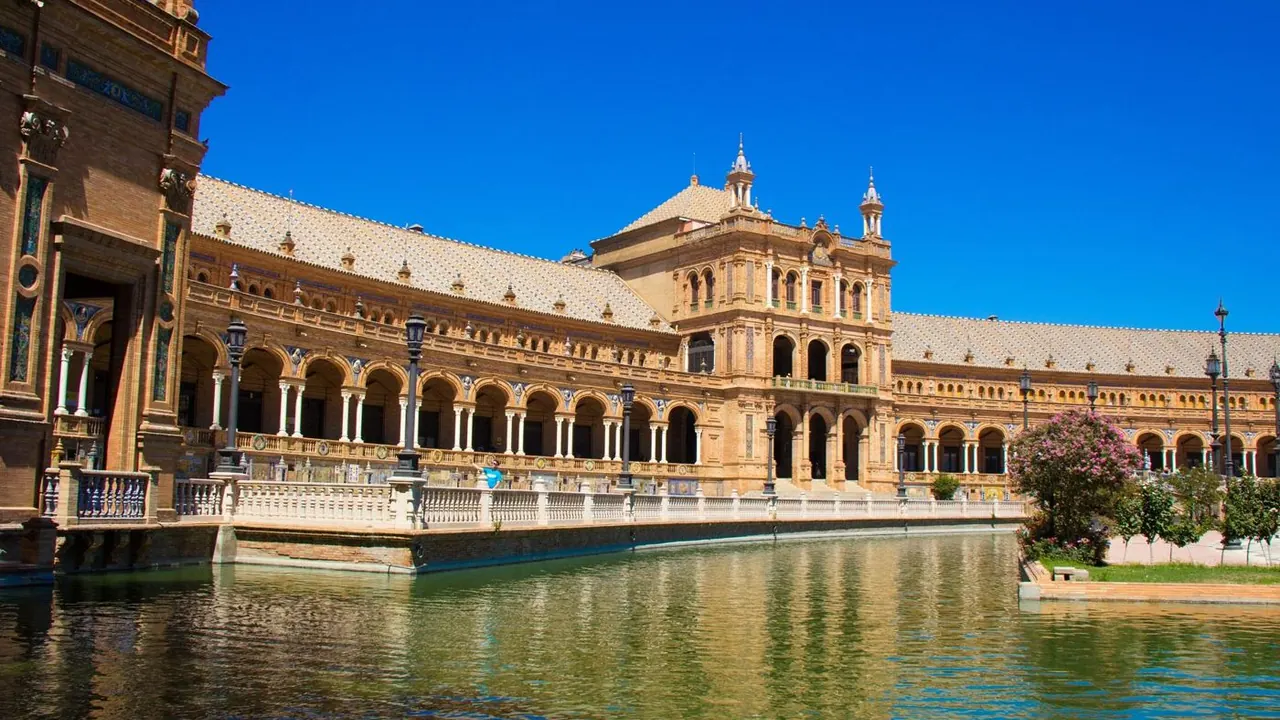
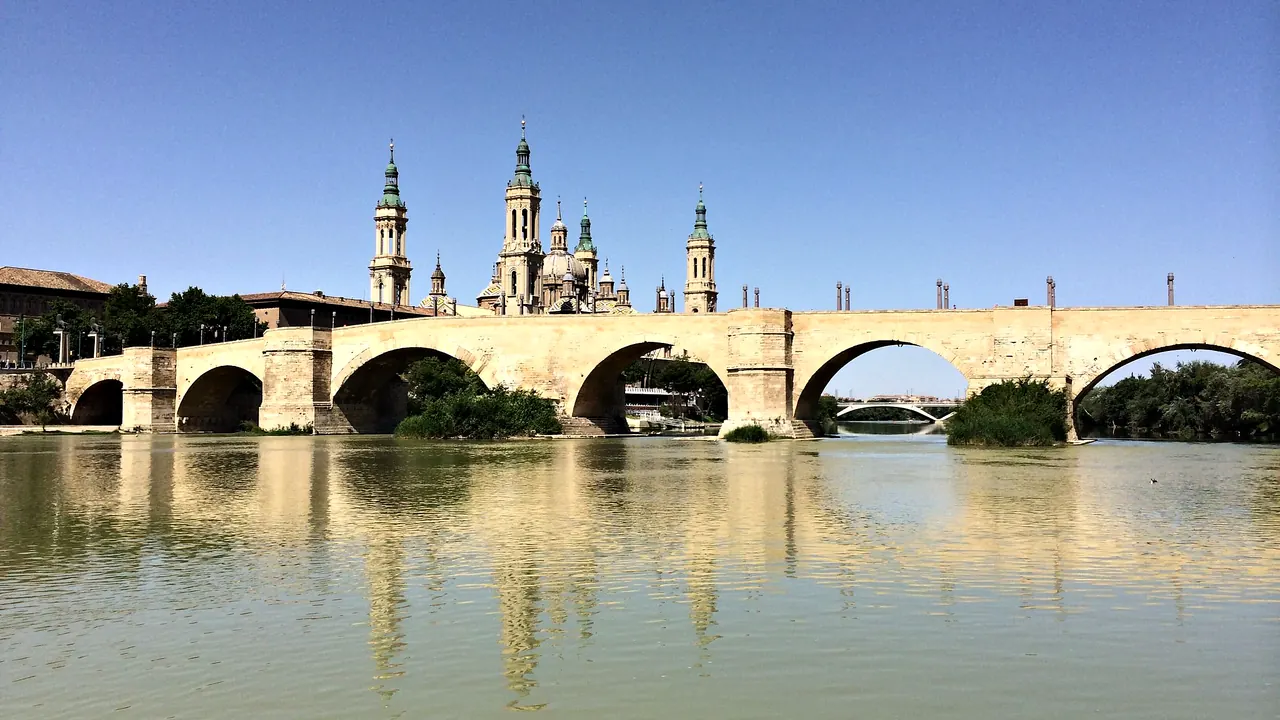
Photos: Seville by Tibor Kovacs, CC BY 2.0, cropped; Zaragoza by Pablo Alejandro Araujo Granda, CC BY-SA 2.0, cropped.
Seville or Zaragoza?
Our verdict in twelve categories, each scored against the same fixed benchmark cities, and the climate month by month, so you can choose for your trip.
Choose Seville for
- live music and the arts
- culture and sights
- beaches
Seville is for the traveller who wants a classic Andalusian city at full strength. The Alcázar, the cathedral and the lanes of Santa Cruz make one of Europe's great old centres, flamenco is on every night, and its tapas bars are some of the best in Spain. It also puts Córdoba, Jerez and the Atlantic coast within easy reach. Choose it for a first trip to southern Spain, and expect to share it with other visitors.
Choose Zaragoza for
- prices
- nature and the outdoors
- families
Zaragoza suits someone who would rather have a calmer, cheaper Spanish city where tourism doesn't set the tone. The Pilar basilica, the Aljafería and the Roman remains fill two or three good days. The bar crawl through El Tubo is pure Aragon, and hotels cost less for most of the year. Being on the high-speed line between Madrid and Barcelona, and close to the mountains of Aragon, makes it a useful stop on a longer route through Spain.
Scoreboard
Twelve categories on one fixed scale from 0 to 100. The shaded stretch is the gap between the two.
Your match
Pick a travel style or drag the sliders, and both match scores follow your weighting.
Wins on live music and the arts and culture and sights with your weighting.
Wins on prices and nature and the outdoors with your weighting.
What matters to you?
Category by category
What the scores mean for a trip.
Beaches & swimming
Neither city is a beach destination, but Seville gets you to the sea far more easily. The Atlantic beaches of Huelva, such as Matalascañas and Mazagón, are about an hour and a quarter away by car or coach, and the water is around 22°C in summer. A beach day is realistic, though it takes most of the day.
From Zaragoza the Mediterranean is more than 200km away, too far for a casual day out, and nobody swims in the Ebro. In summer, swimming in either city means a hotel pool or a municipal pool.
Food & drink
Both cities eat tapas, but Seville does it with more variety. You'll find spinach with chickpeas, pringá, pork cheek and fish fried in the Cádiz style, washed down with fino, manzanilla or orange-blossom vermouth. There are old tiled bars in Triana and El Arenal and more inventive kitchens around the Alameda.
Zaragoza's version is simpler and heartier. In El Tubo each counter is known for a single dish, the main cooking is Aragonese, built around ternasco lamb and migas, and the local reds from Cariñena and Somontano cost little. Neither city offers much international or high-end dining.
Culture & sights
Seville's historic centre is in a different league. The Alcázar's Mudéjar courtyards, the huge Gothic cathedral with the Giralda, and the Archivo de Indias stand side by side. Around them are Santa Cruz, Plaza de España and Casa de Pilatos, easily enough for three or four days.
Zaragoza's highlights are fewer but go back further. The Aljafería, an eleventh-century Islamic palace, is the best of them. Add the Pilar basilica with ceilings by the young Goya, the Mudéjar wall of La Seo, and the underground remains of Roman Caesaraugusta. Two or three days cover it, and outside the old core the city is mostly modern.
Nightlife
Seville has the livelier evenings. Long outdoor nights run from tapas bars to the Alameda de Hércules, Triana and the streets around the Alfalfa. In summer the riverbanks fill with open-air bars once the heat breaks.
Zaragoza's night out is friendly but more tied to the students, busiest around Plaza San Felipe and the Casco on Thursdays and weekends and quieter otherwise. Neither city is a clubbing destination. Each has one great party: Seville's April Fair, and the Fiestas del Pilar in October in Zaragoza.
Nature & outdoors
Both cities sit on hot, flat plains, so the difference is in what lies beyond them. Seville's big draw is wetland. The marshes and dunes of Doñana, about an hour and a half away, are known for flamingos and migrating birds, and the cork-oak hills of Aracena offer gentle walks.
From Zaragoza you get mountains and dramatic rock instead. There are beech forests on the Moncayo, the red towers of the Mallos de Riglos, the badlands of the Bardenas Reales, and the Pyrenees about two hours north, though most of these need a car.
Day trips
Both make excellent bases for day trips, but you use them differently. From Seville, the classic Andalusian outings are mostly easy without a car. Córdoba is under an hour by high-speed train, Jerez and Cádiz are reachable by train, and Carmona and Itálica are close by.
Zaragoza's special advantage is that Madrid and Barcelona are each about an hour and a half away by train. Its best regional sights, such as Loarre castle, ruined Belchite and Albarracín, are much easier with a hired car.
Good for families
Seville has more attractions for children, and Zaragoza is the calmer, slightly cooler city. In Seville there are rowing boats on the canal at Plaza de España in María Luisa Park, a maze and fountains in the Alcázar gardens, and a theme park with a summer water park on La Cartuja, the old Expo island. The downside is July and August, when days often go above 40°C and sightseeing with small children gets hard.
Zaragoza's main attraction for families is the riverside aquarium of the world's great rivers. Next to it, the Parque del Agua has playgrounds and space to run, and the October fiestas bring parades of giants and big-heads. Most of its monuments mean more to adults, but the city's slow pace makes the days easy to manage.
Getting around
Seville is the better city to cycle. Bike lanes run across the flat centre, and the public bike scheme makes it easy to ride from the cathedral to Triana or Plaza de España. Its short tram and single metro line matter less to a visitor than the bike does. The catch is summer, when the midday heat makes walking or riding hard work, and the orange trees along the narrow lanes give only so much shade.
Zaragoza relies more on its tram, which crosses the whole centre from north to south, although the walk from the Pilar to the Aljafería is short enough to do on foot. Its summers are a few degrees cooler, so a midday walk is tiring but not as punishing as in Seville. In both cities a car only earns its keep once you head out into the countryside.
Shopping & style
Seville has more worth taking home. The pottery workshops of Triana sell hand-painted tiles. Around Sierpes and Cuna, shops sell flamenco dresses, mantillas, fans and guitars made for locals preparing for the Fair, and the Thursday flea market on Calle Feria is good for browsing.
In Zaragoza, shopping is mostly high-street chains on Paseo de la Independencia and a large mall on the city's edge. The local character is in edible souvenirs such as frutas de Aragón and in ceramics from nearby Muel. Neither city has much luxury or independent design.
Affordability
Zaragoza is the cheaper stay. Central hotels are good value most of the year, sightseeing costs little, and the Pilar basilica is free to enter. Its one expensive period is the October fiestas.
Seville is still reasonable by Western European standards, and evenings of tapas and beer are a real saving. However, tickets for the Alcázar and the cathedral add up. Room rates also climb steeply around Holy Week and the April Fair, when the best-placed hotels book up months ahead.
Live music & performing arts
This is where the two cities differ most. Seville is the heart of flamenco, with performances every night in small tablaos, cultural centres and local peñas, and the Bienal de Flamenco in autumn of even-numbered years. The Teatro de la Maestranza adds opera in the city where Carmen and The Barber of Seville are set.
Zaragoza's scene is reliable but provincial. The Auditorio hosts touring orchestras and jazz, and the Teatro Principal stages plays and dance. The jota, Aragon's leaping folk dance, is mostly seen during the Fiestas del Pilar, so check the programme before you go.
Wellness & relaxation
Neither city has a bathing tradition of its own. Both offer Arab-style bath houses and hotel spas. Seville's version is the more atmospheric, with baths in old mansions under arched ceilings. It also has cool, tiled courtyards and the Alcázar gardens to rest in, but the narrow streets can be noisy at night.
Zaragoza's calm comes from slow strolls along the Ebro and shady afternoons in Parque Grande. The thermal waters of Alhama de Aragón are a little over an hour away if you want a proper spa day.
When should you go?
Pick your month. The climate figures are measured averages, not a forecast.
Seville in July
Zaragoza in July
Daytime high, °C
Rainfall in the month, mm
Temperature and rainfall are climate normals, averaged over the years shown. Seville: 1991-2020 normals, Sevilla / San Pablo (8.1 km from centre). Zaragoza: 1991-2020 normals, Zaragoza / Aeropuerto (11.2 km from centre).
Spring and autumn are the best times in both cities, but Seville runs warmer all year. By May Seville is already hot, and in July and August daytime highs reach about 36°C, so you can only walk around early in the morning or at night. Zaragoza peaks at about 33°C in summer, which is still tiring, and its dry cierzo wind adds to that. In winter the gap is clear: Seville stays mild at around 16°C in January, warm enough for a terrace lunch, while Zaragoza drops to about 11°C and feels colder in the wind.
Rain follows different patterns. Seville is almost completely dry from June to August, but autumn and winter bring its wettest months, with about 78mm in December. Zaragoza is dry all year, with its little rain coming mostly in spring. Both cities are very sunny. If you want a day on the coast, summer is the time to go from Seville, when the Atlantic water off Huelva is warm enough to swim in.
Which traveller are you?
On a culture and arts trip, Seville is the stronger choice. The Alcázar, the Giralda and the Museo de Bellas Artes can fill several days, and in the evenings there's live flamenco in tablaos and peñas, plus opera at the Maestranza, which Zaragoza can't match.
For a food and nightlife trip, Seville also comes out ahead. Its tapas range from salmorejo to fried fish from Cádiz, with manzanilla to drink, and late nights on the terraces of the Alameda and Triana give it more going on after dark than Zaragoza's student weekends.
On a trip on a tight budget, Zaragoza stretches your money further. Central hotels are good value for most of the year, the Pilar basilica is free to enter and the local reds cost little. Seville's room rates climb steeply around Holy Week and the April Fair.
Before you go
| Measure | Seville | Zaragoza |
|---|---|---|
| Official language | Spanish | Spanish |
| Currency | Euro (EUR) | Euro (EUR) |
| Sockets | CF230 V, 50 Hz | CF230 V, 50 Hz |
| Driving side | Right | Right |
| Time zone | UTC+1, UTC+2 in summer | UTC+1, UTC+2 in summer |
| Emergency number | 112 | 112 |
| Elevation | 18 m | 200 m |
| Main airport | Seville Airport (SVQ)9 km from centre96 non-stop destinations | Zaragoza Airport (ZAZ)13 km from centre12 non-stop destinations |
| Public holidays this year | 12 days | 12 days |
By the numbers
| Measure | Seville | Zaragoza |
|---|---|---|
| City population | 689,423 | 693,091 |
| People per km² | 4,896 | 712 |
| Museums within 10 km | 24 | 22 |
| UNESCO World Heritage sites within 50 km | 1 | 1 |
Where else could you go?
Every comparison below shares a destination with this one, so you can follow Seville or Zaragoza somewhere new.