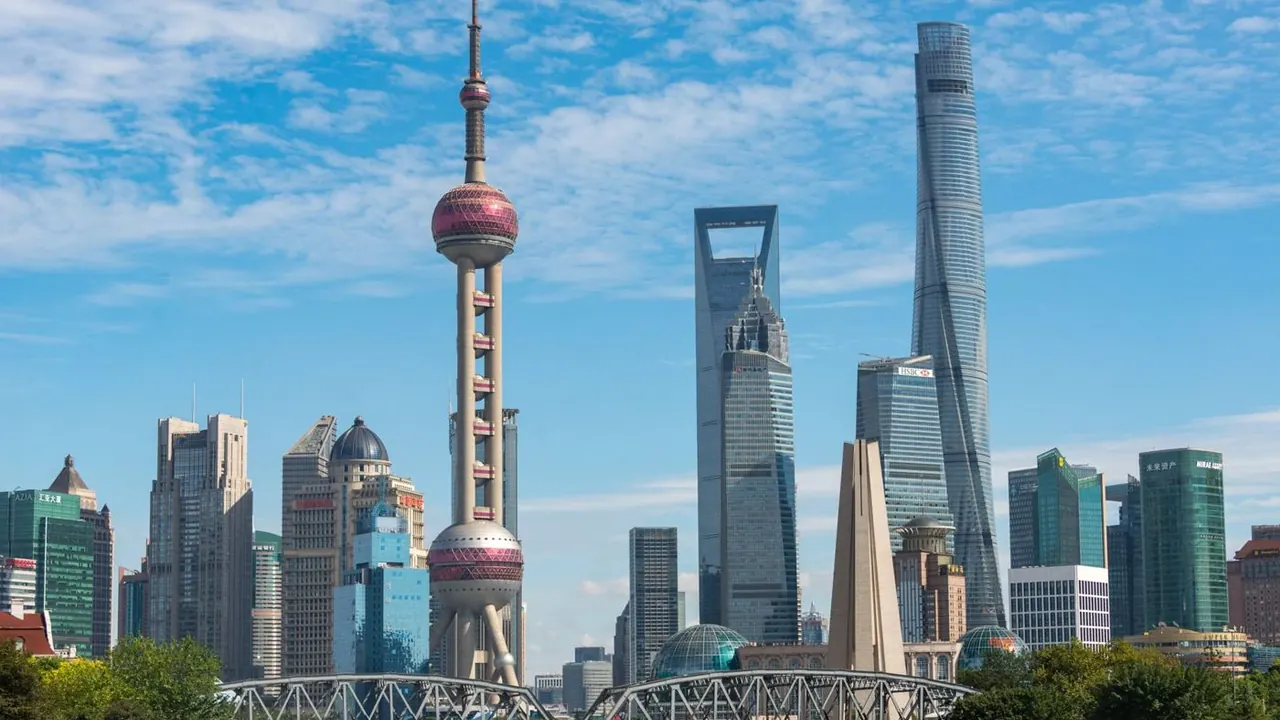
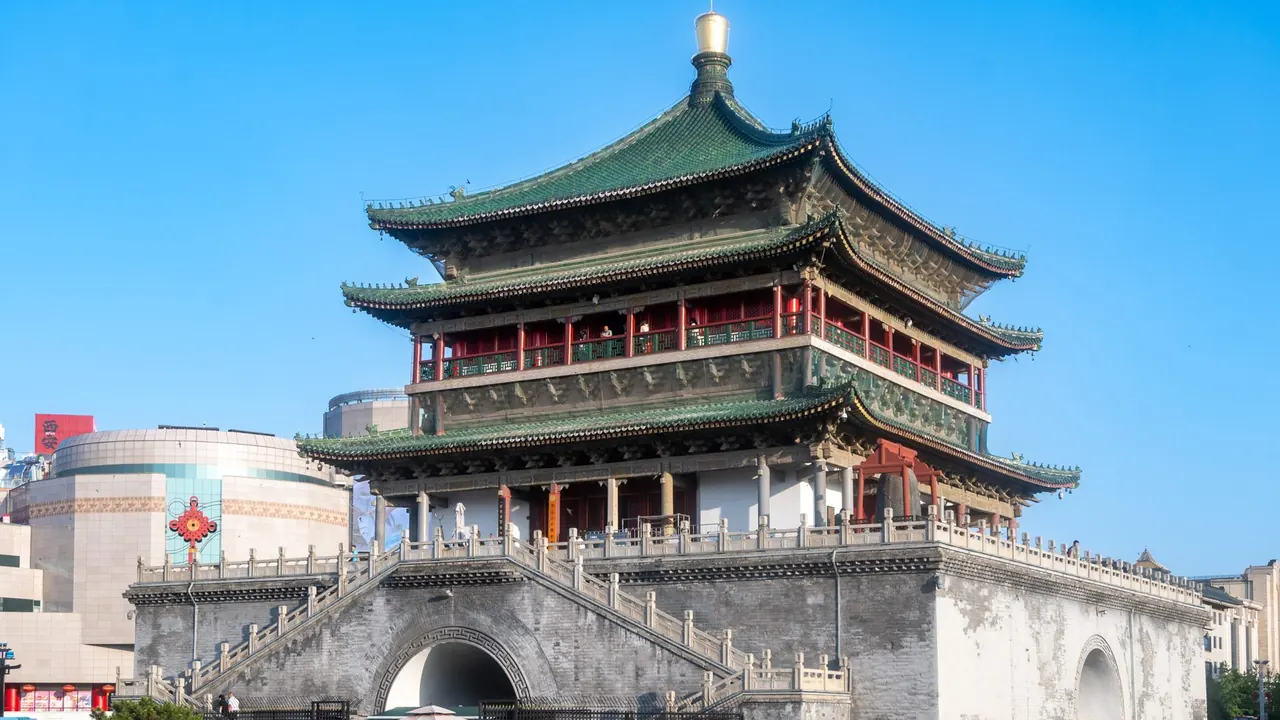
Photos: Shanghai by xiquinhosilva, CC BY 2.0, cropped; Xi'an by xiquinhosilva, CC BY 2.0, cropped.
Shanghai or Xi'an?
Our verdict in twelve categories, each scored against the same fixed benchmark cities, and the climate month by month, so you can choose for your trip.
Choose Shanghai for
- nightlife
- families
- shopping
Shanghai suits travellers who want a big modern city with depth. You get some of the best eating in Asia, cocktail bars above the Bund, serious shopping and an easy metro, and Suzhou, Hangzhou and the canal towns are a short train ride away. It is the stronger choice for families and for anyone whose evenings matter as much as their days.
Choose Xi'an for
- nature and the outdoors
- prices
- culture and sights
Choose Xi'an if ancient China is the point of the trip. The complete Ming wall, the Shaanxi History Museum, the Tang pagodas and the Terracotta Army an hour away bring the dynasties close in a way Shanghai's treaty-port heritage cannot. The Qinling Mountains and Mount Hua add real hiking. It is also noticeably cheaper, though the nights are quieter and the food narrower.
Scoreboard
Twelve categories on one fixed scale from 0 to 100. The shaded stretch is the gap between the two.
Your match
Pick a travel style or drag the sliders, and both match scores follow your weighting.
Wins on nightlife and families with your weighting.
Wins on nature and the outdoors and prices with your weighting.
What matters to you?
Category by category
What the scores mean for a trip.
Beaches & swimming
Neither city is a place for a beach vacation, though Shanghai at least has a sea to swim in. The water off the city itself is brown Yangtze mud, so the only sandy swim is at Jinshan, an hour and a half south by rail. There a sea wall holds back a cleaned-up bay that is warm by midsummer, with factories and port works for a view.
Xi'an has no shoreline to offer at all. The nearest thing to a swim is a warm soak in the spring-fed resort pools at Lintong, near the warriors, or a lap of your hotel pool. For real sand and surf, either trip needs a separate stop on China's southern coast.
Food & drink
Both are serious eating cities, but in different ways. Shanghai offers range: sweet, soy-dark benbang dishes, soup dumplings and shengjian buns, hairy crab in autumn, the whole of China's regional cooking, and a fine-dining and café scene in the former French Concession.
Xi'an is narrower and earthier. It is a wheat city of hand-pulled biangbiang noodles, roujiamo and mutton soup with crumbled bread, and it is at its best at the stalls of the Muslim Quarter. It is a superb place to eat cheaply for a few days, but its wine, coffee and international food are thin beside Shanghai's.
Culture & sights
For ancient China, Xi'an is clearly ahead. The complete Ming wall, the Bell and Drum Towers, the Tang Wild Goose Pagodas, the Forest of Steles and the Shaanxi History Museum trace more than two thousand years of dynasties within a single city.
Shanghai's story is younger and more cosmopolitan: the Bund's Art Deco banks facing the Lujiazui towers, the shikumen lanes of the former French Concession and the fine collections of the Shanghai Museum. That is worth several days, but the city has few older sights, and for classical heritage you have to leave town.
Nightlife
Here the gap is wide. Shanghai's nights are a reason to go in themselves: cocktail bars behind unmarked doors, hotel terraces looking across at the lit Pudong skyline, and clubs ranging from polished DJ venues to techno basements, the busiest running until dawn at weekends.
Xi'an's evenings are public and early. People stroll the floodlit boulevard below the Big Wild Goose Pagoda or snack their way through the Muslim Quarter, and a few bars on Defu Xiang serve a beer afterwards.
Nature & outdoors
Xi'an has real mountains on its doorstep. The Qinling range rises straight out of the plain to the south. The forested Zhongnan valleys are about an hour away, Mount Hua's cliff paths make a hard, exhilarating day, and Taibai Mountain is there for serious hikers.
Shanghai is flat delta country. Outdoors there means running along the Huangpu, walking in Century Park and birdwatching in the Chongming wetlands, while proper hills such as Moganshan are more than a day's outing.
Day trips
Both are excellent bases, and Shanghai has the wider choice. Fast trains reach the classical gardens of Suzhou, West Lake in Hangzhou and the old capital of Nanjing, and the delta's canal towns, including Zhujiajiao, Zhouzhuang and Wuzhen, can fill more days.
Xi'an has fewer excursions, but they include the most famous one in China, the Terracotta Army, which pairs naturally with Huaqing Palace. The imperial tombs at Hanyangling and Qianling, Famen Temple and the Longmen Grottoes at Luoyang complete a list about emperors and Buddhism rather than gardens and water towns.
Good for families
Shanghai is much the easier city with children. Disney is on the metro, Legoland and an ocean park are on the edges of the city, the science and natural history museums are big and hands-on, and stations have lifts for buggies.
Xi'an gives children a few memorable things: cycling on the wall, the warriors for an hour, and the pandas and golden monkeys at the Qinling wildlife park. The rest is museums and tombs, and traffic outside the wall makes pushing a buggy hard work. Both cities have hot summers and heavy crowds in the national vacation weeks.
Getting around
Shanghai's metro is among the largest in the world and reaches almost everything, including the airports and Disney, and ferries across the Huangpu make scenic shortcuts. The city is so large, though, that crossing it takes a good while.
Xi'an works the other way round. Its main sights inside the wall sit on a compact grid you can walk, and the metro covers the pagodas and runs out towards Lintong. Away from the metro, signs are mostly in Chinese and rush-hour roads clog.
Shopping & style
Shanghai is a shopping destination in its own right. It runs from the luxury flagships of West Nanjing Road and Lujiazui to Chinese designer boutiques on Wukang Road, and its fabric markets will tailor a suit or qipao in a few days.
Xi'an has big malls too, but the reason to shop there is craft. Shuyuanmen, inside the South Gate, sells brushes, ink stones and seals, and the Muslim Quarter has tea, dried fruit and shadow puppets.
Affordability
Xi'an is the cheaper of the two. Hotels are good value even inside the wall, and food and transport cost very little. The expense to watch is admission fees at the warriors, the wall and the tombs.
Shanghai is fair rather than dear. Dumplings, noodles and the metro are inexpensive, but central hotels and cocktails cost what they would in a Western capital, so a comfortable trip there costs noticeably more.
Live music & performing arts
Shanghai has the broader stage. Acrobatics are the classic night out, and Kunqu, Yue and Peking opera all have homes in the city. The Grand Theatre, the Oriental Art Center and the city's symphony orchestra cover Western opera, ballet, musicals and concerts, and there is a jazz tradition going back to the 1930s.
Most of what Xi'an offers is staged for visitors, such as the Tang dance dinner shows and the hillside spectacle at Huaqing Palace. The raw local Qinqiang opera and the shadow puppetry are the more rooted evenings and worth seeking out.
Wellness & relaxation
Both cities have the familiar Chinese staples: bathhouses with saunas and rest halls, and foot massage on almost every street. Shanghai goes further, with luxury hotel spas, traditional medicine clinics, tea houses and morning tai chi in the parks.
What sets Xi'an apart is the hot springs at Lintong, where Tang emperors bathed and resort pools still use the water. Otherwise the city is built for sightseeing, and calm comes mostly from temple courtyards and the wall early in the morning.
When should you go?
Pick your month. The climate figures are measured averages, not a forecast.
Shanghai in July
Xi'an in July
Daytime high, °C
Rainfall in the month, mm
Temperature and rainfall are climate normals, averaged over the years shown. Shanghai: 1991-2020 normals, Shanghai / Hongqiao (8.1 km from centre). Xi'an: 1991-2020 normals, Xi'An (4.4 km from centre).
Spring and autumn are the best seasons in both cities. Shanghai is pleasant for walking in April, May, October and early November. From June the plum rains arrive and summer turns hot, humid and wet, with highs of 33°C and the heaviest rain, 216mm, falling in August. The sea warms to 28°C in late summer, but the muddy Yangtze shore makes that of little use. Winters are cool and grey rather than harsh.
Xi'an has a drier, sharper inland climate. Its winters are colder, with January highs near 5°C, but almost rainless at around 7mm a month, so crisp days of sightseeing on the wall are possible. Summer is as hot as Shanghai's but less sodden. April, May, September and October suit both the city and the Qinling hills best.
Which traveller are you?
For a food and nightlife trip, Shanghai wins clearly. Soup dumplings, benbang braises and cooking from every Chinese region fill the days, while speakeasies in the former French Concession, bars over the Bund and clubs open until dawn fill the nights. Xi'an's evenings end early.
On an outdoors trip, Xi'an is the better base. The Qinling Mountains rise just south of the city, with Taoist valleys in the Zhongnan foothills, and Mount Hua's granite ridges are a short train ride away. Shanghai's flat delta offers parks and wetlands, not hills.
On a trip on a tight budget, Xi'an makes the money go further. Noodle and roujiamo stalls feed you for very little, and the main sights inside the wall are a walk apart. In Shanghai, breakfast stalls and free museums help, but central beds cost far more.
Before you go
| Measure | Shanghai | Xi'an |
|---|---|---|
| Official language | Putonghua | Putonghua |
| Currency | Yuan Renminbi (CNY) | Yuan Renminbi (CNY) |
| Sockets | ACI220 V, 50 Hz | ACI220 V, 50 Hz |
| Driving side | Right | Right |
| Time zone | UTC+8 | UTC+8 |
| Emergency number | Police 110, ambulance 120, fire 119 | Police 110, ambulance 120, fire 119 |
| Elevation | 4 m | 405 m |
| Main airport | Shanghai Pudong International Airport (PVG)33 km from centre207 non-stop destinations | Xi'an Xianyang International Airport (XIY)26 km from centre178 non-stop destinations |
| Public holidays this year | 6 days | 6 days |
By the numbers
| Measure | Shanghai | Xi'an |
|---|---|---|
| City population | 24,870,895 | 12,952,907 |
| People per km² | 3,922 | 1,283 |
| Museums within 10 km | 45 | 9 |
| UNESCO World Heritage sites within 50 km | 0 | 2 |
| Swim season, months above 21 °C | 5 months | - |
Where else could you go?
Every comparison below shares a destination with this one, so you can follow Shanghai or Xi'an somewhere new.