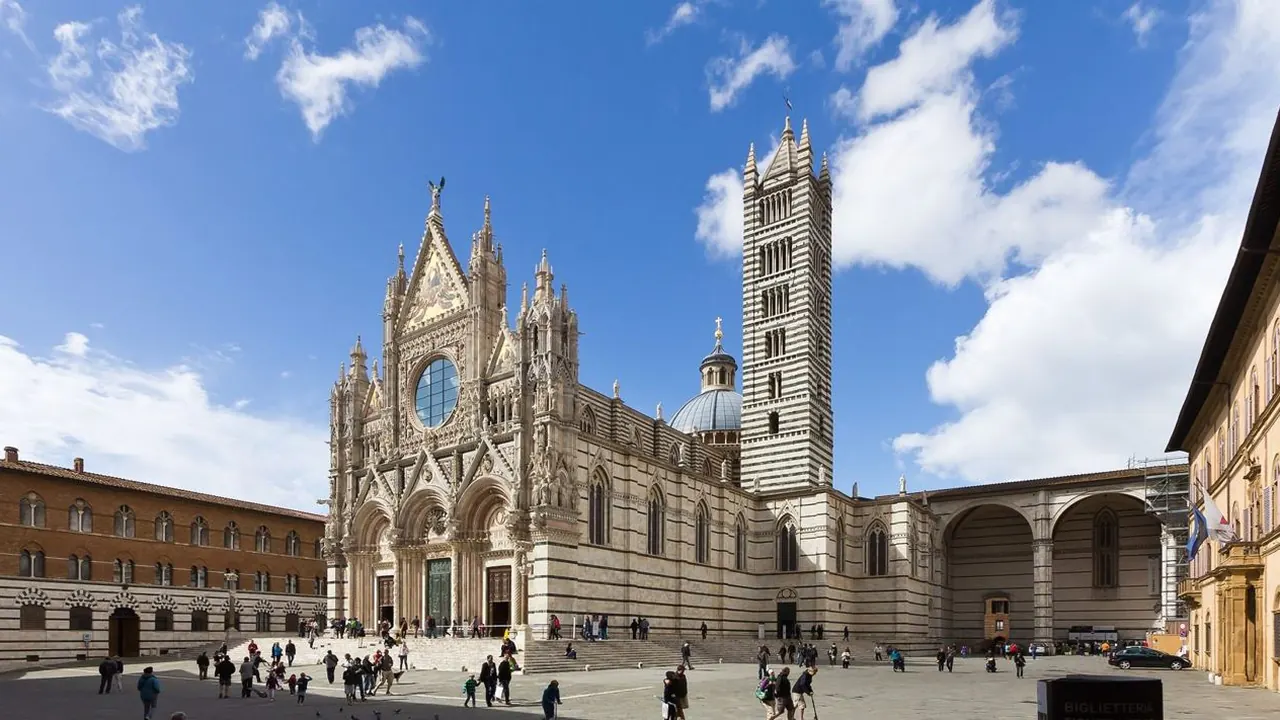
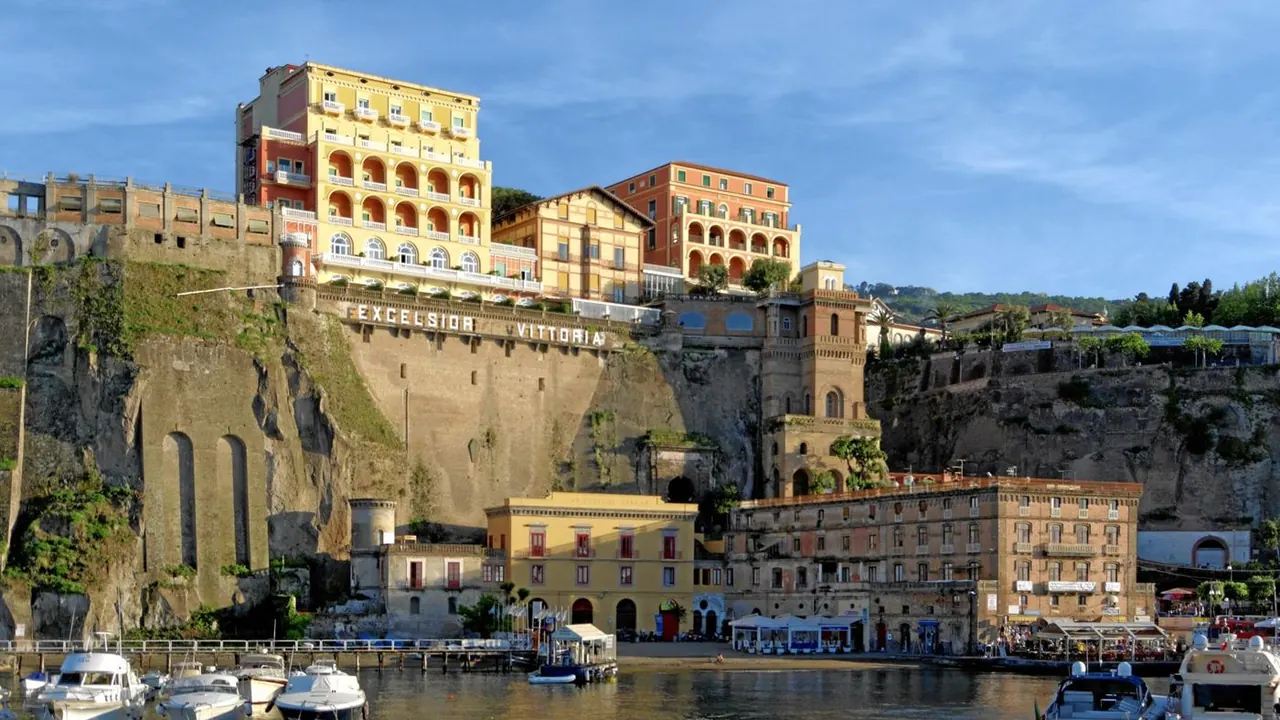
Photos: Siena by Raimond Spekking, CC BY-SA 4.0, cropped; Sorrento by Berthold Werner, CC BY-SA 3.0, cropped.
Siena or Sorrento?
Our verdict in twelve categories, each scored against the same fixed benchmark cities, and the climate month by month, so you can choose for your trip.
Choose Siena for
- culture and sights
- live music and the arts
- prices
Siena is the choice for a trip built around art, architecture and the Tuscan countryside. Its walled centre is a nearly complete medieval city, with the Campo, the Duomo and the Sienese painters close together, and the clay hills, wine villages and thermal pools of southern Tuscany start just beyond the gates. It suits travellers who want to look at things, eat slowly and drive out into the hills, and who can do without the sea. It also costs a little less than the coast.
Choose Sorrento for
- beaches
- nature and the outdoors
- families
Sorrento works better for travellers who want the Mediterranean in front of them. You swim off wooden piers into deep, clear water, walk the terraced cliffs of the peninsula, and take a ferry to Capri or a train to Pompeii without needing a car. The town itself has fewer sights, so it is a base for the Bay of Naples rather than a destination on its own, and it suits a slower seaside trip with plenty of outings by boat.
Scoreboard
Twelve categories on one fixed scale from 0 to 100. The shaded stretch is the gap between the two.
Your match
Pick a travel style or drag the sliders, and both match scores follow your weighting.
Too close to call, 2 points apart
Wins on culture and sights and live music and the arts with your weighting.
Wins on beaches and nature and the outdoors with your weighting.
What matters to you?
Category by category
What the scores mean for a trip.
Beaches & swimming
This is Sorrento's ground. The town has no sand, but lidos on piers at Marina Piccola and Marina Grande, a lift down from the cliff and the rocky inlet of the Bagni della Regina Giovanna put deep, clear water a few minutes from your hotel. Space is tight in high summer and much of the shore is paid.
Siena has no sea at all. A swim on the Maremma coast takes a whole day, so in practice you swim in a farmhouse or hotel pool, or you split the trip and give the beach a few nights on the coast.
Food & drink
Both are strong, rooted regional kitchens, and both are thin on anything beyond Italian food. The difference is land against sea. Siena cooks hearty inland dishes: pici, ribollita, cinta senese pork and wild boar, with panforte and ricciarelli from its old bakeries, and the best wine list of the two, with Chianti Classico, Brunello and Vino Nobile all grown nearby.
Sorrento is lighter and more coastal, with gnocchi alla sorrentina, grilled fish, fresh mozzarella and lemons in everything, plus pizza in the Naples tradition. It also has the fine dining that Siena lacks, in the hill villages of the peninsula. In both places the better meals are on the back lanes rather than on the main squares.
Culture & sights
Siena is in another league here. The whole UNESCO-listed centre is the attraction, with the Campo and the Palazzo Pubblico, Lorenzetti's Good and Bad Government, the Duomo with its pulpit and Piccolomini Library, Duccio's Maestà and the Sienese school in the Pinacoteca. The seventeen contrade give each quarter its own identity, and the main sights need two or three full days.
Sorrento's old grid of lanes, the San Francesco cloister, the Museo Correale and the odd ravine of the Vallone dei Mulini make a pleasant day or so. Its great cultural sights, Pompeii, Herculaneum and Naples, are day trips rather than part of the town.
Nightlife
Neither town is for a big night out, and both go quiet early for most of the year. Siena's evenings are dinner, wine on the Campo and student pubs, with the Palio nights as the one time the streets stay full until late.
Sorrento's version is the passeggiata, cocktails on a terrace over the bay and piano bars playing Neapolitan song, with a club or two open in summer. Getting to livelier Naples or Capri means staying the night, because the last boats and trains leave early.
Nature & outdoors
Sorrento's setting is the more dramatic, with Vesuvius across the bay, sheer limestone coast, lemon terraces and trails to Punta Campanella and the protected bay of Ieranto. Monte Faito and the Path of the Gods are close, and you can get out on the water by boat or kayak, which inland Tuscany cannot offer.
Siena's landscape is gentler: the bare clay hills of the Crete Senesi and the rolling Val d'Orcia. It is best seen by bike, with the strade bianche starting at the edge of town, or on stretches of the Via Francigena. It is beautiful country, but there are no high peaks and no shoreline.
Day trips
Both are exceptional bases, and the real difference is how you travel. From Siena the outings are hill towns, wine and abbeys: San Gimignano, Monteriggioni, the Chianti villages, Pienza, Montalcino, Montepulciano, San Galgano and Sant'Antimo, with Florence an easy bus ride away. Most of them are far easier with a car.
From Sorrento the trips are by rail and sea: the Circumvesuviana to Pompeii and Herculaneum, ferries to Capri and along the Amalfi Coast, and the train to Naples. It is car-free, but the summer crowds on trains and buses take some patience.
Good for families
Neither is set up for children, with no zoos or attractions made for them, and families do best in both with a pool at the hotel or farmhouse. In Siena older children enjoy climbing the Torre del Mangia and seeing the contrada drummers, but the steep streets are hard with a pushchair.
Sorrento's centre is flatter, and boat trips to Capri and the ruins of Pompeii go down well with children. The catch is that swimming is from piers and rocks into deep water, which does not suit toddlers.
Getting around
Both centres are compact and walkable, and the difference is the terrain. Siena spreads over three ridges, with steep climbs and escalators up from the station, while Sorrento's centre is flat, with only the marinas below the cliff.
Further out, Siena works best with a hire car for the hill towns. In Sorrento a car is more trouble than it is worth, and you rely on a crowded train, slow coast buses and the more comfortable ferries.
Shopping & style
Both are modest, souvenir-heavy shopping towns, and serious shoppers go elsewhere for fashion. What you take home differs. Siena's speciality is food and Tuscan craft, such as panforte, pecorino, wine, majolica and contrada scarves, with a big weekly market by the Fortezza.
Sorrento sells lemon everything, plus genuinely local intarsia woodwork, leather sandals made to measure, linen and cameos.
Affordability
Siena is the somewhat cheaper of the two, though neither is a bargain. Rooms inside its walls are scarce and expensive around the Palio and in summer, but osteria lunches are good value, and staying at an agriturismo or in a nearby town cuts costs further. Entry fees to the Duomo and museums add up.
Sorrento charges resort rates in summer for sea views, sunbeds and boat trips. Cheap trains and buses help, and spring and late autumn bring hotel prices down noticeably.
Live music & performing arts
Siena offers more for music lovers. The Accademia Chigiana's summer concerts and masterclasses in palaces and churches, Siena Jazz, and winter seasons at the Teatro dei Rinnovati and the Teatro dei Rozzi make a serious programme for a small town, although opera means going to Florence.
Sorrento's performances are mostly aimed at visitors: tarantella and Neapolitan song shows, hotel bar pianists, and chamber concerts in the San Francesco cloister in summer. The Teatro di San Carlo in Naples is the place for anything bigger.
Wellness & relaxation
Siena has the edge because of the hot springs close by. You can go to the travertine pools at Rapolano Terme, the steaming medieval bath at Bagno Vignoni, the free limestone pools of Bagni San Filippo and Petriolo's sulphur river, and pair them with a quiet farmhouse stay in the hills.
Sorrento's calm comes from cliff-top hotel spas, villa gardens and terraces over the bay. The nearest thermal water is a ferry ride away on Ischia, and its centre is noisier in high summer.
When should you go?
Pick your month. The climate figures are measured averages, not a forecast.
Siena in July
Sorrento in July
Daytime high, °C
Rainfall in the month, mm
Where the figures come from
Siena's temperatures are measured 45 km from the centre, at Arezzo.
Siena has no rain gauge within 25 km of the centre, so its rainfall comes from a gridded climate dataset read at the city rather than from a gauge further away.
Sorrento has no rain gauge within 25 km of the centre, so its rainfall comes from a gridded climate dataset read at the city rather than from a gauge further away.
Sorrento's sunshine is measured 54 km from the centre, at Grazzanise.
Temperature and rainfall are climate normals, averaged over the years shown. Siena: 2006-2017 (rainfall 1991-2020) normals, Arezzo (45 km from centre). Sorrento: 2005-2025 (sunshine 1991-2020, rainfall 1991-2020) normals, Capri (17 km from centre).
The two places share the same hot core of summer, with both reaching about 29°C in July and August, but they feel very different around it. In Siena that heat lands on steep stone streets with no sea breeze, so the best walking months are May, June, September and October. Winter in the hills is properly cold, with January highs around 9°C, and rain is spread through the year, heaviest in late autumn.
Sorrento has milder winters, closer to 13°C in January, and a much drier summer, with almost no rain in July and August and long sunny days. The sea is warm enough for swimming from June to early October, peaking near 26°C in August, so the beach season runs well past the end of a Tuscan summer. November is the wettest month on the coast, and spring and autumn are the most comfortable time for hiking the peninsula.
Which traveller are you?
For a beach and sun trip, choose Sorrento. From Siena the Maremma beaches are well over an hour's drive, so each swim takes the whole day. Sorrento has lido piers at Marina Piccola, the Bagni della Regina Giovanna inlet and boats to Capri's coves.
On a culture and arts trip, Siena wins comfortably. Lorenzetti's frescoes, the Duomo's inlaid floor, Duccio's Maestà and the Pinacoteca fill two or three days. Sorrento's own sights take a gentle day, and its great ruins lie outside town.
For an outdoors trip, Sorrento has the edge. Siena gives cyclists the strade bianche and walkers gentle clay hills, but has no coast and no high mountains. Sorrento adds hikes to Punta Campanella and along the Path of the Gods, Vesuvius and kayaking in the coves.
Before you go
| Measure | Siena | Sorrento |
|---|---|---|
| Official language | Italian | Italian |
| Currency | Euro (EUR) | Euro (EUR) |
| Sockets | CFL230 V, 50 Hz | CFL230 V, 50 Hz |
| Driving side | Right | Right |
| Time zone | UTC+1, UTC+2 in summer | UTC+1, UTC+2 in summer |
| Emergency number | 112 | 112 |
| Elevation | 322 m | 50 m |
| Main airport | Florence Airport, Peretola (FLR)55 km from centre46 non-stop destinations | Naples International Airport (NAP)30 km from centre131 non-stop destinations |
| Public holidays this year | 13 days | 13 days |
By the numbers
| Measure | Siena | Sorrento |
|---|---|---|
| City population | 52,812 | 15,407 |
| People per km² | 446 | 1,541 |
| Museums within 10 km | 30 | 6 |
| UNESCO World Heritage sites within 50 km | 5 | 5 |
| Swim season, months above 21 °C | - | 5 months |
Where else could you go?
Every comparison below shares a destination with this one, so you can follow Siena or Sorrento somewhere new.