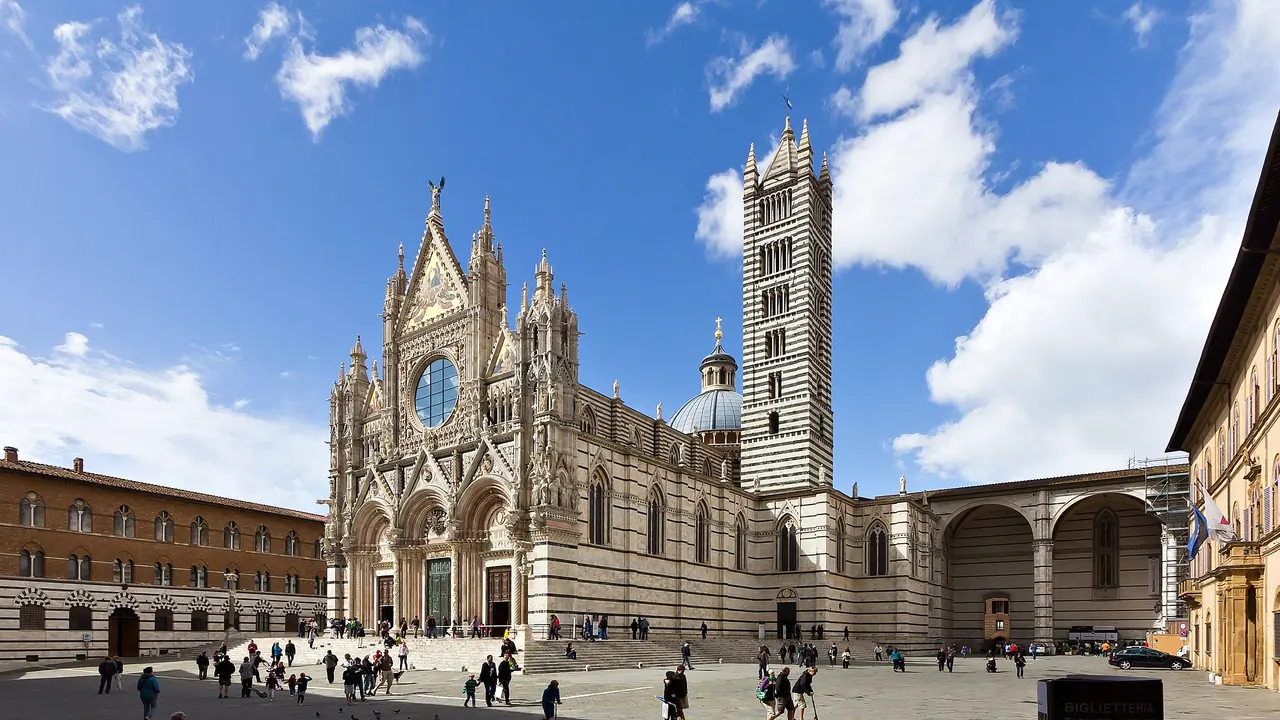
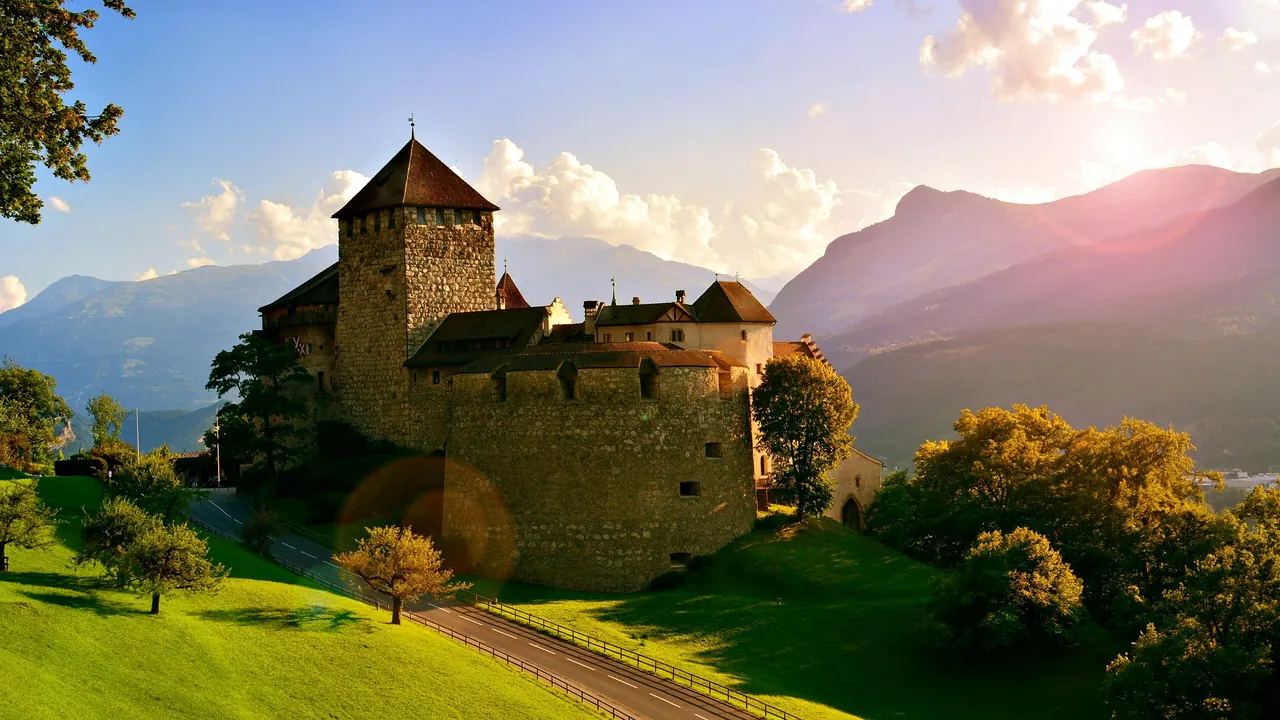
Photos: Siena by Raimond Spekking, CC BY-SA 4.0, cropped; Vaduz by Justin LaBerge, CC BY 2.0, cropped.
Siena or Vaduz?
Our verdict in twelve categories, each scored against the same fixed benchmark cities, and the climate month by month, so you can choose for your trip.
Choose Siena for
- culture and sights
- food and drink
- prices
Siena is the better choice for a trip built around art, history and the table. Its medieval centre, the Duomo and the Sienese painters fill two or three full days. Dinner in the osterie and enoteche is the main event of the evening, and the Tuscan hill towns and wine country lie on every side. It also costs much less to stay and eat in than Vaduz.
Choose Vaduz for
- nature and the outdoors
Choose Vaduz if the mountains are the point. Trails leave from the edge of town, Malbun and the Rätikon peaks are half an hour up the road, and you get long ridge walks in summer and skiing in winter. The town itself is quiet, with a day's worth of museums and early evenings, and it is very expensive. It suits walkers who want a calm, orderly base in the Alps more than anyone looking for a city to explore.
Scoreboard
Twelve categories on one fixed scale from 0 to 100. The shaded stretch is the gap between the two.
Your match
Pick a travel style or drag the sliders, and both match scores follow your weighting.
Wins on culture and sights and food and drink with your weighting.
Wins on nature and the outdoors with your weighting.
What matters to you?
Category by category
What the scores mean for a trip.
Beaches & swimming
Neither town is a beach destination, so in both swimming means a day out or a pool. From Siena the Maremma coast around Castiglione della Pescaia has proper sea beaches, but it is well over an hour each way.
From Vaduz the choice is cool Alpine lakes, the Walensee about half an hour away and Lake Constance within an hour, and the summer season there is short. Siena's hot summers make a hotel or agriturismo pool the everyday answer, while Vaduz has open-air municipal pools.
Food & drink
Siena eats far better. Hand-rolled pici, cinta senese pork, wild boar, and panforte and ricciarelli from long-established pastry shops make every meal part of the trip. Chianti Classico, Brunello and Vino Nobile are poured by the glass, even if there is little international food.
Vaduz offers solid Alpine cooking, such as Käsknöpfle and rösti in hotel dining rooms and village inns, with little range and no market or street food. Its one real pleasure is the prince's own Pinot Noir from the vineyards below the castle.
Culture & sights
This is where the two differ most. Siena's whole medieval centre is a monument, from the sloping Campo and the Palazzo Pubblico to the Duomo, Santa Maria della Scala and the Pinacoteca, and it needs two or three days. The contrade, each with its own church and flag, give the neighbourhoods a living identity as well.
Vaduz covers its sights in a single day: a strong modern and contemporary collection at the Kunstmuseum and the Hilti Art Foundation, the National Museum and the Postage Stamp Museum. The castle above town is something to look at, not to visit.
Nightlife
Neither is a town for a night out, but Siena has more of an evening. Students keep a few pubs and wine bars going, a glass of wine on the Campo rounds off the day, and the Palio nights fill the streets until late. Vaduz winds down soon after dinner, with a few wine bars and hotel lounges on the Städtle, and locals who want something livelier go to Feldkirch or Zurich.
Nature & outdoors
Vaduz has the stronger outdoors by some way, because real mountains begin at the edge of town. Trails climb straight from the centre, and from Malbun the Rätikon peaks offer high walks and the Fürstensteig. Winter brings skiing, and the Rhine dam path is good for easy cycling.
Siena's countryside is gentler and more pastoral, with the clay hills of the Crete Senesi, the Val d'Orcia, the strade bianche for gravel riders and stretches of the Via Francigena. It is superb for cycling and rural walks, but it has no high peaks.
Day trips
Siena has the richer choice of outings. Florence, San Gimignano, Volterra, the Chianti villages, Pienza, Montalcino and Montepulciano, plus abbeys such as Sant'Antimo and San Galgano, could fill a week without repeating anything.
Vaduz offers a wider spread of countries but fewer great sights: Feldkirch twenty minutes away, St Gallen's abbey library, Appenzell, Chur and the towns on Lake Constance. In both places a car makes life much easier, since the hill towns and Alpine villages are awkward to reach by public transport.
Good for families
Both towns are safe and calm and have few attractions built for children, so neither stands out. What differs is the setting. Siena's medieval sights, the climb up the Torre del Mangia and the contrada drummers appeal to older children, though the steep streets are hard work with a pushchair.
Vaduz has a flat, easy centre and keeps families outdoors, at the open-air pools, on gentle walks above Triesenberg and on the beginner slopes at Malbun.
Getting around
Both towns are best seen on foot, and in both a car makes the wider region much easier. Siena's centre is largely car-free but spread over three ridges, with steep lanes and escalators up from the station, and buses to Florence beat the slow trains. Vaduz is flat and compact, and although it has no station of its own, a tidy bus network reaches every village and climbs to Malbun.
Shopping & style
Siena gives a shopper a couple of proper streets to walk. Banchi di Sopra and Via di Città mix Italian clothing, shoes, leather goods and stationers, and the town's own crafts, hand-painted majolica and contrada scarves and flags, make keepsakes with a story behind them. The large weekly market around the Fortezza Medicea is worth a morning, though the lanes just off the Campo are mostly souvenir shops.
In Vaduz the whole of it is one short street, the Städtle, with watches, jewellery and the collectable Liechtenstein stamps. There are no markets, department stores or fashion streets, so anyone with real shopping in mind gives a day to Zurich.
Affordability
Siena is moderately expensive for Italy, but far easier on the wallet than Vaduz. Osteria lunches, an agriturismo outside the walls and a centre you can walk keep costs in check, though summer and the Palio push room prices up.
Vaduz follows Swiss prices for everything, and with few hotels there is almost nothing at the budget end, so even a short stay is costly. Rooms and meals are the main expense, not museums or buses, and some travellers save by sleeping in Austria.
Live music & performing arts
Siena has the fuller calendar. The Accademia Chigiana's summer concerts in palaces and churches and performances by the Siena Jazz school give it a real musical identity, and the Teatro dei Rinnovati and Teatro dei Rozzi stage drama and music in winter.
Liechtenstein offers less: theatre in neighbouring Schaan, a short orchestral season and a summer classical festival in Vaduz. Visitors to either will find something over a week, but from Siena it is still a trip to Florence for opera.
Wellness & relaxation
Both rely on thermal water outside town, but Siena has more of it. Rapolano Terme is half an hour away. Further south are the steaming medieval bath of Bagno Vignoni, the free limestone pools of Bagni San Filippo and the hot river at Petriolo, all easy to pair with a rural spa hotel.
Vaduz has one excellent option, the Tamina spring water at Bad Ragaz about twenty-five minutes away, plus a few hotel spas. Its strength is quiet, with orderly streets, mountain views and early nights, whereas Siena's centre is crowded by day in summer.
When should you go?
Pick your month. The climate figures are measured averages, not a forecast.
Siena in July
Vaduz in July
Daytime high, °C
Rainfall in the month, mm
Where the figures come from
Siena's temperatures are measured 45 km from the centre, at Arezzo.
Siena has no rain gauge within 25 km of the centre, so its rainfall comes from a gridded climate dataset read at the destination rather than from a gauge further away.
Vaduz's temperatures are measured 51 km from the centre, at Sigmarszell-Zeisertsweiler.
Vaduz has no rain gauge within 25 km of the centre, so its rainfall comes from a gridded climate dataset read at the destination rather than from a gauge further away.
Temperature and rainfall are climate normals, averaged over the years shown. Siena: 2006-2017 (rainfall 1991-2020) normals, Arezzo (45 km from centre). Vaduz: 1991-2020 normals, Sigmarszell-Zeisertsweiler (51.3 km from centre).
Siena is a warm-weather town at its best in two stretches. The first is May and June, the second September and early October. Both bring warm days and moderate rain, ideal for the steep streets and the countryside. July and August are the driest months but reach 31°C, which makes climbing the ridges at midday hard going. From October the rain builds to a peak of 127mm in November, and winter is cool but still fine for walking.
Vaduz is cooler and follows a different pattern. Summer is the wettest season, with about 126mm in August, but also the sunniest, with around 225 hours of sunshine in July. Highs of about 24°C make June to September the time for hiking, while winter brings cold, grey valley days with little sun, and that is the season for skiing up at Malbun. Neither suits a beach trip, and Siena's summer heat calls for a pool, not the sea.
Which traveller are you?
On a culture and arts trip, Siena is the clear pick. The Duomo, Lorenzetti's frescoes, Duccio's Maestà and the Pinacoteca fill several days, and the Accademia Chigiana adds summer concerts. Vaduz has a fine modern art collection but little beyond one day.
For an outdoors trip, Vaduz wins. Mountain trails start at the edge of town, the Rätikon peaks and the Fürstensteig are half an hour away, and Malbun adds winter skiing. Siena's gravel cycling and walks through the Crete Senesi are lovely but gentler.
On a trip on a tight budget, Siena is far easier. Osteria lunches with house wine and agriturismo stays keep costs down. Vaduz runs at Swiss prices with few cheaper rooms, and the usual way to save there is to sleep across the Austrian border.
Before you go
| Measure | Siena | Vaduz |
|---|---|---|
| Official language | Italian | German |
| Currency | Euro (EUR) | Swiss Franc (CHF) |
| Sockets | CFL230 V, 50 Hz | CJ230 V, 50 Hz |
| Driving side | Right | Right |
| Time zone | UTC+1, UTC+2 in summer | UTC+1, UTC+2 in summer |
| Emergency number | 112 | 112 |
| Elevation | 322 m | 455 m |
| Main airport | Florence Airport, Peretola (FLR)55 km from centre46 non-stop destinations | Zürich Airport (ZRH)81 km from centre226 non-stop destinations |
| Public holidays this year | 13 days | 21 days |
By the numbers
| Measure | Siena | Vaduz |
|---|---|---|
| Population | 52,812 | 5,668 |
| People per km² | 446 | 328 |
| Museums within 10 km | 30 | 7 |
| UNESCO World Heritage sites within 50 km | 5 | 3 |
Where else could you go?
Every comparison below shares a destination with this one, so you can follow Siena or Vaduz somewhere new.