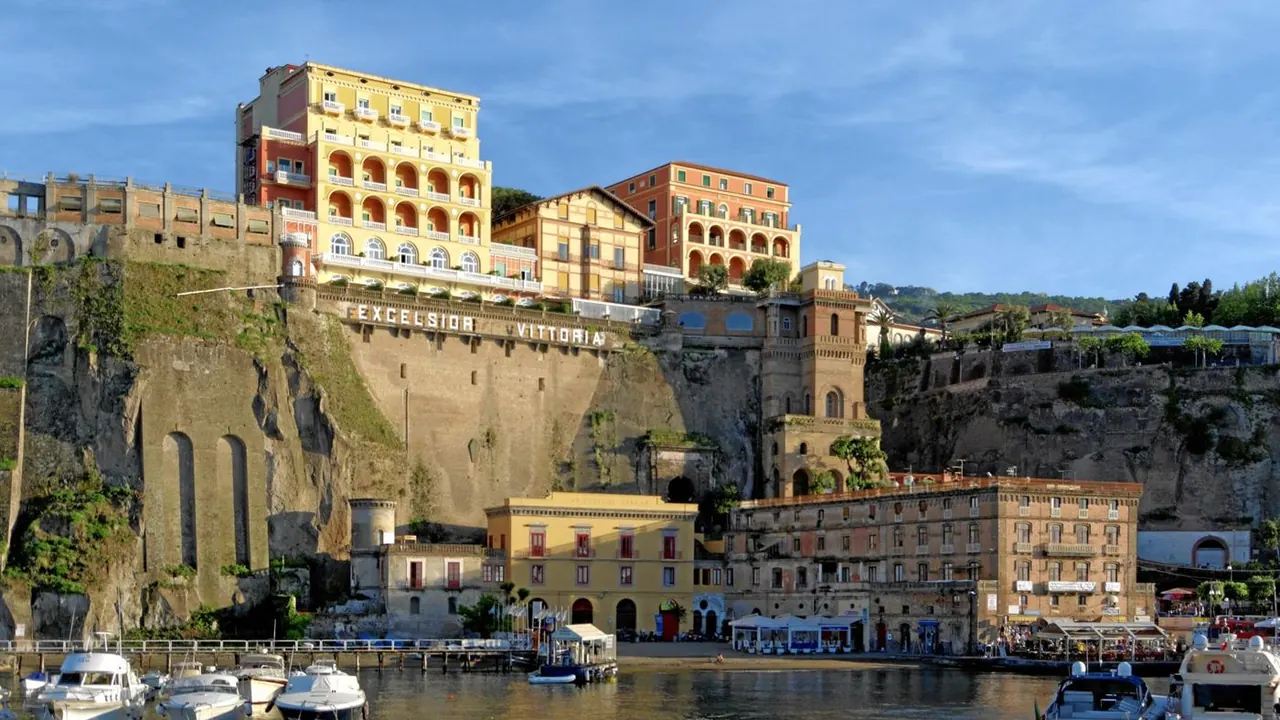
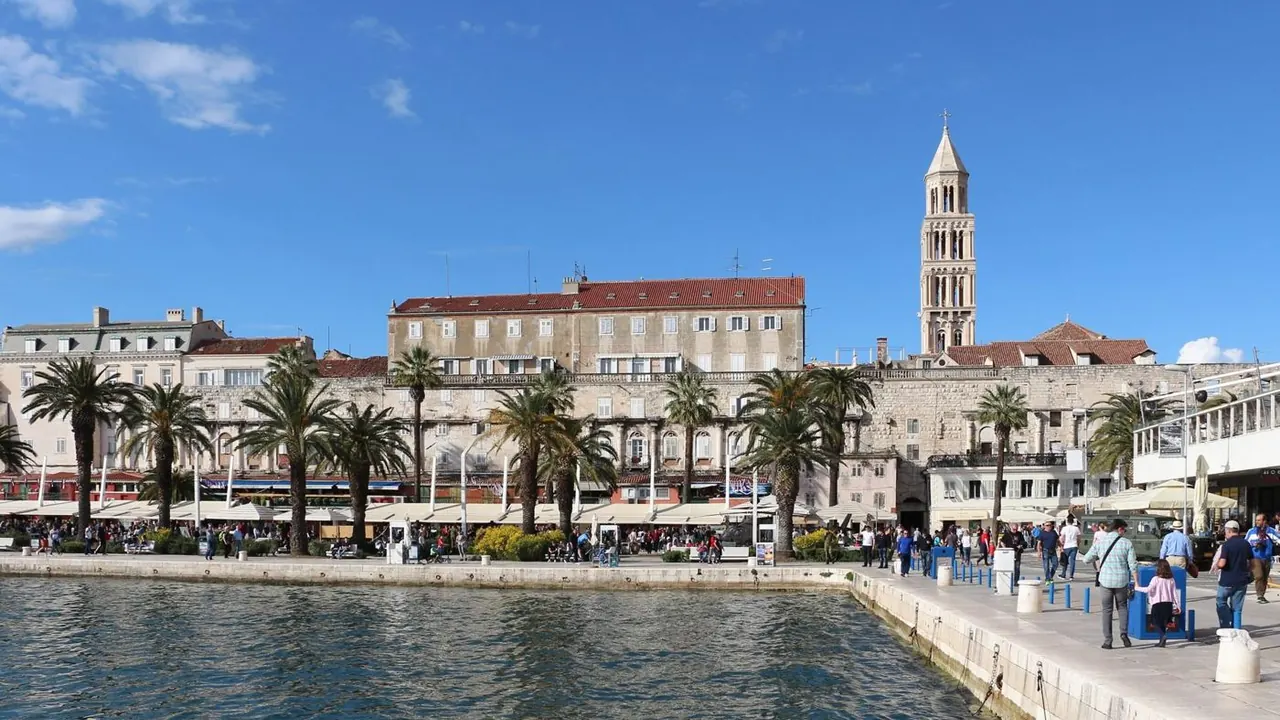
Photos: Sorrento by Berthold Werner, CC BY-SA 3.0, cropped; Split by Bernard Gagnon, CC BY-SA 4.0, cropped.
Sorrento or Split?
Our verdict in twelve categories, each scored against the same fixed benchmark cities, and the climate month by month, so you can choose for your trip.
Choose Sorrento for
- day trips
- wellness
- shopping
Sorrento suits travellers who see their vacation as a series of excursions. From a quiet clifftop town you can reach Pompeii, Herculaneum, Vesuvius, Capri, the Amalfi Coast and Naples, and the peninsula behind it is lemon terraces and coastal footpaths. The town itself is gentle and goes to bed early. It works best for couples and older travellers who want long dinners over the bay and a restful hotel, and who don't need much going on after dark.
Choose Split for
- culture and sights
- nightlife
- live music and the arts
Split is the better pick if you want the city to be the destination. You live in and around a Roman palace, walk to a swim, and spend the evening in stone alleys that stay busy until late. It also makes more sense for families, younger travellers and anyone watching costs. The trips out are still good, to Trogir, the islands and the Cetina canyon, but they are a bonus rather than the main reason to go.
Scoreboard
Twelve categories on one fixed scale from 0 to 100. The shaded stretch is the gap between the two.
Your match
Pick a travel style or drag the sliders, and both match scores follow your weighting.
Wins on day trips and wellness with your weighting.
Wins on culture and sights and nightlife with your weighting.
What matters to you?
Category by category
What the scores mean for a trip.
Beaches & swimming
Split is the better place to swim. You can walk from the palace to Bačvice, a shallow sandy bay where children can paddle and locals play picigin. Pine-shaded coves around Marjan offer deeper water, and the islands have longer beaches.
Sorrento has almost no beach in town. You swim from wooden lido piers at Marina Piccola and Marina Grande, or from the rocks at the Bagni della Regina Giovanna. The water is clear and deep, but most of the shore belongs to the paid lidos, and for a real pebble beach you take a bus or a boat.
Food & drink
The two are evenly matched. Each is a place to eat the regional cooking where it comes from, with little else on offer. Sorrento means Campanian food: gnocchi baked with fior di latte, fish all'acqua pazza, lemons in everything and pizza in the Naples tradition. The hill villages of the peninsula add fine dining of a standard that Split doesn't try to match.
Split's table is Dalmatian: black risotto, pašticada and octopus slow-cooked under the peka bell, with Plavac Mali or Pošip to drink. It has markets you can browse, both fish and green. In both places, eat away from the main tourist streets: in Varoš and behind the Riva in Split, and on the back lanes and at Marina Grande in Sorrento.
Culture & sights
Split has much more to see within its own walls. The emperor's palace is a whole neighbourhood, with the mausoleum-turned-cathedral, the vaulted substructures and a bell tower over the rooftops. The Meštrović Gallery and the Archaeological Museum fill a second day.
Sorrento's own sights are small: the cloister of San Francesco, the Museo Correale, a museum of wood inlay and the overgrown ravine of the Vallone dei Mulini. The great culture of this coast lies at Pompeii and in Naples, so in Sorrento you travel to it rather than step out into it.
Nightlife
Split is the livelier of the two in summer. Small bars fill the palace alleys and stairways, beach bars and clubs around Bačvice run into the early hours, and a younger crowd moves between them. From October the scene shrinks to a few bars.
Sorrento's evenings are a passeggiata on Corso Italia, a drink on a terrace over the bay, and perhaps a piano bar playing Neapolitan songs. The last trains and ferries leave early, so a real night out in Naples or on Capri means staying over.
Nature & outdoors
Both sit between mountains and sea, and both reward walkers. The difference is in the kind of landscape. From Sorrento, paths run through olive and lemon terraces to Punta Campanella and the protected bay of Ieranto. The Path of the Gods, Monte Faito and the crater of Vesuvius add a volcanic, cultivated side.
Split's outdoors is wilder and more active. You can walk to Marjan's pine forest from town, take ridge hikes on Mosor and Kozjak, go rafting and canyoning in the Cetina gorge at Omiš, see the waterfalls of Krka, and sail among the islands. In both places the exposed trails are best left for spring and autumn.
Day trips
Sorrento is the stronger base, and few places anywhere can match what lies within a short ride. Pompeii and Herculaneum are on the local railway, Capri is a quick ferry, and Positano, Amalfi and Ravello are reached by boat or bus. Naples and its archaeological museum are about an hour away.
Split has good outings too: medieval Trogir, Šibenik's cathedral, Roman Salona, Klis Fortress, and the islands of Hvar and Brač. Its list is more about pleasant towns and island days than about world-famous sites. In winter the ferries thin out and trips take more planning.
Good for families
Split is the easier choice with children. Bačvice's shallow water suits small swimmers, Marjan gives them shade and space to run, and the ferry ride to an island is usually a highlight. Many families rent an apartment just outside the centre.
Sorrento is friendly and has a flat centre for pushchairs, and the boat to Capri and the ruins at Pompeii appeal to older children. But the swimming is into deep water off piers and rocks, many hotels sit on steep lanes without pavements, and the long coastal bus rides wear on young travellers.
Getting around
Split is simpler to manage. The palace, Varoš, the markets and Bačvice are within about fifteen minutes' walk, and the ferry port, bus station and railway station sit together at the harbour. The one catch is the stepped, polished stone of the palace streets.
Sorrento's centre is just as walkable, but leaving it is harder work. The Circumvesuviana is old, crowded and prone to delays, and buses crawl round the Amalfi hairpins in summer. Hotels in the hills depend on shuttles or taxis, so in practice ferries are often the best way to travel.
Shopping & style
Neither city is a shopping destination, but Sorrento has more local craft to take home. You can buy intarsia boxes and trays from a long inlay tradition, have sandals made to measure while you wait, and pick up cameos and linen, along with plenty of lemon-themed souvenirs.
Split's better buys are edible: dried figs, honey, brandies, wine and olive oil from the Pazar market. Marmontova street has the mainstream fashion chains, which Sorrento largely lacks.
Affordability
Split is the more affordable of the two, though neither is cheap in July and August. Its bakeries, market, buses and palace sights cost little, prices fall sharply in May, June and late September, and in winter it is a modestly priced city.
Sorrento charges resort prices for sea-view rooms, lido sunbeds and boat trips, which reflects the demand for this coast. The savings are in its cheap trains, its pizza, the trattorias away from Piazza Tasso, and hotel rates in spring and late autumn.
Live music & performing arts
Split has a real stage of its own. The Croatian National Theatre puts on opera and ballet through the season, the Summer Festival performs in the open air in the Peristyle, and klapa singers fill the domed vestibule with unaccompanied harmonies.
Sorrento's offer is mostly shows of Neapolitan song and tarantella for visitors, plus summer chamber concerts in the San Francesco cloister. For proper opera, you take the train to the Teatro di San Carlo in Naples.
Wellness & relaxation
Sorrento is the more restful stay. The big cliff hotels have spas and pools over the bay, the villa gardens are slow and quiet, and Ischia's hot springs and thermal gardens are about an hour away by ferry.
Split has no spa tradition beyond hotel spas along the coast. What it offers is fjaka, the Dalmatian habit of idleness: long coffees on the Riva and quiet pine woods on Marjan. In both places, July and August are crowded, so a quiet stay is best planned for spring or autumn.
When should you go?
Pick your month. The climate figures are measured averages, not a forecast.
Sorrento in July
Split in July
Daytime high, °C
Rainfall in the month, mm
Where the figures come from
Sorrento has no rain gauge within 25 km of the centre, so its rainfall comes from a gridded climate dataset read at the city rather than from a gauge further away.
Sorrento's sunshine is measured 54 km from the centre, at Grazzanise.
Temperature and rainfall are climate normals, averaged over the years shown. Sorrento: 2005-2025 (sunshine 1991-2020, rainfall 1991-2020) normals, Capri (17 km from centre). Split: 1991-2020 normals, Split / Marjan (0.9 km from centre).
The two climates follow much the same pattern. In both, July and August reach about 31°C, fine for the beach but tiring for walking the streets, and the sea is warm enough for swimming from June into early October. Sorrento runs a little warmer on both counts. Its sea peaks at 26°C in August, about a degree above Split's, and its September afternoons are still as warm as June. By September Split's air has already eased to a gentler 25°C, which is better for sightseeing.
The rain starts in September in both places, but Sorrento's autumn is wetter, and November is its wettest month at 151mm. Split gets more sunshine in almost every month and has a slightly cooler winter. For walking and quiet sightseeing, April, May and October are good in either city. Between November and April, neither is a beach destination.
Which traveller are you?
For a relaxing and wellness trip, Sorrento is the easier choice. You can stay in one cliff hotel all week, swim in its pool, have dinner over the bay and give a single day to soaking in Ischia's hot springs. In Split, real rest usually means moving out to an island.
On a culture and arts trip, Sorrento's great sights mean a train ride out to Pompeii or Naples. In Split they are right outside your door: mornings in the palace and its substructures, an evening of opera in the Peristyle, and a day out in Trogir.
On a trip with a tight budget, Split makes the money go further. Go in May or late September, rent an apartment outside the old town, start the day with burek and catch local buses. In Sorrento the train to Pompeii is cheap, but the rooms and boat trips are not.
Before you go
| Measure | Sorrento | Split |
|---|---|---|
| Official language | Italian | Croatian |
| Currency | Euro (EUR) | Euro (EUR) |
| Sockets | CFL230 V, 50 Hz | CF230 V, 50 Hz |
| Driving side | Right | Right |
| Time zone | UTC+1, UTC+2 in summer | UTC+1, UTC+2 in summer |
| Emergency number | 112 | 112 |
| Elevation | 50 m | 0 m |
| Main airport | Naples International Airport (NAP)30 km from centre131 non-stop destinations | Split Saint Jerome Airport (SPU)12 km from centre69 non-stop destinations |
| Public holidays this year | 13 days | 14 days |
By the numbers
| Measure | Sorrento | Split |
|---|---|---|
| City population | 15,407 | 160,577 |
| People per km² | 1,541 | - |
| Museums within 10 km | 6 | 11 |
| UNESCO World Heritage sites within 50 km | 5 | 4 |
| Swim season, months above 21 °C | 5 months | 4 months |
Where else could you go?
Every comparison below shares a destination with this one, so you can follow Sorrento or Split somewhere new.