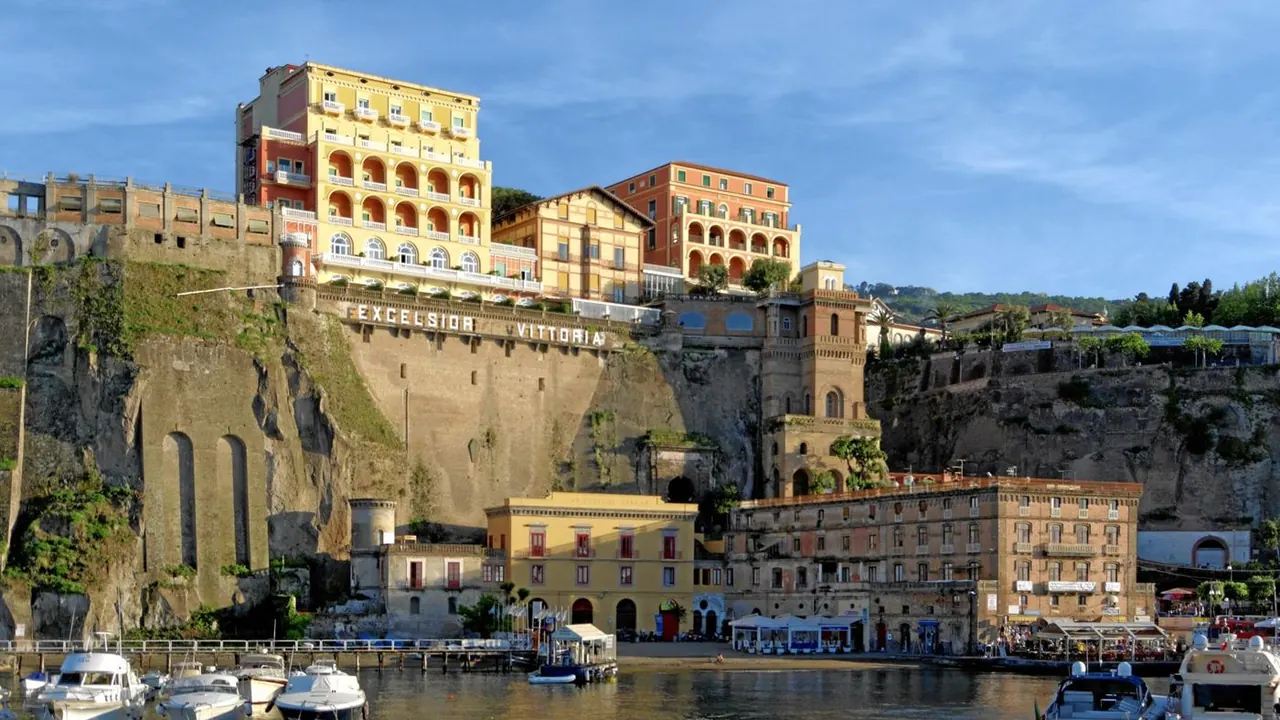
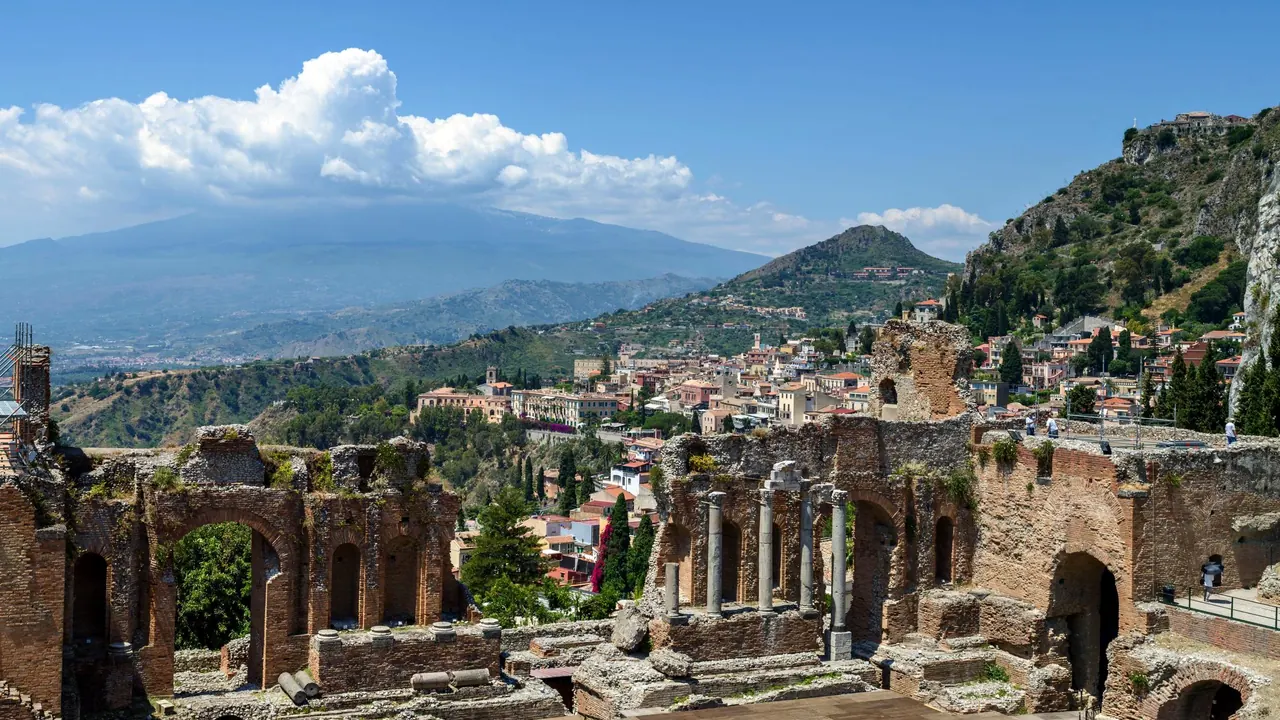
Photos: Sorrento by Berthold Werner, CC BY-SA 3.0, cropped; Taormina by Reinhard Bruckner, Pexels License.
Sorrento or Taormina?
Our verdict in twelve categories, each scored against the same fixed benchmark cities, and the climate month by month, so you can choose for your trip.
Choose Sorrento for
- day trips
- food and drink
- getting around
Sorrento suits travellers who want a base rather than a destination. Its own sights are few, but Pompeii, Herculaneum, Vesuvius, Capri, Naples and the Amalfi Coast are all close by train or boat, so a week here can be filled with a different outing every day. It works best for people who like a busy itinerary, coastal walks and boat trips, and plan to come back each evening to a quiet terrace over the bay.
Choose Taormina for
- culture and sights
- live music and the arts
- beaches
Taormina gives more within the town itself. The Greek theatre, with Etna behind it, is a sight worth the journey on its own, and on summer nights it is used for concerts and opera. The swimming is better too, with clear coves below the town and sandier beaches a short bus ride away. Choose it for a slower stay built around the sea, the volcano and long Sicilian evenings, with fewer excursions and more time in one place.
Scoreboard
Twelve categories on one fixed scale from 0 to 100. The shaded stretch is the gap between the two.
Your match
Pick a travel style or drag the sliders, and both match scores follow your weighting.
Too close to call, 1 point apart
Wins on day trips and food and drink with your weighting.
Wins on culture and sights and live music and the arts with your weighting.
What matters to you?
Category by category
What the scores mean for a trip.
Beaches & swimming
Neither town has a beach at its door, and both send you down a lift, cable car or stairway to the water. Sorrento's swimming is mostly from lido platforms built out over deep water at Marina Piccola and Marina Grande, or from the rocks at the Bagni della Regina Giovanna. For a real beach you need a bus or a boat.
Taormina does better for swimmers. The pebble coves at Mazzarò and Isola Bella have glassy water good for snorkelling, and Giardini Naxos and Letojanni add longer stretches of sand and shingle a short bus ride away. In both towns the shore fills up in high summer, so arrive early.
Food & drink
Both cook from their own region, and neither offers much beyond Italian food. Sorrento has Campanian cooking: gnocchi baked with fior di latte, fish all'acqua pazza, lemons in everything, and pizza from nearby Naples. Its best tables are in the hill villages of the peninsula and at the fish restaurants of Marina Grande.
Taormina tastes of Sicily, with pasta alla Norma, raw red prawns, cannoli and the granita-and-brioche breakfast, and it has the volcanic wines of Etna on almost every list. In both towns the main street is lined with tourist menus, and the better meals are found on the side lanes.
Culture & sights
Taormina has the stronger sights within its own walls. The Greek theatre, framing Etna and the coast, is one of the great views of the Mediterranean, and Corso Umberto adds the Duomo, Palazzo Corvaja and Badia Vecchia, with their Arab, Norman and Catalan influences.
Sorrento's old centre is pleasant but modest: a cathedral, the cloister of San Francesco, the Museo Correale and the strange ravine of the Vallone dei Mulini. Neither town has a major museum, and in both a day or two covers the lot.
Nightlife
Both are quiet after dark. Evenings mean a passeggiata, an aperitivo and a drink on a terrace over the sea, and the crowd is mostly couples and older visitors. Sorrento adds British-style pubs and piano bars playing Neapolitan song, but a proper night out means staying over in Naples. Taormina's later options are the summer lounge bars and beach clubs down near Mazzarò and Giardini Naxos.
Nature & outdoors
Both have outstanding landscapes, but different ones. Sorrento's outdoors is coast and terraces: footpaths to Punta Campanella and the protected bay of Ieranto, the Path of the Gods above Positano, Monte Faito's beech woods, and boat or kayak trips around Capri's grottoes. Vesuvius is a short climb from the crater car park.
Taormina is all about Etna, a much larger and more active volcano, with lava flows, craters, guided trips towards the summit and even winter skiing. The basalt Alcantara gorges are nearby, and the Isola Bella marine reserve adds diving. In both places, summer heat makes spring and autumn the seasons for hiking.
Day trips
This is where Sorrento pulls clearly ahead. Pompeii is about half an hour by train, Herculaneum and Vesuvius fit into the same day, Capri is a short ferry ride, and summer boats run to Positano and Amalfi. Naples and its archaeological museum are about an hour away.
Taormina's outings are good but more spread out. Catania is an hour away, while Syracuse and Ortigia take about two hours each way, and Noto needs an early start. The hill villages of Castelmola and Savoca and the wine towns on Etna's slopes make gentler days nearer by.
Good for families
Sorrento's flat, largely pedestrian centre is the easier of the two with a pushchair, and children tend to love the rattling train out to Pompeii's ruins and the boat across to Capri. The catch is the swimming, which is off piers and rocks into deep water, and many hotels sit on steep lanes without pavements, so a hotel pool matters more here.
Taormina is just as welcoming to children, but the town is all steps and slopes, and the pebbly coves below are crowded in August. Families with small children often stay down in Giardini Naxos for its sandier shore and level streets, while school-age children get the snorkelling at Isola Bella and the lava fields of Etna.
Getting around
Both centres are small and best on foot, and in both towns a car is more trouble than it is worth. Sorrento's centre is flat. Its Circumvesuviana trains and coast buses reach far, though they are often crowded, and ferries fill the gaps.
Taormina is built on a slope, so stairs come with every outing. Its station is down by the sea and the cable car links the town to the beaches. Etna and the inland villages realistically need a tour or a hired car.
Shopping & style
Neither is a shopping destination, and both sell coral, cameos and linen to visitors. Sorrento's local crafts are wood inlay and sandals made to measure, alongside endless lemon souvenirs. Taormina's single street, Corso Umberto, offers Sicilian ceramics such as moor's-head vases, plus pistachio and almond sweets and Etna wines. For serious fashion, Sorrento shoppers go to Naples or Capri, and Taormina shoppers go to Catania.
Affordability
Both are expensive resorts, with sea-view rooms and terrace restaurants priced for a famous coast. Sorrento is the cheaper base for its area, helped by inexpensive trains and fairly priced pizza on the back lanes. Taormina costs far more than the rest of eastern Sicily, and the usual saving is to sleep down in Giardini Naxos or Letojanni. In both, spring and late autumn bring room rates down.
Live music & performing arts
Taormina has the stronger summer programme, because the Greek theatre still works as a stage. Opera, ballet, concerts and big pop acts play there with Etna behind them, and the town has a long-running film festival.
Sorrento offers tarantella shows put on for visitors, singers in hotel bars and chamber concerts in the San Francesco cloister. Both towns are quiet in winter, when you go to Naples' Teatro di San Carlo or Catania's Teatro Massimo Bellini for the real thing.
Wellness & relaxation
Sorrento has the one real thermal option between them: Ischia's terraced hot-spring gardens by the sea are about an hour away by ferry. In town itself, relaxing means a cliff-top hotel spa, a pool above the bay and the slow pace of the lemon groves and old villa gardens.
Taormina's hotel spas add treatments with volcanic mud, citrus and almond, and the shade of the Villa Comunale and an evening watching Etna change colour do the rest. Summer crowds break the calm in both towns, so a restful stay is best planned for spring or autumn.
When should you go?
Pick your month. The climate figures are measured averages, not a forecast.
Sorrento in July
Taormina in July
Daytime high, °C
Rainfall in the month, mm
Where the figures come from
Sorrento has no rain gauge within 25 km of the centre, so its rainfall comes from a gridded climate dataset read at the city rather than from a gauge further away.
Sorrento's sunshine is measured 54 km from the centre, at Grazzanise.
Taormina's temperatures are measured 45 km from the centre, at Messina.
Taormina has no rain gauge within 25 km of the centre, so its rainfall comes from a gridded climate dataset read at the city rather than from a gauge further away.
Temperature and rainfall are climate normals, averaged over the years shown. Sorrento: 2005-2025 (sunshine 1991-2020, rainfall 1991-2020) normals, Capri (17 km from centre). Taormina: 1991-2020 normals, Messina (45.1 km from centre).
The two follow the same Mediterranean pattern, but Taormina is a degree or two warmer through most of the year and noticeably drier in summer, when it gets hardly any rain. Both seas warm to about 26°C in August and stay good for swimming from June into October. July and August bring highs of around 31°C in Taormina, which makes its steep lanes and the Etna trails hard going by midday. Sorrento is slightly cooler at the peak, and both are among the sunniest places in Italy in high summer.
For walking and sightseeing, May, June and late September suit both towns best. Autumn rain arrives in October in each, and Sorrento has the wetter winter, with November bringing around 151mm. Taormina also stays a little milder in the cooler months, so it is the better choice for a winter or early spring visit.
Which traveller are you?
On a beach and sun trip, Taormina is the better pick. The coves at Mazzarò and Isola Bella have clear water for snorkelling, and Giardini Naxos and Letojanni add longer beaches. Sorrento mostly offers swimming from lido piers and rocks.
For a culture and arts trip, Taormina has more in town: the Greek theatre, the medieval palazzi along Corso Umberto and a summer season of concerts, opera and ballet on an ancient stage. Sorrento's own sights and evening shows take less time.
For travellers who have come to see Pompeii, Capri and the Amalfi Coast, Sorrento is the obvious base. Trains, ferries and summer boats reach the excavations, the islands and Positano in short hops, while Taormina's best day trips usually take longer.
Before you go
| Measure | Sorrento | Taormina |
|---|---|---|
| Official language | Italian | Italian |
| Currency | Euro (EUR) | Euro (EUR) |
| Sockets | CFL230 V, 50 Hz | CFL230 V, 50 Hz |
| Driving side | Right | Right |
| Time zone | UTC+1, UTC+2 in summer | UTC+1, UTC+2 in summer |
| Emergency number | 112 | 112 |
| Elevation | 50 m | 204 m |
| Main airport | Naples International Airport (NAP)30 km from centre131 non-stop destinations | Catania-Fontanarossa Airport (CTA)47 km from centre96 non-stop destinations |
| Public holidays this year | 13 days | 13 days |
By the numbers
| Measure | Sorrento | Taormina |
|---|---|---|
| City population | 15,407 | 10,471 |
| People per km² | 1,541 | 799 |
| Museums within 10 km | 6 | 5 |
| UNESCO World Heritage sites within 50 km | 5 | 2 |
| Swim season, months above 21 °C | 5 months | 5 months |
Where else could you go?
Every comparison below shares a destination with this one, so you can follow Sorrento or Taormina somewhere new.
- Positanovs Sorrento
- Amalfivs Sorrento
- Naplesvs Sorrento
- Salernovs Sorrento
- Cataniavs Taormina
- Syracuse, Sicilyvs Taormina