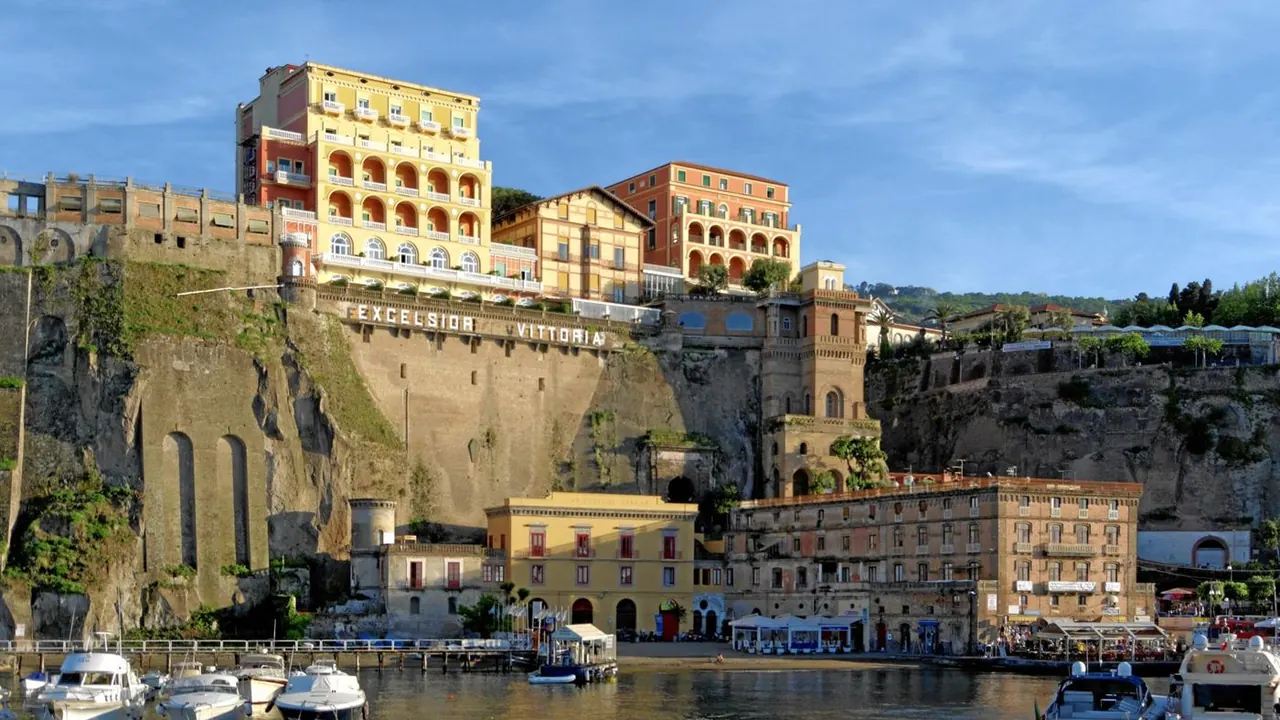
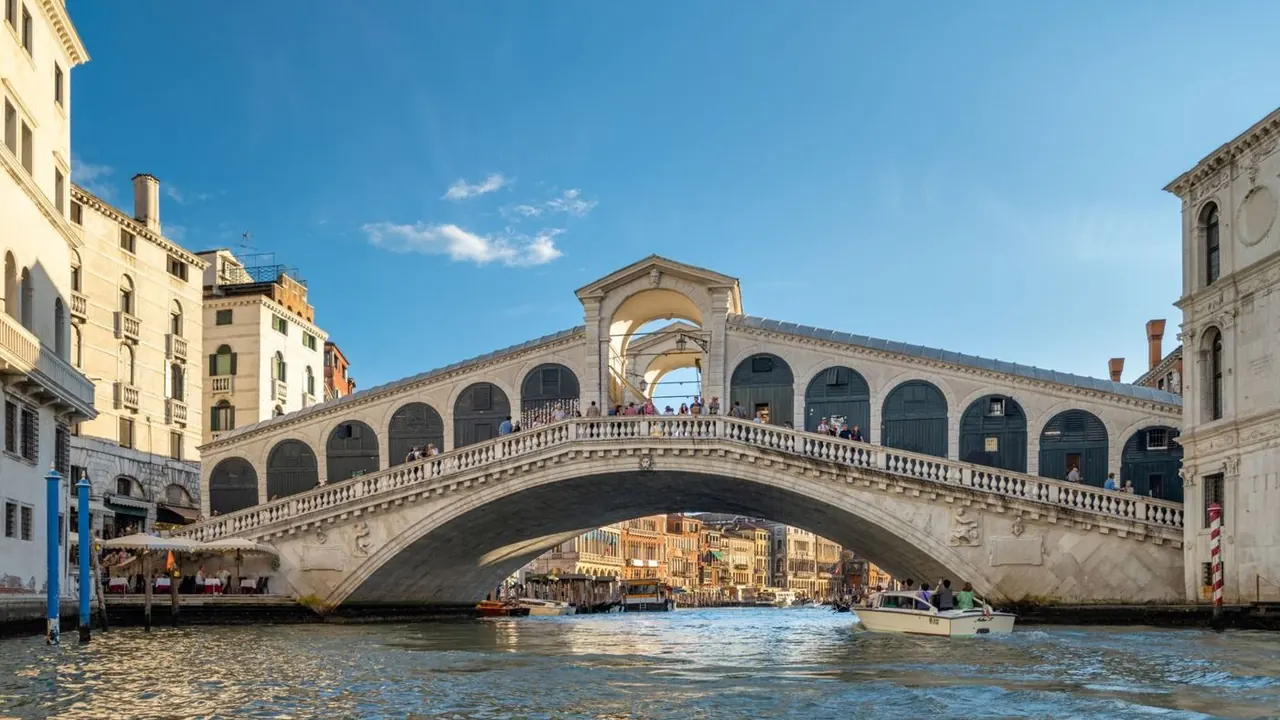
Photos: Sorrento by Berthold Werner, CC BY-SA 3.0, cropped; Venice by David Vives, Pexels License.
Sorrento or Venice?
Our verdict in twelve categories, each scored against the same fixed benchmark cities, and the climate month by month, so you can choose for your trip.
Choose Sorrento for
- nature and the outdoors
- prices
- day trips
Sorrento suits travellers who want a base rather than a destination in itself. Its own lanes take a day or two, but Pompeii, Herculaneum, Capri, the Amalfi Coast and Naples are all a short train or boat ride away, and the terraced ridge behind the town gives some of the best coastal walking in Italy. Add a drier, sunnier summer, deep clear water off the piers and somewhat gentler prices, and it is the choice for an active week on the coast.
Choose Venice for
- culture and sights
- live music and the arts
- shopping
Venice is the stronger pick for anyone who travels for art, architecture and music. The city itself is the sight, its churches and galleries hold the great Venetian painters, and La Fenice gives evenings a real programme. It costs more and offers little in the way of landscape, but a few days walking a car-free city on water, with Padua and Verona close by train, is something no other place repeats.
Scoreboard
Twelve categories on one fixed scale from 0 to 100. The shaded stretch is the gap between the two.
Your match
Pick a travel style or drag the sliders, and both match scores follow your weighting.
Wins on nature and the outdoors and prices with your weighting.
Wins on culture and sights and live music and the arts with your weighting.
What matters to you?
Category by category
What the scores mean for a trip.
Beaches & swimming
Neither town is really a beach destination, and the swimming is very different. Sorrento's lidos stand on wooden piers over deep, clear water, with ladders down from the platforms and the rocky inlet of the Bagni della Regina Giovanna nearby, but there is hardly any sand and space is tight in high summer.
Venice has the real beach: the Lido's long stretch of fine sand on the Adriatic, with shallow, gentle water that suits small children, although it is greenish rather than clear. Choose Sorrento to dive into blue water and Venice to paddle off sand.
Food & drink
Both eat well once you leave the main tourist streets, but the meals are quite different. Sorrento is Campanian cooking: gnocchi baked with fior di latte, fish all'acqua pazza, lemons in everything, cheese from the hill dairies, and some celebrated fine dining up in the peninsula villages.
Venice is best enjoyed standing at a bacaro counter, with cicchetti of salt cod and sarde in saor and a spritz, plus lagoon dishes like black cuttlefish risotto supplied by the Rialto market. Sorrento leans towards long sit-down dinners, Venice towards grazing from bar to bar.
Culture & sights
Here Venice is in another league. Its whole centre is a monument, from San Marco and the Doge's Palace to the palazzi of the Grand Canal, and its churches and galleries hold Titian, Tintoretto and the modern collections of the Guggenheim and Punta della Dogana. A week barely covers it.
Sorrento's own sights, the cathedral, the cloister of San Francesco, the Museo Correale and the ravine of the Vallone dei Mulini, fill a gentle day or two. Its cultural weight comes from what lies nearby, chiefly Pompeii and Naples.
Nightlife
Both go quiet early, so neither suits a big night out. Sorrento's evenings are the passeggiata along Corso Italia, a terrace drink over the bay and piano bars playing Neapolitan song. Venice has a livelier aperitivo hour in the bacari of the Rialto and Cannaregio and some later student drinking on Campo Santa Margherita, and then a silent walk by the canals.
Nature & outdoors
Sorrento has far more to offer outdoors. Behind the town rises a steep limestone ridge of olive and lemon terraces, with footpaths to Punta Campanella and the protected bay of Ieranto. The Path of the Gods, Monte Faito and the crater of Vesuvius are all within reach, and boat and kayak trips run along the cliffs.
Venice's nature is the flat lagoon: salt marshes around Torcello with herons and flamingos, rowing and kayaking, and cycling on the Lido. Real hills mean a trip to the Euganean Hills or the far-off Dolomites.
Day trips
Both are superb bases, and Sorrento has the edge for the sheer density of famous places close by. Pompeii and Herculaneum are a short train ride away, Vesuvius can be climbed the same day, and boats reach Capri, Positano and Amalfi, with Naples about an hour off.
Venice works by fast train instead: Padua's Scrovegni Chapel in half an hour, Vicenza and Verona further on, plus Murano, Burano and Torcello across the lagoon. Sorrento's trips lean towards ruins and coast, Venice's towards art cities.
Good for families
With a pushchair, Sorrento is easier: its centre is flat, while Venice's hundreds of stepped bridges mean lifting the pushchair again and again. Children enjoy the boat to Capri and the ruins of Pompeii, but the swimming is from piers into deep water, so families with small children usually want a hotel with a pool.
Venice is easier at the beach. The Lido has shallow water off soft sand, and children love riding a vaporetto, watching glass being blown on Murano and having no cars to watch out for. The steps and the summer crowds make it best on a short stay with older children.
Getting around
Venice is the easier place to move around, simply because everything is on foot or by water. The centre is a long walk end to end with no traffic, and vaporetti reach the Lido and the islands, though the steps on the bridges punish luggage and wheels.
Sorrento's small centre is easy to walk, but the trouble starts beyond it. The Circumvesuviana is crowded and prone to delays, coast buses crawl round the hairpins in summer, and hotels in the hills depend on shuttles or taxis.
Shopping & style
Venice offers more and better shopping. Murano glass, Burano lace, papier-mâché masks, marbled paper and furlane slippers are made in workshops across Dorsoduro and Castello, and the big fashion names line Calle Larga XXII Marzo, though fake glass crowds the main routes.
Sorrento's lanes are mostly full of limoncello and lemon souvenirs. Its real finds are inlaid wood and sandals made to measure, and anyone wanting fashion goes to Naples or Capri.
Affordability
Neither is cheap, but Sorrento is the gentler of the two. Sea-view rooms, lidos and private boats cost a lot in summer, but trains and buses are cheap, back-lane trattorias are fairly priced and spring brings rates down.
Venice costs more at almost every turn: rooms in the historic centre, water transport priced for visitors and entry to most churches. Standing for cicchetti and sleeping in Mestre are the usual ways to save.
Live music & performing arts
Venice is far ahead. La Fenice runs a full season of opera, ballet and symphony concerts, the Teatro Goldoni stages drama, the Biennale adds contemporary festivals, and Vivaldi is played in churches most evenings.
Sorrento has shows of Neapolitan song and tarantella staged for visitors, summer chamber concerts in the cloister of San Francesco, and hotel pianists. For real opera you go to the San Carlo in Naples.
Wellness & relaxation
Sorrento is slightly better for unwinding. Cliff-top hotels have pools and spas over the bay, the lemon gardens set a slow pace, and Ischia's thermal gardens are a ferry ride away.
Venice relies on hotel spas and the thermal towns near Padua, about an hour off. Its calm comes instead from the hush of a car-free city early in the morning, in Castello, Cannaregio or Giudecca.
When should you go?
Pick your month. The climate figures are measured averages, not a forecast.
Sorrento in July
Venice in July
Daytime high, °C
Rainfall in the month, mm
Where the figures come from
Sorrento has no rain gauge within 25 km of the centre, so its rainfall comes from a gridded climate dataset read at the city rather than from a gauge further away.
Sorrento's sunshine is measured 54 km from the centre, at Grazzanise.
Venice has no rain gauge within 25 km of the centre, so its rainfall comes from a gridded climate dataset read at the city rather than from a gauge further away.
Venice's sunshine is measured 26 km from the centre, at Treviso / S. Angelo.
Temperature and rainfall are climate normals, averaged over the years shown. Sorrento: 2005-2025 (sunshine 1991-2020, rainfall 1991-2020) normals, Capri (17 km from centre). Venice: 1991-2020 normals, Venezia / Tessera (6.7 km from centre).
Sorrento has the drier, sunnier summer. From June to September afternoons are hot, peaking around 29°C in July and August, and July and August are almost rainless with long hours of sun. Rain returns in September and builds to a wet November of about 151mm, so the best months for the trails and the town are April, May and early October, when days are warm but not tiring.
Venice is close to Sorrento in high summer, but it is more humid and gets less sun. In both places the sea stays around 23°C or warmer from June to September, so the Lido is fine for swimming over the same months. Venice is much colder in winter, with highs near 7°C. Its rain falls in every season rather than holding off in summer, and October is the wettest month at about 87mm. May and early October are the most comfortable times for long days walking the city.
Which traveller are you?
On a culture and arts trip, Venice is the clear choice. Titian in the Frari, Tintoretto at San Rocco, the Accademia, the Biennale and opera at La Fenice fill a week, whereas Sorrento's own sights are small and its great history lies out at Pompeii.
For an outdoors trip, Sorrento wins easily. Paths run through lemon terraces to Punta Campanella and Ieranto, the Path of the Gods and Vesuvius are close, and kayaks explore the coves, while Venice offers flat lagoon paddling and birdwatching.
On a trip on a tight budget, Sorrento stretches money further. Cheap trains and buses, fairly priced pizza and back-lane trattorias, and lower rates in spring help, while Venice charges heavily for rooms, water transport and entry to most sights.
Before you go
| Measure | Sorrento | Venice |
|---|---|---|
| Official language | Italian | Italian |
| Currency | Euro (EUR) | Euro (EUR) |
| Sockets | CFL230 V, 50 Hz | CFL230 V, 50 Hz |
| Driving side | Right | Right |
| Time zone | UTC+1, UTC+2 in summer | UTC+1, UTC+2 in summer |
| Emergency number | 112 | 112 |
| Elevation | 50 m | 2 m |
| Main airport | Naples International Airport (NAP)30 km from centre131 non-stop destinations | Venice Marco Polo Airport (VCE)7 km from centre103 non-stop destinations |
| Public holidays this year | 13 days | 13 days |
By the numbers
| Measure | Sorrento | Venice |
|---|---|---|
| City population | 15,407 | 250,369 |
| People per km² | 1,541 | 602 |
| Museums within 10 km | 6 | 52 |
| UNESCO World Heritage sites within 50 km | 5 | 5 |
| Swim season, months above 21 °C | 5 months | 4 months |
Where else could you go?
Every comparison below shares a destination with this one, so you can follow Sorrento or Venice somewhere new.