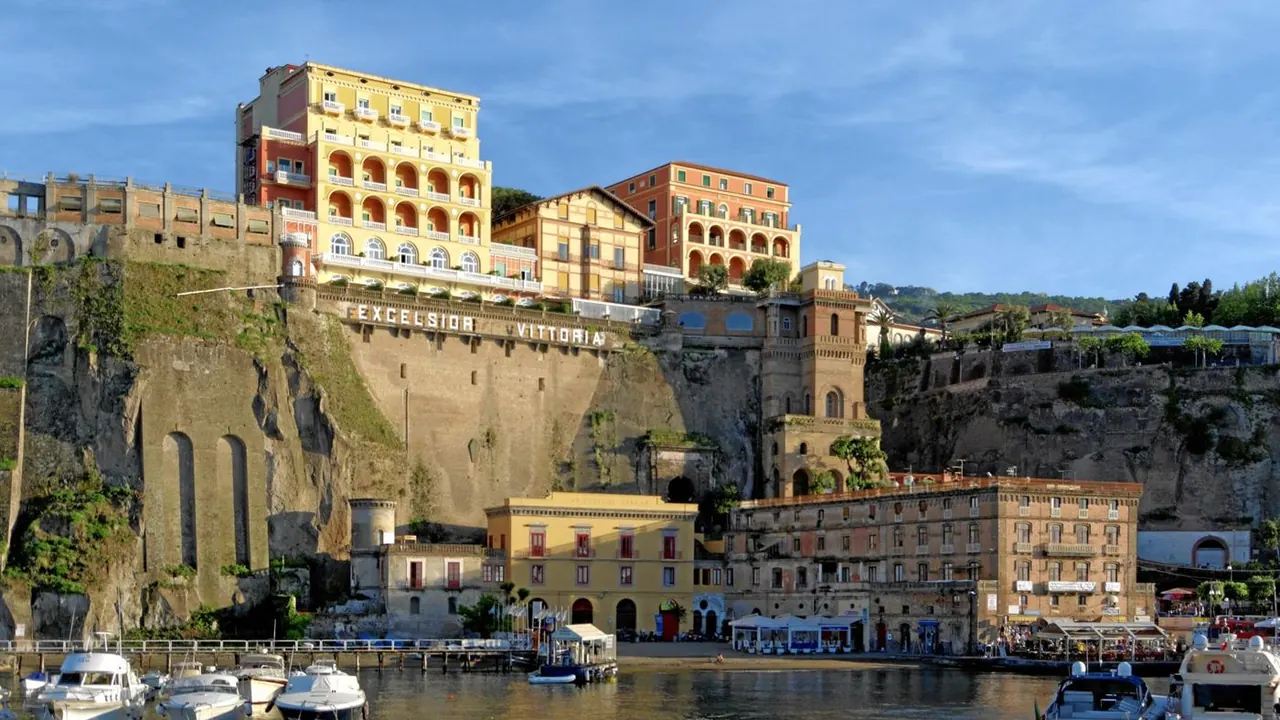
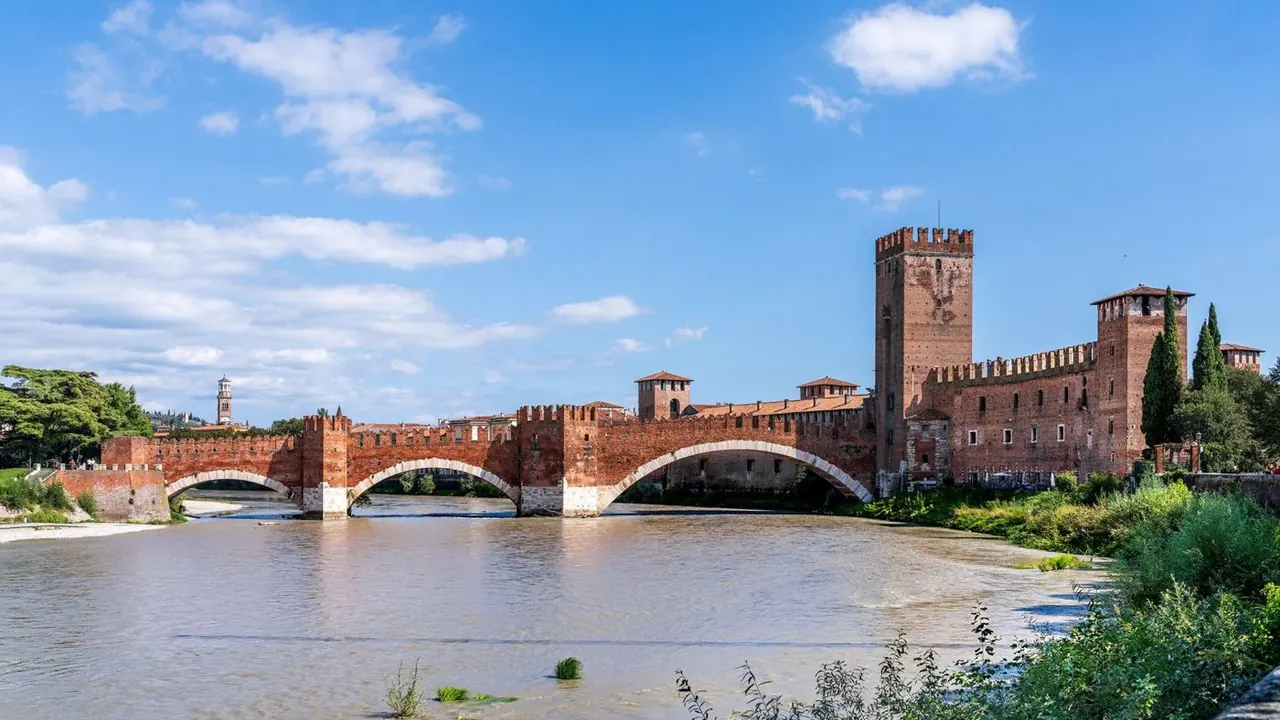
Photos: Sorrento by Berthold Werner, CC BY-SA 3.0, cropped; Verona by NorbertNagel, CC BY-SA 4.0, cropped.
Sorrento or Verona?
Our verdict in twelve categories, each scored against the same fixed benchmark cities, and the climate month by month, so you can choose for your trip.
Choose Sorrento for
- beaches
- nature and the outdoors
- day trips
Sorrento suits a slower coastal vacation built around the water: swimming off the lido piers, boat trips to Capri and the Amalfi side, and walks along the terraced ridge of the peninsula. The town itself is small and has few sights, so it works best for travellers who treat it as a comfortable base for the Bay of Naples, with Pompeii and Vesuvius a train ride away, and who accept resort rates in summer.
Choose Verona for
- live music and the arts
- culture and sights
- families
For a trip led by history, wine and evening performance, Verona is the stronger choice. Roman, medieval and Renaissance layers sit within a short walk of the Arena, summer opera on the ancient tiers is an event in its own right, and Valpolicella and Soave are close by. Families also do better here, with Gardaland and the shallow shores of Lake Garda nearby, though swimming is a side trip rather than the rhythm of the day.
Scoreboard
Twelve categories on one fixed scale from 0 to 100. The shaded stretch is the gap between the two.
Your match
Pick a travel style or drag the sliders, and both match scores follow your weighting.
Wins on beaches and nature and the outdoors with your weighting.
Wins on live music and the arts and culture and sights with your weighting.
What matters to you?
Category by category
What the scores mean for a trip.
Beaches & swimming
Sorrento has sea swimming on the doorstep, though not on sand. A lift or stairs take you down to the wooden lido piers at Marina Piccola and Marina Grande, or you walk to the rocks of the Bagni della Regina Giovanna and drop into deep, clear water. A proper pebble beach means a bus to Marina del Cantone or a boat to the coves of Capri.
Verona has no sea, so swimming means a half-hour trip to the southern shore of Lake Garda, with its lawns, lidos and Sirmione's flat limestone shelves. The water is calm fresh water rather than sea and the season is shorter, so it works as an afternoon off rather than as the basis of a beach vacation.
Food & drink
Both cook with deep regional roots, but Verona comes out ahead, mostly because of its wine. Amarone, Valpolicella and Soave are made within a short drive, and an evening glass with snacks at a counter is part of the day. The cooking is inland and hearty: risotto with Amarone, bigoli with duck and bollito with pearà, served in the osterie around Piazza delle Erbe and in Veronetta.
Sorrento's strengths are the sea and the lemon groves: fish all'acqua pazza at Marina Grande, gnocchi alla sorrentina, mozzarella from the hill dairies and Naples-style pizza. The centre leans towards tour-group menus, so the better meals mean a walk into the back lanes or a trip up to the hill villages.
Culture & sights
The gap is wide here. Verona's whole centre is UNESCO-listed, with the Roman Arena and theatre, the Scaliger tombs, San Zeno's bronze doors and the art collection at Castelvecchio in Scarpa's setting. That is enough for two or three full days without leaving town.
Sorrento's old town, with its cathedral, the cloister of San Francesco and the Museo Correale, fills a gentle day or so. Its real cultural weight lies outside town, at Pompeii, Herculaneum and Naples.
Nightlife
Neither is a place for clubbing, but Verona's evenings go further. The aperitivo spills across Piazza delle Erbe and along the river, Veronetta's student bars stay busier later in term time, and in summer the opera crowd leaving the Arena near midnight gives the centre a second wind.
In Sorrento the night means a passeggiata on Corso Italia, a drink on a terrace over the bay and perhaps a piano bar playing Neapolitan songs. Outside summer it goes quiet early, and because the last trains and ferries leave in the evening, a late night in Naples needs a room there.
Nature & outdoors
Sorrento has the more dramatic setting: a steep limestone ridge of lemon and olive terraces dropping into the sea. The trails to Punta Campanella and the bay of Ieranto, the Path of the Gods, Monte Faito and the crater rim of Vesuvius are all close, and kayaks and small boats take you along the coast itself.
Verona's landscape is gentler and further away. The Valpolicella vineyards suit easy walks and cycling, but the bigger outdoors, Monte Baldo's ridges, the Lessinia gorges and the sailing winds at the northern end of Garda, means travelling an hour or so.
Day trips
Both are exceptional bases, and the difference is in the kind of outing. From Sorrento the trips go by rail and sea around a single bay: Pompeii and Herculaneum on the Circumvesuviana, ferries to Capri and along the Amalfi Coast, and Naples within an hour.
Verona's day trips are a string of cities along the rail line, with Venice, Vicenza, Padua and Mantua all easy, plus the Garda lake towns and the wine estates of Valpolicella and Soave. Sorrento gives you islands and ruins, Verona art cities and cellars.
Good for families
Verona has far more made for children. Gardaland, the water parks around southern Garda and the drive-through safari at Parco Natura Viva are each about half an hour away, and the lake offers calm, shallow swimming, although most of these places need a car or a transfer.
Sorrento has the same Italian warmth towards children and a flat centre, and boat trips to Capri go down well. But the swimming is into deep water from piers and rocks, and many hotels stand on steep lanes without pavements, so families with young children usually book a hotel with a pool.
Getting around
Both towns have flat centres that are easy to walk. Verona's is better for exploring on foot, because its main sights sit a short stroll apart inside the river loop, and its rail links to Venice, Milan and the lake are fast and reliable.
Sorrento is easy within town, but leaving it is harder. The Circumvesuviana is cheap but crowded and prone to delays, and summer buses crawl round the Amalfi hairpins, which is why ferries often win. Neither town needs a car, though Verona's wine villages and the Lessinia are easier with one.
Shopping & style
Verona has the better shopping, though in a smart provincial way. Italian fashion labels line the marble-paved Via Mazzini, smaller boutiques and jewellers fill Corso Porta Borsari, and Amarone and pandoro make good things to take home.
Sorrento sells mostly lemon goods and painted ceramics, but it has crafts of its own: inlaid wood boxes and leather sandals made to measure while you wait. For serious fashion, Verona's shoppers go to Milan and Sorrento's to Naples or Capri.
Affordability
Sorrento is the dearer of the two, and its costs fall on the very things people come for. A room facing the bay, lunch on a terrace above it, a sunbed on a lido pier and a boat of your own to Capri all carry the premium of one of Italy's most sought-after coasts, and that premium holds for the whole summer. The savings come at the edges of the year and from the plainer side of a stay, the Circumvesuviana and local buses and a pizza eaten well away from Piazza Tasso. It still costs less as a base than staying on the Amalfi side or Capri.
Verona's bill is easier to control because most of it goes on one thing, the hotel room. Day to day, a glass of Valpolicella with a snack at a wine counter or dinner in a Veronetta osteria stays reasonable, and the compact centre means you hardly pay for transport. Sorrento stays expensive all summer, while Verona's peaks are sharper but shorter, on opera nights and during the big trade fairs. A room near Porta Nuova or across the Adige softens them, and you avoid paying for the Arena view by skipping the tables on Piazza Bra.
Live music & performing arts
This is one of the widest gaps between the two. Verona's summer opera in the Arena, grand Verdi and Puccini performed on Roman stone tiers until close to midnight, is a reason to visit in itself. The Roman theatre's festival of Shakespeare, dance and jazz and the winter season at the Teatro Filarmonico fill out the rest of the year.
Sorrento offers Neapolitan song and tarantella shows staged for visitors, summer chamber concerts in the San Francesco cloister and singers in the hotel bars. Anything bigger means the Teatro di San Carlo in Naples, and usually a night there.
Wellness & relaxation
Neither town has a bathing tradition of its own, so relaxing comes down to pace and nearby springs. In Sorrento that means a cliff-top hotel with a spa and pool above the bay and the calm of its lemon gardens, with Ischia's thermal gardens a ferry ride away.
Verona's springs are closer and reached by land: Sirmione's thermal pools facing Lake Garda, the spring-fed lake near Lazise and the waters at Caldiero, used since Roman times. In both places, the summer crowds are what to avoid.
When should you go?
Pick your month. The climate figures are measured averages, not a forecast.
Sorrento in July
Verona in July
Daytime high, °C
Rainfall in the month, mm
Where the figures come from
Sorrento has no rain gauge within 25 km of the centre, so its rainfall comes from a gridded climate dataset read at the city rather than from a gauge further away.
Sorrento's sunshine is measured 54 km from the centre, at Grazzanise.
Temperature and rainfall are climate normals, averaged over the years shown. Sorrento: 2005-2025 (sunshine 1991-2020, rainfall 1991-2020) normals, Capri (17 km from centre). Verona: 1991-2020 normals, Verona / Villafranca (11.6 km from centre).
Sorrento is the place for warm-water swimming. The sea is pleasant from June through September and reaches about 26°C in August. Daytime highs climb to 31°C in July and August, too hot for the exposed hill trails but fine on a lido. Late spring and early autumn are the best weeks for walking. Rain returns in September and peaks in November at 151mm, but winters stay mild and fairly sunny, good enough for unhurried sightseeing.
Verona has a more continental year. Winters are properly cold, with January highs around 7°C and noticeably less sun than Sorrento gets. Summer heat is close to Sorrento's, which makes midday on the stone piazzas tiring. Rain is spread far more evenly through the year, so there is no reliably dry summer, and May and September are the most comfortable months for exploring the city on foot.
Which traveller are you?
On a beach and sun trip, Sorrento is the clear pick. The lido piers and rocky coves give daily sea swimming in deep, clear water, and boats reach Capri's coves, while Verona's swimming is a lake outing half an hour away with a shorter season.
For a culture and arts trip, Verona wins easily. A UNESCO-listed centre of Roman, Romanesque and Scaliger monuments lies within a short walk, summer opera in the Arena offers an evening Sorrento cannot match, and Venice, Padua and Vicenza are easy by train.
On a family trip with children, Verona has more to fill the days. Gardaland, water parks and a safari zoo are within half an hour and the lake shallows are gentle, whereas Sorrento's deep-water swimming and steep hotel lanes suit older children better.
Before you go
| Measure | Sorrento | Verona |
|---|---|---|
| Official language | Italian | Italian |
| Currency | Euro (EUR) | Euro (EUR) |
| Sockets | CFL230 V, 50 Hz | CFL230 V, 50 Hz |
| Driving side | Right | Right |
| Time zone | UTC+1, UTC+2 in summer | UTC+1, UTC+2 in summer |
| Emergency number | 112 | 112 |
| Elevation | 50 m | 59 m |
| Main airport | Naples International Airport (NAP)30 km from centre131 non-stop destinations | Verona Villafranca Valerio Catullo Airport (VRN)10 km from centre96 non-stop destinations |
| Public holidays this year | 13 days | 13 days |
By the numbers
| Measure | Sorrento | Verona |
|---|---|---|
| City population | 15,407 | 255,588 |
| People per km² | 1,541 | 1,285 |
| Museums within 10 km | 6 | 18 |
| UNESCO World Heritage sites within 50 km | 5 | 5 |
| Swim season, months above 21 °C | 5 months | - |
Where else could you go?
Every comparison below shares a destination with this one, so you can follow Sorrento or Verona somewhere new.