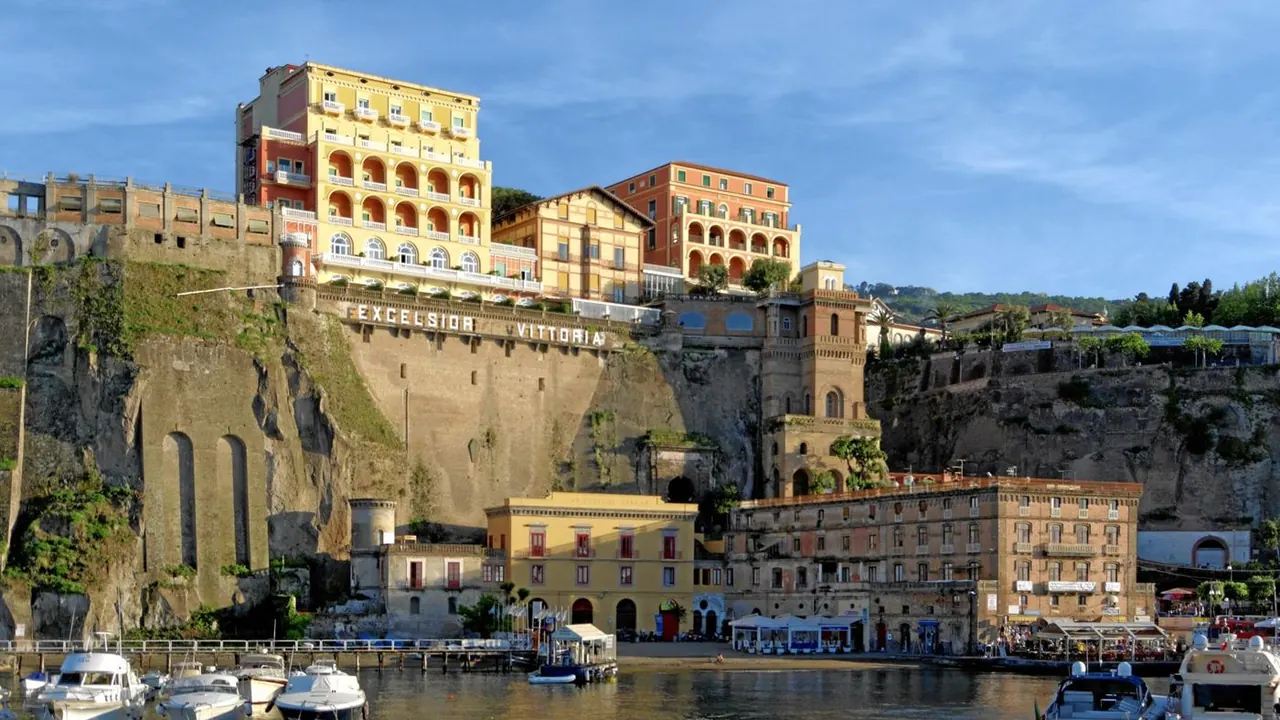
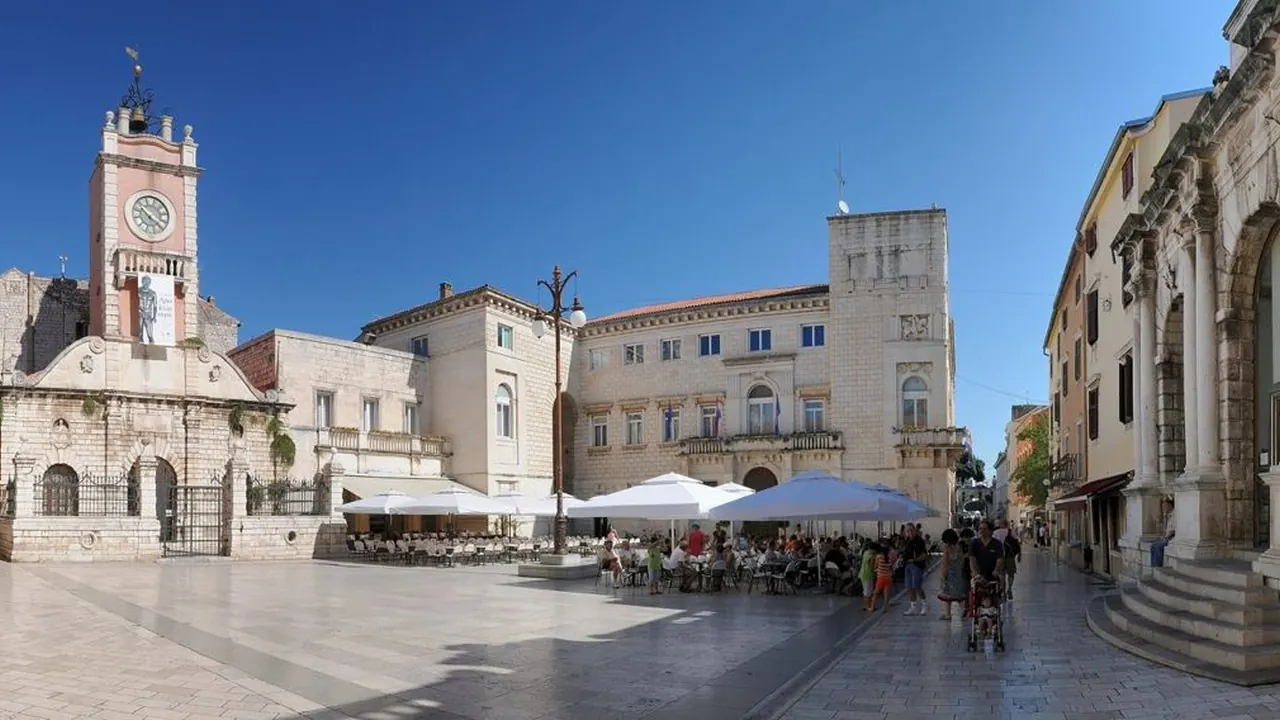
Photos: Sorrento by Berthold Werner, CC BY-SA 3.0, cropped; Zadar by Böhringer Friedrich, CC BY-SA 2.5, cropped.
Sorrento or Zadar?
Our verdict in twelve categories, each scored against the same fixed benchmark cities, and the climate month by month, so you can choose for your trip.
Choose Sorrento for
- day trips
- food and drink
- wellness
Sorrento is the better choice for a traveller who wants a comfortable base and plans to spend most days somewhere else. Pompeii, Herculaneum, Vesuvius, Capri, Naples and the Amalfi Coast are all a train or boat ride away. The cooking is also some of the best in Italy, from the trattorias on the back lanes to the fine dining in the hill villages, and cliff-top hotel spas over the bay suit a slow, restful stay. You pay for all this, especially in summer.
Choose Zadar for
- culture and sights
- prices
- families
Zadar gives you more to do in the town itself and costs less while you do it. Its walled peninsula packs Roman, early medieval and Venetian layers into a short walk, the swimming starts at the promenade, and Nin's shallow sand makes it the easier coast for young children. It suits travellers who want sea, islands and national parks without paying Amalfi prices, and who are happy to hire a car or join excursions to see the wider region.
Scoreboard
Twelve categories on one fixed scale from 0 to 100. The shaded stretch is the gap between the two.
Your match
Pick a travel style or drag the sliders, and both match scores follow your weighting.
Too close to call, 2 points apart
Wins on day trips and food and drink with your weighting.
Wins on culture and sights and prices with your weighting.
What matters to you?
Category by category
What the scores mean for a trip.
Beaches & swimming
Zadar makes swimming easier and more varied. People swim off the stone promenade in town, Kolovare and pine-shaded Borik are close by, and Nin's long, shallow sandy beaches are about 20km up the coast. Ferries reach quieter island coves and the pale sand at Sakarun.
Sorrento sits on a cliff, so its swimming is from wooden lido piers at Marina Piccola and Marina Grande, or from the rocks at the Bagni della Regina Giovanna, into deep, clear water. Much of the shore belongs to paid lidos, and a real pebble beach means a bus or boat ride.
Food & drink
Sorrento eats noticeably better. This is Campanian cooking where it comes from: gnocchi alla sorrentina, fish all'acqua pazza, fior di latte and provolone from the hill dairies, and lemons in almost everything. The hill villages also have some of southern Italy's most celebrated fine dining. The tourist menus around Piazza Tasso are best avoided.
Zadar's Dalmatian table is good but narrow: grilled fish, black risotto, peka lamb, Pag cheese and pršut, with Maraschino as the local liqueur. Most konobas serve much the same menu, and there are few top restaurants.
Culture & sights
Zadar has much more to see within its walls. The open Roman forum, the round Church of St Donatus, the cathedral bell tower and the UNESCO-listed Venetian defences sit within a few minutes of each other. Add the glass and archaeological museums, plus the Sea Organ on the waterfront, and the city fills two full days.
Sorrento's own centre is gentler: the Roman street grid, the cloister of San Francesco, the Museo Correale and the odd ravine of the Vallone dei Mulini. Its great ancient sites are out of town, at Pompeii and Herculaneum.
Nightlife
Neither city is a party destination, but Zadar stays out later. Summer evenings start at sunset by the Sea Organ and move on to café-bars on Kalelarga and terraces on the walls. Young clubbers make the hour's trip to Zrće on Pag.
Sorrento's evenings are older and quieter: the passeggiata on Corso Italia, a drink on a terrace over the bay, and piano bars playing Neapolitan songs. The last trains and ferries leave early, so a big night in Naples or on Capri means staying the night there.
Nature & outdoors
Both are excellent bases for the outdoors, but in different landscapes. From Sorrento you walk the lemon-terraced ridge to Punta Campanella and Ieranto, take the Path of the Gods or Monte Faito, climb Vesuvius, and go out by boat to the grottoes of Capri.
Zadar has more open space. There are the gorges and climbing walls of Paklenica in the Velebit range, the bare Kornati islands, Krka's waterfalls and Plitvice further inland. Hiking in both is best in spring and autumn.
Day trips
Sorrento is clearly the better base for days out, mainly because you never need to drive. The town is both the end of a railway line and a ferry port, so the famous ruins, the islands and the city across the bay are all a train or boat ride away, and you are back in time for dinner. Even the longer outings fit into a single day: the ferry to Ischia and Procida, or the drive south to the Greek temples at Paestum.
Zadar's best outings are spread along the coast instead. Nin's royal church and Šibenik's cathedral are close enough, but Split and Trogir make a long day on the motorway, and the regional buses are little help. Only the ferries to Ugljan, Pašman and car-free Silba leave from the old town, so most days out from Zadar start with a hire car or a coach excursion.
Good for families
Zadar is the easier city with children. The old town is car-free and flat, the tiles of the Greeting to the Sun light up after dark, and Nin's shallow sand is ideal for toddlers. Short ferry rides to the islands are a treat.
Sorrento welcomes children warmly, and boat trips and Pompeii go down well. But the swimming is from piers and rocks into deep water, and hotels on steep lanes without pavements are hard work with a pushchair, so many families choose a hotel with a pool.
Getting around
Getting around is about equally easy, and in both you walk the small, flat centre and go by sea for the best outings. In Sorrento, public transport takes you farther: the train runs to Pompeii and Naples and buses run along the Amalfi road, though both are crowded and slow in summer, and a car is more trouble than it is worth.
Zadar's island ferries leave right from the old town, but its buses barely reach beyond the suburbs. For the national parks and the wider coast, a hire car is the practical answer there.
Shopping & style
Sorrento has a little more worth buying. Beyond the lemon-themed souvenirs on Via San Cesareo there are real local crafts: intarsia boxes and trays, sandals made to measure, cameos and linen. Capri's boutiques and Naples are close for anything more.
Zadar's Kalelarga has chains and jewellers, and the best things to take home are edible or handmade: Maraschino, Pag cheese, figs and Pag lace from the market by the walls.
Affordability
Zadar is the cheaper of the two. Private apartments are good value outside July and August, konobas and bakeries are fair, and ferries cost little, though national park tickets and boat trips add up.
Sorrento sits on one of Italy's most expensive coasts, and sea-view rooms, lido sunbeds and private boats show it. The cheap trains and back-lane pizzerias help, and in spring and late autumn hotel rates fall a long way.
Live music & performing arts
Neither town has much of a stage, but Zadar's best offering is the more memorable. The Musical Evenings in St Donatus bring early and chamber music to a ninth-century church, and in summer you can hear klapa singing in the squares.
In Sorrento, performances mostly mean tarantella and Neapolitan song shows put on for visitors, plus cloister concerts in summer. For opera, take the train to the Teatro di San Carlo in Naples.
Wellness & relaxation
Sorrento is better for pampering. Its cliff-top hotels have proper spas and pools above the bay, and Ischia's seaside hot springs are about an hour away by ferry.
Zadar has fewer spas, mostly in the resorts at Borik, plus the mud lagoon at Nin. Its relaxation lies in the slow rhythm of the day, ending with the sunset from the Sea Organ steps. In both places the quieter months are the most restful.
When should you go?
Pick your month. The climate figures are measured averages, not a forecast.
Sorrento in July
Zadar in July
Daytime high, °C
Rainfall in the month, mm
Where the figures come from
Sorrento has no rain gauge within 25 km of the centre, so its rainfall comes from a gridded climate dataset read at the city rather than from a gauge further away.
Sorrento's sunshine is measured 54 km from the centre, at Grazzanise.
Zadar has no rain gauge within 25 km of the centre, so its rainfall comes from a gridded climate dataset read at the city rather than from a gauge further away.
Temperature and rainfall are climate normals, averaged over the years shown. Sorrento: 2005-2025 (sunshine 1991-2020, rainfall 1991-2020) normals, Capri (17 km from centre). Zadar: 1999-2020 (rainfall 1991-2020) normals, Zadar / Zemunik (9.9 km from centre).
The two cities follow the same summer pattern. Both are hot and almost dry in July and August, with highs around 31°C, which is good for swimming but tiring for long walks through the streets. Both seas are warm enough for most swimmers from June to September. Sorrento's water stays a little warmer and is still pleasant in October, when it reaches about 22°C. Sorrento also has very long sunny days in midsummer. For walking and hiking, May and late September to October are the best months in either place.
The two differ most in the cool half of the year. Sorrento's autumn is the wetter one: rain picks up in September and peaks in November at about 151mm, though winter days stay mild. Zadar spreads its rain more evenly but has colder winters, with January highs near 10°C, so a winter visit there is quieter and more of a coat-and-café trip.
Which traveller are you?
For a culture and arts trip, Zadar has more in the town itself. The Roman forum, St Donatus, the Venetian walls and the glass museum sit side by side, and summer concerts fill the ninth-century church. Sorrento's own sights take only a day or two.
On a trip with a tight budget, Zadar is the easier city. Private apartments outside high summer, konoba meals and cheap ferries keep costs reasonable. Sorrento charges resort prices for sea-view rooms, sunbeds and boat trips, and only spring and late autumn soften them.
For a relaxing and wellness trip, Sorrento has the edge. Its cliff-top hotels have spas, pools and terraces over the bay, and Ischia's thermal gardens are a ferry ride away. In Zadar, unwinding mostly means slow café mornings and sunsets on the Riva.
Before you go
| Measure | Sorrento | Zadar |
|---|---|---|
| Official language | Italian | Croatian |
| Currency | Euro (EUR) | Euro (EUR) |
| Sockets | CFL230 V, 50 Hz | CF230 V, 50 Hz |
| Driving side | Right | Right |
| Time zone | UTC+1, UTC+2 in summer | UTC+1, UTC+2 in summer |
| Emergency number | 112 | 112 |
| Elevation | 50 m | 5 m |
| Main airport | Naples International Airport (NAP)30 km from centre131 non-stop destinations | Zadar Airport (ZAD)10 km from centre66 non-stop destinations |
| Public holidays this year | 13 days | 14 days |
By the numbers
| Measure | Sorrento | Zadar |
|---|---|---|
| City population | 15,407 | 70,779 |
| People per km² | 1,541 | - |
| Museums within 10 km | 6 | 1 |
| UNESCO World Heritage sites within 50 km | 5 | 2 |
| Swim season, months above 21 °C | 5 months | 4 months |
Where else could you go?
Every comparison below shares a destination with this one, so you can follow Sorrento or Zadar somewhere new.