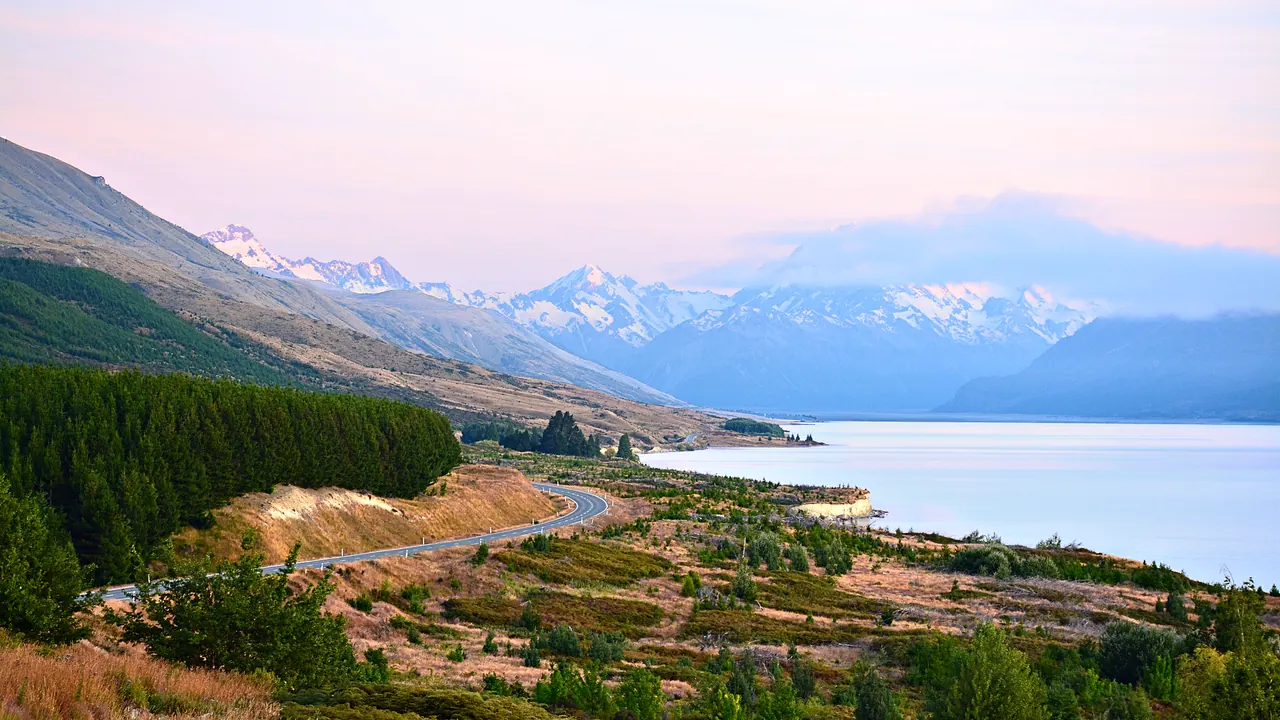
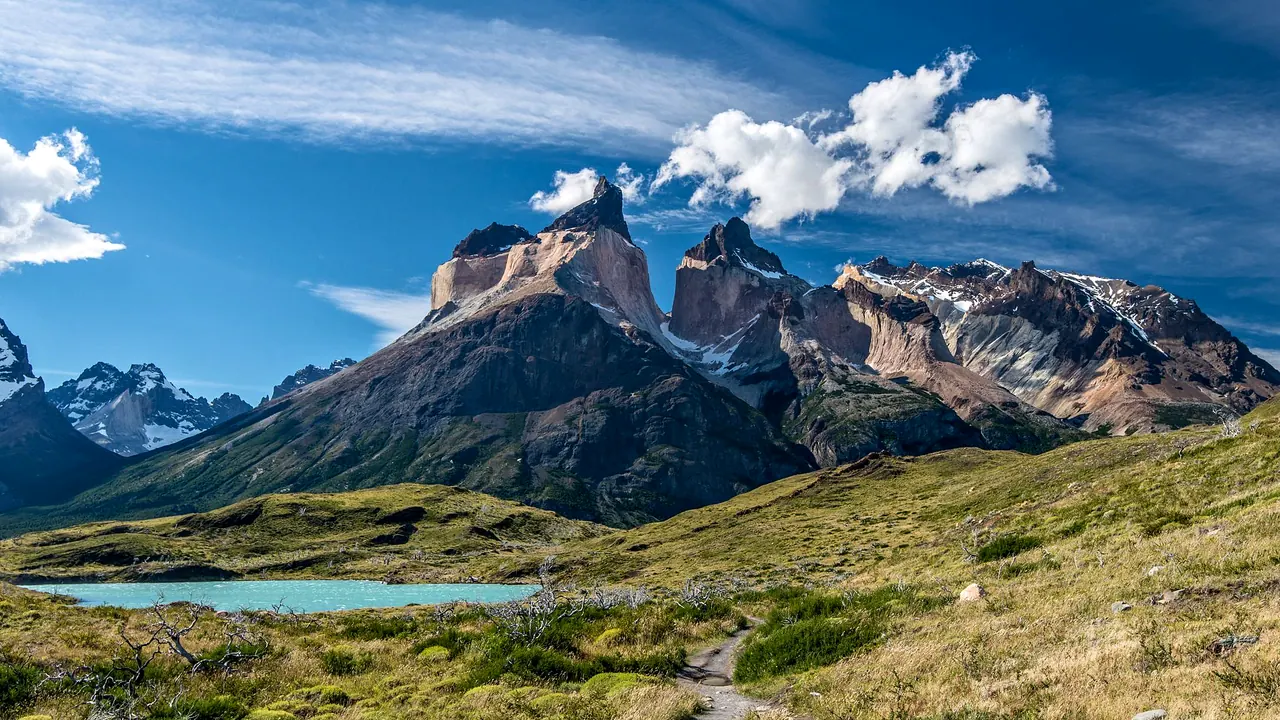
Photos: South Island by Mark de Jong, Pexels License; Torres del Paine by Holger J. Bub, Pexels License.
South Island or Torres del Paine?
Our verdict in twelve categories, each scored against the same fixed benchmark cities, and the climate month by month, so you can choose for your trip.
Choose South Island for
- day trips
- beaches
- families
The South Island suits a longer road trip that moves between very different kinds of landscape. In two or three weeks you can see Fiordland, the glaciers of the West Coast, the lakes below Aoraki/Mount Cook and the sheltered bays around Nelson. Wine country, hot pools and towns with proper restaurants break up the driving. Families, wine lovers and couples who want to mix serious walking with comfortable evenings will find much more to do here.
Choose Torres del Paine for
Torres del Paine does not lead in any category we score.
Torres del Paine is the choice for a trip built around one mountain massif and very little else. Trekkers come for the W or the O, and wildlife watchers come for pumas and condors in open steppe. Swimming, good dining, towns to explore and any kind of nightlife are all missing, and the park is remote and expensive to reach. Most people get the best from it as one leg of a wider journey through Patagonia.
Scoreboard
Twelve categories on one fixed scale from 0 to 100. The shaded stretch is the gap between the two.
Your match
Pick a travel style or drag the sliders, and both match scores follow your weighting.
Wins on day trips and beaches with your weighting.
Has no clear advantage with the weighting you have chosen.
What matters to you?
Category by category
What the scores mean for a trip.
Beaches & swimming
The South Island at least has somewhere to swim. Kaiteriteri, the golden coves of the Abel Tasman and Golden Bay have clear, sheltered water in summer, although the rest of the island's coast is cold, rough or wild surf.
Torres del Paine has no beach to speak of. Its lakes are fed by glaciers and stay close to freezing, and the fjord at Puerto Natales is a working waterfront.
Food & drink
The South Island eats and drinks far better. Marlborough Sauvignon Blanc and Central Otago Pinot Noir are poured at cellar doors among the vines. The coast supplies Kaikoura crayfish, Bluff oysters and Sounds mussels, and Queenstown and Christchurch have a wide choice of restaurants.
Torres del Paine has one memorable dish, Patagonian lamb roasted over an open fire, and also southern king crab and calafate drinks. Beyond those, you eat whatever your lodge or refugio serves, or a meal from Puerto Natales' short street of restaurants.
Culture & sights
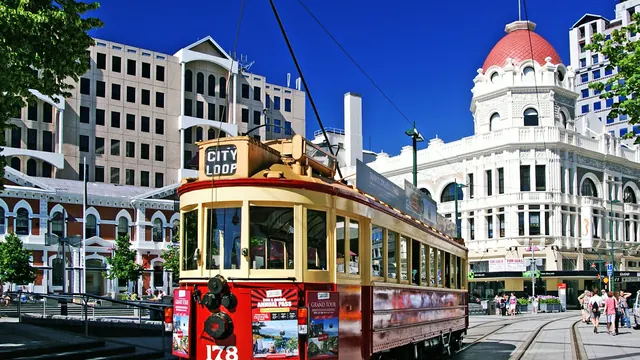
Dunedin, Oamaru and Christchurch give the South Island several days of colonial history. There are Dunedin's Scottish-founded streets and its railway station, Oamaru's limestone Victorian harbour quarter, and the museums and gallery of Christchurch. French-founded Akaroa adds a different flavour.
Around Torres del Paine, the heritage fits into a morning near Puerto Natales: the Milodon Cave, the old Puerto Bories freezing works and a small museum on the sheep-ranching era.
Nightlife
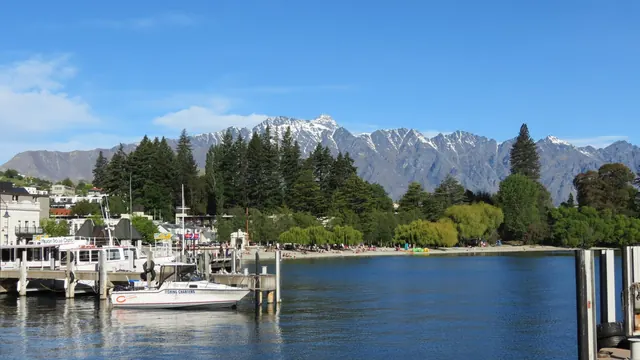
Queenstown gives the South Island a real night out, with lakeside bars that stay busy late through the ski and summer seasons. Christchurch's small clubs and Dunedin's student pubs add more.
Torres del Paine has no clubs and nothing that runs late. Trekkers swap stories in a few Puerto Natales brewpubs, and inside the park the evening ends in the lodge bar, often while it is still light outside.
Nature & outdoors
These are two of the world's great outdoor destinations, and the difference is breadth against intensity. The South Island spreads its scenery along a whole mountain chain. It has Aoraki/Mount Cook above Tekapo and Pukaki, the fiords of Milford and Doubtful Sounds, the West Coast glaciers and kayaking on the Abel Tasman. There are also whales at Kaikoura, penguins and albatross on the Otago Peninsula, and skiing in winter.
Torres del Paine concentrates everything into one massif. The granite Towers, the Cuernos and Grey Glacier all lie along a single classic trek, and the wind across the open steppe is fierce. Guanacos and condors are seen every day, and in the quiet autumn and winter months the eastern sector is one of the best places anywhere to track pumas. Choose the South Island for variety and Torres del Paine for raw scale in one place.
Day trips
The South Island has a good choice of easy outings. Arrowtown, Wanaka and the Gibbston Valley wineries are close to Queenstown, Akaroa and Hanmer Springs are within reach of Christchurch, and Nelson is a good base for the Marlborough vineyards. These are modest places, but there are many of them.
From Torres del Paine, the only real town is Puerto Natales, two hours away. Punta Arenas and Argentina's El Calafate are too far for a day and work better as stops on the way in or out.
Good for families
The South Island works well with children of any age. Campgrounds have cabins and playgrounds, and there are short glacier and forest walks, dolphin boats from Akaroa, and Orana Wildlife Park and the Antarctic Centre in Christchurch. The long drives between bases are the main drawback.
Torres del Paine can thrill a sturdy ten-year-old with guanacos by the road and the boat to the glacier. For younger children, though, the gravel roads, sudden cold, fierce wind and lack of facilities between the lodges make it hard going.
Getting around
Both are places you drive or walk through, but the South Island is easier. Its roads are quiet and well kept, intercity coaches and the TranzAlpine train fill some gaps, and Queenstown, Nelson and central Christchurch are easy on foot. Winding roads and mountain passes still make journeys long.
Getting into Torres del Paine takes a flight to Puerto Natales or Punta Arenas, then a long road transfer. Inside the park you rely on gravel roads, a few buses a day, the boat across Lake Pehoé and your own legs, and refugio places must be booked well ahead.
Shopping & style
On the South Island, the things worth bringing home are merino and possum-merino knitwear, pounamu carved in Hokitika's workshops and outdoor gear from Queenstown. Nelson adds craft studios and a weekend market, and Christchurch has the widest range of mainstream shops.
In Puerto Natales, shopping mostly means renting trekking gear, buying gas canisters and stocking up at the supermarket before a trek. A few stores sell sheep's-wool knitwear, leather and Patagonian crafts, and inside the park there is little beyond lodge souvenirs.
Affordability
On the South Island, what you spend depends heavily on where you base yourself and what you book. Queenstown, fiord cruises and scenic flights are expensive. Campgrounds, Department of Conservation sites and supermarkets are everywhere, though, and Dunedin and the small towns are noticeably cheaper.
Torres del Paine is harder to do cheaply. Foreign visitors pay a substantial park entry fee, the refugios are costly for what they offer, and the lodges are among the priciest stays in South America. Sleeping in Puerto Natales hostels and taking the bus helps, but you still need to budget carefully for this trip.
Live music & performing arts
Christchurch has most of the South Island's live performance, with a symphony orchestra, a repertory theatre and the restored Isaac Theatre Royal. Dunedin adds indie gigs in the student quarter and Queenstown has bands in its bars, though this is not a trip to plan around performance.
Torres del Paine offers at most a folk guitarist in a Natales bar or a gaucho-style evening at an estancia.
Wellness & relaxation
The South Island has real thermal bathing. Hanmer Springs has been built around its pools since the nineteenth century, and there are hot pools overlooking Lake Tekapo's night sky and remote springs such as Maruia in beech forest.
Torres del Paine has no bathing tradition. Relaxing here means booking one of the upmarket lodges, with a sauna, a massage or an outdoor hot tub facing the Paine massif. Trekkers in refugios get little more than a hot shower.
When should you go?
Pick your month. The climate figures are measured averages, not a forecast.
South Island in July
Torres del Paine in July
Daytime high, °C
Rainfall in the month, mm
Where the figures come from
South Island has no weather station within reach, so its figures come from a gridded climate model rather than a measured record, and read a broad area rather than one spot.
Torres del Paine has no weather station within reach, so its figures come from a gridded climate model rather than a measured record, and read a broad area rather than one spot.
Temperature and rainfall are climate normals, averaged over the years shown. South Island: 1991-2020 normals, TerraClimate 4 km grid at the town, no weather station within 90 km. Torres del Paine: 1991-2020 normals, TerraClimate 4 km grid at the town, no weather station within 90 km.
The South Island is warmest in January and February, with highs around 20°C. December to March is the season for a swim in the sheltered northern bays and for walking high in the mountains. Rain falls in every month and is heaviest in spring, reaching about 200mm in September. Winter days are cold for sightseeing, but June to August is the ski season around Queenstown and Wanaka.
Torres del Paine is cooler in most months. It peaks near 17°C in January and February and falls to about 5°C in June, so the trekking season runs from October to April. In July the two are level, with both reaching only about 6°C. Rainfall here is lower and more even through the year, but the wind and sudden changes in the weather matter more than the totals. The cold autumn and winter months are still the best time for tracking pumas.
Which traveller are you?
On a family trip with children, the South Island is far easier. It has campgrounds with playgrounds, gondola and luge rides above Queenstown, dolphin boats from Kaikoura and the Antarctic Centre in Christchurch. Torres del Paine really only suits older children who can cope with wind, gravel roads and long walks.
For a food and nightlife trip, the South Island is the only real option. You can have long lunches at Marlborough and Central Otago cellar doors, Kaikoura crayfish and late bars in Queenstown. In Torres del Paine the evenings end over a beer in a Puerto Natales brewpub or at the lodge bar.
For wildlife watchers set on seeing a puma, Torres del Paine has something the South Island cannot offer. Its eastern sector is one of the best places anywhere to track these big cats, and guanacos, rheas and condors are seen every day on the open steppe.
Before you go
| Measure | South Island | Torres del Paine |
|---|---|---|
| Official language | English, New Zealand Sign Language, Māori | Spanish |
| Currency | New Zealand Dollar (NZD) | Chilean Peso (CLP) |
| Sockets | I230 V, 50 Hz | CL220 V, 50 Hz |
| Driving side | Left | Right |
| Time zone | UTC+12, UTC+13 in summer | UTC-3 |
| Emergency number | 111 | Police 133/134, ambulance 131, fire 132 |
| Main airport | Queenstown Airport (ZQN)7 non-stop destinations | President Carlos Ibáñez International Airport (PUQ)7 non-stop destinations |
| Public holidays this year | 12 days | 16 days |
By the numbers
| Measure | South Island | Torres del Paine |
|---|---|---|
| Population | 1,115,800 | - |
Where else could you go?
Every comparison below shares a destination with this one, so you can follow South Island or Torres del Paine somewhere new.