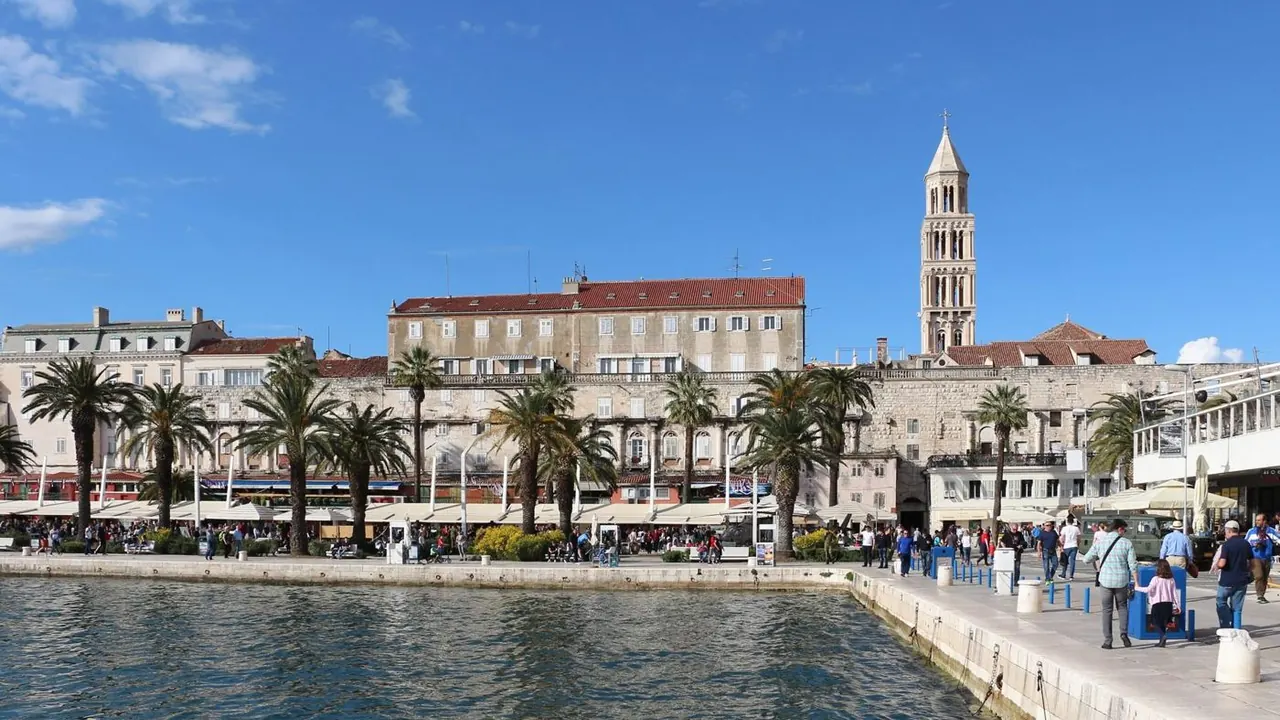
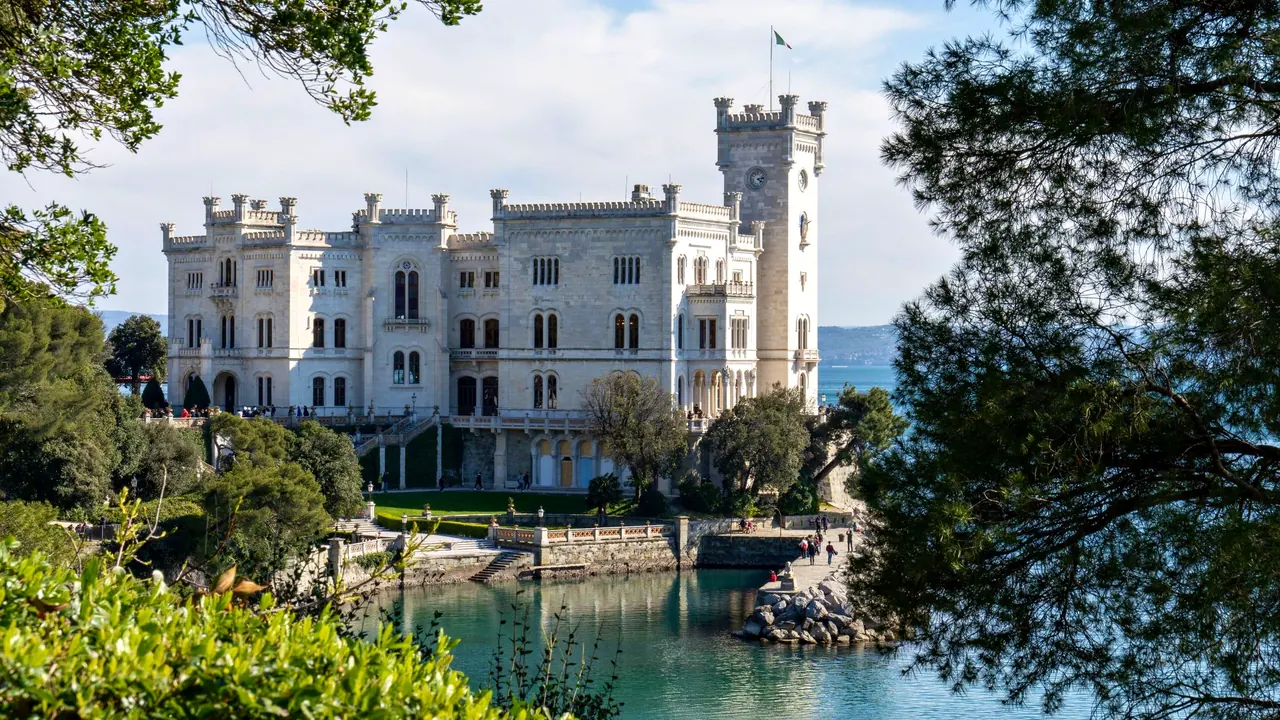
Photos: Split by Bernard Gagnon, CC BY-SA 4.0, cropped; Trieste by Tibor Szabo, Pexels License.
Split or Trieste?
Our verdict in twelve categories, each scored against the same fixed benchmark cities, and the climate month by month, so you can choose for your trip.
Choose Split for
- nightlife
- beaches
- nature and the outdoors
Split suits a summer trip built around the sea and the outdoors. You can swim a short walk from a Roman palace, take a ferry to Brač or Hvar, hike the ridges of Mosor or raft the Cetina canyon, then spend the evening in bars packed into the palace alleys. It is the better pick for active travellers, friends and anyone who wants warm water and late nights, as long as they can live with crowds and high-season prices in July and August.
Choose Trieste for
- live music and the arts
- prices
- food and drink
Trieste is for a slower, more urban trip with a Central European flavour. Its draws are grand coffee houses, buffets carving boiled pork, a proper opera season at the Teatro Verdi and day trips into Slovenia and Friuli. It costs less, its evenings are quiet, and it suits couples and older travellers who would rather sit over an aperitivo by the gulf than dance until dawn.
Scoreboard
Twelve categories on one fixed scale from 0 to 100. The shaded stretch is the gap between the two.
Your match
Pick a travel style or drag the sliders, and both match scores follow your weighting.
Too close to call, level with your weighting
Wins on nightlife and beaches with your weighting.
Wins on live music and the arts and prices with your weighting.
What matters to you?
Category by category
What the scores mean for a trip.
Beaches & swimming
Split is the stronger choice for swimming. Bačvice, just east of the harbour, is a rare sandy and shallow bay where locals play picigin in knee-deep water. Quieter pebble coves with pine shade ring the Marjan peninsula, and Brač, Hvar and the Makarska Riviera add longer beaches within easy reach.
Trieste's sea is just as clear and warm in midsummer, but the city has almost no sand. Locals spread towels on the stepped concrete and lawns of Barcola and climb down ladders, or use the old bathing establishments with their changing cabins. The prettier coves at Sistiana and Duino are still pebble and rock.
Food & drink
Trieste has the more distinctive table. Its buffets carve boiled pork and sausages with horseradish and sauerkraut, jota soup sits next to fried sardoni and strudel, and coffee has its own local vocabulary. In season, the farmhouse osmize on the Karst sell their own Terrano and Vitovska.
Split is good at Dalmatian cooking but narrower: grilled fish, black risotto, pašticada and peka baked under the iron bell. The best meals are in the konobas of Varoš rather than on the tourist menus inside the palace, and the scene goes quiet in winter. Neither city offers much fine dining.
Culture & sights
The two are about equal for sightseeing, but in different ways. In Split the culture is concentrated in a single extraordinary place. Diocletian's Palace is still a lived-in neighbourhood, with the Peristyle, the cathedral that was once the emperor's mausoleum and the vaulted substructures, and the Meštrović Gallery is the main addition. Most visitors have seen it all in two days.
Trieste spreads its interest across a whole Habsburg cityscape: Piazza Unità facing the sea, the Canal Grande and San Spiridione, the cathedral and castle on San Giusto, and Miramare Castle on the coast. It also has a weightier modern history, with its great synagogue and the Risiera di San Sabba memorial.
Nightlife
In summer, Split is the livelier place by a clear margin. Small bars fill the palace's stone alleys and stairways until late, and the beach bars and clubs around Bačvice carry a younger crowd into the early hours. Outside the season it shrinks to a handful of bars.
Trieste's evenings revolve around spritz and white wine around Piazza Unità and the Canal Grande, a few student wine bars, and kiosks on the Barcola seafront in summer. Clubs are scarce, and the streets are quiet by midnight in winter.
Nature & outdoors
Split offers more variety outdoors. Marjan's forest trails start at the edge of the old town and the Mosor and Kozjak ridges rise behind the city. Biokovo climbs above 1,700m an hour south, the Cetina canyon at Omiš has rafting and canyoning, and Krka's waterfalls are an easy trip. The islands make for real sailing and kayaking.
Trieste's outdoors is built on the Karst. You can take the Strada Napoleonica along the plateau's edge, the Rilke Path over the Duino cliffs or the climbing gorge of Val Rosandra. The caves are its speciality, from the Grotta Gigante to Škocjan just over the border, and the Miramare marine reserve is good for snorkelling.
Day trips
Both are excellent bases, but Split's trips run along the coast and by sea. You can reach UNESCO-listed Trogir and Šibenik, Roman Salona and Klis Fortress, and ferries go to Hvar, Brač and Vis, though these need more planning in winter.
Trieste looks inland and across borders. Aquileia's mosaics, star-shaped Palmanova and the Collio wine country are in Friuli, Piran and Ljubljana are in Slovenia, and Venice is a long but realistic day by train. That makes Trieste better for variety of country and Split better for island-hopping.
Good for families
Neither city is built around children, and both are calm and safe. They suit different ages, though. Split works well for small children thanks to the shallow sand at Bačvice, shady space to run on Marjan and a ferry ride that often becomes the highlight, though July and August are hot and crowded.
Trieste has more indoor options for older children, with the waterfront aquarium, a hands-on science centre and the vast Grotta Gigante. Rocky swimming and steep, stepped streets make it harder going with toddlers.
Getting around
Both centres are best on foot, but the terrain differs. Split's core is car-free and compact, and the ferry port, bus station and railway station sit together at the harbour, which makes leaving for the islands simple. Its local buses are basic, though, and the polished stone steps inside the palace are hard work with luggage.
Trieste's centre is flat along the water, but the climb to San Giusto is steep. A dense bus network and passenger boats to Muggia and along the coast cover far more of the surrounding area without a car.
Shopping & style
Neither city is a shopping destination, and Trieste is only slightly better. Its antique and second-hand shops in the old town lanes give more character to a browse, and its coffee roasters, Karst wines and presnitz make good things to take home. In Split, the palace shops lean to souvenirs and ties. The Pazar market by the east gate, with its figs, honey, brandies and olive oil, is the best place to browse.
Affordability
Trieste is the easier city on the budget. Coffee at the bar and a plate at a buffet cost little, buses are cheap, and rooms stay reasonable most of the year, with Barcola and the Karst walks free.
Split swings more with the season. In July and August, rooms near the old town and fish sold by weight on the waterfront push it towards big-city prices, and island ferries add up for families. In May, June, late September and winter it becomes moderately priced.
Live music & performing arts
Trieste is the better city for an evening at the theatre. The waterfront Teatro Verdi runs a full opera and ballet season, the city keeps up an operetta tradition rare in Italy, and the Politeama Rossetti and a Slovenian-language theatre add drama and musicals.
Split's offer is narrower and seasonal. The Croatian National Theatre stages opera and ballet, and the Summer Festival uses the Peristyle as an open-air stage. Its real local sound is klapa harmony singing in the palace vestibule.
Wellness & relaxation
Neither city has thermal baths, and both rely on hotel spas, so the relaxation lies in their pace. Split's is fjaka, the long coffees on the Riva and the empty afternoon streets. That calm is hard to find in midsummer, when the old town is loud, and the islands are the better escape. Trieste is quieter through the year, with newspapers in old coffee houses and sunset walks along the Molo Audace.
When should you go?
Pick your month. The climate figures are measured averages, not a forecast.
Split in July
Trieste in July
Daytime high, °C
Rainfall in the month, mm
Temperature and rainfall are climate normals, averaged over the years shown. Split: 1991-2020 (sunshine 1971-2000, rainfall 1981-2010) normals, Split / Marjan (0.9 km from centre). Trieste: 1991-2020 normals, Trieste (1.6 km from centre).
Split is warm enough for the beach from June to September, but its truly dry spell is only July and August. Then barely any rain falls and highs reach about 31°C, which makes midday sightseeing tiring, so the old town is best early and late. The sea is warm from June, peaks at about 25°C in August and is still pleasant in early October. September stays warm and good for swimming, but the autumn rain begins then and builds to a wet November. Split is the sunnier of the two in every month.
Trieste runs a few degrees cooler, so summer walking is easier, and its sea is just as warm in July and August. It has no real dry season. Showers come throughout May to August, and the rain turns heavy from September, at about 114mm that month, so early autumn there is much less reliable than in Split. Winters are colder and greyer. For both cities June is the safest month to combine swimming with comfortable walking. Late May and September add good extra weeks in Split, while in Trieste a September swim comes with a fair chance of wet days.
Which traveller are you?
On a beach and sun trip, Split is the place. Whole days can revolve around the water, with a morning swim in town and an afternoon on an island under steadier sun. In Trieste a swim is a pleasant break between sights, not the point.
For a culture and arts trip, Trieste fills more days. A whole Habsburg cityscape occupies the daytime and opera or ballet the evenings. Split gives you one extraordinary monument, then leaves you to the sea.
On a trip on a tight budget, Trieste is the steadier bet, because its costs hardly shift with the calendar and plain local eating is part of its character. Split suits budget travellers who skip high summer and come in the shoulder months.
Before you go
| Measure | Split | Trieste |
|---|---|---|
| Official language | Croatian | Italian |
| Currency | Euro (EUR) | Euro (EUR) |
| Sockets | CF230 V, 50 Hz | CFL230 V, 50 Hz |
| Driving side | Right | Right |
| Time zone | UTC+1, UTC+2 in summer | UTC+1, UTC+2 in summer |
| Emergency number | 112 | 112 |
| Elevation | 0 m | 2 m |
| Main airport | Split Saint Jerome Airport (SPU)12 km from centre69 non-stop destinations | Trieste Airport (TRS)31 km from centre32 non-stop destinations |
| Public holidays this year | 14 days | 13 days |
By the numbers
| Measure | Split | Trieste |
|---|---|---|
| City population | 160,577 | 198,417 |
| People per km² | - | 2,332 |
| Museums within 10 km | 11 | 33 |
| UNESCO World Heritage sites within 50 km | 4 | 5 |
| Swim season, months above 21 °C | 4 months | 4 months |
Where else could you go?
Every comparison below shares a destination with this one, so you can follow Split or Trieste somewhere new.