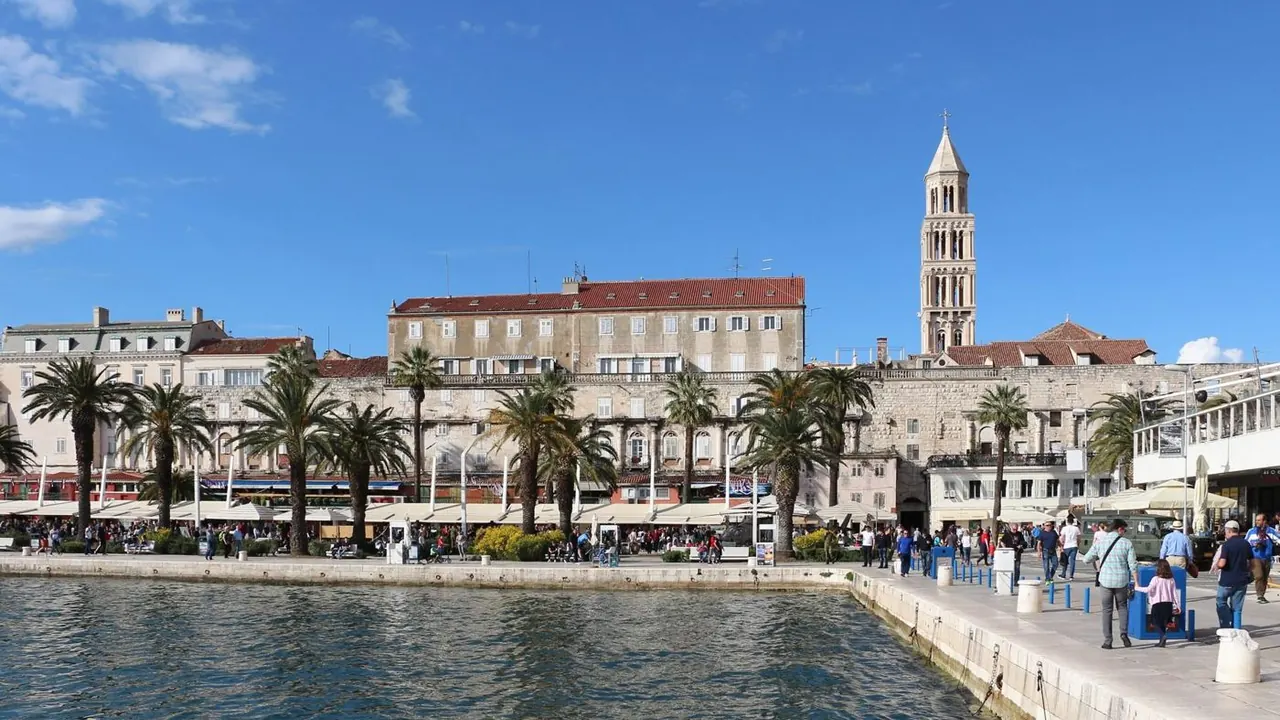
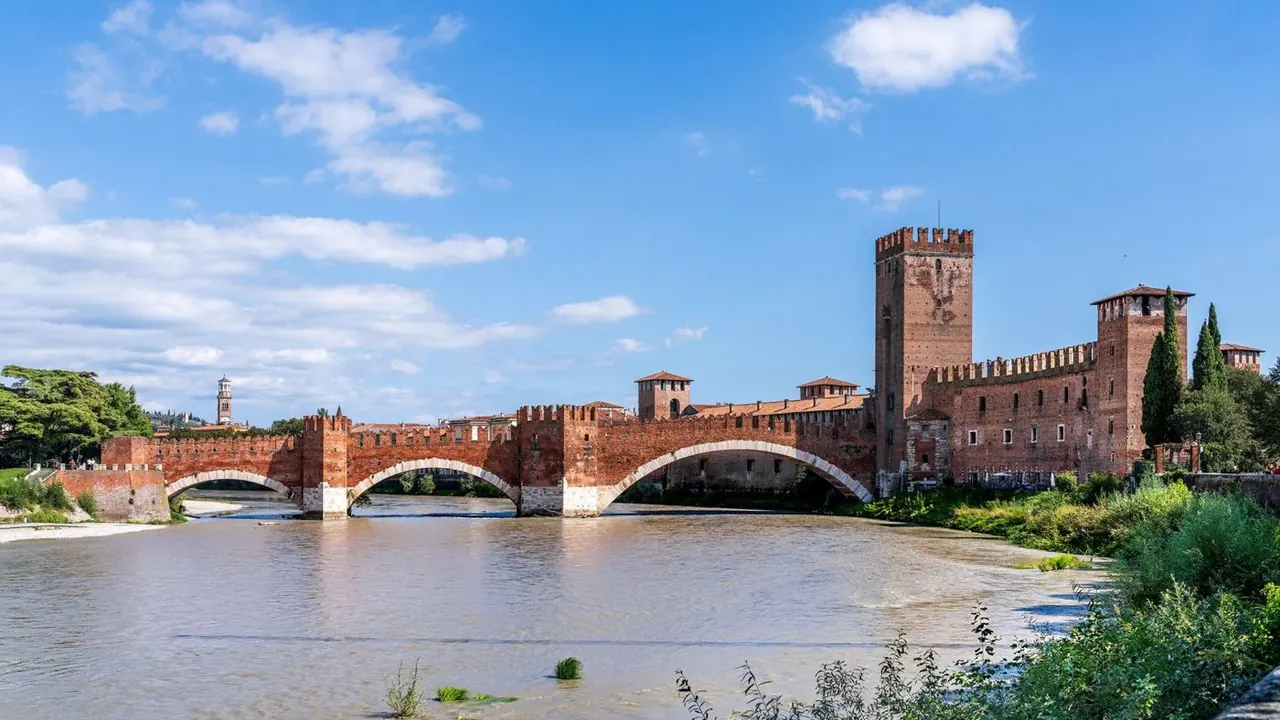
Photos: Split by Bernard Gagnon, CC BY-SA 4.0, cropped; Verona by NorbertNagel, CC BY-SA 4.0, cropped.
Split or Verona?
Our verdict in twelve categories, each scored against the same fixed benchmark cities, and the climate month by month, so you can choose for your trip.
Choose Split for
- beaches
- nightlife
- nature and the outdoors
Split is the pick when the sea is the point. You can swim within walking distance of a Roman palace, take a ferry out to Brač or Hvar, and climb Marjan or the ridges of Mosor without a long drive. Summer evenings in the palace alleys also run later than anything Verona offers. It suits active couples, groups of friends and anyone who wants a coastal base more than a long list of sights.
Choose Verona for
- live music and the arts
- shopping
- day trips
Travellers who want art, opera and good wine around them will get more from Verona. Its walled centre holds more Roman, Romanesque and Renaissance building than Split's palace quarter, and a night at the Arena is a reason to go in itself. The rail line puts Venice, Padua, Vicenza and Mantua within a day. Families do well here too, with Gardaland and the lake about half an hour away.
Scoreboard
Twelve categories on one fixed scale from 0 to 100. The shaded stretch is the gap between the two.
Your match
Pick a travel style or drag the sliders, and both match scores follow your weighting.
Wins on beaches and nightlife with your weighting.
Wins on live music and the arts and shopping with your weighting.
What matters to you?
Category by category
What the scores mean for a trip.
Beaches & swimming
Split's life is built around the water. The Adriatic is a short walk from the palace, Bačvice has shallow sand and the local ball game picigin, and the pine-shaded coves around Marjan have deeper water. Ferries to Brač, Šolta and Hvar add longer beaches, though most of the city's shore is pebble or concrete and it fills up in high summer.
Verona has no coast, so swimming means Lake Garda, about half an hour away at Peschiera, Lazise or Sirmione's flat limestone shelves. The fresh water is calm, with lidos and lawns rather than coves, and it works as an outing rather than a daily routine.
Food & drink
Both kitchens are regional and rooted in tradition, but Verona's goes further. Its osterie around Piazza delle Erbe and in Veronetta serve Amarone risotto, bigoli with duck and bollito with pearà. The Valpolicella, Soave and Bardolino vineyards are a short drive away, which makes the evening glass at a counter a real part of the trip.
Split's strength is the sea: grilled fish, black risotto and octopus under the peka, with Plavac Mali or Pošip alongside. The best tables are in the konobas of Varoš, and the fish and green markets are worth a morning, but the range is narrower and winter is quiet.
Culture & sights
Split has one great sight, and it is a remarkable one. Diocletian's Palace is a Roman emperor's residence that people still live in, with the cathedral set in his mausoleum and the vaulted substructures below. Add the Meštrović Gallery and the list is soon done.
Verona builds far more on its Roman base. Beside the Arena and the Roman theatre are the Scaliger tombs, the Romanesque basilica of San Zeno, Gothic Sant'Anastasia and Castelvecchio's art collection in Scarpa's setting. That is enough for two or three unhurried days rather than a quick circuit.
Nightlife
In summer, nights in Split go later and louder. The palace alleys fill with small bars and people drinking on the steps, and the beach bars and clubs around Bačvice keep a younger crowd out into the early hours. Most of this fades from October.
Verona's evening centres on the aperitivo, a spritz or a glass of Valpolicella in Piazza delle Erbe or by the river, and Veronetta's student bars are the liveliest late option. There is no dance scene in the centre, and outside opera nights the streets empty early.
Nature & outdoors
Split has mountains and sea right on its doorstep. Marjan's pine forest and cliffs are a walk from the palace, Mosor and Kozjak have real ridge hikes, and the Cetina canyon at Omiš and the islands add rafting, kayaking and sailing.
Close to Verona, the outdoors is gentler, with vineyard walks and cycling in the Valpolicella and the long Adige cycle route north. The bigger landscapes are about an hour away: Monte Baldo above Garda, the windsurfing waters at the lake's northern end and the gorges of the Lessinia plateau.
Day trips
Split's days out follow the coast and the ferry routes. Trogir's island core and Šibenik's cathedral, both UNESCO-listed, are within an hour, while Salona's Roman ruins and Klis Fortress sit on the edge of the city. Boats also run to Hvar, Brač and Vis. In summer these trips are simple, but in winter the boats take more planning.
From Verona the choice is wider, and the trains do most of the work. Venice is a little over an hour away, Vicenza, Padua and Mantua are closer, and Bologna or Milan fit into a longer day. The Garda towns and the Valpolicella and Soave wine country are nearer still, so one week can take in art cities, lake harbours and cellar visits in a way Split's coast cannot match.
Good for families
Verona has the attractions built for children that Split lacks. Gardaland, the water parks on Garda's southern shore and the Parco Natura Viva safari zoo are all about half an hour away, though most need a car or a transfer.
Split's appeal for children is simpler: shallow water at Bačvice, room to run on Marjan and a ferry ride that often turns out to be the highlight. There is no theme park or aquarium worth the name, and July and August bring heavy heat and crowded beaches.
Getting around
Both centres are made for walking, and neither needs a car in town. Split's palace, Riva and Bačvice are close together, but its lanes are polished stone and full of steps. Verona's centre inside the river loop is flat and largely closed to traffic.
The real difference is in getting out of town. Split's ferry port, bus station and railway station sit together at the harbour, which makes island trips easy. Verona relies on its rail line to Venice, Milan and the lake. In both, a car helps for the hills and trailheads.
Shopping & style
Verona has more to browse. Via Mazzini carries Italian fashion and accessory labels on a marble-paved street, and Corso Porta Borsari has boutiques, jewellers and shoe shops. Even so, Milan remains the place for serious shopping.
Split's palace shops lean towards lavender, coral, ties and souvenirs, with the chain stores on Marmontova. Its best browsing is at the Pazar market. In both cities, the things most worth taking home are local wine and olive oil.
Affordability
Neither city is a bargain, and they end up costing about the same in different ways. Split's prices swing with the season. Rooms near the old town are steep in midsummer and fish sold by weight adds up, but May, June, late September and winter are much kinder.
Verona's main cost is a central hotel, especially on opera nights and during the big trade fairs. Everyday eating in Veronetta's osterie and at wine counters stays fair. Staying near the station or across the river helps, much as staying outside the old town does in Split.
Live music & performing arts
This is where Verona pulls clearly ahead. Opera in the Roman Arena, with Verdi and Puccini performed to thousands on the stone tiers through the summer, is worth planning a trip around. The Roman theatre's festival of Shakespeare, dance and jazz adds to it, and the Teatro Filarmonico takes over in the cooler months.
Split has its own summer festival on the Peristyle, opera and ballet at the Croatian National Theatre, and klapa singing in the palace vestibule. Beyond that the programme is thin, especially out of season.
Wellness & relaxation
Verona has the edge for real spa time, because warm springs lie close by. There is Sirmione's thermal centre facing Lake Garda, the spring-fed lake in a villa garden near Lazise and the springs at Caldiero, used since Roman times. In town, the Giardino Giusti terraces and a passeggiata along the river set a gentle pace.
Split offers hotel spas and the Dalmatian habit of fjaka: long coffees on the Riva and quiet streets in the afternoon heat. It is restful in May, June and September, but the old town is loud on summer nights, and real calm often means going to an island.
When should you go?
Pick your month. The climate figures are measured averages, not a forecast.
Split in July
Verona in July
Daytime high, °C
Rainfall in the month, mm
Temperature and rainfall are climate normals, averaged over the years shown. Split: 1991-2020 normals, Split / Marjan (0.9 km from centre). Verona: 1991-2020 normals, Verona / Villafranca (11.6 km from centre).
Split is a summer city. From June to September the sea is warm enough for proper swimming, peaking around 25°C in August, and the long, very sunny days carry on into early October. July and August reach about 31°C, which makes midday sightseeing and hiking hard work, so May, June and September are the best months for combining the beach with walking. The rain arrives in autumn and peaks in November at around 117mm, though winters stay mild.
Verona is inland, so its seasons are sharper and it gets less sun all year. Winters are cold, around 7°C in January. Summers are about as hot as Split's, with more frequent rain spread across the warm months. April, May, September and October are the comfortable months for walking the centre and the vineyards. Summer belongs to opera nights and lake swimming, and in winter Split is the milder of the two.
Which traveller are you?
For a beach and sun trip, Split is the clear choice. The Adriatic is a short walk from the old town, Bačvice and the Marjan coves cover city swimming, and ferries to Brač and Hvar reach longer beaches. In Verona, a swim means a trip to Lake Garda.
On a culture and arts trip, Verona gives more. Its UNESCO-listed centre runs from the Arena to San Zeno and Castelvecchio, and summer opera fills the Roman amphitheatre. Venice, Padua and Vicenza are each a short train ride away.
On a family trip with children, Verona has the edge. Gardaland, the Parco Natura Viva safari zoo and the shallow lake shore are all about half an hour away. Its flat centre is also easier with a pushchair than Split's stepped stone lanes.
Before you go
| Measure | Split | Verona |
|---|---|---|
| Official language | Croatian | Italian |
| Currency | Euro (EUR) | Euro (EUR) |
| Sockets | CF230 V, 50 Hz | CFL230 V, 50 Hz |
| Driving side | Right | Right |
| Time zone | UTC+1, UTC+2 in summer | UTC+1, UTC+2 in summer |
| Emergency number | 112 | 112 |
| Elevation | 0 m | 59 m |
| Main airport | Split Saint Jerome Airport (SPU)12 km from centre69 non-stop destinations | Verona Villafranca Valerio Catullo Airport (VRN)10 km from centre96 non-stop destinations |
| Public holidays this year | 14 days | 13 days |
By the numbers
| Measure | Split | Verona |
|---|---|---|
| City population | 160,577 | 255,588 |
| People per km² | - | 1,285 |
| Museums within 10 km | 11 | 18 |
| UNESCO World Heritage sites within 50 km | 4 | 5 |
| Swim season, months above 21 °C | 4 months | - |
Where else could you go?
Every comparison below shares a destination with this one, so you can follow Split or Verona somewhere new.