Trincomalee
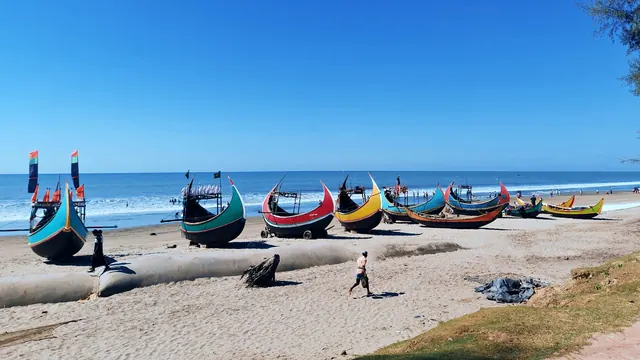
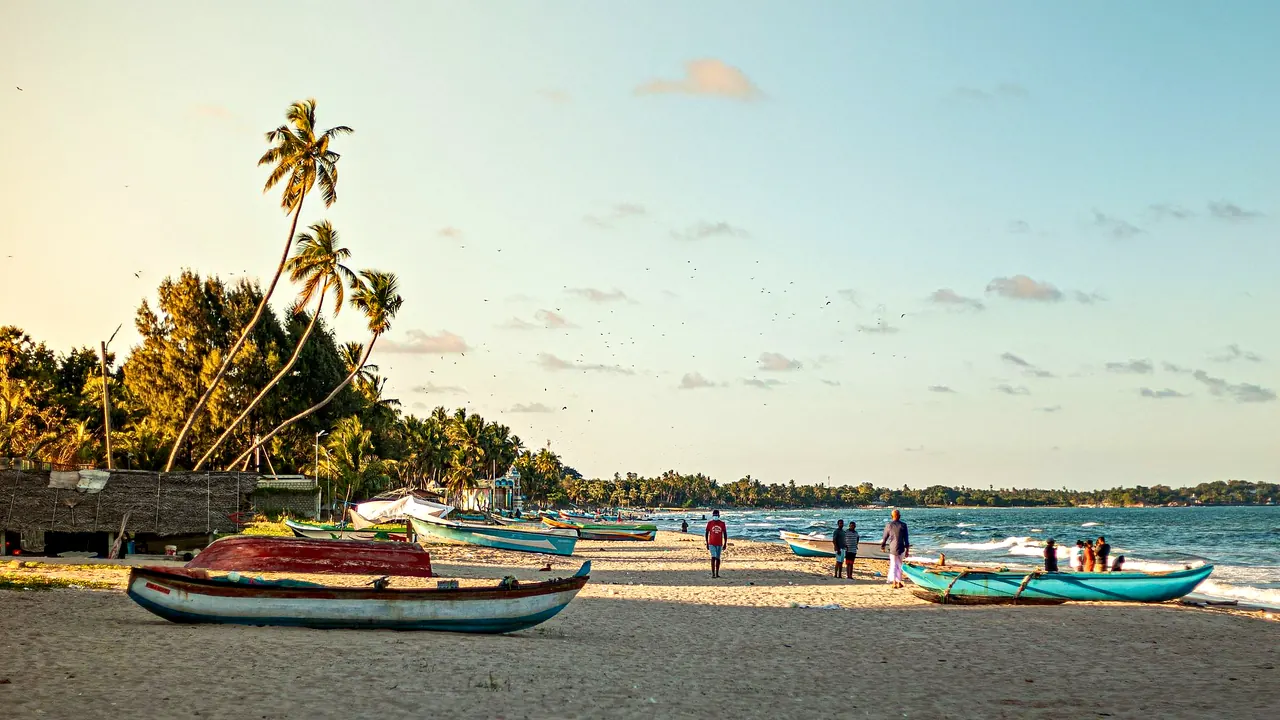
Fishing boats and palms on a Trincomalee beach in evening light
- Beaches80
- Affordability80
- Nature & outdoors66
Match
41
Every category weighted equally
- Beach & sun50
- Culture & arts35
- Food & nightlife33
- Family trip50
- Outdoors52
- Relax & unwind48
- Shopping & style33
- On a budget46
Trincomalee in twelve categories
Our verdict on each, scored 0 to 100 against the same fixed benchmark cities, so a score means the same thing on every page.
Beaches & swimming. Scores 80 out of 100.
Food & drink. Scores 38 out of 100.
Culture & sights. Scores 33 out of 100.
Nightlife. Scores 8 out of 100.
Nature & outdoors. Scores 66 out of 100.
Day trips. Scores 58 out of 100.
Good for families. Scores 40 out of 100.
Getting around. Scores 30 out of 100.
Shopping & style. Scores 10 out of 100.
Affordability. Scores 80 out of 100.
Live music & performing arts. Scores 7 out of 100.
Wellness & relaxation. Scores 45 out of 100.
Trincomalee category by category
Beaches & swimming
80The beaches are the reason most people come. Uppuveli lies a short tuk-tuk ride north of town, a broad sweep of pale sand with guesthouses and fishing boats along it. About 15km further up the coast, Nilaveli is longer, emptier and calmer, with water that turns clear turquoise in the dry months. Marble Beach, a sheltered military-run cove to the south of the bay, is the gentlest swim of all.
The sea is warm, around 28°C, and from roughly April to September it is flat and clear, with boats crossing to Pigeon Island for reef snorkelling just off Nilaveli. From about November to January the northeast monsoon brings rain, rough water and red flags, and many beachfront places close. Outside that window, this is a slow, uncrowded beach stay rather than a party strip.
Food & drink
38Eating here is simple and local. In town, rice and curry is served at lunch in plain canteens, kottu is chopped on hot griddles in the evening, and the Tamil kitchen brings dosai, vadai and spicy crab and fish curries that taste different from the south of the island. The fish market by the harbour shows what comes in each morning.
Along Uppuveli and Nilaveli, most meals are grilled seafood at beach tables and guesthouse kitchens, good when the catch is fresh but limited in range. There is no café culture or fine dining to speak of, and alcohol is not served on the monthly full-moon Poya days.
Culture & sights
33Trincomalee's history sits on the headland that guards its deep natural harbour. Fort Frederick, built by the Portuguese and rebuilt by the Dutch and British, is still a military base, but its gate road is open and spotted deer wander among the old walls. At the tip of the rock stands Koneswaram, an ancient Hindu shrine destroyed in colonial times and rebuilt on the cliff edge above the sea, with puja ceremonies visitors can join.
Beyond that the list is short: the Commonwealth War Cemetery from the Second World War, colourful Hindu kovils in town, and a couple of minor Buddhist sites. It fills a morning or a day, not a trip.
Nightlife
8There is essentially no night out. A few beach bars and guesthouse terraces in Uppuveli serve beer and cocktails after dinner in season, sometimes with a bonfire, and that is the extent of it. The town itself is quiet and conservative after dark, so evenings are for an early meal and a walk on the sand.
Nature & outdoors
66The outdoor life here is mostly on and under the water. Pigeon Island National Park, a short boat ride off Nilaveli, has shallow coral with reef sharks and turtles, and dive boats visit wrecks and rocky reefs around the bay. In the right months, whale-watching trips head out over the deep canyon off the coast, where blue whales and dolphins pass close to shore.
Inland, the national parks of Minneriya and Kaudulla are about two hours away, famous for the great gatherings of elephants around their reservoirs late in the dry season. The countryside is flat scrub, lagoons and paddy, so there are no hikes of note, and the hot months and the monsoon both shape what is possible.
Day trips
58Trincomalee is a long but workable day from the heart of Sri Lanka's Cultural Triangle. The rock fortress of Sigiriya, the cave temples of Dambulla and the ruined royal city of Polonnaruwa are each about two hours away by road, and an early start with a driver lets you see one of them properly and return for sunset on the coast. Anuradhapura is a longer haul.
Closer to town there is little to visit as a separate outing beyond the Kanniya hot wells and a few small temples. Most visitors hire a car and driver for these trips, since buses are slow and connections awkward.
Good for families
40In the calm season the beaches suit children well, with shallow, warm water at Nilaveli and Marble Beach, and older children enjoy snorkelling at Pigeon Island, the deer at Fort Frederick and a boat out to look for whales. An elephant safari inland is a long but memorable day.
There is nothing designed for children, though: no aquarium, playgrounds or parks to speak of, strong heat, long road journeys and limited medical facilities. Families do best with a beachfront hotel with a pool and a gentle, beach-centred plan, and should avoid the monsoon months.
Getting around
30The town centre and the fort can be walked, but the beaches are not: Uppuveli is a few kilometres north and Nilaveli about 15km, so visitors move by tuk-tuk, scooter or hired driver. Tuk-tuks are easy to find and the main way people get about. Local buses run up the coast road but are crowded and irregular, and anything inland, from national parks to ancient cities, means booking a car with a driver.
Shopping & style
10Shopping is for necessities. The central market and the streets around it sell spices, fruit, saris and household goods, and a few stalls along the beaches offer sarongs and souvenirs. Anyone wanting tea, gems or crafts to take home will find more choice elsewhere on the island.
Affordability
80Day-to-day costs are low. Rice and curry in town, tuk-tuk rides and simple beach guesthouses cost very little by international standards, and a long stay on a modest budget is easy. Spending rises with comfort: beachfront resorts, dive and whale-watching trips, a private driver for day trips and the entrance fees charged to foreigners at national parks and ancient sites add up quickly.
Live music & performing arts
7There is no theatre or concert life. What a visitor may encounter is temple music: drums and nadaswaram pipes at the evening puja at Koneswaram and the town kovils, and processions during the Hindu festival calendar. Beyond that, the most you will find is the odd guitar at a beach bar.
Wellness & relaxation
45Rest here comes from a slow, small-town pace more than from any spa scene. Days start early, before the heat, and the hours after lunch belong to shaded verandas, garden hammocks and a nap while the town goes quiet. Many hotels and guesthouses offer Ayurvedic treatments, Sri Lanka's traditional medicine: warm herbal oil massages, steam baths and short courses for guests who want them, done in simple treatment rooms rather than polished spas.
The Kanniya hot wells, a short drive inland, are seven small square springs of differing warmth where visitors pour buckets of water over themselves, more a curiosity than a soak. There are no bathhouses or large spa complexes, and the town itself is hot and dusty, so the calm is found in your own lodging rather than in the streets.
When should you go?
Pick a month to see what it is like. The climate figures are measured averages, not a forecast.
Trincomalee in July
Daytime high, °C
Rainfall in the month, mm
The whole year
Shaded against this destination’s own year: the deepest cell is its best month for that figure and the palest its weakest.
Temperature and rainfall are climate normals, averaged over the years shown. Trincomalee: 1991-2020 normals, Trincomalee (2.6 km from centre).
Before you go
| Measure | Trincomalee |
|---|---|
| Official language | Tamil, Sinhala |
| Currency | Sri Lanka Rupee (LKR) |
| Sockets | GM230 V, 50 Hz |
| Driving side | Left |
| Time zone | UTC+5:30 |
| Emergency number | Police 119, ambulance 110, fire 110 |
| Elevation | 8 m |
| Main airport | Bandaranaike International Colombo Airport (CMB)214 km from centre58 non-stop destinations |
By the numbers
| Measure | Trincomalee |
|---|---|
| Population | 99,135 |
| People per km² | 13,218 |
| Museums within 10 km | 1 |
| UNESCO World Heritage sites within 50 km | 0 |
| Swim season, months above 21 °C | 12 months |
Compare Trincomalee with
Every comparison with a written verdict behind it.