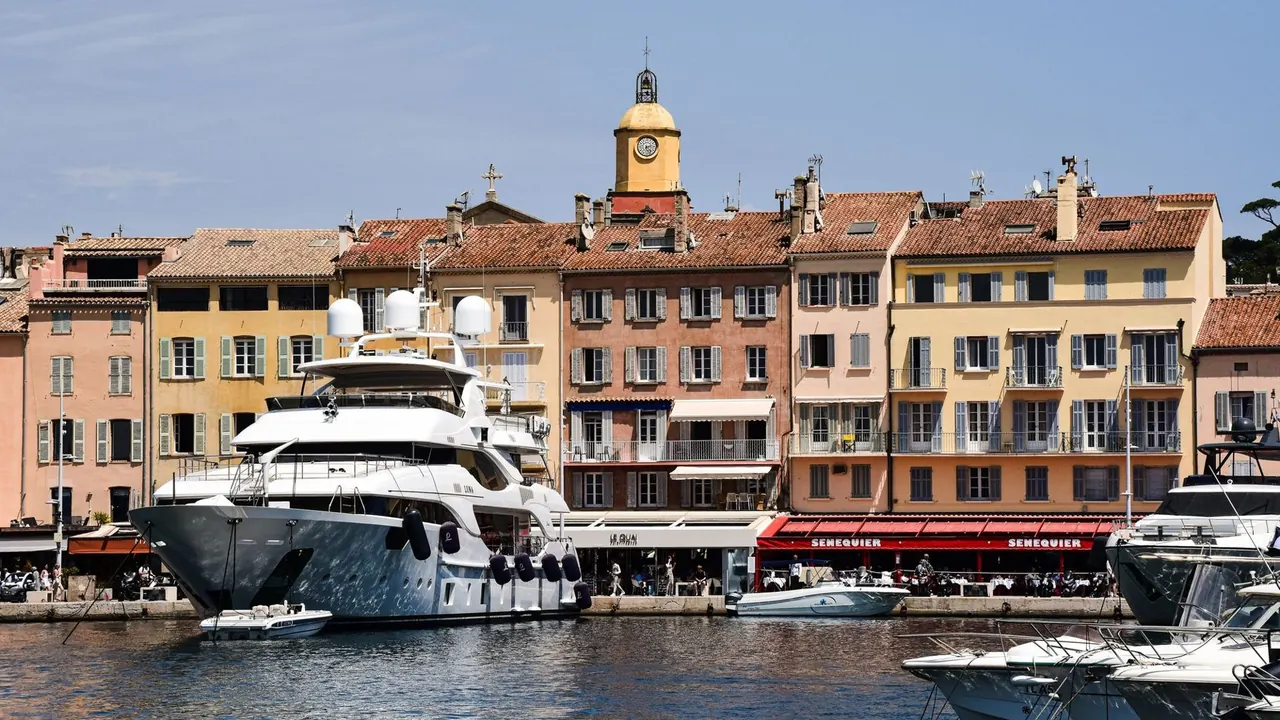
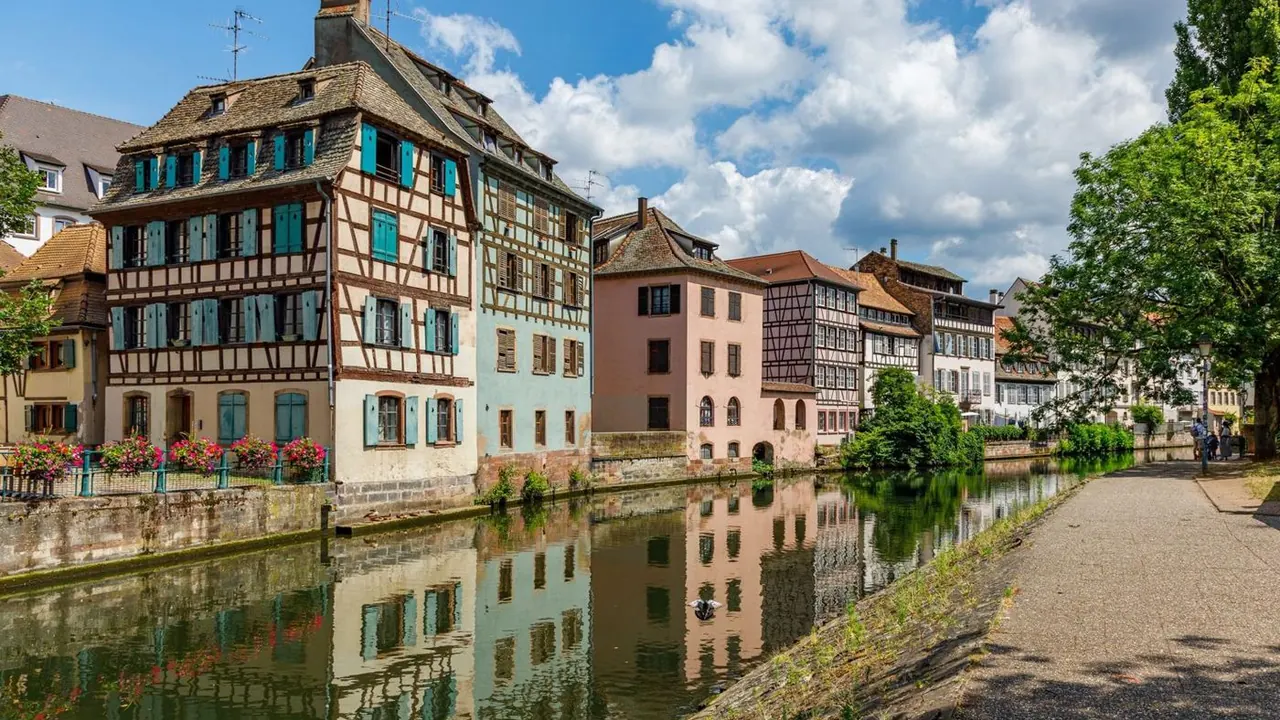
Photos: Saint-Tropez by AXP Photography, Pexels License; Strasbourg by Edoardo Colombo, Pexels License.
Saint-Tropez or Strasbourg?
Our verdict in twelve categories, each scored against the same fixed benchmark cities, and the climate month by month, so you can choose for your trip.
Choose Saint-Tropez for
- beaches
- nightlife
- shopping
Saint-Tropez is for a summer trip built around the sea: long days on Pampelonne's sand, swims in the coves along the coast path and evenings among the yachts and terraces of the harbour. It suits travellers who care more about glamour and scenery than sights, and who are ready for the cost and the traffic that come with it.
Choose Strasbourg for
- getting around
- live music and the arts
- prices
Strasbourg is for curiosity rather than sunbathing. The cathedral, Petite France and the Palais Rohan museums fill a few unhurried days, trams and bike lanes make the city effortless to get around, and Colmar, the wine villages and the Black Forest are all close by. It is the better choice for culture, for families and for anyone watching what they spend, and it works in any season.
Scoreboard
Twelve categories on one fixed scale from 0 to 100. The shaded stretch is the gap between the two.
Your match
Pick a travel style or drag the sliders, and both match scores follow your weighting.
Wins on beaches and nightlife with your weighting.
Wins on getting around and live music and the arts with your weighting.
What matters to you?
Category by category
What the scores mean for a trip.
Beaches & swimming
This is the widest gap between the two cities. Saint-Tropez has about 5km of fine sand at Pampelonne on the Ramatuelle side, clear water all summer and wilder coves at Escalet and Cap Taillat. For a quick dip there are also small town beaches such as Les Graniers.
Strasbourg has no sea at all. People swim in summer in lifeguarded gravel-pit lakes such as the Baggersee, which the tram reaches, with grassy banks and fresh water. They are pleasant on a hot afternoon but never a reason to travel.
Food & drink
Strasbourg is the better place to eat. Its winstubs serve choucroute, baeckeoffe and tarte flambée with local Riesling at fair prices, there is a strong fine-dining tier, and the covered market is full of Munster and charcuterie. The weak spot is the tourist menus around the cathedral and Petite France, and the food is heavy enough to suit winter more than August.
Saint-Tropez cooks lighter Provençal dishes: grilled fish, aïoli and rosé over a long lunch on the sand, plus the Place des Lices market and the tarte tropézienne. The top end is good, but simple, good-value meals are hard to find, and much of the town closes in winter.
Culture & sights
Strasbourg has far more to see. The pink sandstone cathedral, the timber-framed Grande Ile, Petite France and the German-built Neustadt make up a UNESCO-listed whole. The Palais Rohan, the Oeuvre Notre-Dame and the modern art museum by the river add enough for two or three days.
You can see Saint-Tropez's heritage in a day. The main sights are the Musée de l'Annonciade, with pointillist and Fauvist painting from the Signac years, the maritime museum in the citadel and the lanes of La Ponche. People come for the setting more than the sights.
Nightlife
In summer, Saint-Tropez has much the bigger night out. Afternoons in the Pampelonne beach clubs lead to champagne on the harbour terraces and then to famous clubs that stay open until dawn. It is glamorous, expensive and dressy, and it goes almost silent once the season ends.
Strasbourg's evenings are about bars rather than clubs. There are student bars and beer cellars in Krutenau and around Place Saint-Étienne, and terraces by the river in summer. Going out is relaxed and possible all year, but nights rarely run late.
Nature & outdoors
Saint-Tropez has the more striking outdoors right on its doorstep. The Sentier du Littoral runs past pine-backed coves to the capes of Camarat and Taillat, and the Massif des Maures has forest trails. There is also sailing, snorkelling and the national park islands of Port-Cros and Porquerolles. Summer heat and fire risk can close some trails.
Strasbourg's own landscape is flat and green, which makes it ideal for cycling along the Rhine and the canals. For hills you go about an hour out to the Vosges or the Black Forest, which suit hikers who don't mind the journey.
Day trips
Strasbourg is much the better base. Colmar is half an hour away by train, and the Alsace wine route runs through Riquewihr and Eguisheim below Haut-Koenigsbourg. Across the Rhine are Baden-Baden, Freiburg and Heidelberg, and Basel is also within reach by rail.
From Saint-Tropez the outings are short and pretty rather than important: the hilltop villages of Ramatuelle and Gassin, the castle at Grimaud, a boat to Port Grimaud or a full day on Porquerolles. All of them depend on roads that jam in high summer.
Good for families
Strasbourg is easier with children. The centre is flat and largely car-free, there are boat trips around the Grande Ile, and the Orangerie has storks and rowing boats. Le Vaisseau is a hands-on science centre, and Europa-Park is about an hour away.
Saint-Tropez offers families gently shelving sand at Pampelonne and Gigaro and little else aimed at them, since the beach clubs and harbour are built around adults, prices are high and summer traffic is hard work. Many families stay across the gulf and come over by boat.
Getting around
Strasbourg is far ahead here. Trams link the station, the European quarter and even Kehl across the Rhine, the separated cycle lanes often make a bike the quickest way around, and no visitor needs a car in the city.
You can cross Saint-Tropez on foot in minutes, but there is no railway, the buses are slow and the beaches are several kilometres out. Most visitors rely on a car, a scooter or taxis, and the gulf road jams for hours in July and August. The passenger boat from Sainte-Maxime is often the best way in.
Shopping & style
Saint-Tropez is the place for fashion. The big luxury houses open summer shops behind the port, the lanes are full of resort wear and jewellery, and Tropézienne sandals are still stitched by hand in the old town. Outside that luxury and resort range, and outside summer, there is little choice.
Strasbourg's shopping is more everyday and more regional. There are chain stores around Place Kléber and independent shops near the cathedral, and good things to take home include Soufflenheim pottery, Alsace wine and kougelhopf moulds. In December the Christmas market stalls add crafts and decorations.
Affordability
Strasbourg is far easier on the wallet. Prices are those of a large French regional city: winstub meals are good value, trams are cheap and many sights are free. Hotels are the main expense, and they cost much more during the Christmas market and the weeks when the European Parliament sits.
Saint-Tropez is one of the most expensive places on the Mediterranean, from rooms and beach loungers to a coffee on the port. Visitors on a budget usually sleep elsewhere, picnic from the market and swim from the public beaches.
Live music & performing arts
Strasbourg has a proper arts calendar: the Opéra national du Rhin on Place Broglie, a full philharmonic season, the Théâtre National de Strasbourg and the Musica festival of contemporary music every autumn.
Saint-Tropez has open-air concerts in summer and live sets in the beach clubs. Its one distinctive occasion is the Bravade in May, a centuries-old costumed procession. For opera or theatre you would have to drive to Toulon or Nice.
Wellness & relaxation
Strasbourg has the edge for unwinding. Its tiled Bains municipaux has pools, a hammam and saunas that locals use, and the Friedrichsbad and Caracalla baths in Baden-Baden are under an hour away. Walks by the canals and long winstub lunches set an easy pace.
In Saint-Tropez, wellness means the spas of the luxury hotels, which are aimed at their guests. How calm it feels depends on timing. High summer is crowded and loud, but in May, June and September the town slows to long lunches and pétanque under the plane trees.
When should you go?
Pick your month. The climate figures are measured averages, not a forecast.
Saint-Tropez in July
Strasbourg in July
Daytime high, °C
Rainfall in the month, mm
Where the figures come from
Saint-Tropez has no rain gauge within 25 km of the centre, so its rainfall comes from a gridded climate dataset read at the city rather than from a gauge further away.
Saint-Tropez's sunshine is measured 62 km from the centre, at Nice.
Temperature and rainfall are climate normals, averaged over the years shown. Saint-Tropez: 1999-2020 (sunshine 1991-2020, rainfall 1991-2020) normals, Le Luc (24.2 km from centre). Strasbourg: 1991-2020 normals, Strasbourg (9.1 km from centre).
Saint-Tropez is a summer place. From June to September the sea is warm enough for most swimmers, reaching about 24°C in August. July and August are very sunny and almost dry, but highs of 32°C make walking at midday hard work, so May and late September are better for the coast path. The rain comes in autumn, and November is the wettest month at around 155mm. Winters are mild and much sunnier than Strasbourg's.
Strasbourg has a continental climate. Summer highs of about 26°C are ideal for walking and cycling, but late spring and summer are also its wettest months, with frequent showers. Winters are cold and dull, with January highs of around 5°C and very little sunshine. The city is at its best for walking the streets from May to September. In July and August, when Saint-Tropez is at its hottest, Strasbourg is the more comfortable of the two for sightseeing on foot.
Which traveller are you?
On a beach and sun trip, Saint-Tropez is the obvious choice. Strasbourg has nothing like Pampelonne's long sand, the clear summer water or the quiet coves to the south. There, a swim means a gravel-pit lake on the edge of town.
For a culture and arts trip, Strasbourg wins clearly. It has the cathedral and its astronomical clock, a UNESCO-listed old town, several major museums, an opera house and a leading theatre. Saint-Tropez has one fine museum and a citadel.
On a trip on a tight budget, Strasbourg is the realistic option. Winstub meals, wine by the pichet, cheap trams and free sights keep costs sensible. Saint-Tropez prices everything for the yachting crowd and adds taxis or parking on top.
Before you go
| Measure | Saint-Tropez | Strasbourg |
|---|---|---|
| Official language | French | French |
| Currency | Euro (EUR) | Euro (EUR) |
| Sockets | CE230 V, 50 Hz | CE230 V, 50 Hz |
| Driving side | Right | Right |
| Time zone | UTC+1, UTC+2 in summer | UTC+1, UTC+2 in summer |
| Emergency number | 112 | 112 |
| Elevation | 0 m | 132 m |
| Main airport | Nice-Côte d'Azur Airport (NCE)64 km from centre130 non-stop destinations | Strasbourg Airport (SXB)10 km from centre43 non-stop destinations |
| Public holidays this year | 11 days | 11 days |
By the numbers
| Measure | Saint-Tropez | Strasbourg |
|---|---|---|
| City population | 3,582 | 293,771 |
| People per km² | 320 | 3,752 |
| Museums within 10 km | 4 | 21 |
| UNESCO World Heritage sites within 50 km | 0 | 1 |
| Swim season, months above 21 °C | 3 months | - |
Where else could you go?
Every comparison below shares a destination with this one, so you can follow Saint-Tropez or Strasbourg somewhere new.